Training

Good training is safe, practical, and built around real understanding. You learn what to do, why you are doing it, and how it all fits together. Joe McLain, an Army special operations veteran certified through the USCCA and the NRA, leads every class in a small group. You leave with knowledge you can use and the understanding to use it wisely.

Where do I start?
Tell me what you’re looking for

See something you’d like? Tap I’m interested on it, and I’ll get back to you personally about dates, times, and places near you. Tapping it doesn’t sign you up or charge you anything. Not sure which one fits? Tell me what you’re looking for and I’ll help you choose.

Classes held across northwest Iowa. Questions? Call or text 712.796.1464. Standard classes are for ages 12 and up. All classes follow the 48-hour cancellation policy.

Learn to shoot

From your first shot to confident, accurate shooting. New shooters usually start with Basics of Pistol Shooting; if you're not sure shooting is for you, try a one-hour Familiarization first.

Back to course groups
Official NRA course

Basics of Pistol Shooting

Whether you have never fired a handgun or have shot without formal training, this is the place to build a solid foundation, from safe handling to live fire with individual coaching.

Class details

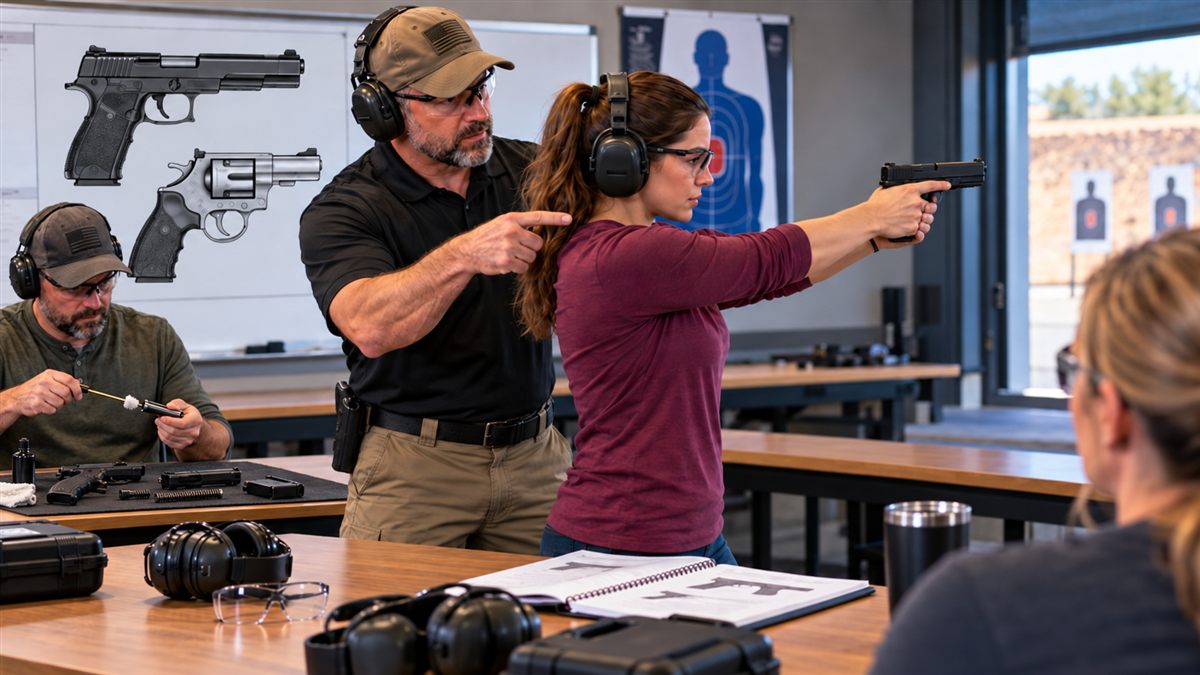
This official NRA course takes you from the fundamentals of safe handgun ownership and handling through practical shooting on the range. You work with semi-automatic pistols and revolvers, learn how they operate, how to load and unload them safely, how ammunition works, and how to inspect, store, clean, and maintain a handgun.

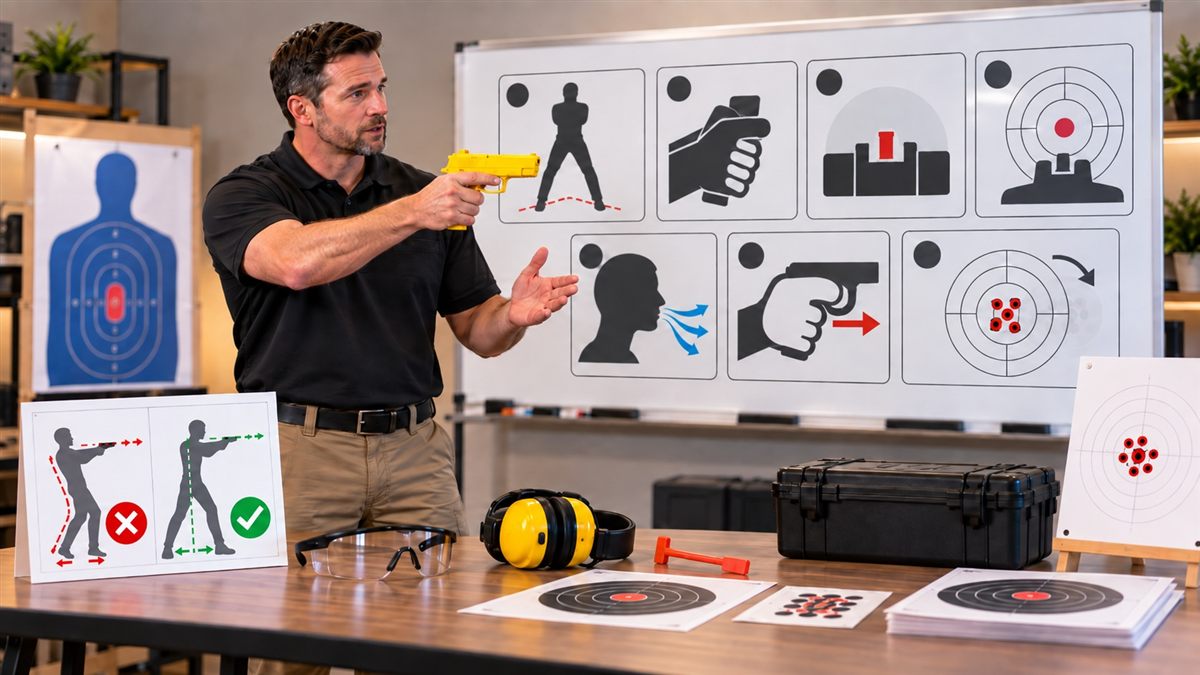
You develop grip, stance, aiming, trigger control, and follow-through in the classroom, then apply them in live fire with individual coaching. The course ends with the NRA student exam and live-fire qualification, and graduates receive an official NRA certificate.

Took Familiarization or Choosing Your First Pistol? Get $25 off when you book within 60 days.
Price$115
Length6 hours in the classroom and 2 hours at the range
Ages12 and up

Marksmanship Simplified

For shooters who handle a pistol safely but want to hit what they aim at. Two lessons, taken in order. Basics of Pistol Shooting graduates may go directly to Lesson 2.

The two lessons

  • Lesson 1: Preparing for the range, how semi-automatic pistols and ammunition work, selecting a handgun, administratively loading and unloading, and the basic techniques of shooting, practiced with dry-fire and live-fire drills.
  • Lesson 2: Reviews the fundamentals, then adds drawing and recovering the pistol, clearing malfunctions, and emergency reloads, with more drills.
Class details

Every skill is worked on by itself, so your full attention goes to the mechanics of shooting, not to the situation around it. The drills also diagnose and fix individual problems.

PriceOne lesson$60Both lessons$110
Length2 to 3 hours each

New Shooter Familiarization

Never touched or have limited experience with a pistol and want to see if pistol shooting is for you? A low-pressure way to find out, in a safe, controlled setting.

Class details

This one-hour introduction is for people who have never fired a handgun and want to see what shooting is really like before committing to anything. We go to the range, I walk you through the fundamentals, and you fire a pistol that I provide.

The pistol, ammunition, eye and ear protection, and targets are all provided. No experience, gear, or commitment is needed, and couples, families, and small groups are welcome.

PriceJust you$65Each person you bring$30
LengthAbout 1 hour, at the range
GroupUp to 4 people

Choosing Your First Pistol

Shoot a wide range of pistols and become a well informed buyer so you can make a purchasing decision with confidence.

Class details

Terms such as polymer frame, single-action, and trigger pull mean little until you have felt the difference. In this four-hour range session you shoot many pistols side by side: .22, .380 and 9mm semi-automatics, .38 and .357 revolvers, and often a few larger calibers. I provide every firearm and all the ammunition.

You leave with real experience, a clear sense of your own likes and dislikes, and the confidence to buy the right pistol the first time.

PriceJust you$255Each person you bring$65
LengthAbout 4 hours, at the range
GroupUp to 4 people

Practice Night

A two-hour weeknight at the range. No lesson, no exam, just an enjoyable time shooting. I'll provide targets and scenarios.

Class details

Open to graduates of my classes. Bring your own pistol or use a rental. Ammunition is available on site.

Price$30
Length2 hours, weeknight
WhoGraduates of my classes

What students say

“This class was something I never thought I would participate in but I’m so very glad I did. I’ve only shot a pistol a few times and was never really comfortable with them. This class made me feel so much more knowledgeable about and confident with pistols. Joe was an amazing teacher; he was always by our side when we had any questions and was always willing to answer those questions in a way I could understand. I’m so thankful I went to this class!”

Addie L. · Basics of Pistol Shooting

“I’d never touched a gun before and was honestly nervous. Joe was patient, never made me feel silly for asking questions, and by the end of the day I was shooting confidently and safely – and had fun doing it! I recommend his coaching to anyone who’s interested.”

Myrka O. · New Shooter Familiarization, Basics of Pistol Shooting, Choosing Your First Pistol

Concealed carry & home defense

For anyone who carries, plans to, or keeps a firearm at home for protection. Start with the carry class; the others build on it.

Back to course groups

Concealed Carry

The law, the gear, the decisions, and the aftermath of carrying a handgun, with Iowa-specific instruction. Take the Iowa classroom class, or stay on for the Minnesota material and live fire.

Class details

Owning or carrying a firearm for protection involves much more than knowing how to shoot. This course connects the pieces every responsibly armed citizen should understand: Choosing and safely handling a defensive firearm, a realistic protection plan, defensive shooting concepts, gear, sound decisions about the use of force, and what can happen during and after a violent encounter, with considerations specific to Iowa.

Two options:

  1. The Iowa class is classroom only and the certificate is recognized throughout the state.
  2. After the Iowa class concludes, stay as we cover material required by the state of Minnesota and then proceed to the range for the required live-fire exercise. Completion earns a certificate recognized throughout both Iowa and Minnesota so you can get your residential and nonresidential permits with the same certificate.

Basics of Pistol Shooting and Marksmanship Lesson 2 graduates receive a $15 gift card. Legal information is educational, not individualized legal advice.

PriceIowa permit$60Iowa and Minnesota permits, with live fire$80Already took the Iowa class? Add Minnesota$20Pistol or Marksmanship graduates$15 gift card
LengthIowa: 5 hours, classroom
Iowa and Minnesota, with live fire: 7 hours, including range time

Home Defense

Protecting your family inside your home: A home protection plan, the firearms most often used for home defense, defensive shooting, and the legal use of force in your own home.

Class details

Home defense is more than owning a gun. This course covers how to assess and strengthen your home's security and build a plan your family can follow, then the basics of the handguns, shotguns, and AR-15-style rifles commonly chosen for home defense and the fundamentals of using them defensively.

It also covers the legal use of force and what happens in the hours and days after a violent encounter in your home, and ends with gear and skills for continued training. Legal information is educational, not individualized legal advice.

Price$75
Length2.5 hours, plus range time

Build Your Own Personal and Home Protection Plan

Build a plan to avoid, escape, de-escalate, or defend, from the color code of awareness to protecting your home and preparing for the aftermath.

Class details

A plan made in advance gives you choices when there is no time to think. This class covers the four options in a violent encounter (avoid, escape, de-escalate, and defend), the color code of awareness, everyday habits that help you avoid trouble, the types of force, and when deadly force is justified.

You then turn to your home: Doors, windows, lighting, cameras, and a home-safety plan your family can follow, from where a firearm is stored to where everyone goes. You finish with first aid preparation and “what if this happens?” scenarios, such as coming home to an open front door or hearing glass break at night.

PriceNo charge
LengthAbout 1 hour, classroom

Should I Shoot?

Decide whether a shooting is justified: Is it legally justifiable, can you make the shot, and are you willing to live with the consequences? You practice with scenarios.

Class details

Deciding whether to shoot happens in seconds, and you live with the answer for the rest of your life. This class works through three questions in order: Is it legally justifiable, meaning an immediate deadly threat, you are the innocent party, no lesser force will stop it, and you can’t escape? Can you make the shot, given the target’s size, distance, and movement and who else is nearby? And are you willing to live with the consequences, from jail time and financial ruin to damaged relationships?

You then apply those questions to realistic scenarios, such as an evening walk, a crowded food court, a noise in the garage, and a family member in crisis, and talk through what you would do and why.

PriceNo charge
LengthAbout 1 hour, classroom

After a Self-Defense Incident

How stress affects you after an incident, what to do in the first minutes, and six things to know when police arrive.

Class details

The minutes after a self-defense incident can be the most dangerous part of it. Police arrive to an armed situation, everything is being recorded, and stress has changed what you see, hear, and remember. This class explains how adrenaline, tunnel vision, auditory exclusion, and memory loss affect you, and why you need a plan before you ever need it.

You learn who to call and in what order, a short four-part statement to give police, and six things to expect: Being detained, having your gun seized, being questioned, needing an attorney, possibly posting bail, and waiting on the prosecutor’s decision. Legal information is educational, not individualized legal advice.

PriceNo charge
LengthAbout 1 hour, classroom

Permitless Carry Basics

What permitless carry means, the responsibility of carrying in public, spotting pre-threat warning signs, and the use of force.

Class details

Permitless carry lets an eligible adult carry a concealed firearm without a state permit, but every firearm and self-defense law still applies, and you are held to a higher standard. This class covers that responsibility, how to spot pre-threat warning signs, and how to de-escalate and walk away.

It explains reasonable force, deadly force, and the four conditions that must be met before deadly force is justified, along with why a permit can still be worth having and how to plan your own continued training. Legal information is educational, not individualized legal advice.

PriceNo charge
LengthAbout 1 hour, classroom

Non-Lethal Self-Defense Tools

Pepper spray, energy weapons, and self-defense launchers: why to consider them, how they work, and how they fit the use of force, with a product demonstration.

Class details

Non-lethal tools fill the gap between doing nothing and using deadly force. This class explains how pepper spray, stun guns, TASERs, and self-defense launchers work, the types of each, and the strengths and weaknesses that matter when you choose one.

It also covers where these tools fit in the use of force, since a non-lethal tool is not a free pass and is not always non-lethal, and ends with a product demonstration.

PriceNo charge
LengthAbout 1 hour, classroom

Emergency first aid

Hands-on first aid for the emergencies most likely at home, on the farm, and at work, where help can be a long way off. No medical training required.

Back to course groups

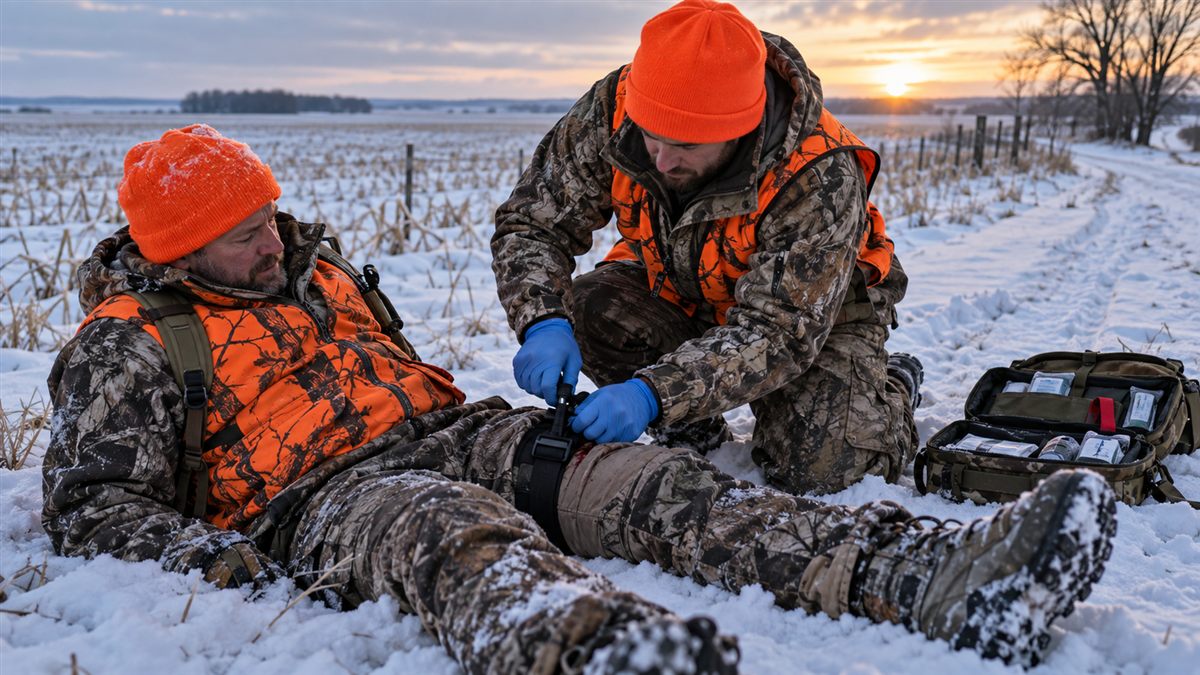
Control the Bleed

Recognize life-threatening bleeding and stop it: Pressure, packing, and tourniquets.

Class details

Severe bleeding can become life-threatening in minutes, and the person standing nearby may be the only help until EMS arrives. You learn to identify serious bleeding, apply direct pressure and compression bandages, use commercial and improvised tourniquets, pack wounds, and address penetrating chest injuries.

These skills apply to far more than firearm injuries: Farm and workplace accidents, vehicle crashes, hunting accidents, falls, and severe cuts.

Price$25
LengthAbout 1 hour

Emergency First Aid Fundamentals

Become your family’s first responder: Assess a scene and a patient, and treat serious injuries and medical emergencies until help arrives.

Class details

Medical emergencies are far more likely than a violent encounter, and help can be a long way off. You learn to size up a scene and its dangers, assess a patient, and decide how urgently you need more help.

Traumatic emergencies include severe bleeding, penetrating chest injuries and flail chest, severe burns, broken bones and other musculoskeletal injuries, and head and eye injuries. Medical emergencies include stroke, cardiac arrest, and diabetic emergencies. No medical background is needed.

Price$75
Length5 hours or more

First Aid Lessons

Three separate lessons, one topic each, and a good next step after Control the Bleed. Each lesson stands on its own: Take one, or all three, in any order.

The three lessons

  • Restart the Heart: Recognize sudden cardiac arrest, perform chest compressions, use an AED, give rescue breaths, and know what to do when paramedics arrive.
  • Mass Casualty: Learn the START triage system and practice it on a mock incident.
  • Medical Emergencies: Recognize and respond to stroke, cardiac arrest, diabetic emergencies, and more, which are far more likely than a gunshot wound.
PriceEach lesson$20

Personal, church & workplace safety

Staying safe in public, at church, and at work: Recognizing threats, planning a response, and keeping people safe without losing a welcoming place. For individuals, pastors, safety teams, ushers, employers, and anyone who works with the public.

Back to course groups

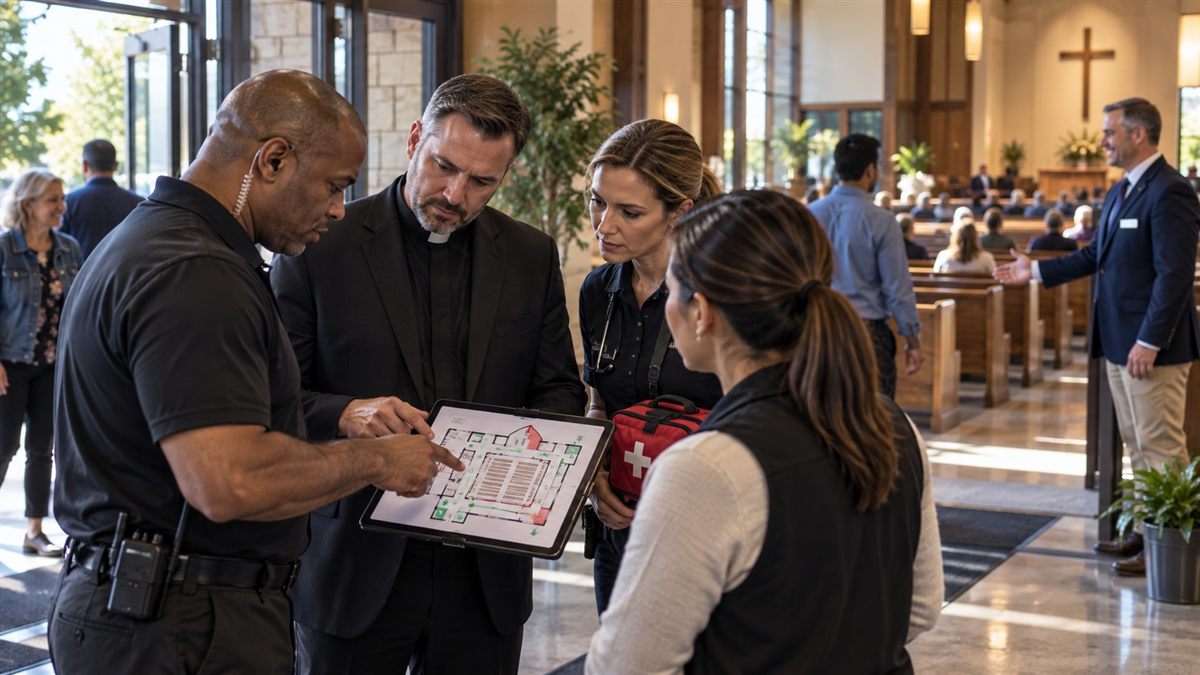
Protecting Houses of Worship

For pastors, ushers, greeters, and safety team members: Recognize threats, assess your facility, and plan an emergency response.

Class details

Students learn the warning signs of a developing threat, then evaluate their own building: Entrances and doors, lockdown procedures, children's areas, and how to respond in the first minutes. The course walks through building an Emergency Operations Plan (deterrence, protection, response, and mitigation) so responsibilities are set before an emergency, not during one.

It also covers how to include armed congregants in a plan responsibly, and the Run, Hide, Fight options for everyone in the room. Effective church safety involves awareness, planning, communication, medical preparedness, and coordinated action.

PriceNo charge
Length2 hours, classroom

Countering the Mass Shooter Threat

How attacks unfold, how to recognize warning signs, and what to do in the first minutes, for civilians, churches, and workplaces.

Class details

Learn what has been found about mass shooters and these events: How they unfold, where, how they end, and how fast police respond. Then separate the popular ideas that hold up from those that do not, including magazine limits, gun-free zones, and whether victim response makes a difference.

The class then turns to action: Warning signs and risk indicators, building an Emergency Operations Plan, evaluating the security of schools and houses of worship, and deciding in advance what you would do, including escape routes and Run, Hide, Fight. Workplace and church versions are held on site.

Price$60
Length4 hours, classroom

Real Estate Agent Safety

Practical personal-safety habits for showings, open houses, and client meetings, without making your job harder.

Class details

Built around meeting strangers, entering vacant properties, hosting open houses, and working alone. You learn why agents are targeted and how predators select victims, and how to break that cycle. You also learn how to notice warning signs, screen a new client, set up check-in plans, and handle parking, approaching, entering, and leaving a property.

You practice de-escalation and distance management, and learn how stress affects the body. For agents, brokers, property managers, and leasing professionals.

Price$25
Length2 hours, classroom

Spotting Threats in Public Places

How attackers choose their targets, the attack cycle, and the warning signs that come before an attack, so you don’t look like an easy target.

Class details

Criminals look for the easiest target with the lowest risk. This class walks through how an attack unfolds, from looking for a target to choosing, stalking, and attacking, and what makes someone look like an easy target: Being unaware, distracted, or alone.

You learn the warning signs that come before an attack, including body posture, eye contact, hands, a stranger striking up a conversation, and someone changing course to meet you. Then you practice spotting them in a hands-on group exercise.

PriceNo charge
LengthAbout 1 hour, classroom

Women’s Personal Safety

Awareness, personal boundaries, and a survivor mindset, so you are the person an attacker decides not to mess with.

Class details

Attackers look for someone they can overpower or intimidate. This class shows you how to be the “wrong” person: Taking responsibility for your own safety, setting personal boundaries, and living in a relaxed state of awareness instead of being distracted.

It covers the color codes of awareness, how to avoid, escape, or defend, the rules for using force, and your voice as a defensive tool. It also compares revolvers and semi-automatic pistols, explains how to choose a gun that fits you, and covers non-lethal options such as pepper spray and TASERs.

PriceNo charge
LengthAbout 1 hour, classroom

Staying Safe During the Holidays

Keeping your home, your shopping trips, and your holiday travel safer, including package deliveries, crowds, and bad weather.

Class details

The holidays bring more packages on the porch, more valuables in the house, more time away from home, bigger crowds, and harder travel. This class covers protecting your home, staying safe while shopping, and preparing for holiday travel, from emergency gear in your car to gas stops and airports.

In a group exercise, you study everyday scenes the way a criminal would, so you learn to spot the openings in your own routine.

PriceNo charge
LengthAbout 1 hour, classroom

Children & families

Knowledge replaces curiosity and fear. Start with the adult lecture, then bring your children to the hands-on family classes. Standard classes, including Basics of Pistol Shooting, are also open to students 12 and older.

Back to course groups

Children's Firearms Safety: The Adult Lecture

For parents, grandparents, and anyone who cares for children, regardless whether you own a gun: Why children touch guns, how to store firearms so they can't, and how to talk with children about it.

Class details

A seminar for the adults in a child's life, whether or not you own a gun. It covers education (how, when, and what to teach children about firearms safety), prevention (dispelling myths, looking at the real data on injuries, and safe storage options), and action (working through realistic scenarios and putting plans in place).

It is the recommended first step before the family classes, but not required.

PriceEach adult$45
Length2.5 to 3 hours
WhoAdults only

Family Safety Classes

Nine separate one-hour classes for children with a parent or guardian. Each class stands on its own: Come to one, or to as many as you like, in any order.

The nine classes

  • Accident Prevention and Safety Basics: What safety means and the gun safety rules
  • Firearms Safety Rules: What to do and not do with a firearm
  • Firearms Familiarization, Handguns: Parts, functions, and fundamentals
  • Firearms Familiarization, Long Guns: Parts, functions, and fundamentals
  • Firearms Heritage and Use: The Second Amendment and firearms in America today
  • Dry Fire Practice: Tools, preparation, and drills
  • Shooting Fundamentals: The seven shooting fundamentals
  • Range Rules and Etiquette: What to expect on the range and how to act
  • Situational Awareness: Being present in and observant of your surroundings
PriceEach child, each class$10ParentsFree
Length1 hour each
AgesAny age, with a parent or guardian

Before you sign up

Ages: Standard classes have a minimum age of 12. Family Safety Classes are open to children of any age with a parent or guardian.

48-hour cancellation policy: Cancellations made at least 48 hours in advance receive a full refund. Cancellations made less than 48 hours in advance are not refundable, but are eligible for a reschedule. If we cancel a class, you can choose a free reschedule or a full refund. Read the full class policy.

Want a class for your group?

Maybe you belong to a church, a club, a team at work, or just a group of friends or family who would like to learn together. Tell me about it. I'll listen first, then tell you honestly which class fits and whether I can make it work. Call, text, or email, and we'll talk it over.

top