
Buying a Used Shotgun: What to Check Before You Pay
Joseph McLain Nov 07, 2026
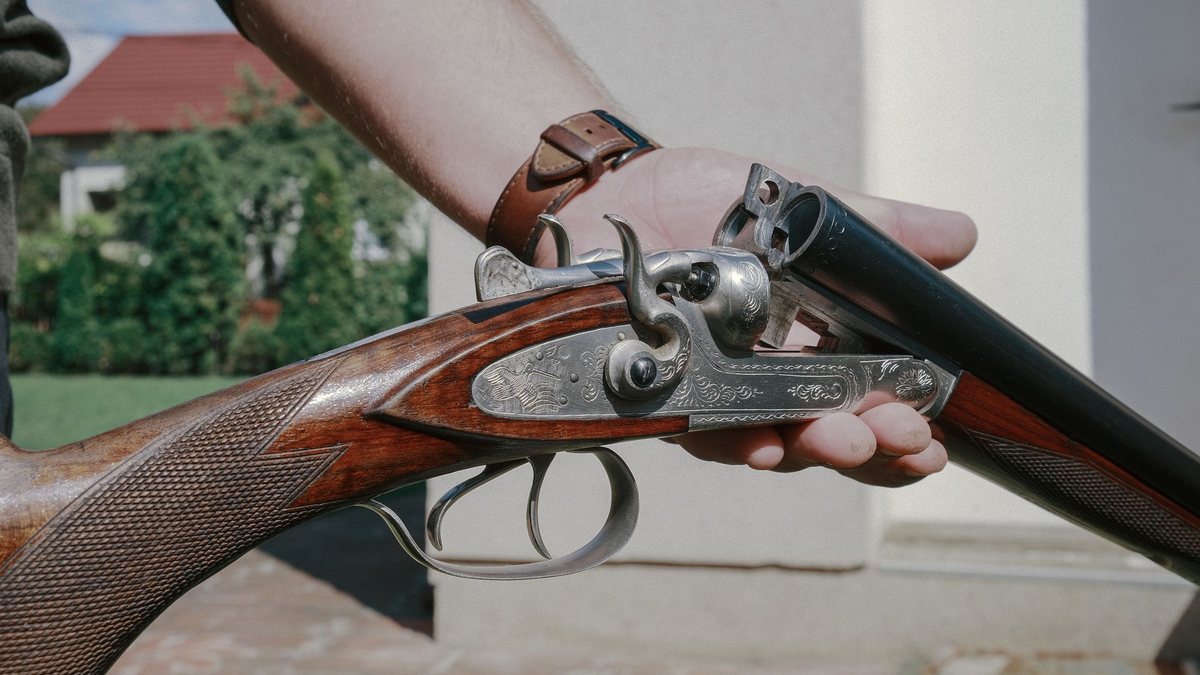
A used shotgun can be one of the best buys in the gun world. Shotguns are often lightly used, built to last for generations and sold for far less than new. You may find a well-kept pump that's taken a few pheasants a year for decades, or an over-under someone bought for trap and shot twice. You may also find a gun with a bulged barrel, a cracked stock or a stuck choke, sold by someone who didn't know or didn't say.
Is an old shotgun so tough that rust is the only thing to check? Is buying used just buying someone else's problems? If it goes bang, is it fine? Many old shotguns are nearly indestructible, some used guns are trouble, and a gun that fires beats one that doesn't. But a few minutes of careful checking separates the bargains from the money pits.
By the end you should understand the legal side of buying a used shotgun in Iowa and how to check the barrel, chokes, action, stock and safety, with specific checks for pumps, semi-autos and break-actions, so you can look over a used shotgun, spot the problems that matter and decide whether it's worth the price.
Buying legally: Dealers, private sales and transfers
When you buy a used shotgun from a licensed dealer, the process is the same as for a new gun. You fill out the federal Form 4473, the dealer runs a background check, and you take the gun home once you're approved.
Private sales work differently. Under federal law, a private seller may sell a shotgun to a resident of the same state without going through a dealer, as long as the seller doesn't know or have reason to believe the buyer is prohibited from having firearms. Iowa does not require a permit or background check for a private sale of a long gun between Iowa residents. If the seller lives in another state, though, the gun must go through a licensed dealer in your state. That's where an FFL transfer comes in: the seller ships the gun to a dealer, and you complete the paperwork and background check there.
Even in a legal private sale, many buyers and sellers choose to go through a dealer for peace of mind, so both sides know the transaction was handled properly. A written bill of sale with the date, the gun's make, model and serial number, and both parties' names is good practice either way. This is education, not legal advice; laws change, so check current federal and Iowa law or ask an Iowa attorney about your specific situation.
Key idea: In-state private sales of long guns are legal in Iowa without a background check, but an out-of-state seller must ship to a licensed dealer. Either way, a dealer transfer protects both sides.
Before you touch it: Safety and a plan
Every inspection starts the same way. Ask the seller to show you that the gun is unloaded, then check it yourself: open the action, look into the chamber and magazine, and feel with a finger if the light is poor. Keep the muzzle in a safe direction the whole time. Keep any ammunition well away from where you're inspecting.
Bring a small flashlight, a clean white card or piece of paper to reflect light down the bore, and the gun's manual or a printed copy if you can find one. If the gun is a model you're not familiar with, read about how it disassembles before you look at it, so you don't force anything.
Plan your inspection in this order: bore and barrel, chokes, action, stock and safety. Doing it the same way every time keeps you from getting distracted by a pretty stock and forgetting to look inside the barrel.
The barrel: Where the expensive problems hide
The barrel is the heart of a shotgun, and barrel problems are the costliest to fix.
Look through the bore
Open the action and point the barrel at a light, or slip a white card into the action to reflect light into the bore. Look from the muzzle end and the breech end. You want a shiny, smooth bore. Light haze or plastic fouling from wads is normal and cleans out. Dark pitting, deep rust or rough patches are not; they affect patterns and can be impossible to remove.
Check for bulges and dents
Hold the barrel up to a light and look along the outside, watching how reflections run along the surface. A bulge or ring shows as a wavy or interrupted reflection. Inside the bore, a bulge looks like a dark ring or shadow. Bulges often come from firing a shell with an obstruction in the barrel, such as mud or a stuck wad. Then run your fingers lightly along the outside of the barrel, feeling for dents or swellings. A dent in a thin shotgun barrel can affect patterns and safety.
Check the rib and muzzle
On a ribbed barrel, look for loose sections of rib or gaps where it should be solid. Check the muzzle for dings or burrs. A small ding at the muzzle may be repairable; a cracked or split muzzle is a serious problem.
Common mistake: Skipping the bore check because the outside looks perfect. A gun can be beautiful on the outside and have a bulged or pitted barrel. Look through the bore every time.
Chokes: Stuck, missing or wrong
If the barrel uses screw-in choke tubes, remove the choke with the proper wrench. A tube that's stuck may have been left in for years without cleaning or lubrication, and freeing it can cost money. A tube that's hard to turn may also mean damaged threads.
Look at the choke's markings and make sure it matches the gun's choke system; tubes from different makers often aren't interchangeable. Check that the threads in the barrel are clean and undamaged. Ask the seller which choke tubes come with the gun, since a missing set adds cost.
For fixed-choke guns, check the barrel markings for the choke. Some older fixed-choke guns weren't designed for steel shot, which matters if you plan to hunt ducks or public areas that require nontoxic shot. Our article on nontoxic shot in Iowa explains how to tell whether a gun can handle steel. Make sure the chokes come out, go back in and suit the shooting you plan to do.
The action: Pumps, semi-autos and break-actions
Each action type has its own weak points.
Pump actions
Work the action slowly several times. It should move smoothly without grinding or catching. Some looseness in the forend is normal on older pumps and doesn't hurt function. Check that the action bars, the metal rails that connect the forend to the bolt, aren't bent. With dummy rounds if the seller allows, check that the gun feeds from the magazine and ejects cleanly.
Semi-autos
Gas-operated semi-autos need clean gas systems to function. Ask when it was last cleaned. If you can look at the gas piston and magazine tube, check for heavy carbon buildup or rust. Look for cracks in the receiver near the stock and check that the bolt locks back on an empty magazine if the model is designed to. A semi-auto that cycled perfectly for its previous owner may need a cleaning or new O-rings, which is cheap; a cracked receiver is not.
Over-unders and side-by-sides
With the action closed, hold the barrel and receiver and try to wiggle them gently. There shouldn't be any play. Open and close the gun; it should lock up firmly. A gun that's "off the face," with a gap between the barrels and the receiver face, needs repair. Check the ejectors or extractors work on both barrels, and look for cracks in the stock behind the receiver, a common stress point on break-actions.
Work the action until you're sure it locks, feeds and ejects as designed.
Stock, safety and trigger
Look closely at the stock where it meets the receiver. Cracks often start at the tang, the thin wood behind the action, and spread under recoil. Check the forend for cracks too. Oil-soaked wood near the action looks dark and soft and can weaken over time. Check that the recoil pad isn't dried out or cracked.
Test the safety with the gun unloaded and pointed in a safe direction. With the safety on, the trigger should not release the hammer when pressed firmly. With it off, the trigger should break cleanly. A safety that doesn't fully block the trigger is a serious problem and needs a gunsmith.
Finally, shoulder the gun. Even a mechanically perfect shotgun is a poor buy if it doesn't fit you. Our article on shotgun fit explains how to tell, and how easy fixes like spacers and comb raisers can help.
Deciding what it's worth
Every used gun has some flaws. The question is which ones matter. Cosmetic wear, like scratches on the stock or bluing worn from handling, usually doesn't affect function and can make a good shooter a bargain. A stuck choke, a dirty gas system or a worn recoil pad are modest costs you can figure into the price. A bulged or deeply pitted barrel, a cracked receiver, a loose break-action or a faulty safety are serious problems that often cost more than the gun is worth to fix.
Compare the asking price with what the same model costs new and in good used condition. Our article on out-of-the-box shotgun quality at different price points helps you judge what a gun was worth to begin with. If you're unsure, ask a qualified gunsmith to look at it before you buy. Pay for a good shotgun, not for a project, unless you want a project.
Practicing an inspection on your own gun
The best place to learn an inspection is on a shotgun you already own. With it unloaded, the action open and all ammunition in another room, look through the bore from both ends with a flashlight and a white card, run your fingers along the barrel and sight along it under a light for waves or bumps, remove and reinstall the choke tube if it has one, and work the action several times. Then check the stock behind the receiver for cracks and test the safety with the muzzle in a safe direction. After a few practice runs, you can inspect a shotgun in about ten minutes and name any problem you'd want priced into a sale.
Putting it together
Buying a used shotgun legally in Iowa is simple from a dealer or another Iowa resident, and an out-of-state purchase must go through a dealer. Start every inspection by confirming the gun is unloaded. Check the bore and barrel for pits, bulges and dents, then the chokes, action, stock and safety, in the same order every time. Separate cosmetic wear from real problems, price in the small fixes and walk away from serious ones.
Check your understanding
Try answering these before you open the answer. If you can decide what to do and explain why, you have it.
1. A seller in Nebraska offers you a shotgun. Can they mail it to your house in Iowa?
No. Because the seller lives in another state, the gun must be shipped to a licensed dealer in Iowa, where you complete the paperwork and background check.
2. You see a dark ring inside the barrel about halfway down. What might it be?
A possible bulge, often from firing with an obstruction in the barrel. Check the outside for a matching swelling and treat it as a serious problem.
3. The choke tube won't come out with the wrench. Is that a reason to walk away?
Not necessarily, but it's a cost to consider. A stuck choke may need professional removal, and the threads could be damaged.
4. An over-under wiggles slightly when closed. What does that tell you?
The lockup may be worn or the gun may be off the face. It needs a gunsmith's evaluation and is a reason to lower your offer or pass.
5. A pump has worn bluing and a scratched stock but a bright bore and smooth action. Good buy?
It can be a very good buy. Cosmetic wear usually doesn't affect function, and the important parts are in good shape.
Where to go next
If this article helped you, we invite you to sign up for email notifications of new blog articles.