
A Guide to Shotgun Ammunition for Turkey Hunting: Tailoring Your Setup for Success
Joseph McLain Nov 07, 2026
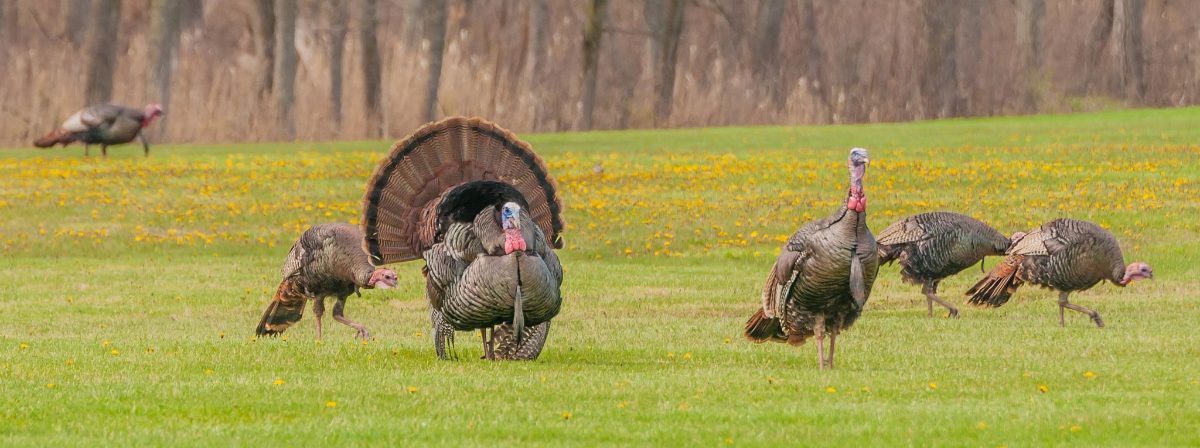
It is the night before opening morning, and every turkey shell you look at promises tight patterns and clean kills. Some are lead, some tungsten and some a "blend." Lead #5s have killed gobblers for decades, and TSS costs several times as much. Which belongs in your gun?
By the end you should understand what each choice does, so you can match shot size, shell length, shot material and choke to your own shotgun, and prove the match on paper before the season starts.
Why turkey hunting needs its own kind of shotgun load
A shotgun fires a cloud of pellets called a pattern. Calling a gobbler into range often ends in one carefully placed shot, and gobblers can be remarkably tough birds. Unlike waterfowl or upland birds, turkeys present three challenges.
- A small vital zone, mainly the head and neck
- Shots at moderate to long distances (30 to 50+ yards)
- A need for dense, uniform patterns
Picture tossing a handful of gravel at a small target. A tight, even spray puts more pieces on it than a thin, scattered one, and each piece must still hit hard enough to matter. That is why turkey loads tend to feature tighter patterns, heavier shot charges (more pellet weight in the shell), and often higher densities or specialized wads that keep pellets together longer.
Key idea: Every turkey-load decision comes back to two questions. Will enough pellets land in the head and neck, and will each one still carry enough energy to be lethal? Shot size, material, shell length and choke each push on one or both answers.
Shot size: Balancing pattern density and penetration
Shot size describes how big each pellet is. A shell has only so much room, so larger pellets mean fewer of them. Think of filling a coffee can with marbles versus BBs. The marbles weigh more each, but the BBs put far more pieces in the can. For lead, turkey hunters usually choose among #4, #5 and #6, and each strikes a different balance. Remember that shot sizes run backward: The bigger the number, the smaller the pellet.
| Size | Best for | What you gain | What you give up |
|---|---|---|---|
| #4 lead (largest) | Long shots (40+ yards) where penetration is critical | Pellets keep their energy and punch through feathers and tissue | Fewer pellets, so a sparser pattern and more skill required |
| #5 lead | Versatile, all-around turkey hunting | A balance of pellet count and pellet energy | Less pattern density than the smaller size and less penetration than the larger |
| #6 lead (smallest) | Close-to-mid-range shots (25 to 35 yards) | High pellet count, dense patterns and less margin for error | Pellets lose energy quickly past 40 yards |
Read each row as a trade. The #4 keeps its energy at distance but leaves a thinner pattern, so your aim and your pattern test have to be good. The #6 forgives small aiming errors, but its light pellets run out of energy past 40 yards. A simple rule is to choose for the distance you will honestly shoot. If nearly all of your shots will come inside 35 yards, lean smaller. If you hunt big open fields, lean larger.
Tungsten Super Shot (TSS) and micro pellets (#7 to #9)
Density is how much weight is packed into a given volume. Modern tungsten, particularly Tungsten Super Shot (TSS), offers densities up to about 18 g/cc, compared with about 11 g/cc for lead. A denser pellet holds its energy better, so even tiny pellets in sizes #7 to #9 still hit with substantial energy. Small pellets also mean more pellets, so TSS yields extremely dense patterns on a turkey's head and neck at 40+ or even 60+ yards. TSS shells are more expensive, but many hunters find the performance worth the investment. Our article on innovative shot designs looks at high-density shot more broadly.
Shell length and gauge: How much can you shoot comfortably?
A longer shell holds more pellets and can push them faster, but every gain shows up in your shoulder.
- 2.75-inch. Lower pellet count and velocity potential, with minimal recoil. It suits youth and recoil-sensitive shooters, closer ranges, and smaller gauges such as the 20-gauge.
- 3-inch. The most common "happy medium," with adequate payload for mid-to-long range and manageable recoil.
- 3.5-inch. Maximum pellet load, typically at higher velocities. Patterns and range can be impressive, but some hunters find the recoil punishing over a long season or many practice sessions.
Most hunters land on the 3-inch shell because it gives up little while staying comfortable. A shell you dread firing is a shell you will not pattern, and an unpatterned load is a guess. Always confirm that your chamber is rated for the shell length you plan to shoot.
For gauge, the 12-gauge is the gold standard for turkey hunting, with broad ammunition availability. The 20-gauge is increasingly popular because TSS extends the range and efficacy of smaller guns. The 10-gauge is less common and was historically used for maximum pellet counts, but modern TSS can make it overkill for many scenarios.
Lead, bismuth, tungsten and steel: What your pellets are made of
Material controls density, and density controls how much energy a pellet still carries at 40 yards. It also affects cost, legality and what your choke can take.
| Material | Density (approx.) | Strengths | Trade-offs |
|---|---|---|---|
| Lead | ~11 g/cc | Affordable, time-tested, many shot sizes | Toxic to wildlife if left in the field, restricted in some states or public lands, heavier felt recoil in higher payloads |
| Bismuth | ~9.6 g/cc | Non-toxic, softer than steel and safe for older shotguns, better downrange energy than steel | Slightly less dense than lead, and costs more than lead but less than tungsten |
| Tungsten (TSS) | ~18 g/cc | Extreme density and penetration, lethal energy beyond 50 yards in #7 to #9, denser patterns | Highest cost, and often needs a choke rated for harder shot to prevent scoring or damage |
| Steel | ~7.8 g/cc | Required for waterfowl in many jurisdictions | Relatively low density, so rarely used for turkeys |
Start with the density column, then read right to see what each step costs. Lead is where many hunters begin because it is affordable and proven. Bismuth gives up a little density but is non-toxic and gentle on older guns. Tungsten is the performance leader, at the highest price. Steel sits at the bottom, which is why it is rarely used for turkeys. Turkey hunting typically does not mandate steel except in specific "no lead" areas, and even there tungsten or bismuth are more effective choices for ethical kills. If you hunt waterfowl too, our guide to shotgun ammunition for duck hunting covers that side.
Specialized turkey loads: Blends, buffers, speed and wads
Makers have developed several ways to solve specific turkey problems. A wad, the plastic piece that carries the pellets down the barrel, is the focus of some of them.
- Blended loads. These combine two or more shot sizes to balance penetration and pattern density, so one shell adapts to different ranges if you are unsure how close the bird will come. HEVI-Shot Magnum Blend, for example, combines several shot sizes in one shell.
- Buffered loads. Granulated plastic or resin in the shot column reduces pellet deformation. Winchester Long Beard XR uses "Shot-Lok" resin. Rounder pellets make tighter, more uniform patterns, especially at 40+ yards.
- High-velocity loads. These raise muzzle velocity (1,300+ fps) for a flatter trajectory and shorter lead time on moving turkeys. They may also bring heavier recoil, and faster shot columns can blow patterns if not well matched to the choke and wad.
- Flight control wads. Federal's FliteControl and FliteControl Flex wads keep shot together longer before it "peels away." Some wads are designed for minimal choke constriction contact, so confirm compatibility with your choke.
You will not need all four. If you cannot predict how close the bird will come, a blend is a hedge. If your patterns open up past 40 yards, a buffered load or flight control wad may help. Treat high-velocity loads with the most caution, because speed can hurt a pattern as easily as help it. For tungsten, Federal Premium TSS and HEVI-Shot HEVI-13 / HEVI-18 TSS are non-toxic, extra-high-density options. Plated lead loads, such as copper-plated shot, are a middle path: Harder pellets that deform less than plain lead, at a lower price than tungsten.
Choke considerations: Extra-full and turkey-specific
A choke is the tapered tube at the muzzle that squeezes the shot column. Tighter constriction keeps pellets together longer. Turkey-specific ammunition needs a compatible choke to tighten patterns effectively, and Demystifying Shotgun Chokes is a good companion read.
- Extra-full or turkey-specific chokes. Typically .660 to .665 constriction for 12-gauge, though it varies by brand. They focus the shot column to keep lethal density out to 40+ yards.
- Tungsten-safe chokes. Tungsten is very hard and can damage chokes not rated for it, so check the manufacturer's guidelines for markings such as "TSS safe" or "Hevi-Shot compatible."
Common mistake: Assuming any choke will take any shot. Before shooting TSS or other hard shot, confirm that your choke is rated for it.
Pattern testing: How to know what your shotgun really does
No matter how advanced the shell, confirm its performance. What works on paper may not mesh with your specific gun, choke or style, so pattern testing is the most important step of all.
A pattern test at turkey distances
Only a pattern test tells you how far your gun, choke and shell can reach. At a range with a safe backstop, with eye and ear protection on and the muzzle downrange, hang turkey head-and-neck targets on a large backer at known distances, such as 20, 30, 40 and 50 yards. After each shot, count the pellets in a 10-inch circle around the vital zone and note the count with the distance, choke and shell, along with how the recoil and muzzle jump felt. If patterns are sparse or inconsistent, change one thing at a time, the choke constriction, shot size or brand, so you know which change made the difference, and test again in conditions like your hunt. Your effective range is the farthest distance at which you consistently see roughly 100 or more pellets in the circle.
Ethics, rules and putting it all together
Turkeys are resilient, and a marginal hit can lead to a lost or crippled bird. Dense patterns from tungsten or high-quality lead support ethical harvests, and our article on hunting ethics and a clean, humane kill goes deeper. Rules matter too. Some states or public lands ban lead for upland or turkey hunting, certain regions restrict shot sizes above a stated limit, and gauge restrictions are rare but worth verifying for specialized hunts or events. Check local regulations and confirm current rules with your state wildlife agency; Iowa, for example, publishes allowed gauges and shot sizes for turkey in its annual hunting regulations. Non-toxic bismuth or tungsten is a good choice where lead is restricted, or where you want a smaller ecological footprint.
Now fit the pieces together with two hunters. The first expects most shots under 35 yards. A lead load in #5 or #6, in a 3-inch shell with a turkey choke at the desired constriction (.660 to .665 for a 12-gauge), makes a dense, forgiving pattern. The second works open fields and might stretch a shot to 50 yards. That hunter should consider #4 lead or tungsten (#7 to #9 TSS) with a choke rated for hard shot. Either hunter should ask whether a 3-inch or even 2.75-inch shell in tungsten delivers comparable performance with less recoil than a 3.5-inch.
Finally, even the best load fails if you cannot place pellets on the head and neck. Practice mounting the shotgun and aligning the sights, or red-dot optics if you use them, and keep records of pellet counts and combinations. Optimizing your turkey load is part science and part personal preference, and pattern testing remains the final arbiter. When one shot often makes the difference, that careful approach gives you the best chance at a clean, humane kill.
Check your understanding
Try answering these before you open the answer. If you can decide what to do and explain why, you have it.
1. Your friend's #9 TSS load kills gobblers at 45 yards, but #7 lead runs out of steam well before that. How?
Density. TSS runs up to about 18 g/cc, compared with about 11 g/cc for lead, so even small pellets hold substantial energy at distance. Smaller pellets also mean more of them, which makes a denser pattern.
2. A hunter wants 3.5-inch shells for range, but the recoil makes practice unpleasant. What are the options?
A 3-inch or even 2.75-inch shell in tungsten might deliver comparable performance with less recoil, and it is a load the hunter can actually practice and pattern.
3. You switch from lead to TSS and want to keep your choke. What should you check, and why?
Check that the choke is rated for hard shot. Tungsten is very hard and can score or damage chokes that are not rated for it.
4. Your test shows 100+ pellets in the 10-inch circle at 30 yards but a sparse pattern at 40. What does that tell you?
Your setup is dependable at 30 yards but not yet at 40. Try a different choke constriction, shot size or brand and test again, or limit your shots to the distance where the pattern holds.
Where to go next
Start with Demystifying Shotgun Chokes, because the choke is the other half of every pattern you tested. Then read innovative shot designs to see how high-density and non-spherical shot are changing what a pellet can do. Before opening day, The Legalities of Hunting helps you confirm the rules that apply to you.
If this article helped you, we invite you to sign up for email notifications of new blog articles.