
Trap Shooting Fundamentals: Stance, Hold Points, Timing and Follow-Through
Joseph McLain Nov 07, 2026
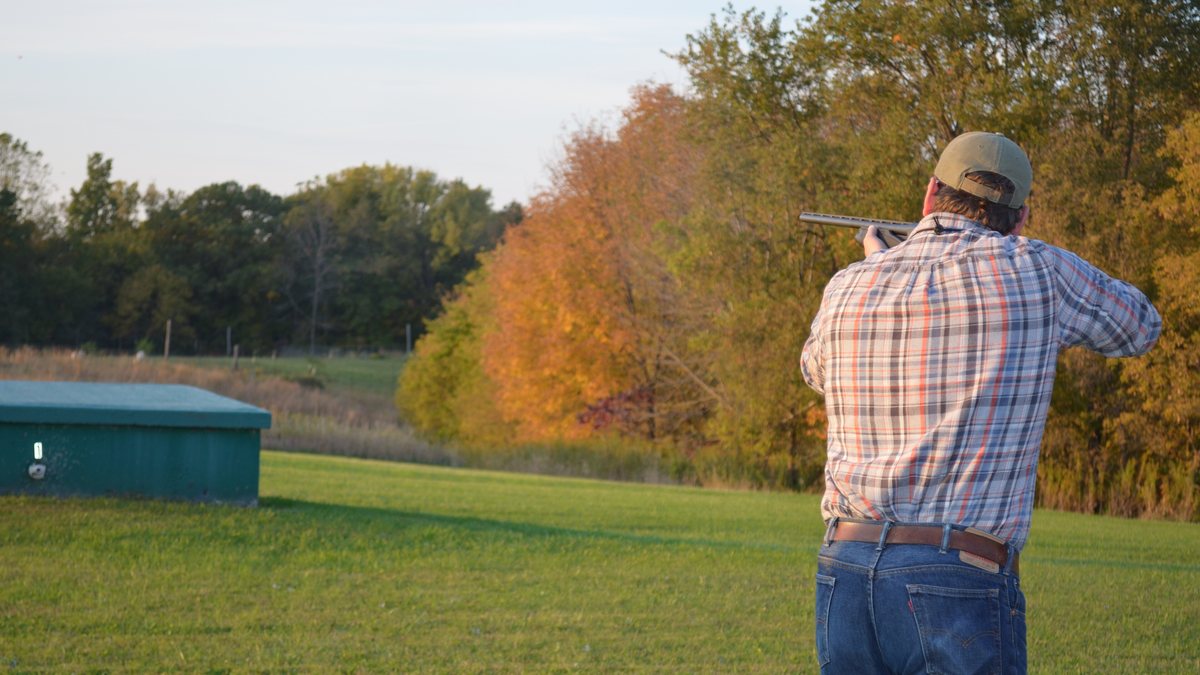
You have shot your first few rounds of trap, and the scores are all over the place. Should you hold the gun higher above the trap house? Shoot faster? Move your feet? Every miss seems to have a different explanation. The good news is that trap rewards a small number of fundamentals done the same way every time, and once you understand why each one matters, most of those questions answer themselves.
By the end you should understand what the trap target is doing when it leaves the house, why your stance, gun hold and eye hold have to fit that flight, and how timing and follow-through decide whether the shot arrives where the target is going, so you can set up a consistent stance and hold for each station, explain why most trap targets are missed under or behind, and practice in a way that fixes the most common faults.
What the trap target is doing
In American trap, five shooters stand in an arc on the 16-yard line behind a single trap house. The machine inside throws targets away from the shooters at varying angles to the left and right, so you do not know exactly where the next one will go. Each target is rising as it leaves the house and is going away from you. That combination shapes everything else. A rising, going-away target is broken by shooting slightly over it and on its line, and the target is easiest to break early, before it slows, drops and gets farther away. Handicap trap moves shooters back from 17 to 27 yards, which makes the same targets farther and smaller. If you are still choosing between games, our article on trap versus skeet explains how the two differ.
Key idea: Trap is about reading a rising, going-away target and moving the gun smoothly onto its line. Stance, hold points, timing and follow-through all exist to make that one move the same every time.
Stance: A foundation that lets you move
A good trap stance is balanced and slightly aggressive, with your weight a little forward on your front foot, knees soft and shoulders relaxed. Your body should be able to rotate smoothly from the hips to either side without your arms doing all the work. Picture a batter waiting for a pitch: Settled, balanced, ready to turn. A stance that is too upright and stiff makes you swing with your arms, which causes the gun to arc and drop off the target's line. A stance with too much weight on the back foot makes recoil push you off balance and slows your second shot.
Foot position matters because the targets come from a known area. Many coaches suggest pointing your front foot roughly toward the area where you expect to break the target, so your body is centered on the shot rather than straining to reach it. As you move from station to station, adjust your feet so you are always set up for the middle of that station's likely target angles. Check that you can rotate comfortably to both edges of the target's range without lifting your heels.
Gun mount and cheek weld
Trap is usually shot with the gun pre-mounted before you call for the target. That gives you time to get the mount right every time: The butt in the pocket of your shoulder, your cheek firmly on the comb in the same spot, your eye looking straight down the rib. If your cheek floats or lifts, your eye is no longer aligned with the barrel, and the gun shoots somewhere other than where you are looking. Most trap guns are set up to shoot slightly high, because the targets are rising, so a consistent cheek weld is what lets that built-in "float" work for you.
Fit matters here more than almost anything else. A stock that is too long, too short or the wrong height forces you to hunt for your position on each shot. Our guide to selecting a shotgun for trap and skeet covers fit and adjustable combs.
Hold points: Where the gun and your eyes start
Before you call for the target, decide two things: Where the gun is pointed (the gun hold) and where your eyes are looking (the eye hold). These are separate, and confusing them is one of the most common beginner faults.
- Gun hold. Most shooters hold the muzzle somewhere above the front edge of the trap house, at a height that lets the target appear just below or near the muzzle as it rises. A hold that is too low covers up the target as it comes out; a hold that is too high forces a long swing down and out. On the outside stations, the gun is usually held toward the side of the house where the harder angle will go.
- Eye hold. Your eyes look out past the muzzle, softly focused into the area where the target will first appear, usually just above the house. Looking at the bead or the end of the barrel is a mistake; your eyes need to find the target the instant it appears, and that requires looking where it will be.
Hold points differ from shooter to shooter, and from station to station. The principle is to set them so that the target appears close to the muzzle with a short, smooth move to its line. Write your hold points for each station down after a good round so you can repeat them.
Timing: Seeing the target before you move
The single most common way to miss a trap target is to move the gun before your eyes have locked onto the target. When you call "pull," let your eyes find the target first, see its line clearly, then move the gun to it. The move should feel unhurried even though it is quick. Shooters who "chase" the target with the gun before seeing it tend to overshoot or come in behind.
Timing also has a rhythm. A shot that is too slow lets the target get farther away, slow down and start to drop, which makes it harder. A shot that is rushed tends to be poorly pointed. The goal is a consistent tempo that you use on every target, which comes from practice rather than from forcing yourself to be faster. If you notice that your misses come on the targets you shot quickest, slow your gun down and let your eyes lead.
Common mistake: Looking at the gun instead of the target. When your focus drifts to the bead or rib, your eyes cannot track the target's line, and you will stop the gun or shoot behind. Keep a hard focus on the leading edge of the target, and let the gun come to where you are looking.
Follow-through: Finishing the swing
Follow-through means keeping the gun moving on the target's line through the shot and for a moment after. Shot does not leave the barrel instantly, and a going-away target is still moving while your shot travels. If you stop the gun to "check" the shot, you will usually shoot behind or under. Think of a golfer finishing a swing: The club keeps going after it strikes the ball, because stopping early ruins the strike. Keep your cheek on the stock and your eyes on the target until you see it break, then dismount.
Reading your misses
Your misses tell you what to fix if you know how to read them.
| What you see | Likely cause | What to try |
|---|---|---|
| Missing under rising targets | Lifting your head, gun hold too high, or stopping the gun | Keep cheek down, check hold height, follow through |
| Missing behind angled targets | Moving before seeing the target, or stopping the swing | Let your eyes lock on first, keep the gun moving through the shot |
| Missing over straightaways | Gun set to shoot high plus a high hold | Lower the hold slightly; pattern-check your point of impact |
| Inconsistent everywhere | Changing stance, mount or tempo between shots | Write down and repeat your setup on every station |
Treat the table as a starting point, not a diagnosis. A coach or experienced shooter standing behind you can often see the fault in a few shots, because they can watch your head, the muzzle and the target at once. Knowing where your gun actually shoots also matters, which is why patterning the gun at trap distance with your usual choke is worth doing once. Our article on shotgun chokes explains how constriction shapes the pattern.
Practicing the fundamentals
Three drills for a practice session
Three simple drills turn fundamentals into habits. At home, with the shotgun unloaded, the action open and all ammunition in another room, mounting smoothly to the same cheek position twenty times trains your eye to land on the rib without adjustment. At the range, with eye and ear protection, five targets from one station while focusing on a single fundamental, such as letting your eyes find the target before moving, build that skill; score only whether you did the fundamental, not whether you hit. And after a good round, writing down your gun and eye hold and foot position for each station gives you a setup to start from next time. When you can shoot a round with the same setup and tempo at every station, your misses start to fall into one pattern you can name and correct.
Equipment that helps beginners
You do not need specialized equipment to learn trap. Any reliable 12- or 20-gauge shotgun that fits you will do, with a modified or improved modified choke for 16-yard targets and standard target loads of #7½ or #8 shot. A gun that fits and a load you can shoot comfortably for a full round matter far more than an expensive trap gun. If recoil makes you flinch, a heavier gun, a softer load or a recoil pad will improve your scores more than any technique tip. Our guides to common target loads and 20-gauge target loads cover ammunition choices, and eye and ear protection are required every time.
Putting it together
Hold height really does decide whether the target appears where you can see and reach it. Timing really does matter, though the fix is usually letting your eyes lead rather than shooting faster. And your feet really do decide whether you can rotate smoothly to the target. The way to put it together is to set up the same balanced stance and mount every time, choose gun and eye holds that bring the target out near the muzzle, see the target clearly before moving, keep the gun moving through the shot, and read your misses for patterns rather than chasing each one.
Check your understanding
Try answering these before you open the answer. If you can decide what to do and explain why, you have it.
1. On station 3 you hold the muzzle just above the trap house but look farther out. What are those two holds called, and why are they different?
The gun hold is where the muzzle points before you call for the target; the eye hold is where your eyes look, out past the muzzle where the target will first appear. Looking out lets your eyes pick up the target sooner and more clearly.
2. Why are many trap targets missed under the target?
Trap targets are rising. Lifting your head off the stock, holding too high or stopping the swing all tend to send the shot under the target.
3. You keep swinging the gun the instant you hear the trap release, then chasing the target. What would help?
Let your eyes find the target before you move the gun. Moving first means chasing an unknown line; seeing it first lets you move once, smoothly, onto its actual path.
4. You hit the target right where your bead was, but the pattern landed behind it. What part of your swing likely failed?
Follow-through. Stopping the gun at the shot lets the target keep going while the pellets travel, so they arrive behind or under it. Keep the gun moving on the target's line through and after the shot.
5. A new shooter flinches every few shots. What should change first: Technique or equipment?
Equipment and load. Better gun fit, a heavier gun, a lighter load or a recoil pad usually fixes flinching faster than technique tips.
Where to go next
If you have not chosen a gun yet, start with how to select a shotgun for trap and skeet. To understand the shells you are shooting, read our comparison of common target loads. If you also shoot skeet, skeet shooting tips on leading the target explains how crossing targets differ. And for the protection every round requires, see the importance of eye and ear protection.
If this article helped you, we invite you to sign up for email notifications of new blog articles.