
Tactical Shotgun Selection: Key Considerations
Joseph McLain Nov 07, 2026
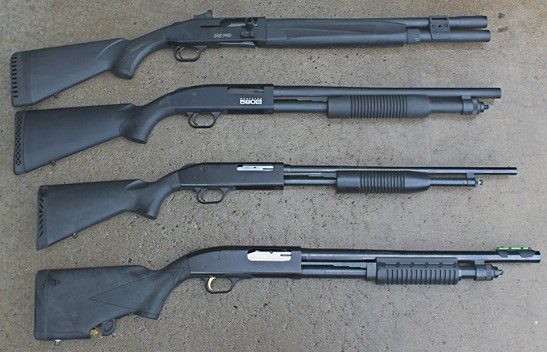
You have a simple question: which shotgun is right for protecting your home? The first choice is pump or semi-automatic, and then the vocabulary starts: an 18-inch barrel, ghost-ring sights, a tube or a detachable magazine, buckshot or slugs.
By the end you should understand each of those features in plain terms, so you can decide what job your shotgun will do, choose a barrel, action, magazine, stock and sights to match, and pick ammunition and a practice routine that fit.
Start with the job: What you want a tactical shotgun to do
Tactical shotguns have grown into versatile firearms used in home defense, law enforcement and competitive shooting. Their appeal lies in their adaptability, their robust performance under stress, and the variety of configurations available. Because one word covers very different tools, your intended use largely determines which configuration is best.
| Use | What matters most | Typical features |
|---|---|---|
| Home defense | Compact size, quick handling and manageable weight for close quarters, plus rapid target acquisition and enough power for the job | Shorter barrels (typically 18 to 20 inches), lightweight synthetic stocks, simple and robust operating mechanisms, often pump-action |
| Law enforcement and military | Durability and reliability in rugged, high-stress environments, plus high magazine capacity and specialized accessories such as breaching attachments | Rugged construction, often heavier barrels, pump-action or semi-automatic platforms, and accessories such as muzzle brakes, adjustable stocks and integrated optics |
| Competition (3-Gun and tactical matches) | Fast cycling, precise control, and customization for quick reloads and enhanced accuracy | Semi-automatic systems for rapid follow-up shots, lightweight designs to reduce fatigue in extended matches, and accessories such as detachable magazines and quick-change choke tubes |
The three uses pull in different directions. A home shotgun is judged by how easily it moves through a hallway, a duty shotgun by how much abuse it takes and how many rounds it holds, and a match shotgun by how quickly you can shoot and reload it. Recreational shooters can borrow from any row, as long as they understand what each feature costs.
Key idea: Choose the job first. Every feature that follows is a trade-off, and your job tells you which side of the trade matters.
Barrel length: Handling versus velocity
Barrel length is a major factor in how a shotgun handles and performs. Picture carrying a short broom handle and a long pole through a hallway. The short one clears the corner, and the long one catches.
Short barrels, from 18 to 20 inches, are more maneuverable in confined spaces and are typically lighter, which suits home defense. The cost is reduced muzzle velocity compared with longer barrels, which can affect effective range. Longer barrels, at 22 inches and up, give somewhat higher muzzle velocity and a longer sight radius, which helps with slugs at longer distances. They also swing more smoothly, which some competitors prefer. The cost is extra length and weight that reduce maneuverability in tight spaces.
For example, the Mossberg 590 Tactical is available with an 18.5-inch barrel, which makes it a popular choice for home defense because of its compact size and reliable performance. Our article on the Mossberg 5xx series shows how the family fits together. Federal law sets a floor: A shotgun barrel shorter than 18 inches, or an overall length under 26 inches, makes it a short-barreled shotgun regulated under the National Firearms Act. If you will mostly shoot in rooms and hallways, favor handling. If you will shoot across open ground, a longer barrel earns its weight.
Pump-action or semi-automatic: What you gain and what you give up
The action is the mechanism that loads, fires and ejects each shell. In a pump-action, you slide the forend back and forward by hand. In a semi-automatic, the energy of the shot cycles the action for you. The right choice depends largely on your intended application and personal preference.
Pump-action shotguns are known for reliability and simplicity. They are typically more rugged and easier to maintain, and the tactile feel of working the action reassures some shooters in defensive situations. The Remington 870, a long-running pump-action, is known for its durability in law enforcement and home defense, and you can learn more in our guide to the Remington 870 series. The disadvantage is that manual cycling can slow follow-up shots in rapid-fire scenarios.
Semi-automatic shotguns cycle faster and need less manual effort, which suits high-volume or competitive use. They generally offer smoother recoil and quicker follow-up shots. The Benelli M4 is a premier semi-automatic favored by military and law enforcement for its rapid cycling and reliability in demanding conditions. The trade-offs are that semi-automatics tend to be more expensive and may need more maintenance because they have more moving parts.
Start with a pump if you value simplicity, ruggedness and easy upkeep. Look at a semi-automatic if you shoot a lot, compete, or want the fastest follow-up shots.
Magazines, stocks and sights: Fitting the shotgun to you
Magazine capacity
Magazine capacity affects how many rounds you can fire without reloading, which matters in competitive and defensive situations. Tubular magazines, common in many tactical shotguns, typically hold 4+1 to 8+1 rounds, where the "+1" is a round in the chamber. The design is streamlined and inherently robust, but reloading is slower than with detachable magazines.
Detachable magazines are found in some modern tactical shotguns. They enable faster reloads and often increase overall capacity. The Beretta 1301 Tactical is an example, an excellent choice for scenarios where quick reloads are crucial. Decide how much reload speed your job actually needs.
Stock configuration
The stock is critical for comfort, control and overall shooting performance. Fixed stocks provide excellent stability and consistency. Adjustable or collapsible stocks let you customize the length of pull (the distance from the trigger to the end of the stock) and the comb height (where your cheek rests) for a better fit, which is particularly useful in tactical or competitive scenarios. Pistol grips can enhance control and handling, especially in close-quarters engagements. The Winchester SXP Defender, for example, offers both traditional and pistol-grip stock configurations, giving versatility based on shooter preference and application.
A fit check before you buy
A shotgun that fits shoots where you look. With the muzzle in a safe direction, your finger outside the trigger guard and the action open to confirm it is unloaded, close your eyes, mount it as you would to shoot, then open them. Your eye should land on the sights or bead without lifting or tilting your head, and you should be able to reach the safety and work the controls comfortably. Trying each stock option the same way shows which one puts your eye in the same place every time.
Sights and optics
Optics play a vital role in target acquisition and accuracy. Ghost-ring sights, which use a large thin aperture for the rear sight, give quick, intuitive sighting that is especially useful in tactical situations. Optics-ready models let you mount a red dot or reflex sight for faster target acquisition and enhanced accuracy. The Benelli M2 Tactical, for example, is an optics-ready shotgun favored by competitive 3-Gun shooters for its ability to mount red dots or reflex sights. Our guide to rail systems explains how those mounts attach.
Tactical shotgun ammunition: Matching the load to the job
Selecting the right ammunition is as important as choosing the right firearm, because different applications call for specific loads. Here is how the common loads compare.
| Load | What it is | Where it fits | What to watch |
|---|---|---|---|
| Buckshot (.33-caliber pellets) | Multiple .33-caliber pellets that balance power and spread | Standard for law enforcement and home defense | Pellets spread with distance |
| Buckshot (smaller pellets) | Multiple smaller pellets | Confined spaces and home defense | Can reduce, but not eliminate, the risk of over-penetration |
| Slugs | A single large projectile | Longer ranges, hunting and tactical applications | Potentially over-penetrative in tight spaces |
| Combination loads (buck and ball) | Buckshot blended with a slug | Versatility across different ranges | Check how it patterns in your gun |
| Less-lethal rounds | Rubber buckshot or bean bags | Law enforcement | Non-lethal options for duty use |
The word to understand is over-penetration, meaning a projectile that passes through its target or a wall and can endanger people beyond. Indoors, that risk is why prioritizing loads that minimize over-penetration, such as smaller pellets, may be wise for home defense (though any buckshot can still pass through interior walls), and why a slug, however effective at longer ranges, can be a poor fit in tight spaces. Always know your target and what is beyond it, as our article on firearm safety for beginners explains. For a deeper look at defensive loads, see Selecting the Right Personal / Home Defense Ammunition.
The load must also suit the platform. Pump-action shotguns are reliable with most load types, and you can consider low-recoil loads for home defense. Semi-automatics may require higher-velocity ammunition to cycle consistently, so check your firearm's specifications and confirm that your chosen load runs in your gun. Hunting or tactical applications might benefit from slugs or combination loads.
Two examples show the idea. Federal FlightControl Buck delivers tight, controlled patterns that suit defensive scenarios. Brenneke Tactical Slugs provide consistent performance for longer-range engagements.
Comparing loads on paper
Your own targets show how each load behaves in your shotgun. With eye and ear protection and under the range rules, a group with each of two loads that fit your job, such as buckshot and a slug, at each distance your range allows, such as 25, 50 and 75 yards, shows how the pattern or group spreads with distance. A different barrel length, if you can try one, shows its effect too. The load whose spread you can trust at your distances is the one for your purpose.
Recommended tactical shotgun models
To put those considerations in context, here are tactical shotguns that excel in various applications.
| Model | Action type | Key features | Use case |
|---|---|---|---|
| Mossberg 590A1 | Pump-action | 18.5-inch barrel, rugged design, simple, reliable | Home defense, law enforcement |
| Remington 870 | Pump-action | Proven reliability, customizable with various stocks | Home defense, tactical applications |
| Benelli M4 | Semi-automatic | Fast cycling, low recoil, used by military and LE | Tactical use, competition |
| Beretta 1301 Tactical | Semi-automatic | Detachable magazines, fast reload, reliable cycling | Home defense, tactical, 3-Gun |
| Winchester SXP Defender | Pump-action | Versatile stock options, lightweight, easy to handle | Home defense, recreational shooting |
To use the table, sort by action type first, then match the use case to your job. Specifications change over time, so confirm current details with the manufacturer or with us before you buy.
Accessories that earn their place
A tactical shotgun can be optimized with the right accessories. Add only those that solve a real problem for you, since each one adds weight and cost.
- Weapon lights. They improve target identification in low-light conditions. Dedicated forend lights such as SureFire's DSF models replace the factory forend on shotguns like the Remington 870.
- Shell carriers. They keep extra ammunition within quick reach in dynamic situations. The Mesa Tactical Side Saddle attaches to compatible shotguns and keeps extra shells at your fingertips.
- Choke tubes. They let you adjust the shot pattern for different applications. Carlson's Tactical Breacher Choke not only enhances shot pattern control but can also serve as a door-breaching tool.
For a home shotgun, the light matters most, because you must be certain of your target before you ever fire. It helps you identify a target but does not replace the rule to know what is beyond it.
Building a tactical shotgun training routine
Improving your skills takes regular practice and a structured routine that covers the fundamentals. Safety comes first. Verify any shotgun you practice with is unloaded, keep live ammunition out of the room for dry-fire, and keep the muzzle in a safe direction.
For daily practice, use dry-fire at home with snap caps (dummy shells that protect the firing mechanism and make the drill safe to repeat). Practice your grip, stance, mount and trigger pull, and focus on a consistent pre-shot routine.
At regular range sessions, start with static targets at short distances, such as 15 to 25 yards, to reinforce consistent sight alignment and trigger control. Then fire groups at various distances (25, 50 and 75 yards) to see how barrel length and ammunition type affect group size. Add transition drills by setting up multiple targets and engaging them in rapid succession. Then add dynamic drills with moving targets or time-based drills to improve rapid target acquisition and follow-through. Follow the range rules for every drill, and never trade safe gun handling for speed.
Two specialized drills round out the routine. Practice indoors to build fundamentals, then move outdoors to learn how wind and lighting affect your shooting. Practice reloading from a side saddle or shell carrier to build speed and confidence in a defensive scenario.
Making your choice
Selecting a tactical shotgun is a personal decision based on your intended use, the features you need and your performance goals. Home defense calls for a compact, maneuverable shotgun with a short barrel and low-recoil loads. Law enforcement and military applications prioritize durability, capacity and accessories, and competition values fast cycling and precision. The pump and the semi-automatic each win for a different job. Whatever you choose, make sure it fits you, pattern your load in it, and keep up your live-fire and dry-fire drills.
Check your understanding
Try answering these before you open the answer. If you can decide what to do and explain why, you have it.
1. Why is an 18 to 20 inch barrel favored for home defense, and what do you give up?
A shorter barrel is more maneuverable in confined spaces and typically lighter. You give up some muzzle velocity compared with longer barrels, which can affect effective range.
2. A friend says a semi-automatic is always the better choice. How would you respond?
Semi-automatics cycle faster and give smoother recoil and quicker follow-up shots, but they tend to cost more and may need more maintenance. Pumps are simpler, more rugged and easier to maintain, so the right choice depends on the job.
3. What is over-penetration, and how does it affect your choice of load for home defense?
It is a projectile passing through its target or a wall and endangering people beyond. Smaller pellets can reduce that risk in confined spaces, while slugs can be over-penetrative in tight spaces.
4. You switch to a low-recoil load and your semi-automatic stops cycling reliably. What is a likely reason?
Semi-automatics may require higher-velocity ammunition to cycle consistently. Check your firearm's specifications and test the load in your gun.
5. You've only practiced at an indoor range. What will an outdoor range teach you that indoor practice can't?
Indoor practice builds fundamentals in controlled conditions. Outdoors you learn how wind and changing light affect your patterns, your sight picture and your shooting.
Where to go next
If budget is part of your decision, Out-of-the-Box Shotgun Quality shows what to expect at different price points. If the choke tube caught your interest, Demystifying Shotgun Chokes explains how the muzzle shapes your pattern. And if the shotgun will live in your home, Proper Gun Storage covers how to keep it secure when you are not using it.
If this article helped you, we invite you to sign up for email notifications of new blog articles.