
Sporting Clays for Beginners: How the Game Works and How to Shoot It
Joseph McLain Nov 10, 2026
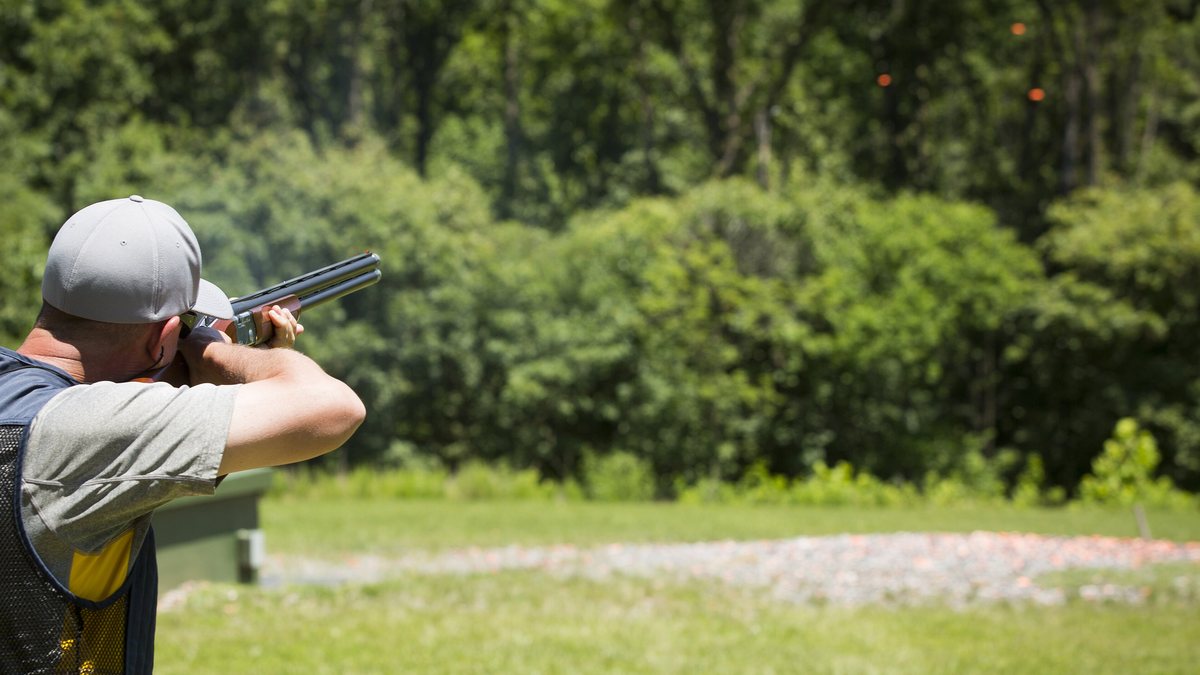
Picture a coworker who shoots a little trap in the summer and hunts pheasants every fall. A friend invites him to a sporting clays course, and he has no idea what to expect. Is it just trap with more walking, or a different game entirely?
Sporting clays uses the same clay targets and shotguns as trap, but the targets fly very differently from station to station, which makes it harder in some ways and excellent practice for bird hunting. It rewards the shooter who thinks before calling for the target. A beginner who understands how a course is laid out, why the targets fool the eye and how to plan each station breaks more targets and enjoys the walk.
What sporting clays is
Sporting clays is often called golf with a shotgun. Instead of shooting from a few fixed positions on one field, you walk or ride a course of stations spread through woods, fields and along ponds. At each station, machines throw targets along paths designed to resemble flushing pheasants, crossing ducks, springing teal, bounding rabbits and other game.
A typical round is 50 or 100 targets spread across 10 to 15 stations, usually shot in small groups called squads. Each station shows a different set of target paths, speeds and distances. In the United States, the National Sporting Clays Association sets the rules for registered competition, though many clubs run casual rounds with a simple card.
Think of trap as a batting cage and sporting clays as a real ballgame. In the cage, every pitch comes from roughly the same place. In the game, every pitch is different. That is why sporting clays rewards planning each station rather than shooting every target the same way.
How it differs from trap and skeet
Trap and skeet each throw targets on a known pattern from fixed houses, which makes them excellent for building a smooth, repeatable swing. Our guide to trap vs. skeet explains both. Sporting clays changes three things.
- Variety. Targets cross, climb, drop, roll and come toward or away from you, at speeds and distances that change from station to station.
- Target types. Besides standard clays, courses use smaller, thinner, flatter and heavier targets that fly and break differently.
- Pairs. Many stations throw two targets, either together or one after the other, and you must plan both shots.
Of these, variety is what makes sporting clays both harder and better practice for hunting. A trap shooter's score might drop the first time, and that is normal. You give up the repetition that grooves a single swing in exchange for practice reading new targets. Treat your first rounds as learning, not scoring.
The targets you will see
Sporting clays courses use several target types, and each behaves differently in the air.
| Target | What it looks like | How it flies |
|---|---|---|
| Standard | The usual 108mm dome-shaped clay | Steady, slows gradually |
| Midi | Smaller, about 90mm | Starts fast and slows quickly, looks farther than it is |
| Mini | Very small, about 60mm | Fast and easy to overestimate in distance |
| Battue | Thin, flat disc | Knifes through the air, then often turns and drops |
| Rabbit | Heavy, thick-edged disc | Rolls and bounces along the ground |
The lesson in the table is that size and shape fool the eye. A midi looks farther and slower than it is, so shooters often miss behind it. A battue shows almost no face when seen edge-on, then suddenly shows its full face when it turns. A rabbit can hop unexpectedly. Courses also throw standard targets on special paths, such as a teal springing almost straight up or a looper arcing like a rainbow. Watch how a target actually flies before you decide where to shoot it, because your first impression is often wrong.
Gun, chokes and shells
Most sporting clays shooters use a 12-gauge over/under or semi-automatic, usually with a 28- to 32-inch barrel. A 20 gauge works well too, especially for younger or smaller shooters. The longer barrel helps keep the gun moving smoothly. Our article on shotgun actions explains the trade-offs between types.
Interchangeable chokes are a real advantage, because target distances change from station to station. A beginner can do well leaving an improved cylinder or modified choke in place for the whole round, then learning to change chokes later. Our guide to shotgun chokes explains what each constriction does.
Target loads in 7½ or 8 shot, with about an ounce or a little more of shot, are standard. Check the club's rules, because many limit shot size and payload. Bring more shells than you think you need, since some stations may take extra shots, and some clubs require you to buy their shells. Our comparison of target ammunition covers popular loads.
Reading a target before you shoot
The biggest difference between a beginner and an experienced sporting shooter is not the swing; it is what happens before the gun moves. At each station, watch the targets thrown for the shooters ahead of you, or ask to see a pair if you are first. Pick out three points.
The break point. Where along the flight you plan to break the target, usually where it is easiest to see and most predictable, often before it starts to drop or curve.
The hold point. Where you point the muzzle before you call for the target, a little back along the flight path from the break point, so the gun moves with the target, not ahead of it.
The visual pickup point. Where your eyes look when you call, the first place you can see the target clearly as a sharp shape rather than a blur.
Key idea: Most misses are decided before you call "pull." If you choose your break point, hold point and look point at every station, your gun is already in the right place when the target appears.
Never step up to shoot without knowing where you will break the target.
Lead: Three ways to get ahead of the target
A moving target needs lead, aiming ahead of it so the shot and the target arrive at the same place. Sporting clays shooters use three main methods, and most learn to use each for different targets.
- Maintained lead. Start the muzzle ahead of the target and keep that gap as you swing with it, then shoot. It works well for long, steady crossers.
- Pull-away. Start on the target, match its speed, then pull ahead and shoot. It is precise and works for many presentations.
- Swing-through. Start behind the target, swing through it and shoot as the muzzle passes ahead. It is natural and fast for close, quick targets.
No method is best for every target. Pull-away is a good one to start with because it begins on the target, which teaches you to match speed. Whatever method you use, keep your head down on the stock and keep the gun moving after the shot. Stopping the swing is the most common reason for missing behind. Our article on leading the target explains lead in more detail. Whatever the method, a hit comes from matching the gun's speed to the target, seeing the gap and following through.
Pairs: Planning both shots
Many stations throw two targets, and the way they are released changes your plan.
A report pair releases the second target at the sound of your first shot. A following pair releases the second right after the first, on the same path. A true pair releases both targets at the same moment.
The key is to plan both breaks before you call. Decide which target to shoot first, often the one that will disappear or drop first, and where you will move to for the second. Many beginners break the first target, then lift their head to admire it, and miss the second. Finish the first shot, keep your head down, and move smoothly to the second. Plan the path to the second target before you call, then shoot the first one completely before you move to it.
Safety and etiquette on a course
Sporting clays is a social game, and courses run smoothly when everyone follows a few habits. Carry your gun with the action open and empty between stations, or in a slip or cart rack. Load only in the shooting stand, with the muzzle pointed downrange, and unload before you step out. Wear eye and ear protection at all times; our guide to shooting glasses lens colors helps you pick a tint that makes targets stand out against trees and sky.
Wait your turn quietly, don't talk while someone is shooting, and keep the squad moving. If you are new, tell the squad; most shooters are glad to help. Many clubs have a few basic rules posted at the clubhouse, such as payload limits and where carts may go.
Common mistake: Closing the gun as soon as you step into the stand, before you are ready, or turning around in the stand with a closed gun to talk to the squad. Close it only when the muzzle is pointed downrange and you are about to call, and open it before you turn.
The habit that keeps a squad safe is simple: open and empty outside the stand, closed and pointed downrange only when you are ready to shoot.
Working through a station, step by step
Experienced sporting shooters run the same short routine at every station, and it works just as well on your first one:
- At the station, wearing eye and ear protection, with your gun open and empty, watch at least one full presentation thrown for the shooters ahead of you.
- Pick the break point where the target is easiest to see and most predictable.
- Choose a hold point back along the path from the break point and a look point where you first see the target clearly.
- When it is your turn, step into the stand, load with the muzzle downrange, set the gun at your hold point, look at your look point, and call.
- After shooting, unload and open the gun before leaving the stand, and think about whether your break point worked.
Over a round, this routine turns misses into information. A miss behind tells you to add lead or break the target earlier. A miss you can't explain usually means there was no plan when you called.
Putting it together
Sporting clays uses the same targets and guns as trap, but it is a different game. It is harder, yet a beginner who plans each station hits more than expected, and its variety builds hunting skill, because it teaches reading and leading targets like the ones you will see in the field.
The habits are simple. Bring a gun you shoot well with a middle choke and plenty of target loads. At each station, watch the targets, pick your break point, hold point and look point, and choose a lead method. Plan pairs before you call. Keep your head down and follow through. And handle your gun with the action open whenever you are not in the stand.
Check your understanding
Try answering these before you open the answer. If you can decide what to do and explain why, you have it.
1. A small target looks slow and far away, and you keep missing behind it. What might be happening?
It may be a midi or mini. Smaller targets look farther and slower than they are, so you need more lead than your eye suggests.
2. The station card says "report pair," and you plan to break the first target, settle in and then call for the second. What will surprise you?
There is no second call. On a report pair, the second target is released at the sound of your first shot, so it is already flying while you are recovering. Plan where you will move for the second target before you call for the first.
3. You break the first target of a pair and miss the second every time. What is a common cause?
Lifting your head to watch the first target break. Keep your head down, finish the first shot, then move smoothly to the second.
4. You step into a new stand, mount the gun and call without watching anyone shoot it first, and the target is gone before the gun catches up. What should you change?
Watch the presentation before your turn and choose a break point, a hold point back along the path and a look point where you first see the target clearly. With that plan, the gun starts where the target is going instead of chasing it.
5. A battue on one station looks like a thin line you can barely see, then suddenly shows its full face and drops away. Where might you plan to break it?
Many shooters plan to break a battue as it turns and shows its face, where it is easiest to see, but before it begins to drop quickly. Watch a few presentations first to see where that moment comes on that station.
Where to go next
You can find Winchester AA target loads and Fiocchi target loads, including Crusher, White Rhino and Low Recoil Trainer, on our website, and anything listed there can be ordered if it isn't in stock.
To compare sporting clays with the other clay games, read trap vs. skeet. To build the smooth swing every station needs, trap shooting fundamentals covers stance, hold points and follow-through. For the shells many clay shooters use, see the guide to competition shotgun shells. And to choose a gun for the course, read shotgun actions explained.
If this article helped you, we invite you to sign up for email notifications of new blog articles.