
Shotgun Sights and Optics: Beads, Rifle Sights and Red Dots for Birds, Turkeys and Slugs
Joseph McLain Nov 07, 2026
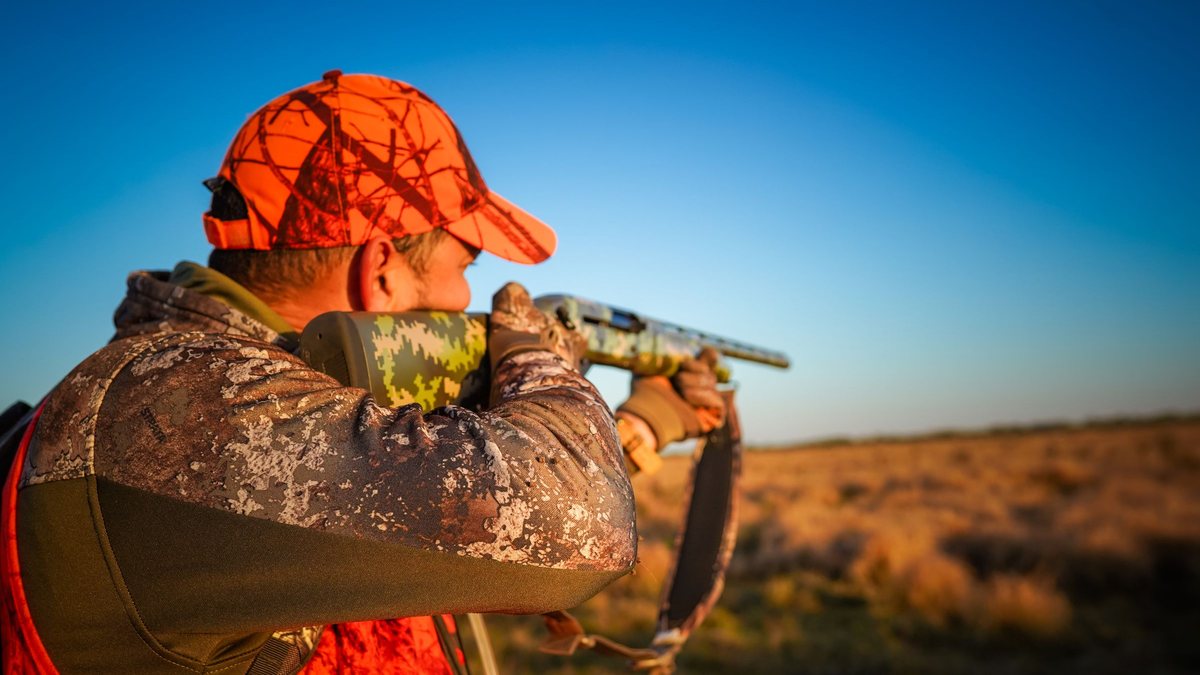
Look down the barrel of most shotguns and you'll see a single small bead at the muzzle. For a century that's been enough. Yet walk the shotgun aisle today and you'll find fiber-optic beads, ghost rings, red dots and scopes made just for shotguns. If a bead was good enough for your grandfather's pheasants, why would anyone need more?
The bead works best when you hardly notice it, a red dot can help on a stationary turkey, and slugs need a precise aiming system such as a scope.
By the end you should understand why moving and stationary targets need different sighting systems and how beads, rifle sights, ghost rings, red dots and scopes work on a shotgun, so you can match a sighting system to the way you'll shoot and know how to zero it.
Pointing versus aiming: The key difference
When you shoot a flying bird or a clay target, you point the shotgun. Your eyes stay on the target, and the gun comes up to where you're looking. The barrel and bead sit in your peripheral vision. There's no time to line up sights, and trying to do it usually stops the swing and causes a miss. In this kind of shooting, your eye acts as the rear sight and the stock places it behind the rib. That's why shotgun fit matters so much for moving targets.
When you shoot a turkey's head or a deer with a slug, you aim the shotgun. The target is still or moving slowly, the vital area is small and you have a moment to settle the gun. Here, a shotgun works more like a rifle, and a precise sighting system helps a great deal.
Think of the difference between catching a ball and threading a needle. Catching depends on watching the ball and letting your hands follow. Threading a needle depends on lining things up carefully. Both use your eyes and hands, but in completely different ways. Sights that help with one can get in the way of the other.
Key idea: Moving targets reward pointing with your eyes on the target. Stationary targets reward aiming with a precise sight. Choose your sighting system for the kind of shooting you'll do most.
Beads and ribs: Simple for a reason
The single front bead is all most bird hunters and clay shooters need. It gives a soft reference at the end of the barrel without pulling your eye away from the target. A rib, the flat strip along the top of many barrels, helps your eye find the line of the barrel quickly.
Many target guns add a smaller middle bead. When you mount the gun, the middle and front beads should stack into a figure eight, or sit with the front bead just above the middle, depending on how the gun is set up. That stack confirms your eye is in the right place, which makes the middle bead a fit-checking tool more than a sight.
Fiber-optic beads glow brightly and are popular, especially for low-light hunting. Some shooters love them; others find the bright dot pulls their eye back to the barrel and makes them aim instead of point. If a bright bead makes you check the barrel during your swing, a plain bead may serve you better. For birds and clays, choose the simplest bead that lets you keep your eyes on the target.
Rifle sights and ghost rings: Aiming without glass
Some shotguns come with rifle-style sights, a front blade or post and an adjustable rear notch. These are common on slug barrels and some defensive shotguns. They allow real aiming and can be adjusted to put slugs where you look, without the cost or bulk of an optic.
A ghost ring is a large rear aperture paired with a front post. You look through the ring, which your eye centers naturally, and put the front post on the target. Ghost rings are faster than notch sights and are favored on defensive and tactical shotguns. Our article on tactical shotgun selection covers that use.
Iron sights do have limits. In dim light, a front sight can be hard to see against a dark target, and older eyes can struggle to focus on rear sight, front sight and target at once. Rifle sights and ghost rings are a solid, durable choice for slugs and defensive use if your eyes handle them well.
Red dots: Fast, precise and forgiving
A red dot sight projects a dot that appears on the target. You don't need to line up front and rear sights; you just put the dot where you want the center of your pattern or the slug to go. Because the dot appears on the same plane as the target, you can keep both eyes open and focus on the target, which makes red dots fast as well as precise.
Red dots have become very popular for turkey hunting. A tight turkey choke puts a small, dense pattern on the head and neck, and a red dot lets you place that pattern precisely. They also work well on slug guns at typical Iowa deer distances, especially in thick cover where shots come quickly. Some hunters use them on defensive shotguns too.
A red dot is less common on a dedicated bird or clay gun, because placing a dot pulls you toward aiming rather than pointing. Some shooters do use one for flying targets, but it's a different technique. When you choose one, look for a dot size that covers little of a turkey's head at 40 yards, brightness settings that work in dawn light and a mount built for shotgun recoil. A red dot is often the best single upgrade for a turkey or slug shotgun.
Common mistake: Mounting a red dot or scope on a turkey gun and not patterning it. The optic aims precisely, but only after you zero it with your actual turkey load. An unzeroed dot just helps you miss precisely.
Scopes on slug guns: When distance and precision matter
For slug hunting, especially with a rifled barrel and sabot slugs, a scope makes the most of the gun's accuracy. Low-power variable scopes in the range of 1x to 4x or 2x to 7x are common. They give enough magnification for a 100- to 150-yard shot across a field while keeping a wide field of view for close shots in timber.
Mounting can be done on a receiver rail or on a cantilever mount attached to the barrel. A cantilever mount keeps the scope with the barrel, so you can switch barrels and keep your zero. Slugs recoil hard, so choose a scope rated for shotgun recoil, with enough eye relief that it won't strike you.
As of the 2025 season, Iowa allowed 10-, 12-, 16- and 20-gauge shotguns shooting single slugs for deer. Optics are widely used on slug guns, but check the current Iowa DNR regulations before the season, since method-of-take rules can change. The slug ammunition itself, rifled versus smoothbore and sabot versus Foster style, makes a big difference in accuracy and should be matched to your barrel.
Zeroing: Making the sight match the gun
Any sight that's used for aiming must be zeroed with the exact load you'll use. Different turkey shells and slugs can strike in noticeably different places from the same gun.
Turkey guns
Start at about 20 yards. Shoot from a rest at a target with a clear aiming point, then adjust the sight to center the densest part of the pattern on your aim. Move out to 30 and 40 yards and check that the pattern stays centered. Many hunters zero so the pattern's center is on the head and neck at their usual distance. Our article on patterning your shotgun covers counting pellets in a 10-inch circle at each distance.
Slug guns
Start at 25 yards to get on paper, then move to 50 and 100 yards. Shoot three-shot groups from a solid rest and let the barrel cool between groups, since slug barrels heat quickly. Adjust the sight to center the group, then confirm at your longest expected distance. Many hunters zero a sabot slug gun a little high at 50 yards so it's close to center at 100.
Recheck your zero before every season and after any bump, change in load or barrel swap. A sighting system is only as accurate as the zero you put on it with the load you'll hunt with.
Deciding what your shotgun needs
One question decides the sight: will this shotgun mostly point or aim? Birds and clays call for pointing, so a simple bead and good fit serve best. Turkeys, slug deer and home defense call for aiming, so rifle sights, a red dot or a scope suited to your distances make sense. With the gun unloaded, the action open and no ammunition nearby, its rib, drilled receiver or rail shows what it can accept. Any aiming sight then needs a zeroing session at a safe range, with eye and ear protection and the exact load you'll hunt with.
Putting it together
Match the sight to the shooting. For flying birds and clays, a simple bead and a gun that fits let you keep your eyes on the target. For turkeys, a red dot or similar precise sight places a tight pattern exactly. For slug deer, rifle sights, a red dot or a low-power scope turn the shotgun into a real aiming tool. Mount optics securely with recoil in mind, and zero every aiming sight with your hunting load before you go.
Check your understanding
Try answering these before you open the answer. If you can decide what to do and explain why, you have it.
1. Why can a bright, precise sight hurt your shooting on flying pheasants?
It tempts you to look at the sight and aim rather than keep your eyes on the bird, which stops your swing and causes misses behind.
2. Your new clay gun has a small middle bead halfway down the rib. What is it telling you?
When the middle and front beads stack the way the gun is designed, your eye is in the right place behind the rib. It's a fit and mount check more than a sight.
3. You put a red dot on your turkey gun. What must you do before hunting?
Zero it with your actual turkey load and pattern it at your hunting distances so the dense center of the pattern lands where the dot is.
4. Why might a deer hunter choose a cantilever scope mount?
It attaches the scope to the barrel, so the zero stays with that barrel even if the shotgun's barrels are swapped.
5. You switch from one brand of slug to another. Is your old zero still good?
Not necessarily. Different slugs can strike in different places. Recheck your zero with the new load before hunting.
Where to go next
To confirm where your turkey gun shoots, read patterning your shotgun. For birds and clays, shotgun fit explains how the stock acts as your rear sight. If you're choosing turkey shells, see our guide to turkey hunting ammunition. And for defensive setups, tactical shotgun selection discusses sights for that role.
If this article helped you, we invite you to sign up for email notifications of new blog articles.