
Shotgun Shell Length and Markings: Reading the Box and the Barrel
Joseph McLain Nov 07, 2026
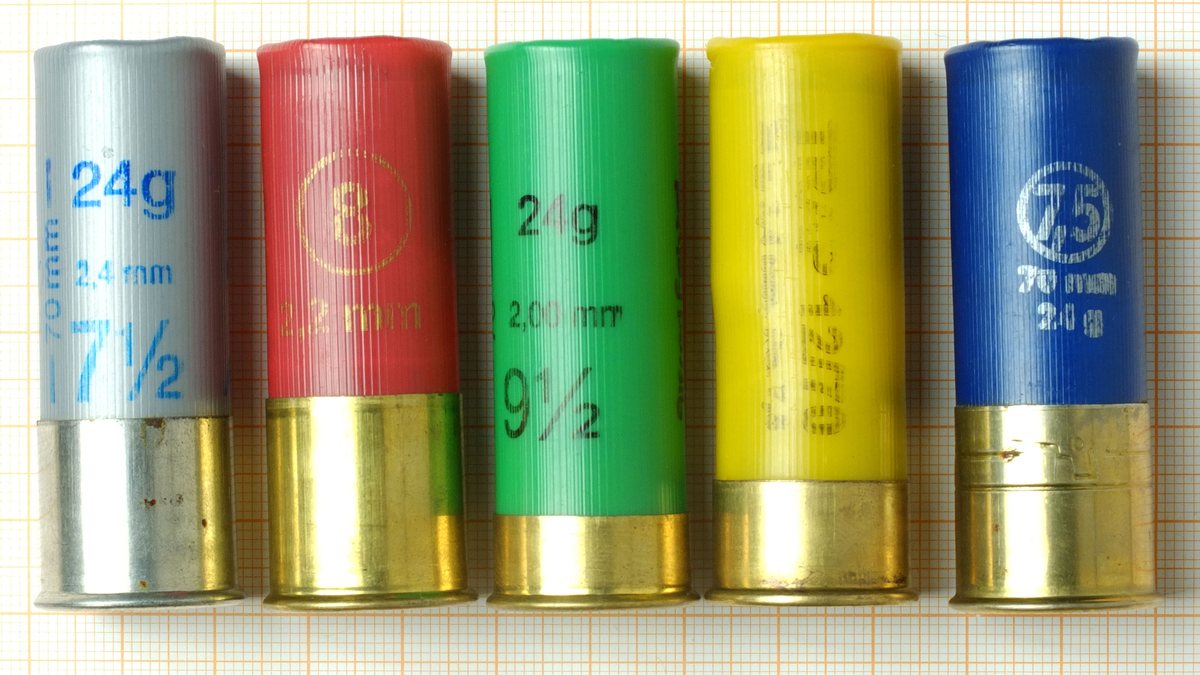
You are buying shells for a pheasant opener, and the box in your hand reads like a code: "12 GA, 2¾ in, 3¼ DR EQ, 1¼ oz, #6, 1330 fps." Next to it is a 3-inch magnum box with a bigger payload and a higher price. Is the magnum better, and will it even work in your gun?
A magnum shell does carry more shot, some guns should never fire one, and gauge is the first thing that has to match. But a shotgun shell's markings say much more than gauge, and the most important number of all is printed on your barrel, not the box. The markings on a box and on a barrel answer two different questions: what the shell is, and what the gun can safely take. Once you can read both, you choose shells for a purpose instead of by the size of the number on the front.
Gauge: An old way to measure a bore
Gauge describes the inside diameter of a shotgun barrel, but in a backward way. It is the number of round lead balls, each the size of the bore, that would together weigh one pound. Twelve balls the size of a 12-gauge bore weigh a pound. Twenty smaller balls the size of a 20-gauge bore weigh a pound. That's why the higher the number, the smaller the bore.
The .410 is the exception. It is measured in inches, as a caliber, not as a gauge, so ".410 bore" is the correct name.
Gauge has to match exactly. A 20-gauge shell can slide into a 12-gauge barrel and lodge out of sight, which is one of the most dangerous mistakes in shotgunning. Our article on cartridges that can and can't share a gun explains why.
Choosing between gauges is a matter of power against weight and recoil. A 12-gauge throws more shot, and a 20-gauge is lighter and kicks less. For most shooters, the better gauge is the one whose recoil lets them keep shooting well through a full round or a long day afield.
Shell length and chamber length: The number that matters most
Every shotshell box lists a shell length, such as 2¾ inch, 3 inch or 3½ inch. Here is the part that surprises people. That figure is the length of the shell after it has been fired and its folded crimp has opened up. An unfired 2¾-inch shell actually measures less than that, because the crimp is still folded.
Your barrel is stamped with its chamber length, something like "12 GA 3 IN" or "2¾ IN." The chamber is the space where the shell sits, and it is cut long enough for a fired shell of that length to open fully. Just ahead of the chamber, the barrel narrows through a short taper called the forcing cone.
Load a shell that is longer than your chamber, and it may still close, because the unfired shell is short. When it fires, though, the crimp tries to unfold into the forcing cone instead of open space. That restricts the shot column as it starts moving, and pressure rises sharply. SAAMI lists shells longer than the chamber among its unsafe combinations.
Going the other way is generally fine. A 2¾-inch shell fired in a 3-inch chamber is safe, though some semi-automatic shotguns may not cycle reliably with lighter, shorter shells.
Key idea: The shell length on the box must be equal to or shorter than the chamber length stamped on the barrel. If the shell is longer, don't fire it, even if it loads.
That is why the barrel, not the box, is the place to start when you buy shells.
Payload: Ounces of shot
The payload is the weight of shot in the shell, listed in ounces, such as 7/8, 1, 1⅛ or 1¼ ounce in a 12-gauge. More shot means more pellets, which can give a denser pattern at longer range. It also means more recoil, since you're pushing more weight out of the barrel.
For clay targets, 1⅛ ounce is a long-standing standard in 12-gauge, and many shooters find 1 ounce or 7/8 ounce loads break targets just as well with noticeably less kick. Many trap and skeet clubs set their own limits on payload and shot size, so check before you shoot there. For pheasants and other game, hunters often step up to 1¼ ounce or more. Our article on pheasant hunting ammunition covers those choices.
Common mistake: Buying the heaviest magnum load because more shot must be better. Heavier payloads kick harder, and many shooters flinch and miss more with them. A lighter load you shoot well usually does more for you than a heavy load you dread.
Payload buys pattern density at the cost of recoil. The lightest payload that reliably does the job is usually the right one, because you'll shoot better when the gun isn't punishing you.
Shot size: Smaller numbers, bigger pellets
Shot size works backward, like gauge. The smaller the number, the larger each pellet, and the fewer of them fit in the same payload.
| Shot size | Pellet diameter (approx.) | Common uses |
|---|---|---|
| #9 | .08" | Skeet, close clay targets |
| #8 | .09" | Trap, skeet, doves |
| #7½ | .095" | Trap, doves, quail |
| #6 | .11" | Pheasants, rabbits, squirrels |
| #5 | .12" | Pheasants, turkeys |
| #4 | .13" | Pheasants late season, turkeys |
| #2 | .15" | Ducks (in steel), geese |
| BB | .18" | Geese (in steel) |
The table runs from small, fast targets to larger, tougher animals. Small shot gives you many pellets for a dense pattern on a small target. Larger shot carries more energy per pellet to reach the vitals of bigger birds, but leaves more space between pellets.
Shot material matters too. Steel shot is lighter than lead, so a steel pellet of the same size carries less energy. Waterfowl hunters usually choose steel about two sizes larger than they would in lead. Federal law requires nontoxic shot, such as steel, bismuth or tungsten, for waterfowl. Our article on nontoxic shot explains those materials and where Iowa requires them, shotgun ammunition for duck hunting covers waterfowl loads, and innovative shot designs explains the newer heavy materials. Buckshot uses a separate sizing system, which our article on buckshot explains.
Every shot size balances pellet count against energy per pellet. The best choice is the smallest shot that still carries enough energy for the animal or target at the distance you'll shoot.
Velocity and dram equivalent
Most modern boxes list velocity in feet per second, such as 1,145 or 1,330 fps. Many also list "dram equivalent," a term that dates from the black-powder era. A dram was a measure of black powder. Today's shells use smokeless powder, so "3 dram equivalent" means the shell produces about the same velocity that 3 drams of black powder would have with that payload. A classic 12-gauge target load of 3 dram equivalent with 1⅛ ounce of shot travels about 1,200 feet per second.
Dram equivalent is a rough guide to velocity, recoil and pressure. Higher numbers mean faster, harder-kicking loads. Lower numbers, around 2¾ dram and below, usually indicate light target or low-recoil loads. Some boxes print "Max" instead of a number, meaning the load is faster than the old scale was meant to describe. Many ranges and clay clubs set limits based on dram equivalent or velocity, and the owners of some older shotguns stick to lighter loads.
Speed costs recoil. A faster load reaches the target sooner and hits a little harder, but kicks more. Compare velocity in fps when it is listed, and use dram equivalent as a rough guide when it is not. A few dozen feet per second rarely matter as much as a shooter who isn't flinching.
What the barrel tells you
The box describes the shell. The barrel describes what the shell has to fit. Look for the gauge, the chamber length and, on many guns, the choke. Fixed-choke barrels may be marked with words such as "Full," "Mod" or "IC," or with symbols. Guns with interchangeable chokes have the choke stamped on each tube. Our article on shotgun chokes explains them.
Some older barrels, especially with tight fixed chokes, weren't designed for steel shot, because hard steel pellets don't squeeze through a choke the way soft lead does. Check your owner's manual or the manufacturer before shooting steel through an older fixed-choke barrel.
It takes a few seconds to read the gauge, chamber length and choke on the barrel, and those few seconds decide which shells belong with that gun.
How to match shells to your barrel
Whether you are standing in a store aisle or sorting the shells in your cabinet, the check is the same:
- Start with the gun unloaded. Open the action and look into the chamber and magazine before you handle it to read the barrel.
- Read the gauge, chamber length and choke stamped on the barrel or the choke tube.
- On the box, confirm that the gauge matches exactly and that the shell length is equal to or shorter than the chamber. If either one fails, that box doesn't belong with this gun.
- Among the boxes that fit, choose by purpose: payload and shot size for the target or bird, and velocity for how hard the load is pushed.
For example, a 1-ounce load of #7½ at 1,200 fps fits a 3-inch 12-gauge chamber, kicks less than a heavier load and breaks trap targets well at 16 yards. A 3-inch magnum of #4 fits the same barrel, but it is a late-season pheasant load, not a trap load. And keep each gauge's shells in their own box or bag, so a 20-gauge shell never ends up in the pocket of a 12-gauge hunting vest.
Putting it together
Gauge must match exactly. Shell length must be equal to or shorter than the chamber length on your barrel, because a longer shell can load but shouldn't fire. Payload and shot size are your main choices for the job, and both trade pattern density against energy and recoil. Velocity and dram equivalent describe how hard the load is pushed. And the barrel tells you gauge, chamber and choke before you ever open the box.
Check your understanding
Try answering these before you open the answer. If you can decide what to do and explain why, you have it.
1. Your barrel says "2¾ IN." Can you shoot 3-inch magnum shells in it if they load?
No. A 3-inch shell is longer than the 2¾-inch chamber. When it fires, the crimp unfolds into the forcing cone and pressure rises sharply. Fire only shells of 2¾ inch or shorter.
2. You measure an unfired shell from a 2¾-inch box and it comes up short, so a friend says the box is mislabeled and a slightly longer shell would be fine in your 2¾-inch chamber. Is your friend right?
No. Shell length is measured after firing, once the crimp has opened. An unfired shell is shorter because the crimp is still folded. Compare the length printed on the box to the chamber length on the barrel, never a measurement of an unfired shell.
3. For early-season pheasants at 25 to 35 yards, you're choosing between a box of #8 and a box of #5. Which do you take, and why?
The #5. Shot sizes run backward, so #5 pellets are larger than #8. The #8 gives a dense pattern, but each small pellet carries too little energy to reach the vitals of a tough rooster reliably at that distance. The larger #5 pellet carries enough.
4. Two 12-gauge target boxes look alike, but one reads "2¾ DR EQ" and the other "3 DR EQ." Your shoulder is sore halfway through a round of trap. Which box do you try next, and what changes?
The 2¾ dram equivalent load. A lower dram equivalent means a slower load with less recoil, and at trap distances the slightly slower shot still breaks targets. Less punishment usually means fewer flinches and more broken targets.
5. You want to hunt ducks with an older shotgun that has a fixed full choke. What should you check first?
Whether the manufacturer says the barrel is safe for steel shot, since waterfowl require nontoxic shot and hard steel pellets can be a problem in some older, tightly choked barrels.
Where to go next
You can find Winchester AA target loads and Winchester Super-X upland and buckshot loads on our website, and anything listed there can be ordered if it isn't in stock.
To understand the choke marking on your barrel, read demystifying shotgun chokes. For choosing pheasant loads, see pheasant hunting ammunition. For the larger pellets used in defense and for coyotes, read buckshot explained. And to avoid the gauge mix-up that bursts barrels, see cartridges that can and can't share a gun.
Photo: "Shotgun Shells 12/70 Gauge" by Grasyl, via Wikimedia Commons, licensed CC BY-SA 4.0; cropped.

If this article helped you, we invite you to sign up for email notifications of new blog articles.