
Choosing a Shotgun Gauge: 12, 20, 28 or .410 and What Each Does Best
Joseph McLain Nov 07, 2026
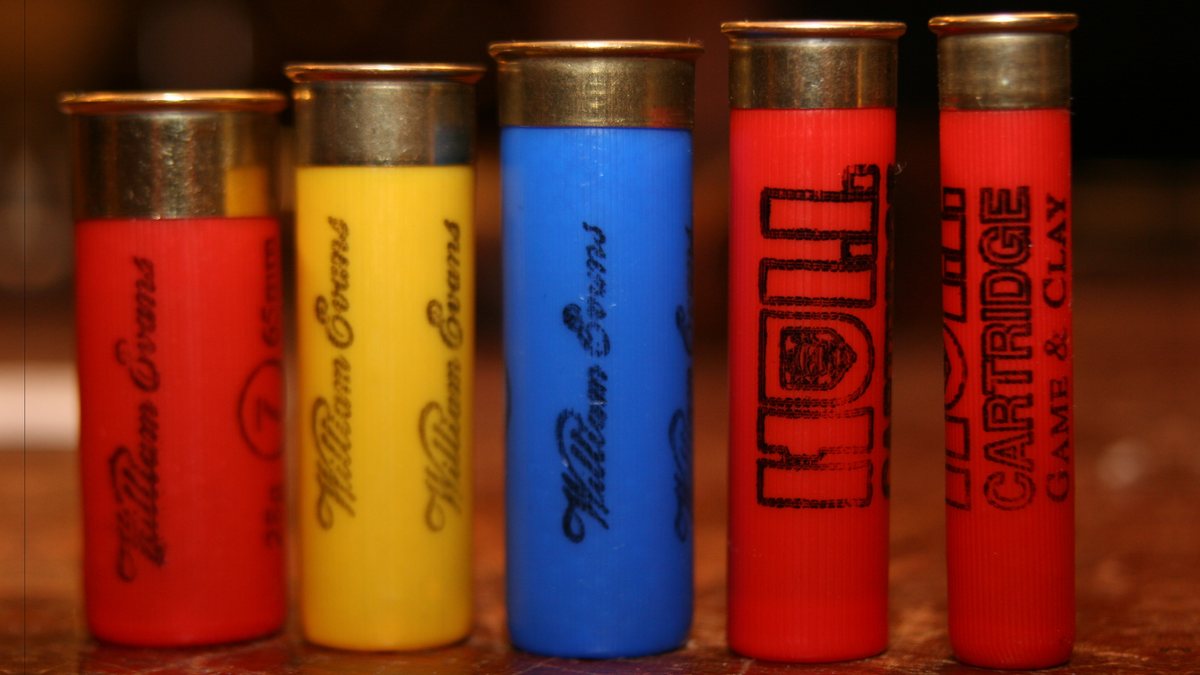
Say you've decided it's time for a shotgun. Maybe pheasant season is coming, maybe a friend invited you to shoot trap, or maybe you just want one good long gun in the house. Before you look at a single model, the first question comes up: "What gauge?"
The 12 gauge covers the most ground, the 20 is enough for a great deal of hunting and clay shooting, and the .410 is mild to shoot. Which one fits you depends on what you will shoot and on the gun that carries it.
By the end you should understand what gauge measures, what changes as the bore gets smaller and how the common gauges compare for hunting, clays and home defense, along with why the gun's weight and fit matter as much as the number on the barrel, so you can name the gauge that fits the shooting you'll actually do.
What gauge means: An old measure that still works
Gauge is an old English way of measuring a bore. Take a pound of lead and divide it into equal round balls that each just fit the bore. If it takes 12 balls, the gun is a 12 gauge. If it takes 20 smaller balls, it's a 20 gauge. That's why the numbers run backward: the bigger the gauge number, the smaller the hole.
The .410 is the odd one out. It's measured in inches like a rifle caliber, so ".410" means a bore of about 0.41 inch. In gauge terms it would be roughly a 67 gauge, which tells you how much smaller it is than the others.
| Gauge | Bore diameter (approx.) | Common payloads |
|---|---|---|
| 12 | 0.729 inch | 7/8 to 1 1/4 oz for most shooting; more in 3-inch and 3 1/2-inch shells |
| 16 | 0.662 inch | 1 to 1 1/8 oz |
| 20 | 0.615 inch | 7/8 to 1 oz; up to 1 1/4 oz in 3-inch shells |
| 28 | 0.550 inch | 3/4 oz |
| .410 | 0.410 inch | 1/2 oz in 2 1/2-inch shells; about 11/16 oz in 3-inch shells |
From top to bottom, notice the pattern. Each step down in bore size means less shot in a typical shell. Bore diameter by itself doesn't break birds or targets; pellets do. A smaller gauge mostly means fewer pellets in the air, and the rest of this article follows from that one fact.
Key idea: Gauge is mostly a statement about how much shot a shell can carry efficiently. More shot means a fuller pattern, which means more forgiveness, at the price of more recoil and usually a heavier gun.
What really changes: Pellets, not power
People often talk as if a 20 gauge shoots pellets more weakly than a 12. It doesn't. A #6 lead pellet leaving a 20 gauge at 1,200 feet per second hits just as hard as a #6 pellet leaving a 12 gauge at the same speed. What differs is how many of them there are.
Think of it like throwing a handful of sand at a dinner plate across the room. A big handful puts more grains on the plate than a pinch does, even though each grain hits just as hard. A 1 1/8-ounce load of #6 shot holds roughly 250 pellets. A 7/8-ounce load holds closer to 200. A 1/2-ounce .410 load holds a bit over 110. At close range every one of those shells can put enough pellets on a bird or a clay. As the distance grows and the pattern spreads, the shell with fewer pellets starts leaving gaps a target can slip through.
That is why the smaller gauges have a reputation for being "expert's guns." They don't require special talent to hit with at close range, but they leave less room for a pattern that's slightly off center. If your aim is a little off, a dense 12-gauge pattern may still catch the bird with its edge. A thin .410 pattern may not. The smaller the gauge, the more closely you need to keep your shots to the range and the targets it's suited for.
Recoil and gun weight: The half of the story people skip
Recoil depends on how much the shot, wad and powder weigh, how fast they leave, and how heavy the gun is. Gauge only affects the first of those. A light load in a 12 gauge can kick less than a heavy load in a 20, and a featherweight 20 can feel sharper than a heavy 12 with target loads.
Some rough numbers make this concrete. A standard 1 1/8-ounce 12-gauge target load in an 8-pound gun produces about 20 foot-pounds of free recoil. Drop to a 7/8-ounce 12-gauge load in that same gun and it falls to about 13. A 7/8-ounce 20-gauge load in a 6 1/2-pound gun lands around 16. In other words, the same 12-gauge gun with lighter shells can be gentler than a light 20 gauge. Our article on taming shotgun recoil explains how to use that to your advantage.
The weight cuts both ways. A lighter gun is easier to carry through a long day of pheasant walking. A heavier gun soaks up recoil and swings more smoothly for a round of trap. Small-gauge guns are usually built on smaller, lighter frames, which is a real advantage for a young shooter or anyone who carries a gun all day, and a real disadvantage when you plan to shoot a hundred rounds in an afternoon.
Common mistake: Buying a light .410 or 20 gauge for a new or small-framed shooter "because it won't kick," then feeding it heavy hunting loads. The light gun and the stout shell together can kick harder than a full-size 12 with target loads.
The 12 gauge: The one that covers the most
The 12 gauge is the most common shotgun in America for good reasons. It handles everything from light 7/8-ounce target loads to heavy 3 1/2-inch waterfowl and turkey shells. Its ammunition is the easiest to find and usually the least expensive per box. Nearly every action type, barrel and choke is made for it.
For Iowa hunters, the 12 is especially practical because of nontoxic shot. Steel pellets are lighter than lead, so you need larger pellets and more of them to do the same work, and the 12 gauge's larger bore and payload handle steel better than the smaller gauges. If you plan to hunt ducks, geese or any public area that requires nontoxic shot, the 12 gives you the most options. Our guide to nontoxic shot in Iowa covers where it's required and how it changes your shell choice.
The 12's trade-offs are weight and recoil with heavy loads. A 12 gauge loaded for geese or turkeys is not a pleasant gun to shoot fifty times. If you'll own one shotgun and use it for several kinds of shooting, the 12 gauge is the safest choice, provided you match the load to the job.
The 20 gauge: Enough for most, easier to carry
The 20 gauge has earned a big following among upland hunters, youth shooters and anyone who wants a lighter gun. With 7/8- to 1-ounce loads it handles pheasants over dogs, doves, rabbits, squirrels and every clay game well. Many experienced pheasant hunters in Iowa carry a 20 because they walk for hours and most of their shots come inside 35 yards.
Its limits show up with steel shot at longer ranges and with the biggest birds. A 20 can take ducks over decoys with good nontoxic loads, but it has less margin than a 12 when birds are high or a long way off. Twenty-gauge ammunition is common, though the selection of specialty loads is smaller than for the 12.
The 20 is also a fine first gun for many adults, not just kids. If you're of average or smaller build, mostly hunt upland birds or shoot clays, and don't plan to hunt geese, a 20 can be the better single gun. Choose a 20 when carrying weight and shooting comfort matter more to you than reach.
The 16, 28 and .410: Specialists with loyal fans
The 16 gauge
The 16 sits between the 12 and 20 and was once very popular in the Midwest. It carries a 12-gauge-like 1-ounce load in a gun that can be nearly as light as a 20. Its weakness is availability: fewer new guns, fewer loads and higher prices per box. If you inherit a good 16 that fits you, it's a wonderful upland gun. As a new purchase, most people are better served by a 12 or 20.
The 28 gauge
The 28 gauge shoots a 3/4-ounce load that patterns very efficiently and kicks little. Skeet shooters and quail and dove hunters love it. Ammunition costs more and is harder to find than 12 or 20, and it's a poor fit for steel shot or long shots. It's a gun people often grow into, not start with.
The .410
The .410 is often handed to beginners because it's small and mild. That is understandable but often backwards. Its thin pattern makes it the hardest of the common gauges to hit with, which can frustrate a new shooter who is still learning to swing and follow through. It shines for close-range small game, pest control around buildings and, in modern loads, turkeys at short range. As of 2025, Iowa allowed shotguns no smaller than .410 for turkey, so it was legal there, but it was not a legal gauge for deer.
Pick these gauges because you want what they specialize in, not because you hope they'll be easier.
Iowa rules that affect your gauge choice
As of the 2025 seasons, Iowa law narrowed the choice for some hunting. For deer, Iowa allowed 10-, 12-, 16- and 20-gauge shotguns shooting single slugs only, so a 28 or .410 couldn't be your deer gun. For turkey, the rule was a shotgun no smaller than .410 using a specific range of shot sizes. For waterfowl, rails, coots, snipe and doves, federal and state rules capped the gun at 10 gauge and three shells in the gun, and ducks, geese and coots required nontoxic shot everywhere.
These rules can change from year to year, so check the current Iowa DNR deer hunting and turkey hunting pages and its hunting regulations booklet before each season. If you're buying one shotgun mainly for Iowa deer and birds, though, the law points clearly toward a 12 or 20.
Matching a gauge to your season
Your own list of shooting chooses the gauge. Every kind of shooting you expect in the next two years, birds, deer, clays, home defense or pest control, comes with a typical shot distance and any nontoxic-shot or slug-only rules. The hardest job on the list, the one needing the most shot or the longest reach, decides it: if a 20 gauge can do that job well, carrying comfort competes with reach; if it can't, the 12 is your answer. Handling both gauges, with actions open and no ammunition present, shows the difference in weight and balance.
Putting it together
Start with what you'll actually shoot. If the answer is "a little of everything," including waterfowl, turkey or slug deer, buy a 12 gauge and use light loads for practice. If it's mainly pheasants, doves and clays, and you value a lighter gun, a 20 is an excellent choice. Choose a 16, 28 or .410 only when you know why you want one.
Then remember that gauge is only one decision. A gun that fits you, has a weight you can carry and shoot comfortably, and wears the right choke will do more for your shooting than switching gauges. Our articles on shotgun fit and shotgun chokes cover those next decisions.
Check your understanding
Try answering these before you open the answer. If you can decide what to do and explain why, you have it.
1. A hunting partner says his 12 gauge's #6 pellets hit harder than your 20 gauge's #6 pellets. Do they?
No. At the same velocity, each pellet hits the same. The 12 gauge simply carries more of them, so its pattern stays dense farther out.
2. A friend wants to buy a .410 for their 12-year-old because it barely kicks. What would you point out?
The .410's thin pattern makes it the hardest common gauge to hit with, which can discourage a beginner. A light-recoiling 20 gauge with 7/8-ounce loads often gives a new shooter more success with modest recoil.
3. You want one shotgun for Iowa slug deer, ducks and an occasional round of trap. Which gauge fits best?
A 12 gauge. It's legal for deer with slugs, handles steel shot for ducks best, and can shoot light target loads for trap.
4. Your heavy 12 gauge with light target loads feels softer than your friend's lightweight 20. How can that be?
Recoil depends on the weight and speed of what leaves the barrel and on the weight of the gun. A light load in a heavier gun can produce less felt recoil than a standard load in a lightweight gun.
5. Can you use a 28 gauge for deer in Iowa?
As of 2025, no. Iowa allowed only 10, 12, 16 and 20 gauge shotguns shooting single slugs for deer.
Where to go next
Once you've picked a gauge, shotgun fit explains how to make sure the gun shoots where you look. If recoil worries you, taming shotgun recoil shows how load, weight and technique work together. To see what your gun and shells actually do on paper, read patterning your shotgun. And if clays are your main interest, 20-gauge shotguns for youth trap and skeet goes deeper on the smaller gauge for target shooting.
If this article helped you, we invite you to sign up for email notifications of new blog articles.