
Shotgun Actions Explained: Pump, Semi-Auto, Over/Under, Side-by-Side and Single-Shot
Joseph McLain Nov 07, 2026
Picture your brother-in-law shopping for his first shotgun. He wants something for pheasants in November, ducks if a buddy invites him, and maybe a few rounds of trap in the summer. He is weighing a pump that will last for decades and costs about half as much, an over/under, a semi-automatic that kicks less, and a side-by-side, the traditional upland gun.
Each action does one or two things better than the others, and each was shaped by the shooting it grew up with. The question is which of those strengths match his shooting.
By the end you should understand how each major shotgun action works and what it does well and poorly, so you can explain the differences and choose the one that fits your shooting, budget and recoil tolerance.
Why the action matters
A shotgun's action is the mechanism that loads a shell, fires it and gets the empty out. It decides how fast you can shoot again, how many shells the gun holds, how much recoil you feel, how much the gun weighs and balances, and how much cleaning and care it needs.
The action also shapes how the gun feels when you mount it and swing. A gun with two barrels side by side looks and points differently from one with a single barrel and a magazine tube underneath. Those differences are not just looks; they affect how naturally you track a flying target.
Think of shotgun actions as different kinds of vehicles. A pickup, a sedan and a sports car all get you down the road, but each does a different job best. Choose the action for the shooting you will do most, then accept its weaknesses for the rest.
Pump-action: The dependable workhorse
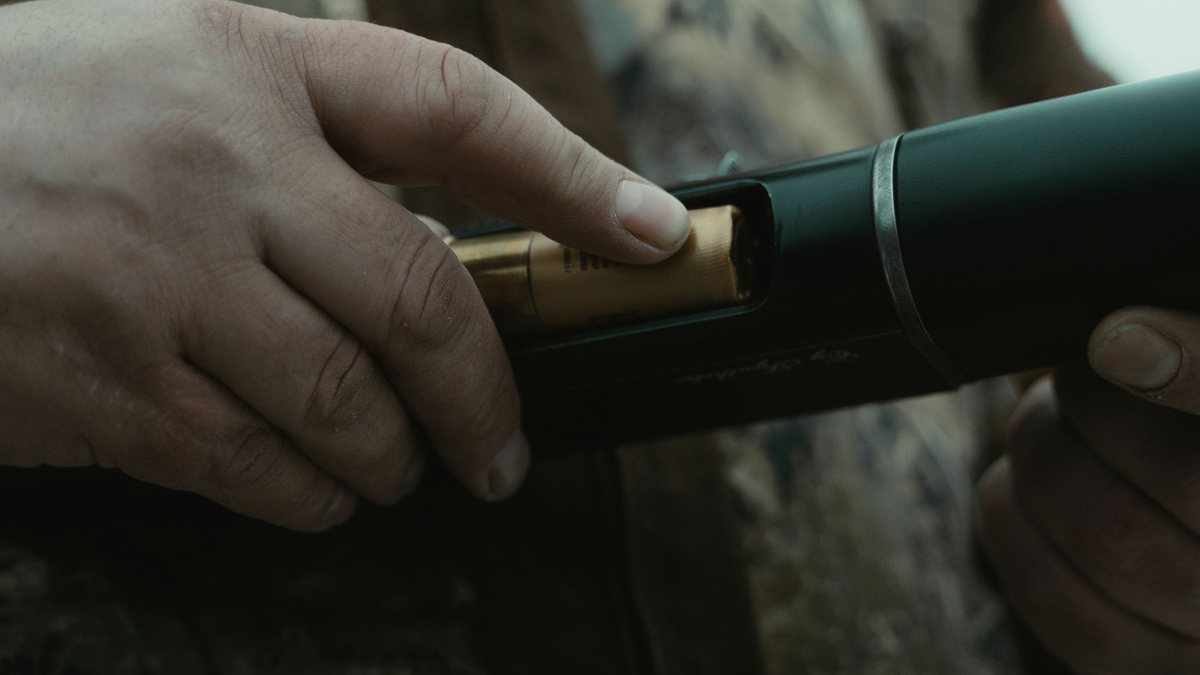
A pump shotgun has a sliding fore-end. Pull it back to eject the empty and cock the gun; push it forward to load the next shell from the tube magazine under the barrel. The Remington 870 and the Mossberg 500 family are two of the best-selling shotguns ever made, and our articles on the Remington 870 and Mossberg 500 series trace their history.
Pumps are popular because they are affordable, rugged and run with nearly any shell, from light target loads to heavy turkey loads, since your arm, not the shell, works the action. Many accept interchangeable barrels, so one pump can carry a smooth-bore barrel for birds and a rifled barrel for deer slugs.
Their weakness is that the shooter is part of the mechanism. Under the excitement of a flushing rooster, a new shooter can "short-stroke" the gun, failing to pull the fore-end all the way back, and get a jam or an empty click. Pumps also kick more than semi-automatics of similar weight. Choose a pump for value, durability and versatility, and practice working it until a full stroke is automatic.
Semi-automatic: Softer recoil, more care
A semi-automatic shotgun uses the energy of each shot to eject the empty and load the next shell, so you simply pull the trigger again. There are two main systems. Gas-operated guns bleed a little gas from the barrel to push the action back. Inertia-driven guns use the recoil itself, with a spring inside the bolt, to cycle.
The big advantage is felt recoil, especially in gas guns, which spread the push over a longer time. That makes them popular with smaller-framed shooters, young shooters and anyone who shoots long days of waterfowl or clay targets. Inertia guns kick a little more but stay cleaner and are often lighter, which upland hunters appreciate.
Common mistake: Expecting a semi-automatic to run on any shell. Many will not cycle reliably with very light target loads, and a dirty gas system can cause failures. Test the shells you plan to use and keep the action clean.
You gain comfort and speed and pay in price and maintenance. Choose a semi-automatic if recoil is your biggest concern or you shoot a lot of shells in a day, and choose shells it is proven to cycle.
Over/under: The clay shooter's favorite
An over/under has two barrels stacked one on top of the other, hinged at the breech. You open it, load one shell in each barrel, and close it. Each barrel can have a different choke, so the first shot can use a more open pattern for a close bird and the second a tighter one for a farther bird. Our guide to shotgun chokes explains why that matters.
Over/unders dominate trap, skeet and sporting clays. The single sighting plane, one barrel in view, helps the eye track targets. Opening the gun makes it obviously safe, which clubs appreciate. And because there is no magazine or cycling mechanism, they work with any shell.
They have two drawbacks. Capacity is two shots, and quality over/unders cost more, because fitting two barrels to shoot to the same point is skilled work. Inexpensive ones exist, but our article on shotgun quality at different price points explains what you give up. Choose an over/under if clay targets are your main game, or if you want two different chokes for upland birds and two shots are enough.
Side-by-side: The classic upland gun
A side-by-side has two barrels next to each other. It works like an over/under, opening at the breech and offering two shots with two chokes. Many traditional side-by-sides have two triggers, one for each barrel, which lets you choose the tighter or more open barrel instantly.
Upland hunters love them for their light weight, slim profile and quick handling in the hand while walking fields and fencerows. They are also part of the tradition and craftsmanship of bird hunting, and fine examples are works of art.
Their wide, flat sighting plane takes some getting used to, and good new side-by-sides are expensive, while many inexpensive ones are built for cowboy action shooting rather than bird hunting. They also offer only two shots. Choose a side-by-side if you walk up birds, value light weight and tradition, and are happy with two shots.
Single-shot: Simple and inexpensive
A single-shot shotgun has one barrel that hinges open to load one shell. It is the simplest, lightest and least expensive kind, often with an external hammer that must be cocked before firing.
Single-shots are traditional first guns for young shooters, because one shell at a time slows the learning process down in a good way. They are also handy as a farm or truck gun for pests. Their light weight means sharp recoil, especially in 12 gauge, which is why many youth single-shots come in 20 gauge or .410. Our article on 20-gauge shotguns for youth shooters discusses that choice.
You gain simplicity and give up capacity and comfort. A single-shot makes a fine first gun or utility gun, but most hunters outgrow it once they want a second shot.
Comparing the actions side by side
| Action | Shots before reloading | Felt recoil | Runs any shell | Typical cost | Best known for |
|---|---|---|---|---|---|
| Pump | Usually 4 to 6 | Higher | Yes | Low to moderate | All-around use, deer barrels, durability |
| Semi-automatic | Usually 3 to 5 | Lowest (gas), moderate (inertia) | Not always light loads | Moderate to high | Waterfowl, high-volume clays, recoil-sensitive shooters |
| Over/under | 2 | Moderate | Yes | Moderate to very high | Trap, skeet and sporting clays |
| Side-by-side | 2 | Moderate to higher | Yes | Moderate to very high | Walking up upland birds |
| Single-shot | 1 | Higher for its weight | Yes | Low | First guns and utility |
Look across each row, then down the column that matters most to you. If recoil drives your choice, the semi-automatic column stands out. If budget does, the pump and single-shot. If clay targets come first, the over/under. Notice that no action wins every column, which is why experienced shooters often own more than one.
Shell capacity and the law
For migratory birds, including ducks, geese and doves, federal law limits a shotgun to three shells total, in the chamber and magazine combined. Pumps and semi-automatics come with a plug, usually a wooden or plastic dowel, that goes inside the magazine tube to reduce capacity. Check that it is installed before you go waterfowl hunting.
Two-barrel guns meet the limit automatically. Other seasons and game have their own rules, so read the current Iowa DNR hunting regulations for what you hunt. Put the plug in before you hunt migratory birds, and know the rules for each season.
Matching the action to your shooting
Start with the shooting you will do most.
Mostly pheasants and upland birds. A light pump, an inertia semi-automatic or a side-by-side or over/under in 12 or 20 gauge all work. Weight matters, because you carry the gun far more than you shoot it.
Mostly waterfowl. A pump or semi-automatic that handles 3-inch or 3½-inch steel shells is the usual choice. A gas semi tames heavy loads.
Mostly clay targets. An over/under or a gas semi-automatic, fitted to you. Our guides to selecting a trap and skeet shotgun and sporting clays go further.
A little of everything. A pump or semi-automatic with interchangeable chokes is the most flexible single gun, and a pump with a second rifled barrel can cover deer season too.
Key idea: The best first shotgun is the one that fits your main use and your body. A shotgun that kicks too hard or fits poorly will be shot less, whatever its action.
Pick the action for your main use, then make sure the gun fits you and the recoil suits you.
Comparing actions before you buy
Your top three kinds of shooting, in order, set the target. Handling at least two action types, unloaded, confirmed empty and with the actions open, and mounting each to your shoulder several times with your eyes on a spot on the wall shows which lands with your eye straight down the rib without adjusting your head. A round of clays with each type, with eye and ear protection, shows how each shoots for you. Choose the action that fits your top use and your shoulder first, and only then compare models and prices, knowing which weakness you accepted in exchange.
Putting it together
Consider the brother-in-law. A pump is affordable and will cover pheasants, ducks and trap, as long as he practices a full stroke. A semi-automatic would be gentler on his shoulder during a long duck hunt. An over/under is the best tool for trap but costs more and holds two shells. A side-by-side is lovely in the uplands but is a specialist.
For a man who wants to do a little of everything on a reasonable budget, a pump or semi-automatic with interchangeable chokes makes the most sense. If he later falls hard for clays, an over/under can join it.
Check your understanding
Try answering these before you open the answer. If you can decide what to do and explain why, you have it.
1. A recoil-sensitive friend plans to shoot 100 clay targets every weekend. Which action would you suggest, and why?
A gas-operated semi-automatic, because it spreads recoil over a longer time and feels softer, which matters over many shells. She should confirm it cycles her target loads.
2. Your pump shotgun clicks on a second shot at a flushing pheasant. What likely happened?
You short-stroked it, not pulling the fore-end fully back, so no fresh shell was chambered. Practice full, firm strokes with snap caps or dummy shells at home.
3. Why might an over/under help an upland hunter even though it holds only two shells?
Each barrel can have a different choke, so the first shot can use a more open pattern for a close bird and the second a tighter one for a bird flying away.
4. You are heading out duck hunting with a pump that holds five shells. What do you need to do?
Install the magazine plug so the gun holds no more than three shells total, as federal law requires for migratory birds.
Where to go next
To pick chokes for whatever action you choose, read Demystifying Shotgun Chokes. To understand what more money buys, shotgun quality at different price points breaks it down. If clays are your main interest, trap vs. skeet and sporting clays explain the games. And if your gun ever stops running, our guide to gun malfunctions includes shotguns.
If this article helped you, we invite you to sign up for email notifications of new blog articles.