
Innovative Shot Designs: High-Density and Non-Spherical Shot for Bird Hunting, Trap, and Skeet
Joseph McLain Nov 07, 2026
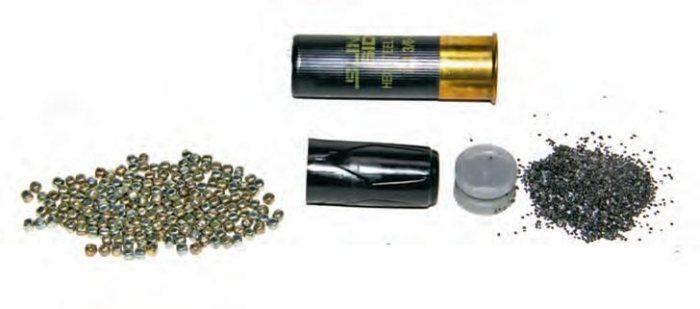
The week before duck season, the choices look different than they did when you started hunting. Next to the familiar steel loads are tungsten, bismuth, hex-shaped pellets and special wads, at very different prices. Is tungsten worth it for geese past 40 yards, or does plain steel work fine inside its range? And if you shoot an old side-by-side, what can it safely handle?
Shot makers can change three things: pellet material, pellet shape and the wad. By the end you should understand what each change does to the pattern and the energy at the bird, how the common nontoxic materials compare and what clay shooters should expect, so you can match a shot design to your birds or targets and prove it on paper.
Three levers a shot maker can pull
A shotshell sends a cloud of pellets toward a moving target. Two things decide whether the result is a clean hit: Enough pellets arriving inside the target's outline, and enough energy in each pellet to do the job when it gets there. Every innovation on the shelf works on one of three levers that change those two things.
The first lever is material, which sets how heavy each pellet is for its size. The second is shape, which changes how a pellet behaves in flight and on impact. The third is the wad, the plastic carrier behind the shot, which changes how long the pellets stay together after leaving the barrel. Once you know which lever a product pulls, the marketing is much easier to read.
Material: Density lets a small pellet hit like a big one
Density is how much weight is packed into a given volume. Throw a ping-pong ball and a golf ball at the same speed: The heavier golf ball keeps its speed much longer. Pellets work the same way. A denser pellet holds its speed and energy farther downrange than a lighter pellet of the same size.
That creates a useful trade. With a denser material, you can use a smaller pellet and still have enough energy at the bird. Smaller pellets mean more of them in each shell, and more pellets fill in the pattern, leaving fewer gaps a bird can slip through. With a less dense material such as steel, you need larger pellets to carry enough energy, which means fewer pellets per shell.
Lead was the traditional standard because it is dense and inexpensive. Federal law has required nontoxic shot for waterfowl since 1991, because spent lead pellets poisoned ducks that swallowed them, and some public areas require nontoxic shot for other hunting too. Check the Iowa DNR's current regulations for where nontoxic shot is required.
Key idea: Density lets you trade pellet size for pellet count without giving up energy. More pellets fill the pattern; enough energy per pellet makes each hit count.
Comparing the nontoxic materials
| Material | Density compared with lead | Relative cost | Main trade-off |
|---|---|---|---|
| Steel | Noticeably lighter | Lowest | Needs larger pellets and closer shots; patterns tighter than lead |
| Bismuth | A little lighter | Higher than steel | Softer than steel, so often suitable for older guns per the maker's guidance |
| Tungsten-based | Equal to or heavier than lead | Highest | Most energy per pellet; very hard, so choke rules apply |
From top to bottom, density and price rise together. Steel is affordable and widely available, and it works well when you go up one or two pellet sizes compared with lead and keep shots within its effective range. Bismuth is the middle path, closer to lead in how it carries energy and softer than steel; many older shotguns that should not shoot steel can shoot bismuth, but follow the gun maker's guidance. Tungsten blends are the densest and most expensive, letting very small pellets carry enough energy for long shots at geese or turkeys' heads.
Choose the material by your longest realistic shot and your shotgun. Most waterfowl hunting inside about 40 yards works well with properly sized steel; tungsten earns its price when shots are routinely longer or the target is small and tough, such as a turkey's head and neck. Our guides to duck and turkey ammunition go deeper.
Common mistake: Treating all nontoxic shot as equal. Steel needs larger pellets and closer shots than tungsten to carry the same energy. Match the material and pellet size to the distance.
Hard shot and your chokes
Lead and bismuth are soft enough to squeeze through a tight choke. Steel and tungsten are hard, so forcing them through a very tight choke stresses the choke and barrel. Many older fixed-choke barrels and many full or extra-full tubes are not rated for steel, and tungsten loads often carry specific choke guidance from their makers. Check your owner's manual, the marking on your choke tube and the shell box before shooting hard shot. Our guide to shotgun chokes explains the markings and why hard shot patterns tighter through the same choke.
Shape: What non-round pellets are for
Most shot is round, and round pellets are the most aerodynamic shape a pellet can be. Non-round designs trade some of that efficiency for something else. Winchester's Blind Side waterfowl loads, for example, use hexagonal steel pellets. Winchester promotes the hex shape for how tightly the pellets stack in the shell, allowing more pellets per load, and for how the flat-sided pellets strike, rather than for flying farther; a non-round pellet slows down sooner than a round one. Other makers have used different shapes, such as pellets with a cutting edge, for similar reasons.
The useful way to think about shape is that it changes what happens at the bird more than what happens on the way there. Whether that trade helps you depends on your distances and your gun, which is exactly what a pattern test reveals.
The wad: Holding the pellets together longer
A wad is the plastic piece that carries the pellets down the barrel and protects the bore from hard shot. A conventional wad opens almost as soon as it leaves the muzzle, releasing the pellets. Federal's FliteControl wad is designed to stay with the shot a little longer and open from the rear, so the pellets stay together longer before spreading. The result is a tighter pattern at longer distances from the same choke.
A tighter pattern is an advantage at long range and a disadvantage up close, where it leaves less room for error. Choose wad designs like this for longer shots, such as decoying geese that hang at the edge of range or turkeys, and to use more open patterns for close, fast shots.
What clay shooters should expect
Clay target shooting is mostly a lead-shot world. Rules for trap and skeet competitions limit 12-gauge loads to 1 1/8 ounces of shot and set maximum pellet sizes, and most target loads use lead because it is dense, inexpensive and allowed. Exotic materials such as tungsten make little sense on clays, where pellets need only enough energy to break a fragile target.
For clay shooters, the innovation that matters most is comfort and consistency. Lighter, slower loads such as low-recoil target shells reduce fatigue over a long day, and premium target loads use harder lead and well-made hulls and wads for consistent patterns. Where a range requires nontoxic shot, steel target loads are available. Our guide to competition shotgun shells compares the popular target lines.
Comparing two loads on paper
A pattern board shows whether a premium load earns its price in your gun. Two loads of the same gauge and shell length, both approved for your shotgun and choke, fired at separate large sheets at your typical shot distance, at a range with a safe backstop for shot and with eye and ear protection, give a direct comparison. A 30-inch circle drawn around the densest part of each pattern lets you count pellet holes and spot large gaps, and a second round of patterns guards against one misleading shot. The load that puts more pellets evenly inside the circle at your distance is the better performer, and the difference in count tells you whether it's worth the price.
Putting it together
Every shot innovation pulls one of three levers. Material changes density, which decides how small a pellet can be and still carry enough energy: Steel is affordable and needs larger pellets and closer shots, bismuth is a softer middle path suited to many older guns, and tungsten is the densest and most expensive. Shape changes what happens at impact more than in flight. Wads change how long the pellets stay together, tightening long-range patterns. Choose by your longest realistic shot, your bird or target and your shotgun's choke ratings, and let a pattern test settle the question.
Check your understanding
Try answering these before you open the answer. If you can decide what to do and explain why, you have it.
1. A box of tungsten #7 goose loads claims to hit as hard as steel BBs. How can a pellet that small do that?
Tungsten is much denser, so a small pellet carries as much energy as a much larger steel one. Smaller pellets also mean more of them per shell, which fills out the pattern.
2. A hunter with an older side-by-side needs nontoxic shot. What should they consider?
Bismuth, which is softer than steel and often suitable for older guns, but only after checking the gun maker's guidance.
3. What does a FliteControl-style wad do, and when is it a disadvantage?
It keeps pellets together longer for tighter long-range patterns. Up close, the tighter pattern leaves less room for error.
4. Why do most clay target loads use lead rather than tungsten?
Clays break easily, competition rules set lead-friendly limits, and lead is dense and inexpensive. Tungsten's extra energy and cost add nothing on clays.
5. You switch from lead #5 to steel for pheasants on a nontoxic area. Why go to a larger steel pellet?
Steel is less dense than lead, so a steel pellet of the same size carries less energy. Going up a size or two restores the energy each pellet needs to bring the bird down cleanly.
Where to go next
To see these ideas applied to specific birds, read our guides to duck, turkey and pheasant ammunition. Demystifying shotgun chokes explains how choke and shot hardness work together, and competition shotgun shells covers the clay-target side.
If this article helped you, we invite you to sign up for email notifications of new blog articles.