
The Ultimate Guide to Competition Shotgun Shells: Winchester AA, AA Diamond Grade, Federal Gold Medal Grand, Remington STS, Nitro 27, and Fiocchi Exacta
Joseph McLain Nov 06, 2026
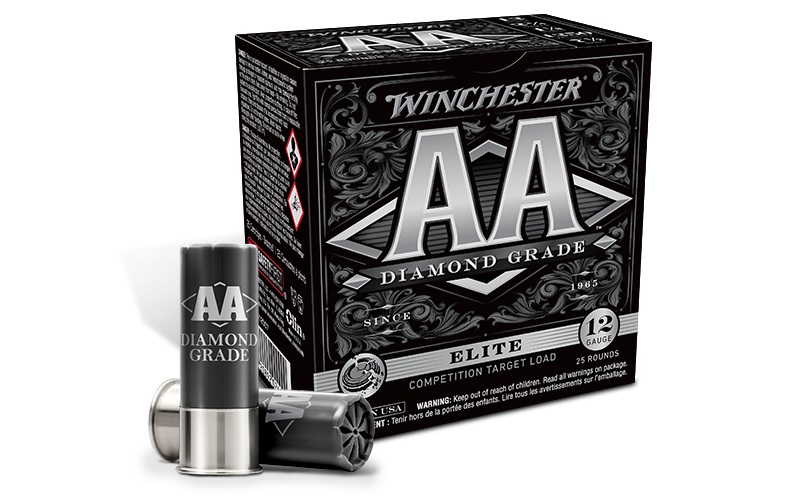
Winchester AA, AA Diamond Grade, Federal Gold Medal Grand, Remington STS, Remington Nitro 27 and Fiocchi Exacta all sit at the top of the heap for serious clay shooters, and the boxes look much alike. Which one should you shoot?
At the competitive level, ammunition choice is almost as critical as shotgun fit, because tiny differences in recoil, pattern density and consistency add up over 100, 200 or 400 targets in a day. Today's top target loads are all very good, so the question is not which one is best. It is which one is best for your game, your gun and your body. By the end you should be able to read a shell box, explain what each part of the shell does, match a load to trap, skeet or sporting clays, and test your choice on your own patterns.
Competition shotshell fundamentals: Five parts, five jobs
Before we compare brands, it helps to know what is inside the shell, because every brand in this guide adjusts the same five components. A modern 12-gauge competition shell usually has a 2¾-inch case.
- Hull: Plastic body plus a metal head. It affects feeding, extraction and reloading life.
- Primer: Ignites the powder consistently from shot to shot.
- Powder: Controls velocity and pressure, and cleaner powders reduce fouling.
- Wad: A plastic cup and gas seal that cushions the shot and protects it from barrel friction. It has a huge influence on recoil feel and patterns.
- Shot: Hardened lead pellets, often with added antimony and sometimes copper plating, that do the actual work of breaking clays.
Each brand tweaks these parts for a slightly different balance of recoil, pattern density and reloading friendliness. The two parts that separate premium lines the most are the shot and the wad, so we will look at them closely after we decode the box.
Reading the numbers on the box
The numbers on a typical box are not trivia. They tell you how the shell will feel and how it will pattern.
- Gauge: Most competition is 12 gauge, but the same brands often offer 20, 28 and .410 versions for sub-gauge events.
- Shell length: Usually 2¾ inches for target loads.
- Shot size: #7½, #8 or #9 for clays.
- Shot weight: 1 oz or 1 1/8 oz, and sometimes 7/8 oz or 24 grams for international-style loads.
- Velocity: Often 1,145 to 1,200 fps for standard loads, and 1,250 or more for handicap or long-range loads.
Of these, shot weight and velocity change the most about how a shell behaves. Throw more weight faster and the gun pushes back harder. With the same gun and the same shooter, 1 1/8 oz at 1,250 fps kicks more than 1 oz at 1,145 fps. Velocity also affects the pattern. Faster loads may open patterns slightly and can be less forgiving if your timing is off, while slower loads can feel smoother and easier to control. Heavier payloads and harder shot can produce more dramatic target smoke, but at the cost of recoil. The gun matters too, since a heavier shotgun absorbs more of that push, as our guide to 12-gauge shotguns for trap and skeet explains.
Key idea: Every competition load trades recoil for reach. A heavier, faster, harder load breaks targets more dramatically at a distance, and your shoulder pays for it. Choosing well means taking only as much load as your targets need.
Shot hardness and antimony: Why premium loads cost more
All the lines in this guide use hardened lead shot, but not all hardness is equal. Antimony is a metal added to lead to harden it. Think of a ball of soft putty and a steel marble pushed down a tight pipe. The putty comes out dented and lopsided, and the marble stays round. In the same way, harder shot deforms less on launch and in the barrel, and round pellets fly straighter. The result is a tighter, more uniform pattern downrange.
Standard premium target loads (Winchester AA, Remington STS and Fiocchi Exacta) use hardened lead with a moderate antimony content, designed for tight, consistent patterns without being brittle. Winchester AA Diamond Grade steps up to copper-plated shot with a very high antimony content, around 8 percent. Federal Gold Medal Grand designs its shot hardness to complement its special wad for even patterns and energy retention. Higher shot hardness and plating are among the big reasons Diamond Grade, Gold Medal Grand and Nitro 27 cost more, and they can give tighter, more forgiving patterns at long handicap yardage. If you are curious how pellets themselves are evolving, see innovative shot designs for trap and skeet.
Wad design and recoil feel
A wad does more than hold the pellets. Its cushioning sections compress under acceleration and control how abrupt the recoil feels. Its cup design and petal thickness govern how well it protects the shot and how consistently it separates from the shot cloud. Think of the same bump taken at the same speed in a stiff truck and a soft one. The wad is the suspension, and that is why some shells feel punchy and others feel soft even when the box velocity looks similar.
- Winchester AA and AA Diamond Grade: Proprietary AA wad designs, marketed for dense patterns and reduced felt recoil.
- Federal Gold Medal Grand: A two-piece wad with SoftCell technology that creates an internal air pocket to delay and smooth recoil while improving pattern uniformity.
- Remington Nitro 27: A Power Piston-type wad in its Premier body that tames recoil while still running high handicap velocities.
- Fiocchi Exacta: Cushioned wads, including those in Crusher and Low Recoil Trainer, tuned either for crushing targets or for easing recoil for newer or recoil-sensitive shooters.
If recoil is your limiting factor, the Gold Medal Grand and the Exacta Low Recoil Trainer are built for that job. If you need high velocity at long range, the Nitro 27 wad is designed to keep that speed manageable.
Hulls and reloadability
If you reload, hull life matters because you will reuse the same hull many times. Winchester AA hulls are famous for long reloading life, and the current AA High Strength hulls are a multi-piece design engineered to maintain internal geometry and structural strength for repeated reloads. Remington STS and Nitro 27 hulls are widely considered among the best for reloading, often lasting many cycles. Federal Gold Medal Grand hulls have an integral base wad and a rigid head for improved primer support and reloadability. Fiocchi Exacta hulls are reloadable, though many reloaders still regard the AA and STS/Nitro hulls as the gold standard for longevity. If you do not reload, hull life matters less, and recoil and pattern should drive your choice.
Matching competition shells to trap, skeet and sporting clays
Shell behavior only matters when you connect it to the targets, and distance is the biggest variable. If trap and skeet are still new to you, start with Trap vs. Skeet: What's the Difference and Which One Should You Start With?
| Discipline | Targets | Typical load | Shot size |
|---|---|---|---|
| Trap singles and first shot of doubles | 16-yard targets | 1 1/8 oz or 1 oz at 1,145 to 1,200 fps | #7½ or #8 |
| Trap handicap | Longer yardages, 24 to 27 yards | 1 1/8 oz at 1,200 to 1,250+ fps | #7½ or #8 |
| Skeet | Closer targets, 21 yards and in | 1 oz or 1 1/8 oz at 1,145 to 1,200 fps | #8 or #9 |
| Sporting clays and 5-stand | Varied distance, angle and speed, stretching to 40+ yards | 1 oz or 1 1/8 oz at 1,200 to 1,300 fps | #7½ or #8 |
Take the table one row at a time and ask what the targets demand. On 16-yard trap singles, lower-velocity loads soften recoil over long events and are usually more than enough. At handicap yardage, tighter chokes and harder shot help maintain pattern density at distance, and our guide to shotgun chokes shows how the two work together. In skeet, many shooters choose softer, lighter loads to minimize recoil across many rounds and sub-gauge events. In sporting clays, the right load depends on the course and your personal recoil tolerance, and high-antimony shot and consistent patterns matter more as targets stretch past 40 yards and presentations get trickier.
The lines sort out like this. AA, STS, Gold Medal Grand and Fiocchi Exacta cover everything from light to heavy 16-yard and mid-yard trap loads, and all four offer excellent skeet loads. Nitro 27 and AA Diamond Grade really shine at handicap and other long-range targets where pattern density and velocity matter more. Diamond Grade is also a plus in skeet if you want overkill pattern uniformity on closer birds. For sporting clays, AA, Diamond Grade, Gold Medal Grand, Nitro 27, STS and Exacta all have strong loads, with Diamond Grade, Nitro 27 and Fiocchi Crusher oriented toward tougher presentations or long crossers.
A closer look at each competition shell line
With the fundamentals in place, here is how to think about each line in real use.
Winchester AA
Winchester AA has been one of the dominant target loads in American clay sports for decades. The family includes light and heavy target loads in 12, 20 and 28 gauge and .410, built on high-strength, reloadable hulls with hardened lead shot and AA wad technology. The shot is hardened, concentric lead alloyed with antimony for tight, even patterns. The current high-strength (HS) hull has reliable crimp memory and long reloading life, and clean-burning powder with high-quality primers gives consistent ignition and reduced fouling.
In practice, AA is known for predictable recoil across its light, standard and heavy variants, reliable cycling in semi-autos, and consistent extraction in pumps and over/unders. Its patterns are dense enough to be competitive, even if not quite as extreme as Diamond Grade or the highest-tier Federal and Remington offerings. That makes it an excellent workhorse for mid-to-high-level competitors who want consistent scores in trap, skeet and sporting clays without paying premium prices for every shot. It suits the shooter who wants one line to buy by the flat and use for almost everything, and reloaders who value hull life and wide availability.
Winchester AA Diamond Grade
AA Diamond Grade is Winchester's flagship competition line, designed for serious competitors who want the hardest shot and the tightest patterns available from factory ammunition. It uses copper-plated lead shot with approximately 8 percent antimony, far higher than typical target loads. An AA wad is tuned to that super-hard shot, and the hull is the same high-strength AA design as standard AA for excellent reloadability. Loads are often offered in traditional 1 1/8 oz #7½ and #8 configurations tailored for sporting and trap.
What does that mean downrange? Because the shot column stays round and resists flattening, you get tighter core patterns at handicap and longer sporting clays distances. There are fewer fliers (stray pellets) and gaps, so slightly off-center hits are more forgiving, and breaks on edge targets and teal-type birds at distance are very consistent. Diamond Grade is best for handicap trap and back-fence events, where every pellet counts, and for sporting clays with many presentations at 35 to 50 yards. It suits A-class and higher shooters who have their fundamentals dialed in and will pay extra for the hardest, most uniform shot.
Common mistake: Buying a premium load to fix a miss. If you are still new and missing big, Diamond Grade will not fix fundamentals. Once your form is solid, the extra pattern quality is noticeable.
Federal Gold Medal Grand
Federal Gold Medal has long been a premium name in competition shells, and Gold Medal Grand is the refined version that incorporates Federal's best technology for recoil reduction, pattern consistency and reloadability. The shot is high-antimony lead engineered for a blend of hardness and density. The two-piece wad with SoftCell technology creates an internal air pocket that cushions recoil and promotes uniform patterning, and an integral base wad with rigid primer support improves ignition consistency and reloadability. It is marketed for noticeably reduced felt recoil compared with many one-piece wad designs.
Why does that matter? The SoftCell effect delays the recoil impulse just enough to make it feel smoother without compromising velocity. Picture a tournament where you fire hundreds of shells in a day. Gold Medal Grand is popular with shooters who are sensitive to recoil but still want full-value target performance, and who appreciate a soft push without sacrificing pattern quality. It works in trap, skeet and sporting clays whenever the shell count is high, such as state shoots, regionals and Grand-type events. It is a sound choice for older shooters, smaller-frame shooters, shooters with shoulder issues, and anyone stepping up in volume who wants to protect their shoulder.
Remington STS (Sporting Target Shells)
Remington Premier STS has long been regarded as one of the benchmark target loads in trap, skeet and sporting clays, and reloaders love it for durable hulls and consistent internal construction. It uses hardened lead shot with a high degree of roundness, plus premium primers, powders, wads and shot for tight, consistent patterns and reliable ignition. Variants include Light Target, standard and handicap-oriented loads in various shot sizes and payloads.
STS has a reputation for very consistent point of impact and pattern performance across different lot numbers. Its recoil is honest, meaning it is not the softest specialty shell but is smooth and manageable. The hulls are widely considered best in class for reloading durability and consistency, and many reloaders guard them jealously at the range. STS fits heavy reloaders and competitors who want a time-tested, low-drama shell they can run for years.
Remington Nitro 27
Remington Nitro 27 is essentially the long-range specialist sibling to STS. It is built for handicap trap and any discipline where targets are far and you need both speed and pattern integrity. It uses magnum-grade, extra-hard lead shot for pattern retention at long range and runs at around 1,235 fps or higher, depending on the specific load. That is noticeably faster than many standard target loads. The Premier body with a Power Piston-type wad reduces felt recoil while keeping the velocity and consistent patterning, and, like STS, the hulls are favored by reloaders for longevity and uniformity.
The payoff is a flatter trajectory at long handicap yardage, which gives a bit more forgiveness in timing, along with strong downrange energy and dense patterns from the hard shot. The price is recoil. It kicks more than a 1,145 fps singles load, though the wad system and powder choice soften it somewhat. Nitro 27 fits handicap trap at the back fence, long-range sporting clays, and competitive trap shooters who live at 24 to 27 yards. It also suits anyone who likes a faster load and will accept firmer recoil for maximum long-range performance.
Fiocchi Exacta target loads
Fiocchi's Exacta line is aimed squarely at competitive shooters and includes variants such as White Rhino, Crusher and Low Recoil Trainer. It uses high-antimony lead shot for pattern consistency and strong breaks, one-piece cushioned wads that balance recoil and pattern density, and clean-burning powders that minimize fouling and keep velocities consistent. Crusher and White Rhino are heavier or faster loads for tough sporting clays presentations and long-range work. Low Recoil Trainer is a reduced-recoil target load for learners or anyone who wants a softer shooting shell.
The big advantage is flexibility. You can pick a low-recoil shell for training days and Crusher or White Rhino for long, fast targets while staying inside one family. Exacta offers strong performance for the cost, often priced competitively against the other premium lines, with reliable patterns and recoil characteristics. It fits sporting clays and 5-stand (especially Crusher and White Rhino), trap and skeet with the standard Exacta target loads, and training and youth shooting with Low Recoil Trainer. It is a good match for anyone who wants a competition-grade shell at a more approachable price.
Comparing the lines side by side
| Brand / Line | Reloadability | Shot Hardness | Recoil Character | Best For |
|---|---|---|---|---|
| Winchester AA | Excellent | Hardened lead (standard premium) | Moderate | General competition, all-around use |
| Winchester AA Diamond | Excellent | Super high antimony, copper-plated | Moderate-firm | Serious competitors, handicap & long sporting |
| Federal Gold Medal Grand | Excellent | High hardness | Very soft feel | High-volume events, recoil-sensitive shooters |
| Remington STS | Best-in-class | High hardness | Moderate | Heavy reloaders, broad competition use |
| Remington Nitro 27 | Excellent | Extra-hard magnum shot | Firm | Handicap trap, long-range sporting |
| Fiocchi Exacta | Good | High hardness | Varies by variant | Sporting clays, general competition, trainers |
Use the table in two passes. First scan the Recoil Character column and decide how much recoil you will accept, then check Best For to see which lines match your game. Reloaders should add the Reloadability column to the decision. Gold Medal Grand has the softest feel, Nitro 27 and Diamond Grade are the firmest, AA and STS sit in the middle, and Exacta depends on the variant you pick.
Which shell fits you? Five shooters, five choices
New or intermediate shooters learning fundamentals need manageable recoil, consistent patterns and good value. Winchester AA light or standard target loads, Remington STS Light Target and Fiocchi Exacta Low Recoil Trainer (especially for smaller shooters or youth) all keep recoil reasonable while still delivering true competition-grade performance.
High-volume tournament shooters who shoot all-day trap or sporting clays want reduced fatigue, soft recoil and steady performance over hundreds of shells. Federal Gold Medal Grand, with its SoftCell wad for softer perceived recoil, is the first stop. Winchester AA or light STS loads are slightly softer options within their lineups.
Handicap trap specialists shooting from 24 to 27 yards need long-range pattern density, hard shot and reliable ignition under tournament conditions. Remington Nitro 27 was built specifically for back-fence and handicap work, and Winchester AA Diamond Grade keeps patterns tight with super-hard plated shot. Federal Gold Medal Grand high-velocity handicap variants suit those who prefer a softer recoil feel at distance.
Sporting clays and 5-stand enthusiasts want versatility for near and far targets, good patterns and manageable recoil through 100+ bird courses. Winchester AA works for general courses, while AA Diamond Grade or Nitro 27 fit long crossers and high-difficulty presentations. Fiocchi Exacta Crusher and White Rhino perform strongly on tough targets, and Gold Medal Grand softens long sporting days.
Reloaders care about hull life, consistent internal dimensions and wide recipe support. Remington STS is arguably the most beloved reloading hull, Nitro 27 has similar hull characteristics, and Winchester AA HS hulls are a long-standing favorite with a lot of load data available.
A simple way to choose your competition shell
Work through these steps in order, because each one narrows the field for the next.
- Pick the discipline and distance. Trap singles, skeet and close sporting targets call for a standard 1 oz or 1 1/8 oz load at 1,145 to 1,200 fps. Handicap and long sporting targets call for 1 1/8 oz at 1,200 to 1,250+ fps with harder shot.
- Decide how much recoil you will take. For recoil-sensitive shooters or long tournaments, look at Gold Medal Grand, AA light loads, STS Light or Exacta Low Recoil Trainer. If you are comfortable with more recoil for performance, look at Nitro 27, AA Diamond Grade, Crusher-type Fiocchi or high-velocity AA.
- Choose the shot size. Use #8 for most trap, skeet and sporting targets, #7½ for longer-range trap and tougher sporting targets, and #9 mostly for skeet and very close-range work.
- Layer in brand strengths. For maximum hull life and classic reliability, choose STS or AA. For the hardest, tightest patterns on long handicap, choose Nitro 27 or AA Diamond Grade. For the softest recoil among the premium lines, choose Gold Medal Grand. For strong performance at a good value with tailored variants, choose Fiocchi Exacta.
- Pattern the load in your gun. The box tells you what a load is built to do, and your patterns tell you what it does in your gun.
Putting it together
The premium target loads are all consistent and well made, and the differences that matter are recoil, shot size, payload, velocity and how each patterns in your gun and choke. Match shot size and payload to your game, choose the lightest recoil that still breaks targets cleanly at your distances, pattern your top two choices, and buy the one that performs best in your gun at a price you can sustain over a season.
Check your understanding
Try answering these before you open the answer. If you can decide what to do and explain why, you have it.
1. With the same gun and shooter, which kicks more, 1 oz at 1,145 fps or 1 1/8 oz at 1,250 fps, and why might a handicap shooter accept it?
The 1 1/8 oz load at 1,250 fps kicks more because more weight is moving faster. A handicap shooter may accept that recoil because the faster load with harder shot helps maintain pattern density at 24 to 27 yards.
2. Your patterns at the 27-yard handicap line show gaps where a target could slip through, and a friend says to spend more on copper-plated, high-antimony shot. Why might that help?
Harder shot deforms less on launch and in the barrel, so pellets stay round and fly more uniformly. That gives a tighter pattern with fewer fliers and gaps at long range, which is exactly where handicap shooters lose targets. Pattern both loads in your gun to confirm the difference before you buy by the case.
3. Two shells list nearly the same velocity, but one feels punchy and the other feels soft. What is the most likely explanation?
The wad design. Cushioning sections that compress under acceleration control how abrupt the recoil feels, so a SoftCell-type wad can feel softer than a stiffer design at a similar box velocity.
4. A shooter fires hundreds of shells at tournaments and ends the day with a sore shoulder. Which lines should they look at first, and why?
Federal Gold Medal Grand, Winchester AA light loads, Remington STS Light or Fiocchi Exacta Low Recoil Trainer. Gold Medal Grand's SoftCell wad is designed to delay and smooth the recoil impulse, and the others are lighter-recoil options within their lineups.
5. A new shooter who is missing big wants to buy AA Diamond Grade. What would you tell them?
Diamond Grade will not fix fundamentals. Standard AA, STS Light Target or Exacta Low Recoil Trainer give manageable recoil and competition-grade performance while they build skills, and the extra pattern quality of Diamond Grade becomes noticeable once their form is solid.
Where to go next
You can find Winchester AA target loads and Fiocchi target loads, including Crusher, White Rhino and Low Recoil Trainer, on our website, and anything listed there can be ordered if it isn't in stock.
To see how three more target lines stack up, read Winchester Super Target, Federal Top Gun, and Fiocchi Target Ammunition, which applies the same box-reading skills to three more lines. If recoil is your main concern, particularly for a young shooter, 20-Gauge Shotguns for Youth Trap and Skeet Shooters shows how a smaller gauge balances size, recoil and performance. Once the right shell is in the gun, Skeet Shooting Tips teaches you how to lead the target.
If this article helped you, we invite you to sign up for email notifications of new blog articles.