
Winchester Super Target, Federal Top Gun, and Fiocchi Target Ammunition: A Comparison for Experienced Trap and Skeet Shooters
Joseph McLain Nov 06, 2026
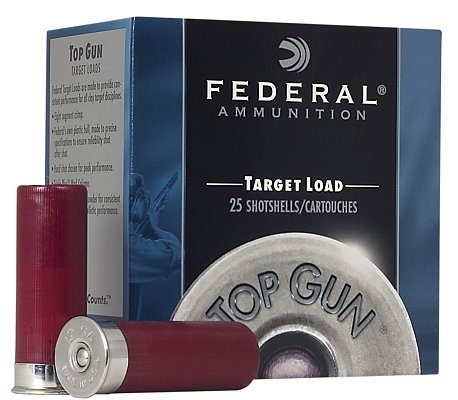
You are at the ammunition shelf before a round of trap or skeet, holding three boxes: Winchester Super Target, Federal Top Gun and Fiocchi Target. The labels say nearly the same thing. Twelve gauge, 1 1/8 ounces of shot, about 1,200 feet per second. One shooter says they are all the same; another swears one breaks targets better. So what are you actually choosing between? This article shows you where these three lines really differ, so you can match one to the way you shoot and then prove your choice with a simple pattern test in your own shotgun.
When the numbers match, what is left to compare?
Start with what the labels share. The shot load is the weight of the pellets in the shell, and all three lines are commonly offered at 1 1/8 ounces in 12 gauge. The muzzle velocity is how fast the shot leaves the barrel, and all three run at roughly 1,200 fps. That speed is a balance. A faster load reaches the target sooner but kicks harder, and a slower, softer load is easier on your shoulder but takes longer to get there. About 1,200 fps gives you manageable recoil and effective target engagement, which is why so many clay shells land there.
Each line also comes in more than one shot size, which lets you adjust for your discipline and target distance. Shot sizes are numbered so that a larger number means smaller pellets. Smaller pellets mean more of them in the same weight of shot, which fills the pattern more densely, while larger pellets carry more energy each. If you want to see how shot is evolving beyond plain round pellets, our article on innovative shot designs is worth a look.
Key idea: When the load weight and velocity match, the differences that matter are how uniformly each shell is built, what you can do with the hull afterward, and how its pattern looks coming out of your barrel and choke.
A pattern is the spread of pellets across a target at a given distance. Consistent patterns are the whole point of buying good target ammunition, so that is where we will spend most of our time.
Why a uniform shell makes a predictable pattern
Think of a garden hose with a nozzle. If the water pressure holds steady, the spray looks the same every time you squeeze the handle. If the pressure wobbles, so does the spray. A shotshell works in a similar way. The primer lights the powder, the powder burns and pushes the shot out of the barrel, and the pellets spread into a pattern on the way to the target. When the primer ignites the same way and the powder charge is the same weight from shell to shell, the pressure and velocity repeat, and the pattern repeats with them.
That is why all three manufacturers talk about components. Winchester uses clean-burning powders and reliable primers for uniform ignition, and the consistency of its powder charges leads to predictable patterns. Federal uses tightly controlled powder charges and reliable primers to keep shells consistent shot after shot. Fiocchi uses premium powders and primers for consistent ignition and performance. Different words, same goal, which is a shell that behaves like the last one.
Weather plays a part too. Temperature, humidity and even altitude can change how powder burns and how the shot pattern develops. The same box can behave a little differently on a cold morning than on a hot afternoon, which is one reason the testing later in this article asks you to write down the conditions.
Three lines, three personalities
Winchester Super Target: Consistency and reloadability
Super Target has long been a staple for shooters who want uniform performance. It is known for consistent shot patterns and solid construction, and it comes in 12, 20, 28 and .410 gauge, built for trap, skeet and sporting clays. Shooters praise it for tight, consistent patterns in both practice and competition. Its balance of velocity and recoil helps pattern density stay stable across a variety of shotguns, which matters if you shoot more than one gun or share ammunition with family.
Its other distinction is the hull, the shell's plastic body. Super Target hulls are considered reloadable, and many experienced reloaders compare them favorably to Winchester's premium AA line for durability in reloading. If you reload, or think you might, this is the line to look at first.
Federal Top Gun: Economical reliability for high-volume shooting
Top Gun is engineered to be a reliable, economical option for target shooters who log high round counts. Like Super Target, it is offered in various gauges for trap, skeet and sporting clays, and it is widely regarded for dependable patterning and consistency. Its budget-friendly pricing and broad availability make it popular with competitive shooters who need reliable ammunition in volume without breaking the bank.
The trade-off is the hull. Top Gun hulls are generally viewed as less ideal for reloading than those of higher-end options such as Federal's Gold Medal line, so the line suits a use-and-dispose approach. That is not a flaw. If you never reload, you are not paying for something you will not use, and you get the same dependable consistency on every trip to the range.
Fiocchi Target: Premium components for precision patterning
Fiocchi has built a reputation with its Target line, designed specifically for clay sports and a direct competitor to both Super Target and Top Gun. It is positioned as a premium yet affordable option. The formulation is optimized for precise shot distribution, a key factor in trap and skeet, and shooters report that its patterns are tight and reproducible, which makes it a strong contender in competition.
Its hulls are engineered for consistency rather than reloading. They are not as reload-friendly as some premium lines, but they are appreciated by shooters who favor out-of-the-box performance. Experienced shooters often commend its pattern consistency and reliability across various shotguns, and see it as an attractive way to gain an extra edge in pattern tuning.
Reloading: Do you need a hull you can reuse?
Reloading means refilling a spent hull with new components so it can be shot again. Hulls that hold up to many reload cycles let a reloader experiment with powder charges, shot sizes and pattern densities, then dial in a load for one specific shotgun. That is the appeal of Super Target. Top Gun hulls may not withstand as many reload cycles, which nudges reloaders toward premium alternatives when long-term consistency is the goal. Fiocchi Target sits in the middle, valued for what it does straight from the box.
Here is the decision rule. If you do not reload, hull durability should barely influence your choice, and you can judge each line by how it patterns in your gun and how it fits your budget. If you do reload, compare how the hulls hold up after multiple cycles, because consistency in the hulls and in performance after reloading is a sign of long-term value.
Safety: Reloaders should always follow published load data from a reputable source, and should never swap components on a guess. A hull that looks fine can still be at the end of its useful life, so inspect each one every time.
How choke and conditions change what you see on the pattern
A choke is a slight constriction at the muzzle end of the barrel that squeezes the shot as it leaves. A tighter choke keeps the pattern narrower, which puts more pellets in a given area at a given distance. A more open choke lets the pattern spread wider. Barrel length plays a role too, but the choke is the part you can easily change. Our guide to shotgun chokes explains the common constrictions and what each one does.
The important point is that ammunition and choke work as a pair. The interaction can differ between brands, so a shell that patterns beautifully through one choke may look different through another. Picture two shooters with the same shotgun. One loads Super Target and one loads Fiocchi Target, and both shoot through the same tube. Their patterns may not look alike, and that is not a sign that either shell is bad. If your gun takes choke tubes, trying a different one is the quickest way to tune the match.
The rule of thumb is to treat the shell and the choke as one decision. Change one at a time, and judge the result by the pattern, not by the brand name on the box.
Comparing the three lines side by side
| Feature | Winchester Super Target | Federal Top Gun | Fiocchi Target |
|---|---|---|---|
| Shot load | 1 1/8 oz (12 gauge); more than one shot size | 1 1/8 oz (12 gauge); more than one shot size | 1 1/8 oz (12 gauge); more than one shot size |
| Muzzle velocity | ~1,200 fps | ~1,200 fps | ~1,200 fps |
| Component quality | Clean-burning powder, reliable primers; reloadable hulls | Tightly controlled powder and primers; less reload-friendly | Premium powders and primers for tight, consistent patterns |
| Reloading potential | Good reload potential; compared favorably to Winchester AA | Generally a use-and-dispose approach | Not as reload-focused; valued for out-of-the-box consistency |
| Cost and availability | Budget-friendly and widely available | Economical; ideal for high-volume shooting | Affordable premium option with consistent performance |
| Target applications | Trap, skeet and sporting clays; excellent pattern uniformity | Reliable for trap, skeet and sporting clays | Precision patterning ideal for competitive trap and skeet |
Read the first two rows as the evidence that the lines are close cousins. Those rows will not help you decide. The rows that separate them are component quality, reloading potential and cost, so read across those three. Then match them to your habits. A high-volume shooter who does not reload will care about the cost row most. A reloader will care about the reloading row. A shooter chasing the tightest, most repeatable pattern will want to test the premium-component claims for themselves.
Try this: A pattern test for your shotgun
Reading about patterns only gets you so far. Here is how to see them for yourself. Wear eye and ear protection, keep the muzzle pointed safely downrange at all times, and use a range and backstop that allow pattern testing. Our article on eye and ear protection explains why both matter every time you shoot.
- Choose one box of each line you want to compare, in the same shot size so the comparison is fair.
- Pin a large sheet of paper to your backstop and mark an aiming point. Use the same distance for every shot.
- Fire one shell at the paper with the first load, then replace the sheet and label it with the load name, choke and conditions. Repeat with a few shells of each load.
- Compare the sheets. Look at how tightly the pellets cluster, whether the pattern is even or has thin spots and holes, and whether it is centered where you aimed.
- If your gun takes choke tubes, repeat with another tube, changing only the tube.
- Keep a log of each result, including temperature and weather, and add to it over time.
You will know it worked when you can name the load and choke that give your gun the most even, repeatable pattern, and you can explain why you chose it. For reloaders, add one more step. Reload some hulls and compare how they pattern after several cycles.
Common mistake: Judging a load from a single shot. Patterns vary a little, so a few shells per load tell you far more than one lucky or unlucky sheet of paper.
Putting it together
Both shooters may be right in their own guns. These three lines are close in payload and speed, and the differences show up in recoil feel, pattern in your gun, reloadability and price. Pick two, pattern them in your gun and choke at your usual distance, notice how each feels over a full round, and buy the one that breaks targets best at a cost you can sustain.
Check your understanding
Try answering these before you open the answer. If you can explain it in your own words, you understand it.
1. All three boxes list 1 1/8 ounces and about 1,200 fps. What should you compare instead?
Component quality and consistency, reloading potential, cost and availability, and above all how each load patterns in your shotgun through your choke.
2. Why does a consistent powder charge lead to consistent patterns?
An even charge produces similar pressure and velocity from shell to shell, so the shot leaves and spreads the same way each time. Uneven charges make the pattern vary.
3. You shoot a lot, never reload, and want to keep costs down. Which profile fits, and what should you still do?
Federal Top Gun's economical, use-and-dispose profile fits well. Still run a pattern test, because your own gun decides how well any load works.
4. A friend says the tightest choke is always best for every load. How would you respond?
A tighter choke keeps the pattern narrower, but ammunition and choke interact differently from brand to brand. Test the shells through the choke tubes you have, and judge by what the patterns show.
5. Why keep a log of temperature and weather during testing?
Temperature, humidity and altitude can change how powder burns and how patterns develop, so a log helps you pick the right load for a given day or competition.
Where to go next
If the premium end of the shelf interests you, our guide to competition shotgun shells looks at higher-end lines, so you can see what you get for the extra step up. To put your ammunition choice to work on the field, trap versus skeet explains how the two games differ, and skeet shooting tips on leading the target shows how a consistent pattern turns into broken clays. If you are still deciding on the shotgun itself, how to select the right shotgun for trap and skeet comes next.
Check out our ammo inventory and let us know if there's something you'd like that we don't have on the website or in stock. Our goal is to have everything you need so if we're lacking, say the word and we'll fix it!
If you found this informative, we invite you to sign up for email notifications of new blog articles.