
20-Gauge Target Loads for Trap and Skeet: Choosing Shot Size, Payload and Speed
Joseph McLain Nov 07, 2026
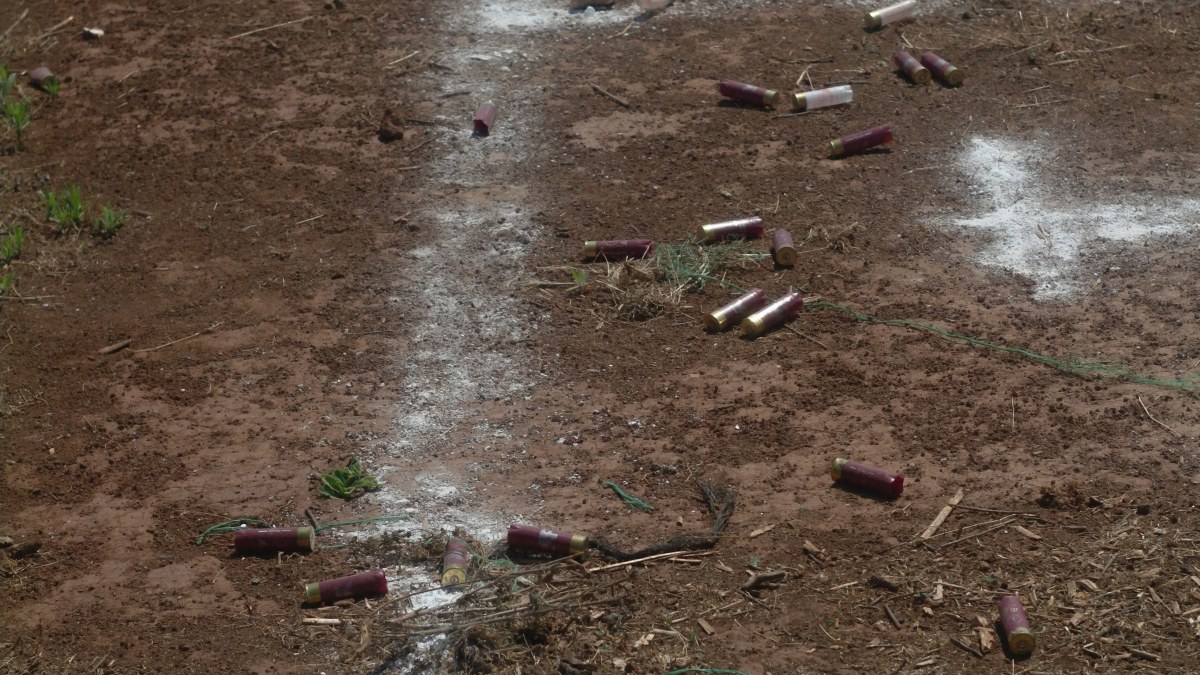
You have a 20-gauge shotgun, a box of clays at the club and a choice of target shells that all say "20 gauge" on the end. Is the cheapest box good enough? Should you shoot #7½ at full speed to make up for the smaller gauge on the trap field? Or is the whole point of a 20 its softer recoil, so the lightest, slowest shells make the most sense?
By the end you should understand what is inside a 20-gauge target shell, how shot size, payload and velocity work together on a flying clay, and why the right answer changes between skeet and trap, so you can read a box of 20-gauge target ammunition, choose a load for your game and the shooter holding the gun, and confirm it on a patterning board.
What a 20-gauge target shell is built to do
A target shell has one job: Put enough pellets, with enough energy, into the space where the clay will be, often enough that the clay breaks. A clay target is fragile, so it does not take much energy per pellet. What it takes is pattern density, meaning enough pellets spread evenly through the pattern that the clay cannot slip through a gap. Think of throwing a handful of sand at a moth. A few heavy pebbles might miss it entirely, while a cloud of fine grains is almost certain to touch it. Clay shooting works the same way, up to the point where the grains become too small to carry a hit across the distance.
The 20 gauge has a smaller bore than the 12 gauge, so it carries less shot. Most 20-gauge target loads carry 7/8 of an ounce of lead shot, compared with the 1 1/8 ounce that is the usual maximum in a 12-gauge trap load. The National Skeet Shooting Association's 20-gauge event is built around that 7/8 ounce figure. Less shot means fewer pellets, and fewer pellets means you have less room for error at longer distances. That is the honest bargain of the 20 gauge: Lighter gun, gentler recoil, smaller margin.
Key idea: A target load is a balance among three things: How many pellets you have (payload and shot size), how hard each pellet hits (shot size and velocity), and how much the shooter feels (payload and velocity). Change one and the others move.
Shot size: The number of pellets versus the punch of each one
Shot sizes are numbered so that a larger number means a smaller pellet. Target loads for clays almost always use #7½, #8 or #9 lead shot, and the major organizations allow nothing larger than #7½ for trap or skeet. The difference among those three sizes looks small, but it changes the pellet count a great deal. An ounce of #7½ holds roughly 350 pellets, an ounce of #8 roughly 410 and an ounce of #9 roughly 585. In a 7/8-ounce 20-gauge load, that works out to about 305 pellets of #7½, about 360 of #8 and about 510 of #9.
More pellets fill the pattern more densely, which helps at close range where the pattern is still small. Larger pellets keep their energy farther, which helps at longer range where the clay is moving away and the pattern has spread. That is why shot size follows distance:
- #9 is the classic skeet choice. Skeet targets are often broken at 20 to 25 yards, where a dense cloud of small pellets is the best way to cover a crossing target.
- #8 is the all-around choice. It holds enough energy for 16-yard trap and gives a good balance of density and reach for sporting clays and longer skeet stations.
- #7½ is the trap and long-target choice. When targets are broken at 35 yards or more, as they are from the trap handicap line, the heavier pellet carries a hit that #9 may not.
Choose the smallest shot that still breaks targets cleanly at the distance where you actually break them. If your targets are being "dusted" with clean breaks, your shot size is adequate. If you are hitting targets that drop a chip and keep flying, the pellets may be arriving with too little energy, and the next size up may help.
Payload: Why 7/8 ounce is the standard and when lighter makes sense
Payload is the weight of shot in the shell. Most 20-gauge target loads carry 7/8 ounce, and that is the most useful starting point because it matches the NSSA 20-gauge event and gives the most pellets the gauge comfortably handles. Some makers also offer 3/4-ounce and lighter loads in 20 gauge, sold for reduced recoil or for youth and new shooters.
A lighter payload has fewer pellets, so the pattern is thinner, but it also produces noticeably less recoil, because recoil depends heavily on how much weight you push out of the barrel and how fast. For a young or small-framed shooter, or for anyone whose shoulder is the limiting factor, a lighter load that they can shoot without flinching will break more targets than a full load that makes them anticipate every shot. Flinching is the enemy here. A shooter who is bracing for recoil stops the gun, lifts the head and misses behind, and no amount of extra shot fixes that.
Start with 7/8 ounce. If the shooter is fatigued, sore or flinching before the round is over, try a lighter load for practice and see whether the scores and the enjoyment both improve. A lighter shell that keeps someone coming back to the range is the right shell.
Velocity: Faster is not automatically better
Velocity is how fast the shot leaves the barrel, measured in feet per second. Typical 20-gauge target loads run somewhere around 1,150 to 1,250 feet per second. It is tempting to think that a faster load gives you more lead forgiveness or a harder hit, and it does, a little. But the difference in travel time to a target at 25 yards between a 1,150 and a 1,250 fps load is a few thousandths of a second, which is not something most shooters can feel in their lead. The faster load also kicks harder, and on some guns it can open the pattern slightly.
For skeet, a moderate velocity is almost always the better trade, because the shots are close and comfort over a full round matters more than a tiny change in timing. For trap, especially from longer handicap yardage, a slightly faster load with #7½ shot can help carry energy to a target that is already well out. In both games, consistency matters more than raw speed. A shooter who uses the same load all season learns its timing, and that learned timing is worth more than any speed printed on the box.
Skeet versus trap: Why the right 20-gauge load changes
The two games ask different things of a load because of distance and angle. If you are still deciding which game suits you, our article on trap versus skeet explains the layouts.
| Game | Typical break distance | Good starting load | Why |
|---|---|---|---|
| Skeet | About 20 to 25 yards | 7/8 oz of #9 at a moderate velocity | Close crossing targets reward pattern density and comfort over a full round |
| 16-yard trap | About 30 to 35 yards | 7/8 oz of #8 | Going-away targets need a balance of density and pellet energy |
| Handicap trap and long sporting targets | 35 yards and beyond | 7/8 oz of #7½, possibly a little faster | Heavier pellets keep enough energy to break a distant target |
| New or recoil-sensitive shooter, any game | Close to moderate | 3/4 oz light load of #8 or #9 | Less recoil prevents flinching, which matters more than pellet count early on |
Left to right, the table is a chain of reasoning. Distance decides how much energy each pellet must keep, energy decides the shot size, and the shooter decides how much payload and speed they can comfortably handle. The 20 gauge is perfectly capable at skeet, which is why it has its own NSSA event. At trap it is a real handicap compared with a 12-gauge 1 1/8-ounce load, because the targets are farther and the pattern thinner, but it is a sensible way for a young shooter to learn trap before moving to a heavier gun and load.
Common mistake: Blaming the shell for misses that come from the swing. A thinner 20-gauge pattern does forgive less, but most missed targets are missed by stopping the gun or misreading the lead, not by gaps in the pattern. Pattern the load once so you know it is sound, then spend your effort on technique.
Chokes and the 20 gauge
The choke at the muzzle controls how tightly the shot cloud holds together, and it matters as much as the shell. With the smaller 20-gauge payload, it is tempting to choke tighter to keep the pattern dense, but a tight choke at skeet distances produces a small, dense pattern that is easy to miss with. Skeet usually calls for an open choke such as skeet or improved cylinder, while 16-yard trap usually calls for modified or improved modified, and handicap trap for tighter still. Our guide to shotgun chokes explains how each constriction shapes the pattern. Match the choke to the distance first, then choose the shell.
Reloadable hulls and cost
Many shooters who shoot a lot of 20-gauge eventually consider reloading, and target hulls differ in how many times they can be reloaded. If you think you might reload later, it is worth saving your empty hulls from a brand known for reloadable target hulls and asking a reloader at your club which ones last in their experience. If you will never reload, buy the load that patterns and feels best to you at a price you can sustain, because the shells you can afford to shoot often will improve your scores more than a premium box you ration. Reloaders should always follow published load data from a reputable source for the exact hull, wad, primer and powder they use.
Patterning two loads before the season
Two loads on paper settle the question better than any box label. Choose two you are considering, such as a 7/8-ounce #8 and a 7/8-ounce #9, or a full load and a light load. At a range that allows patterning, with eye and ear protection on and the muzzle downrange, fire one shot of each at a large sheet with an aiming mark, at the distance where you usually break targets: about 21 yards for skeet or about 32 yards for 16-yard trap, with your usual choke. A 30-inch circle around the densest part of each pattern shows any gaps a clay could slip through. Then shoot a full round with each and notice how your shoulder, your concentration and your score hold up by the last station. The load with an even pattern that you can shoot comfortably all round is the one to buy.
Putting it together
Target loads are close enough in performance that price matters. The 20 gauge carries less shot, so at long trap targets a heavier pellet helps. And softer recoil is the 20's greatest strength, especially for new and young shooters. To choose a load, let the distance choose the shot size, let the shooter choose the payload and speed, let the game choose the choke, and let a patterning board confirm the result. For most skeet shooters that ends at 7/8 ounce of #9 at a moderate speed. For most 16-yard trap shooters it ends at 7/8 ounce of #8. For anyone who is flinching, it ends at a lighter load until the flinch goes away.
Check your understanding
Try answering these before you open the answer. If you can decide what to do and explain why, you have it.
1. Two boxes both hold 7/8 ounce of shot, one #9 and one #7½. Why does the #9 box hold so many more pellets?
A larger shot number means a smaller pellet, so more fit into the same weight: roughly 510 pellets of #9 in 7/8 ounce, compared with about 305 of #7½.
2. You shoot skeet and your targets break cleanly. A friend says to switch to #7½ for "more power." Is that a good idea?
Probably not. At skeet distances #9 already carries enough energy, and its denser pattern is an advantage. Clean breaks show the shot size is adequate.
3. Why might a young shooter break more targets with a lighter 3/4-ounce load than with a full load?
Less recoil reduces flinching. A shooter who is not bracing for the shot keeps the gun moving and the head down, which matters more than the small loss of pellets.
4. Does a faster 20-gauge load change your lead in a way you can feel?
Not much. The difference in travel time at typical clay distances is a few thousandths of a second. Consistency with one load usually matters more than its speed.
5. Your 20-gauge breaks skeet targets well but misses more on the trap field. Why is the 20 a bigger handicap at trap?
Trap targets are broken farther away, where the pattern has spread and a smaller payload leaves more gaps. Skeet targets are close, where a 7/8-ounce pattern is still dense enough.
Where to go next
If you are still choosing the gun itself, read our guide to 20-gauge shotguns for youth trap and skeet shooters, which covers fit, weight and recoil. To see how the common 12-gauge target lines compare once a shooter moves up, read our comparison of Winchester Super Target, Federal Top Gun and Fiocchi target loads. To understand the choke side of the pattern, see demystifying shotgun chokes. And because a full round of shooting is loud, review why eye and ear protection matter before your next trip to the club.
If this article helped you, we invite you to sign up for email notifications of new blog articles.