
12-Gauge Shotguns for Trap and Skeet Shooting: A Guide for Adults
Joseph McLain Nov 07, 2026
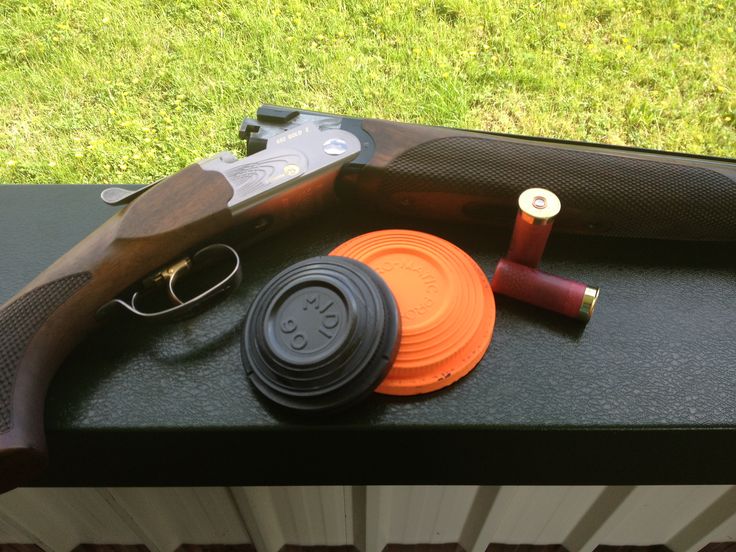
You are shopping for a 12-gauge for clay targets, and the choices pull in different directions: a long, heavy over/under that swings steadily for trap, a short, lively gun that moves quickly for skeet, or a semi-automatic that softens recoil. And 26-inch, 30-inch and 32-inch guns look nearly alike side by side.
By the end you should understand why trap and skeet ask different things of a 12-gauge and how barrel length, weight, choke, action and stock fit each answer part of that question, so you can match a gun to the game you shoot most, decide whether one gun can serve both, and check whether a gun fits you before you buy.
Let the targets decide
Every feature on a trap or skeet gun solves a problem the targets create, so start with the targets. In trap, clay targets are thrown away from you from a single house in front of the line. You never know the exact angle, but every target is going away and climbing or leveling off, much like a bird flushing in front of you. You shoot from five stations in a line, and the distances grow as the targets fly.
In skeet, targets come from two houses, a high one on the left and a low one on the right, and they cross in front of you on fixed paths. You move around a half-circle of stations, so on each station the same targets appear at a different angle. The shots are closer than in trap, but the targets cross quickly and you have to swing the gun across your body to stay with them.
Put simply, trap rewards a gun that settles smoothly onto a target moving away and keeps tracking it steadily. Skeet rewards a gun that starts moving quickly and changes direction easily. The same 12-gauge can shoot both games, but each feature you choose tilts the gun one way or the other. If you have not chosen a game yet, our article on trap vs. skeet will help you pick a starting point.
Key idea: Trap rewards a gun that tracks a target moving away smoothly and steadily. Skeet rewards a gun that starts quickly on a crossing target. Every feature below follows from that difference.
Barrel length and weight: Steady or quick
Trap shooters usually prefer longer barrels, commonly 30 to 32 inches, and heavier guns. Skeet shooters usually prefer barrels of about 26 to 30 inches and guns that feel livelier between the hands.
Think of swinging a long fence post and a short broom handle. The fence post is slow to get moving and slow to stop, but once it is swinging it glides along its path and is hard to jerk off line. The broom handle starts and stops instantly but is easy to wave off course. A long, heavy trap gun behaves like the post, which suits a target that is already moving away on a fairly predictable line. A shorter, lighter skeet gun behaves like the broom handle, which helps when you have to start a swing quickly across a crossing target.
Weight also helps with recoil. A heavier gun moves back more slowly when it fires, so the same shell feels gentler, and trap shooters may fire a hundred or more shells in a day. The cost is fatigue: A heavy gun gets harder to mount the same way each time as your arms tire. Lean longer and heavier if most of your shooting will be trap, lean shorter and livelier if it will be skeet, and pick the middle, often 28 to 30 inches, if you want one gun for both.
Chokes: Tight for distance, open for close crossing shots
A choke is a slight narrowing at the muzzle that controls how quickly the shot spreads after it leaves the barrel. Think of the nozzle on a garden hose. A tight setting sends a narrow stream that holds together farther away, and an open setting makes a wide spray that covers more area up close.
Trap targets are farther away when you hit them, so trap shooters commonly use tighter chokes such as modified, improved modified or full, which keep the pellets together for longer. Skeet targets are closer, so skeet shooters favor open chokes such as skeet or improved cylinder, which spread the pattern quickly and give you more room for error on a crossing target. Many modern shotguns accept screw-in choke tubes, so one gun can switch between games in a minute. Our guide to shotgun chokes explains the names and what they do.
The rule that keeps chokes simple is to use the most open choke that still breaks targets cleanly at the distance you are shooting them. A tighter choke does not add power; it only narrows the pattern, which makes a slightly off-line shot more likely to miss.
Common mistake: Assuming the tightest choke is always best. On a close crossing skeet target, a tight pattern leaves very little room for error and turns near-misses into clean misses.
Over/under or semi-automatic
Most dedicated trap and skeet guns are either over/unders, with two barrels stacked one above the other, or gas or inertia-operated semi-automatics.
An over/under has no moving parts that cycle when it fires, so it is very reliable, it lets you choose a different choke in each barrel, and it opens fully so everyone on the field can see it is unloaded. Clubs value that last point for safety. The cost is that recoil comes straight back into your shoulder, and quality over/unders cost more.
A semi-automatic uses part of the energy of each shot to cycle the action. Gas-operated designs in particular spread the recoil over a slightly longer time, so many shooters find them softer to shoot. In exchange, they need regular cleaning to stay reliable, they throw empty hulls to the side, which some squad members dislike, and you should check that your club allows them on its fields.
Choose an over/under if reliability, simplicity and the option of two chokes matter most, and a gas semi-automatic if recoil is the thing most likely to keep you from practicing.
Stock fit: Making the gun point where you look
A shotgun is pointed more than it is aimed. You look at the target and the gun should point where your eye is looking. That only happens when the stock fits you, so fit matters as much as any feature on the barrel.
Two measurements matter most. The comb is the top of the stock where your cheek rests, and its height sets where your eye sits relative to the rib. Length of pull is the distance from the trigger to the end of the stock, which sets how the gun fits between your shoulder and your trigger hand. Adjustable combs and adjustable length of pull let one gun fit many shooters. Trap guns are often set so they shoot slightly high, which lets you see a rising target above the barrel. Skeet guns are usually set to shoot flatter.
A gun that does not fit will miss in the same direction again and again, no matter how carefully you swing. Fit the gun before you blame your technique, and treat an adjustable stock as a feature worth paying for if you are not built like the average shooter.
The shells the games allow
Clay target competitions limit the shells you can use, so the gun and the shell have to work together. Under the rules of the Amateur Trapshooting Association, the governing body for American trap, 12-gauge loads may hold no more than 1 1/8 ounces of shot, and the shot can be no larger than #7 1/2. Velocity is capped as well, with lighter loads allowed slightly more speed. Skeet rules use the same 1 1/8-ounce limit and allow #7 1/2 through #9 shot. Check the current rule books before a registered event, because rules are revised from time to time.
Within those limits, lighter shells kick less. Many shooters find that a 1-ounce load breaks targets just as well as 1 1/8 ounces for most practice, with noticeably less recoil over a long day. You give up a few pellets in the pattern, so practice with the lightest load that breaks your targets cleanly and save heavier loads for the longest shots. Our guide to competition shotgun shells compares the popular target lines.
Four 12-gauge shotguns that put these features to work
These four well-known models show how the features above combine. They are examples to learn from, not the only good choices, and each manufacturer offers several variations, so check the specific version in front of you.
| Model | Action | Leans toward | What it shows |
|---|---|---|---|
| Browning Citori 725 Trap | Over/under | Trap | Long barrels, trap-style stock options and Invector-DS choke tubes |
| Beretta 686 Silver Pigeon I | Over/under | Both | An all-round over/under with interchangeable choke tubes |
| Benelli Ethos | Inertia-driven semi-automatic | Skeet and sporting use | A light, quick-handling semi-automatic with a recoil-reducing stock |
| Fabarm XLR5 Velocity | Gas-operated semi-automatic | Both | A competition semi-automatic with an adjustable stock |
Start with the column that matters to you. If you will shoot trap almost exclusively, a dedicated trap gun like the Citori 725 Trap is built around long, steady swings and a stock that suits rising targets. If you want one gun for both games, an all-round over/under with choke tubes like the 686 Silver Pigeon I is the traditional answer. If recoil is your main concern, a gas-operated semi-automatic such as the XLR5 is the usual answer, while an inertia gun like the Ethos is lighter and quicker but generally does less to soften recoil than a gas system. Handle any of them before deciding, because the one that fits you will outshoot the one with the better reputation.
A mount test for stock fit
Five mounts at home tell you whether a gun fits. With the shotgun confirmed unloaded and all ammunition out of the room, close the action on the empty chambers and pick a small mark on a wall in a safe direction. Look at the mark, close your eyes and mount the gun as you would for a shot, then open your eyes without moving your head and note where the rib points and how much of it you see. A gun that points at or near the mark the same way every time fits; one that points off in the same direction each time needs comb height or length of pull adjusted, which is exactly what an adjustable stock is for. Open the action when you finish.
Putting it together
Choosing a 12-gauge for clay targets comes down to which game you will shoot most. For mostly trap, choose a longer, heavier gun with tighter choke options and a stock that shoots slightly high. For mostly skeet, choose a shorter, livelier gun with open chokes and a flatter-shooting stock. For both, choose a middle barrel length with screw-in chokes and an adjustable stock, and switch chokes when you switch fields. Then decide between an over/under and a semi-automatic by asking whether reliability and simplicity or softer recoil matters more to you. Whatever you buy, make it fit you, and practice with the lightest legal shells that break your targets.
Check your understanding
Try answering these before you open the answer. If you can decide what to do and explain why, you have it.
1. A friend plans to shoot only trap. What barrel length, weight and choke should they lean toward, and why?
A longer barrel, about 30 to 32 inches, a heavier gun and a tighter choke such as modified or improved modified. Length and weight give a smooth, steady swing and soften recoil, and the tighter pattern holds together on targets that are farther away.
2. Your skeet scores improve when you switch from a modified choke to skeet chokes. Why?
Skeet targets are close and crossing, so a pattern that spreads quickly gives you more room for error than a tight one.
3. You can afford only one 12-gauge but want to shoot both trap and skeet. What features make that work?
A middle barrel length, screw-in choke tubes so you can change patterns for each game, and an adjustable stock so the gun fits you.
4. Recoil is wearing you out by the end of a round. What two changes could help?
A gas-operated semi-automatic or a heavier gun, and lighter shells within the rules, such as 1-ounce target loads.
5. Your mount test misses the mark in the same direction every time. What does that tell you?
The stock does not fit you yet. Adjusting comb height or length of pull should correct it.
Where to go next
If you have not settled on a game yet, trap vs. skeet explains how the two differ and which is easier to start with. For youth shooters and a second set of model recommendations, read how to select the right shotgun for trap and skeet. Once you own the gun, our guide to competition shotgun shells helps you match the shell to it, and skeet shooting tips shows how to lead crossing targets.
If this article helped you, we invite you to sign up for email notifications of new blog articles.