
The Winchester Model 70: Why the Rifleman's Rifle Became a Benchmark
Joseph McLain Nov 07, 2026
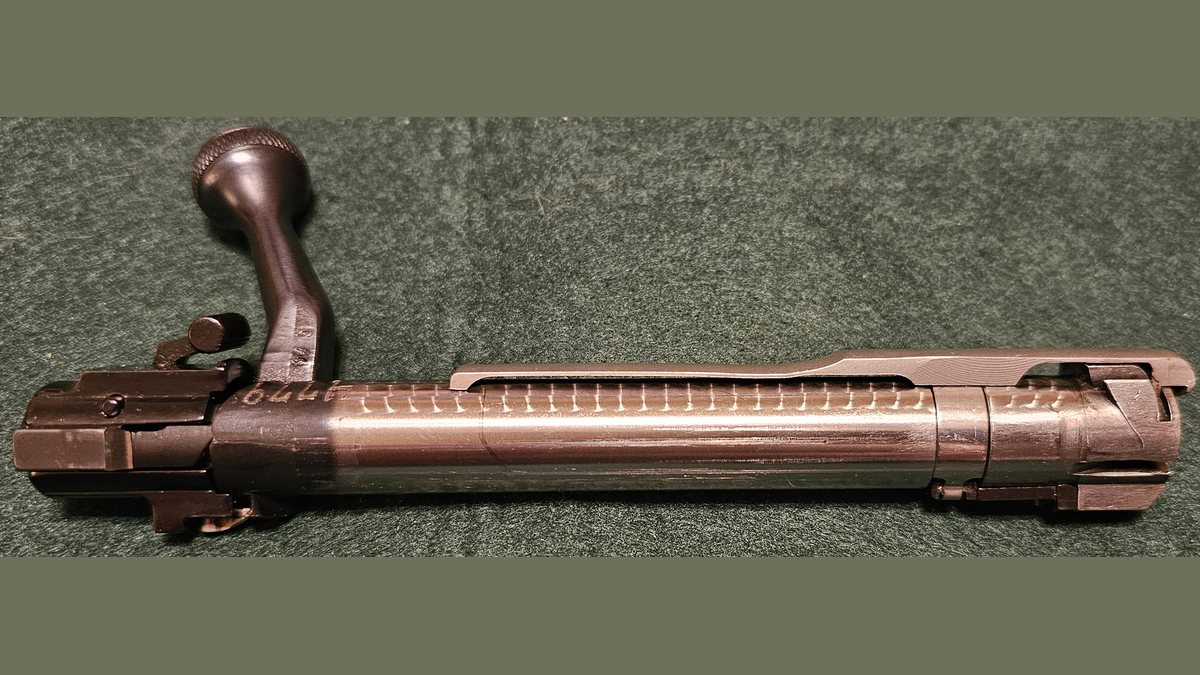
You are looking at a Winchester Model 70, maybe an older pre-'64 rifle or a new one. Is the pre-'64 the only real Model 70, are today's rifles better made than ever, and why does it matter when every bolt rifle shoots? The rifle's history answers that. It explains why other hunting rifles are still measured against it and what to look for if you are buying one today.
By the end you should be able to identify which era of Model 70 you are looking at, explain the practical meaning of its controlled-round feed and three-position safety, understand why the 1964 redesign created a lasting debate, and decide whether a particular Model 70 fits the way you hunt.
From the Model 54 to the Model 70
Winchester introduced the Model 54 bolt-action rifle in the 1920s, one of the first American bolt actions designed from the start for commercial hunting cartridges. The Model 70, introduced in 1936, refined that design into a rifle built around the needs of hunters using telescopic sights. Winchester marketed it as "The Rifleman's Rifle," and writers such as Jack O'Connor, who championed the .270 Winchester, helped make it the standard by which American hunting rifles were judged. That reputation came from a combination of three design choices.
Controlled-round feed: Reliability under pressure
The early Model 70 used a Mauser-type claw extractor that grips the cartridge rim as soon as it rises from the magazine and holds it all the way into the chamber and back out. That is controlled-round feed. Its value shows up in real hunting: When you cycle the bolt quickly for a follow-up shot, when you are not holding the rifle level, or when cold, dirt or excitement makes you short-stroke the bolt. Because the cartridge is held throughout, the rifle is less likely to double-feed or fail to extract. Our article on how bolt actions work compares controlled-round feed with push feed in detail.
The Model 70 also used a cone-shaped breech, which helps guide the bullet into the chamber smoothly as the cartridge is pushed forward. It is a small detail that makes feeding more forgiving.
The wing safety: Built for a scoped rifle
The classic Model 70 safety is a three-position "wing" on the bolt shroud. In its rear position it locks the firing pin and the bolt. In the middle position it locks the firing pin but lets you work the bolt, so you can unload with the safety on. Forward is fire. Because it sits on the bolt shroud and swings sideways, it clears a low-mounted scope, which mattered as scopes became common. A three-position safety lets you unload the rifle without taking it off safe, which is one of the most frequent safety moments in hunting. As with every mechanical safety, it supplements, and never replaces, careful muzzle control and keeping your finger off the trigger.
Key idea: The Model 70's reputation rests on a hunter's priorities: Positive feeding and extraction, a safety designed for a scoped rifle and safe unloading, and a strong, simple action that holds up in the field.
Pre-'64 rifles: Why an era became a category
Model 70s made from 1936 through 1963 are known as "pre-'64" rifles. They are associated with controlled-round feed, careful machining and finishing, and classic styling, and they are sought after by collectors and hunters. In 1952 Winchester added the Featherweight version, a lighter rifle that became a favorite for carrying in the field. The Model 70 also served in military roles: Marine Corps marksmen used Model 70 rifles as sniper rifles in World War II and Vietnam, which added to its reputation for accuracy and toughness.
The term pre-'64 is a reference to an era, not a guarantee of condition or value. A specific rifle's worth depends on its condition, originality, caliber and history. If you are considering one, have it inspected and evaluated by someone who knows the model.
1964: The redesign that started a debate
In 1964 Winchester redesigned the Model 70 to reduce manufacturing cost. The most visible change was a switch from controlled-round feed to a push-feed design with a smaller extractor in the bolt face, along with other changes to the stock and finish. Many shooters saw the change as a step backward, and the phrase "pre-'64" took on the meaning it still carries. Rifles from the post-1964 period were functional and often accurate, but they lost the feature that defined the original for many hunters. That reaction is the source of the older hunter's opinion in the opening: For him, controlled-round feed is what made a Model 70 a Model 70.
Controlled-round feed returns
Over the following decades Winchester brought controlled-round feed back, first in "Classic" models in the early 1990s and then across the line. After the original New Haven, Connecticut factory closed in 2006, production resumed under new ownership in Columbia, South Carolina, with controlled-round feed, the three-position safety and an adjustable trigger. Since 2013, Model 70s have been made at the parent company's factory in Viana, Portugal. Modern Model 70s are built with current machining methods, and many shooters consider them among the best-made production Model 70s, which is where the younger shooter in the opening is coming from. Models, finishes and calibers change, so check the current lineup for the version you want.
| Era | Feeding | What it is known for |
|---|---|---|
| 1936–1963 (pre-'64) | Controlled-round feed | The original reputation, classic styling, collector interest; Featherweight from 1952 |
| 1964 into the early 1990s | Push feed | Cost-reduced redesign; functional, but the change that started the debate |
| Early 1990s onward | Controlled-round feed returns in Classic models, then broadly | Return of the defining feature |
| 2008 onward | Controlled-round feed | Modern production with three-position safety and adjustable trigger; later production in Portugal |
The table works as a guide to what you are holding. The date of manufacture tells you whether to expect controlled-round or push feed, and therefore which of the two design philosophies the rifle follows. When in doubt, look at the bolt face: A long claw extractor along the side of the bolt points to controlled-round feed, while a small clip or plunger in the bolt face points to push feed.
Common mistake: Assuming every Model 70 has controlled-round feed. Push-feed Model 70s were made for decades. If that feature matters to you, check the bolt, not the name on the receiver.
Why the Model 70 still matters
The Model 70 earned its place because its features answer practical hunting questions: Will it feed when I am hurried? Can I unload it safely with the safety on? Will the safety clear my scope? Those questions still matter, and the Model 70's answers influenced many later rifles. Whether you choose a Model 70 or another bolt rifle, those are the right questions to ask. Our comparisons of the Remington 700 and the Ruger M77 show how other designers answered them.
Evaluating a Model 70 before you buy
A few minutes with the rifle in hand tell you what you're buying. With the action open and the rifle confirmed unloaded, identify its era from the serial number or markings. Look at the bolt face: a long claw extractor along the side of the bolt means controlled-round feed, while a small clip or plunger in the bolt face means push feed. Work the safety through its positions and confirm in the owner's manual what each one locks. Then shoulder the rifle to check that the stock fits you and that any scope sits at a comfortable height. Knowing the era, the feed, the safety and the fit lets you judge the price.
Putting it together
Every era produced a real Model 70. The original controlled-round feed rifles built its reputation, modern Model 70s, with controlled-round feed back and modern manufacturing, are excellent rifles, and any well-made bolt rifle can shoot well, which is why the Model 70's real significance lies in its practical hunting features rather than magic. Know the era, check the feeding and safety on the specific rifle, make sure it fits, and choose the version that matches how you hunt.
Check your understanding
Try answering these before you open the answer. If you can decide what to do and explain why, you have it.
1. A listing describes a Model 70 as "pre-'64." What should that tell you, and why does it matter to buyers?
It was made from 1936 through 1963, before the 1964 redesign, so it should have controlled-round feed and classic manufacturing, the features that built the rifle's reputation and that collectors and many hunters pay more for.
2. What did the 1964 redesign change, and why did shooters react?
It switched from controlled-round feed to push feed to reduce cost. Many shooters saw losing controlled-round feed as a step backward.
3. What does the middle position of the Model 70's three-position safety allow?
It locks the firing pin but lets you work the bolt, so you can unload with the safety on.
4. You're looking at a used Model 70 with no paperwork. How can you tell from the bolt whether it has controlled-round feed?
Look at the extractor. A long claw extractor along the side of the bolt indicates controlled-round feed; a small clip or plunger in the bolt face indicates push feed.
5. A friend asks why so many bolt rifles copy features from the Model 70. What would you tell him?
Its features answered practical hunting needs: positive controlled-round feeding, a scope-friendly safety that lets you unload with the safety on, and a strong action. Those shaped what hunters still expect from a bolt rifle.
Where to go next
For the mechanics behind these features, read how bolt actions work. For two other influential bolt rifles, see the Remington 700 and the Ruger M77. And to judge what different price points buy in a hunting rifle, read out-of-the-box hunting rifle quality.
Photo: "Winchester Model 70 Classic Featherweight .300 WSM's Mauser-style bolt" by Efeesh, via Wikimedia Commons, licensed CC BY-SA 4.0; cropped to the side view and placed on a matching background.

If this article helped you, we invite you to sign up for email notifications of new blog articles.