
What Are TALO Exclusive Firearms? A Look at These Limited-Run Collector’s Guns
Joseph McLain Nov 07, 2026
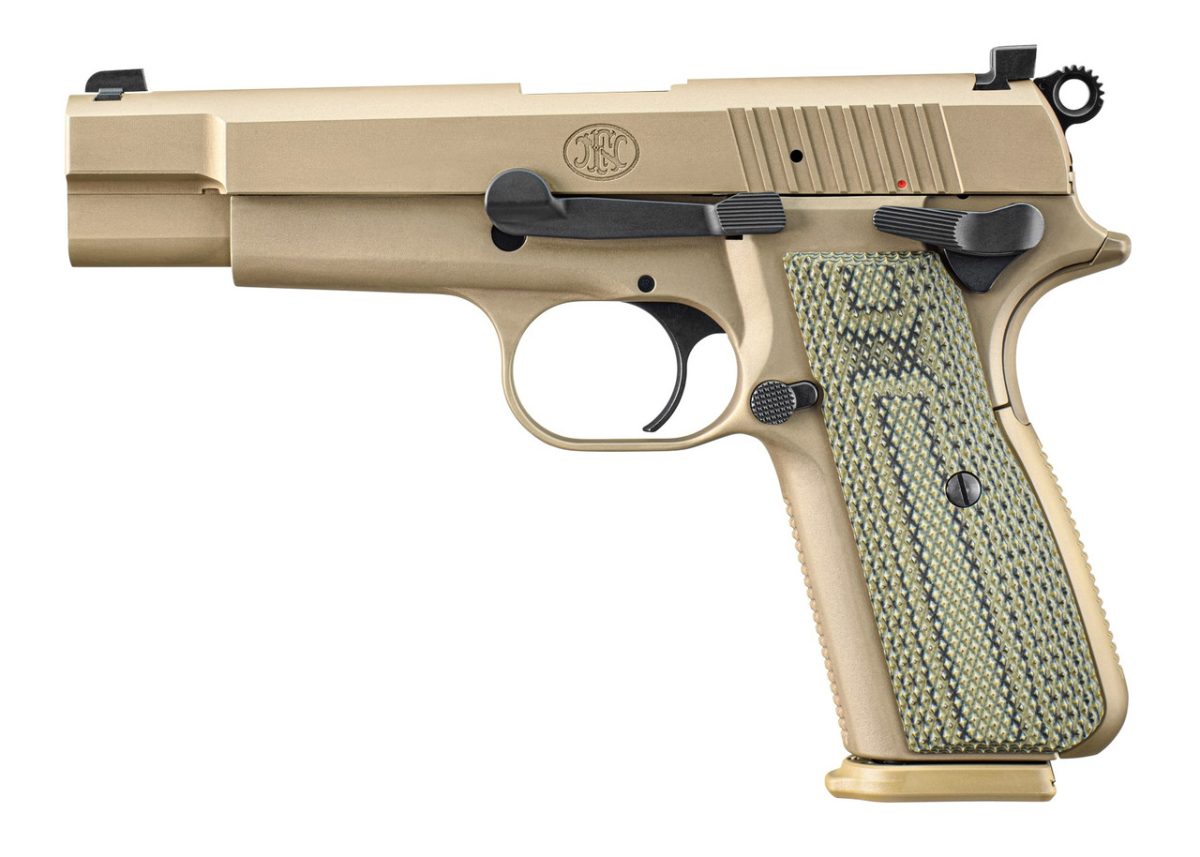
A pistol with an unusual finish catches your eye in a listing. The description says "TALO Exclusive," and the price is higher than the plain version beside it. Is it a collector's piece that will hold its value, the same gun in a different color, or a model with features you'd actually use? Sometimes it is each of those, and knowing which is the whole decision.
By the end you should be able to look at any TALO Exclusive, compare it with the standard model, and decide whether the extra cost buys something you want.
What TALO is, and what it is not
TALO Distributors is not a gun maker. It is a buying cooperative, a group of businesses that pool their purchasing so they can order together. TALO says it was started in 1965 by fishing and hunting wholesalers in Texas, Arkansas, Louisiana and Oklahoma. Its members are wholesale distributors, the companies that sit between manufacturers and the retail stores where you shop.
Because the cooperative buys in volume, it can ask a manufacturer to build a special version of a model just for its members to sell. The manufacturer still designs, builds and warrants the firearm. TALO's part is commissioning the special configuration and getting it to dealers. Recent TALO releases named on the cooperative's own site include a limited Ruger SR1911 edition of 800 pieces, two-tone Diamondback SDR revolvers, engraved TriStar over/under shotguns, Glock models in the V Series, and its first co-branded Winchester ammunition packs.
Think of it like a store-brand special edition of a familiar car. The automaker builds it on the same line with the same engine, and the dealer group that ordered it chose a paint color, wheels and maybe an option package you cannot get elsewhere. Knowing that keeps your expectations realistic. A TALO Exclusive is the manufacturer's firearm, with the manufacturer's strengths and weaknesses, in a configuration you will not find in the regular catalog.
Key idea: A TALO Exclusive is a familiar firearm, built by its usual manufacturer, in a special configuration for a limited run. Judge the underlying model first, then decide whether the special features are worth the difference in price.
Four ways an exclusive can differ from the standard model
No two TALO Exclusives are alike, but nearly every difference falls into one of four groups. Sorting them this way turns a confusing listing into a practical question: Will you see the difference, feel it, shoot with it, or simply own it?
What you see: Finish and engraving
The most common difference is appearance. An exclusive might wear a colored Cerakote finish, a two-tone slide and frame, polished or gold accents, or engraving on the receiver. These change how the firearm looks and, depending on the coating, can change how it resists wear and corrosion. Our guide to handgun finishes explains what different coatings actually do. Appearance is real value if you enjoy it every time you open the case, and no value at all if you do not care how the firearm looks.
What you feel: Grips and stocks
Some exclusives use upgraded grips, special wood or a different stock. Unlike a finish, a grip or stock touches your hands and shoulder, so it can change comfort and control as well as looks. A textured grip panel may help you hold a pistol steady with sweaty hands. A finer wood stock may look better without fitting you any better. Handle the firearm before deciding a different grip is an improvement, because fit is personal.
What you shoot with: Functional features
Some editions add features from the factory, such as night sights or fiber optic sights, an optics-ready slide, a threaded barrel or a different barrel length. These are the differences you use on every trip to the range, so they deserve the most weight in your decision. Price them honestly, though. If the standard model plus an aftermarket sight upgrade costs less than the exclusive, the exclusive is charging you for something else, usually appearance or rarity. A threaded barrel only matters if you plan to use a suppressor. Suppressors are covered by the National Firearms Act, and since October 9, 2026, ATF has said it will not enforce its approval and registration requirements for them (see ATF's current guidance), a policy that could change, with state law still applying; our suppressor guide explains how they work.
What you own: Limited production
The fourth difference is how many exist. A standard model may be built by the hundreds of thousands, and an exclusive may be limited to a set number. Rarity is what collectors pay for, and it has both an upside and a cost, which the next section explains.
Taken together, the four groups give you a simple rule: Weight the functional differences most, the feel differences next, and the appearance and rarity differences only as much as they personally matter to you.
Rarity, price and value: Three different things
People often treat "limited edition," "expensive" and "valuable" as the same idea. They are not, and separating them is the most useful thing you can do before you buy.
Rarity is simply how many were made. Price is what the dealer asks today. Value is what someone else will pay you later, and that depends on demand, not on rarity alone. A limited edition that few people want can sell later for less than its original price, while a popular one may sell quickly at a premium. No one can promise you which way a particular edition will go, so treat any talk of guaranteed appreciation with caution.
Picture two limited-run coffee mugs. One celebrates a team with a huge following and the other a team few people remember. Both are rare. Only one has buyers lining up. Firearms work the same way: An exclusive based on a widely admired model, in a configuration people like, tends to hold interest better than an unusual color on a less popular model.
Rarity also has a practical cost if you plan to shoot the firearm a lot. Internal parts are usually shared with the standard model, so springs and pins are easy to find. Edition-specific parts, such as a special slide, grip panels or a uniquely finished barrel, may be hard to replace if they are damaged. Buy an exclusive to shoot only if every part you are likely to wear out is shared with the standard model, and to buy one to collect only if you like it enough to own it whether or not it gains value.
Common mistake: Buying an exclusive as an investment because it is "limited." Rarity without demand does not create value. Buy it because you want it, and treat any future gain as a bonus rather than a plan.
How to read a TALO listing
Dealer listings for exclusives often lead with the finish and the TALO name and bury the details. Read past the headline and look for the manufacturer's model or catalog number, the caliber and barrel length, the sights, the magazine count and capacity, and any limit on how many were made. Then find the standard model with the same base design and compare the two line by line.
Two details deserve extra attention. First, make sure the exclusive is legal where you live. Iowa does not restrict handgun magazine capacity, but some states do, and a configuration sold in one state may not be legal in another. If you travel or plan to move, check the rules where you will possess the firearm. Second, confirm that the warranty and service come from the manufacturer as they do for the standard model, so you know where to send it if something goes wrong.
A quick look at the photo tells you what it looks like. A few minutes with the specifications tells you what you are paying for.
Shooters and collectors want different things
A shooter buys a firearm to use it. For a shooter, the right exclusive is one whose functional differences, such as sights, an optics cut or a better grip, would otherwise cost money to add, and whose wear parts are standard. A collector buys a firearm to own and keep it. For a collector, condition, original packaging and documentation, and the size of the production run matter more than features, and shooting the firearm may reduce what it is worth to the next collector.
Many people are a little of both, and that is where regret usually starts. If you buy a collectible and then carry it daily, the finish wears and the collectible value fades. If you buy a shooter's exclusive and then keep it in the safe, you paid for features you never use. Decide which one you are before you buy, and choose the edition that suits that role.
Comparing an exclusive with its standard twin
The comparison takes two listings: the exclusive and the standard version of the same model. Sort every difference into see, feel, shoot with or own. Price the functional ones as aftermarket upgrades on the standard model, and check whether the parts you would wear out are shared. The result fits in one sentence, such as "I'm paying about this much more for factory night sights and a finish I like." If you're comfortable with that sentence, the exclusive is a good buy for you. If you handle either gun, keep it pointed in a safe direction with your finger off the trigger, and confirm it is unloaded first.
Putting it together
A TALO Exclusive is worth the premium when its differences line up with how you will use it. Start with the underlying model, because the exclusive cannot be better than the firearm it is built on. Then sort every difference into what you see, feel, shoot with and own. Give the most weight to the features you will use, check that wear parts are shared with the standard model, and value rarity only as much as it personally matters to you. If, after that, the exclusive still costs more than the standard model plus the upgrades you actually want, you are paying for appearance or rarity, which is a perfectly good reason to buy as long as you know that is what you are doing.
Check your understanding
Try answering these before you open the answer. If you can decide what to do and explain why, you have it.
1. A friend says a TALO Exclusive Ruger must be made by a different factory to cost more. Is that right?
No. TALO is a buying cooperative of wholesale distributors, not a gun maker. It commissions a special configuration, and the manufacturer, Ruger in this case, still designs, builds and warrants the firearm. The extra cost buys the special features and the limited run, not a different maker.
2. An exclusive adds factory night sights and an engraved slide. Which difference should weigh more for a shooter, and why?
The night sights, because they help every time the firearm is used in low light. The engraving changes appearance only.
3. A seller says a limited edition is guaranteed to go up in value. What is missing from that claim?
Value depends on demand, not rarity alone. A limited edition few people want can sell for less than its original price, so no one can guarantee a gain.
4. You plan to shoot your pistol hard. What should you check before buying an exclusive version?
Whether the parts you are likely to wear out or damage are shared with the standard model, so replacements stay easy to find.
5. The exclusive costs more than the standard model plus the sight upgrade you want. What are you paying the difference for?
Appearance and rarity. That is a fine reason to buy if you value them, as long as you know that is what the extra money buys.
Where to go next
To see how special editions compare with standard models in a specific family, read our Ruger LCP vs. LCP Max comparison, which looks at TALO and anniversary editions alongside the regular pistols. Because so many exclusives differ mainly in finish, handgun finishes explained helps you judge whether a coating is cosmetic or protective. Glock 17 vs. Glock 19 shows how to evaluate the underlying model that many exclusives are built on, and out-of-the-box pistol quality helps you decide what a given price should buy.
If this article helped you, we invite you to sign up for email notifications of new blog articles.