
Spotting Scopes at the Range: Seeing Your Hits Without Walking Downrange
Joseph McLain Nov 06, 2026
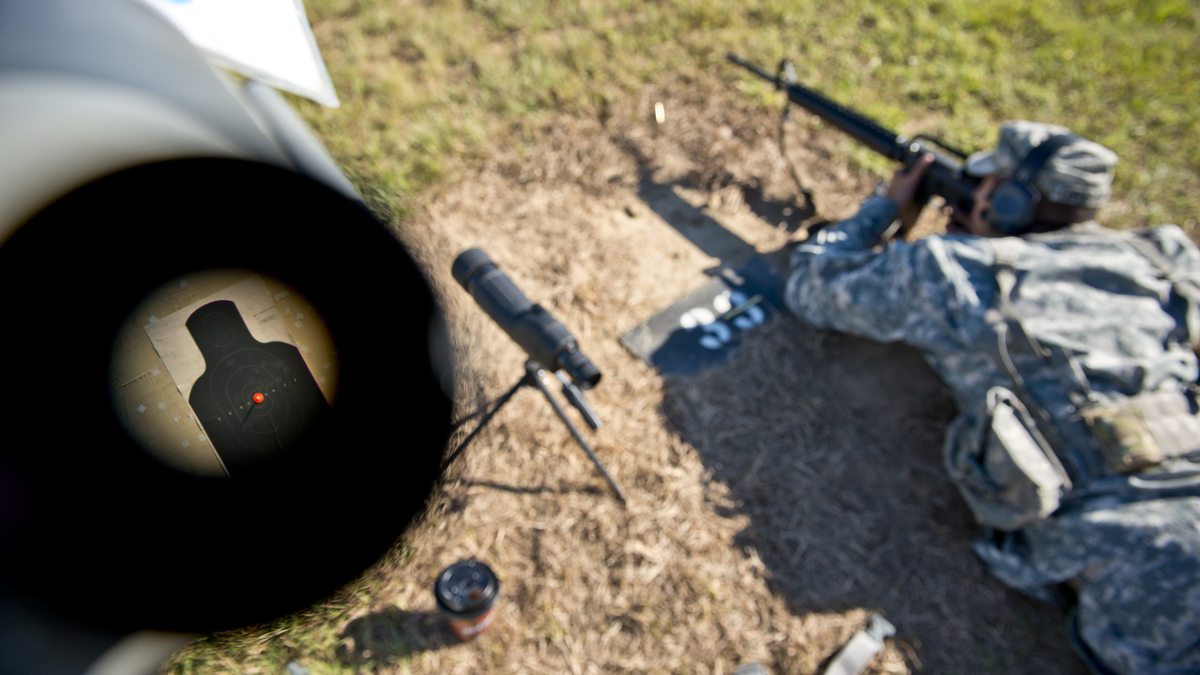
You are at the range sighting in a rifle at 100 yards. After each group, you wait for a cease-fire, unload, step back from the line and walk the hundred yards to the target, then walk back. By the end of the afternoon you have walked more than shot, and you still are not sure which hole came from which shot. The shooter next to you has not moved. He looks into a fat scope on a tripod after every shot and adjusts his turrets.
When you ask about it, you hear different answers. One shooter says a spotting scope is a must for anyone who shoots rifles. Another says your riflescope on high power is all you need. A third says spotting scopes are overrated and a cheap camera on the target works better. Each of them is right about something. A spotting scope is a tool for seeing small details at a distance, and how much it helps depends on how far you shoot, what you shoot and how much light and heat shimmer you are dealing with.
This article explains what a spotting scope does that your riflescope does not, what the numbers mean, angled and straight designs, why seeing .22 holes at 100 yards is harder than seeing larger holes, how heat shimmer affects your view and how to use a spotting scope to read wind and coach a partner. By the end you should be able to choose a spotting scope that fits your range distances and use it to learn more from every shot.
Why not just use your riflescope?
Your riflescope can show you hits at short distances, but it has limits. Most hunting scopes top out at 9x to 12x, which is not enough to see small holes at 100 yards. Looking for hits also means keeping your face on the rifle and moving it around, which disturbs your position between shots. And when someone else is shooting, they cannot use your riflescope to watch for you.
A spotting scope is built to look, not to aim. It has more magnification, usually a large objective lens to gather light and a tripod to hold it steady. It sits beside you, so you can check each shot without moving your rifle. Think of the difference between a camera you hold to snap a picture and a camera on a tripod with a telephoto lens. The handheld camera is quicker, but the tripod camera shows you details you could not see otherwise.
The rule: Use your riflescope for aiming, and add a spotting scope when you want to see small details at distance without disturbing the rifle.
Reading the numbers
Spotting scopes are usually listed with a magnification range and an objective size, such as 20-60x80 or 15-45x65. The first number is the lowest magnification, the second is the highest, and the third is the diameter of the front lens in millimeters.
Higher magnification sounds better, but it has costs. The higher you zoom, the dimmer and less sharp the image becomes, the narrower your field of view and the more any shake or heat shimmer is magnified. Many people find they use the middle of the zoom range most of the time. A larger objective gathers more light and keeps the image brighter at high power, but it makes the scope larger, heavier and more expensive.
The rule: Choose the objective for the light you shoot in and how much weight you want to carry, and choose magnification for your typical range distances, not for the biggest number on the box.
Angled or straight
Spotting scopes come with two eyepiece styles.
- Angled eyepiece. The eyepiece is tilted up at about 45 degrees, so you can look down into it while seated at a bench or lying prone, with the tripod set lower and steadier.
- Straight eyepiece. The eyepiece is in line with the body, so you look straight through it, which makes it quicker to point at a target and easier to use from a vehicle window.
Of these, the angled eyepiece usually does the most work for range use, because it lets you check hits from your shooting position by turning your head slightly, without raising the tripod high. It also lets people of different heights share the scope by leaning over it. Straight scopes are often preferred by hunters glassing from a standing position or a truck. The rule: For bench and prone range shooting, choose angled. For standing use or glassing from a vehicle, consider straight.
Seeing bullet holes: What really decides it
Whether you can see a hole at a given distance depends on more than magnification. Hole size, target color, light, the quality of the glass and the air between you and the target all matter.
| What you are looking at | What makes it easier | What makes it harder |
|---|---|---|
| .22 holes at 50 yards | Good light, a white target, moderate magnification | Black targets, dim light |
| .22 holes at 100 yards | Quality glass, bright light, a still day and a white or light background | Heat shimmer, dim light, low-cost glass |
| .30-caliber holes at 100 yards | Any decent scope in good light | Heavy heat shimmer, holes in black areas of the target |
| Holes at 200 yards and beyond | High-quality glass, cool mornings, high-contrast targets | Shimmer, distance and light limits |
Read the table as a series of hurdles that add up. A .22 hole is small, and at 100 yards it is right at the edge of what many spotting scopes can show you. Add shimmer from a hot day or dim light, and it can disappear. Larger holes in light-colored paper are much easier. Targets with bright-colored reactive centers or shoot-and-see coatings, which leave a bright ring around each hole, make a big difference.
Common mistake: Turning a spotting scope all the way up to its highest power on a hot afternoon and blaming the scope for a blurry image. Heat shimmer and lower brightness at high power often make a lower setting show more detail.
Mirage: Heat shimmer you can read
On a sunny day, the ground heats the air above it, and the warm air bends light as it rises. In a spotting scope, it looks like wavy, shimmering lines running across the target. Shooters call this mirage. It makes holes harder to see, but it also tells you something useful.
Focus the spotting scope slightly in front of the target, about two-thirds of the way out, and the mirage becomes easier to see. If it boils straight up, there is little or no crosswind between you and the target. If it runs sideways, the wind is pushing it, and the faster and flatter it flows, the stronger the wind. When it changes from flowing to boiling, the wind has dropped or changed direction.
Picture watching heat rise off a hot road. On a still day, it shimmers straight up. On a windy day, it tilts and streams sideways. Mirage in a spotting scope is the same thing, only farther away.
Key idea: Mirage hides small details, but it also shows you the wind between you and the target. Learning to read it helps you understand why your shots move on a breezy day.
The rule: On hot days, shoot early or late when mirage is lighter, and use the mirage you cannot avoid to learn the wind.
Using a spotting scope with a partner
A spotting scope is especially useful when two people share the work. One shoots, and the other watches through the spotting scope. The spotter can see where each shot lands and call corrections, and can watch for the trace, the faint swirl of air the bullet leaves, to see how wind affects the shot.
To call a shot, use a simple, agreed system. Many people use clock positions and inches: "two inches at three o'clock" means two inches to the right. Some call the direction to move the aim point, others call where the hit landed, so agree on which before the first shot. This is a great way to coach a new shooter, because you can see what happened and explain it calmly.
Good practice: When coaching a new shooter, watch the shooter as well as the target. A spotting scope tells you where the shot went, but watching the shooter's trigger finger, grip and position tells you why.
Tripods, phone adapters and target cameras
A spotting scope is only as steady as its support. A flimsy tripod makes even excellent glass shake. Choose a tripod sturdy enough for the scope's weight and the wind at your range, with a head that lets you aim smoothly and lock it in place.
Many shooters use a phone adapter to take pictures through the scope, called digiscoping, so they can record groups and show them to others. At longer ranges, wireless target cameras placed near the target send a live picture to a phone or screen. They avoid mirage and distance limits, and they show the shooter's hits in real time. The trade-offs are setup time, batteries and the fact that a camera downrange must be placed and retrieved only during a cease-fire.
Whatever you use, follow the range's rules. Never go downrange or ask someone else to while others are shooting. A spotting scope means you have to go downrange less, not that you can ignore the rules when you do. Our article on range etiquette covers the basics.
Putting it together
A spotting scope lets you see hits and small details at a distance without disturbing your rifle. Its numbers describe magnification and light gathering, and more magnification is not always better. Angled eyepieces suit bench and prone shooting, and straight eyepieces suit standing and vehicle use. Whether you can see a hole depends on its size, the target, the light, the glass and the air between you and the target.
Mirage makes holes harder to see, but it also tells you about the wind. Shared with a partner, a spotting scope becomes a coaching tool. Add a sturdy tripod, and consider a phone adapter or target camera for recording groups and shooting farther. Used well, a spotting scope means less walking and more learning from every shot.
Try this: Read the wind with mirage
- On a sunny day at the range, with eye and ear protection, set up a spotting scope on a tripod at your shooting position.
- Look at your target and set the scope to a moderate magnification.
- Turn the focus slightly until the target goes a little soft and the shimmer between you and the target becomes clearer.
- Watch the mirage for a minute, and note whether it boils up or flows to one side.
- Compare what you see with wind flags or the grass along the range.
You will know it worked when you can finish this sentence: "The mirage was ___, so the wind was ___, and I would expect my shots to drift ___."
Check your understanding
Try answering these before you open the answer. If you can explain it in your own words, you understand it.
1. Why might a spotting scope set to 40x show more detail than the same scope at 60x on a hot afternoon?
Because higher magnification also magnifies heat shimmer and makes the image dimmer and less sharp. A lower setting can show a clearer, steadier image.
2. You shoot mainly from a bench and sometimes prone. Which eyepiece style suits you?
An angled eyepiece, because it lets you look down into the scope from a seated or prone position with a lower, steadier tripod.
3. The mirage you see is boiling straight up. What does that tell you about the wind?
There is little or no crosswind between you and the target at that moment.
4. You cannot see your .22 holes at 100 yards. What could you change besides buying a better scope?
Use a target with a light background or shoot-and-see coating, shoot in better light, choose a cooler time of day with less mirage and try a moderate magnification instead of the highest.
5. Your partner says "three inches at nine o'clock." Where did the shot land?
Three inches to the left of the aim point, if you agreed beforehand to call where the hit landed.
Where to go next
Once you can see your hits, turn them into scope adjustments with our guide to sighting in a rifle scope. To understand how wind and drop affect longer shots, read long-range ballistics. If your groups are larger than you expect, diagnosing loose rifle groups helps you find the cause. And for the measurement system behind your adjustments, see understanding MOA.
We can order spotting scopes and tripods from the brands listed on our website, and we are happy to talk through what fits your range by text or call.
If you found this informative, we invite you to sign up for email notifications of new blog articles.