
Overview of the Savage 110 Ultralite
Joseph McLain Nov 07, 2026
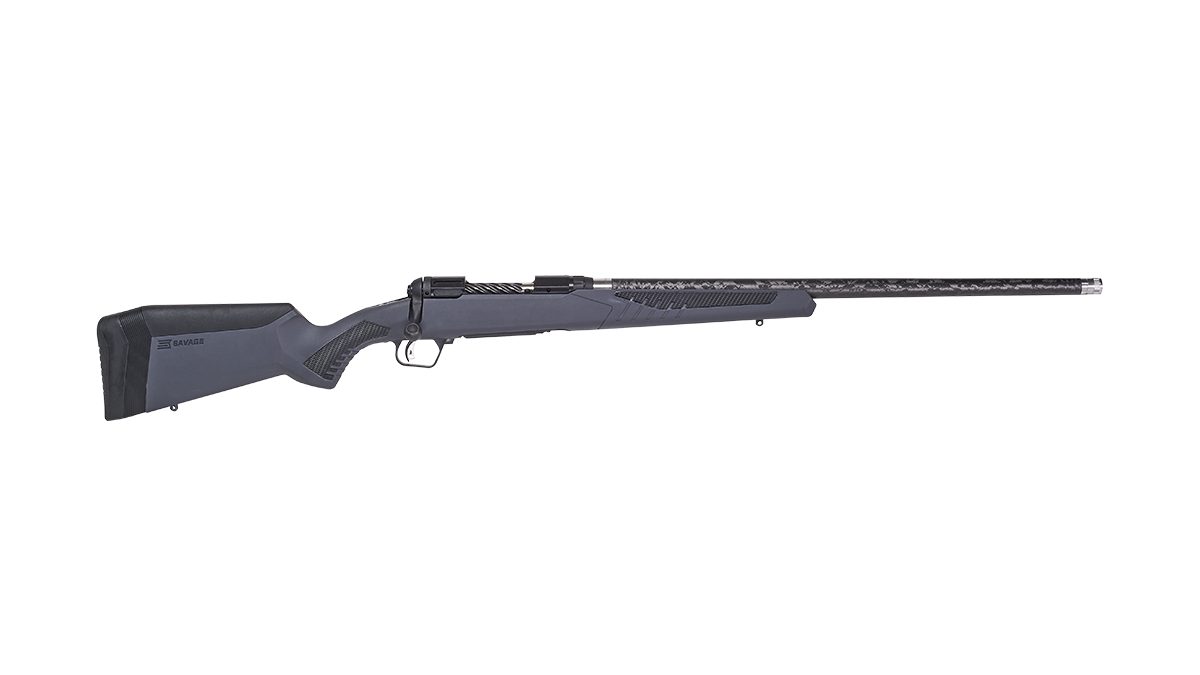
Picture the third ridge of an elk hunt in Colorado, where every ounce of rifle feels like a brick. A light rifle would help there. But a light rifle also kicks harder and can wander as the barrel heats, which a heavy-barreled bench rifle never does. The Savage 110 Ultralite promises light weight and accuracy together.
A light rifle helps in one place and hurts in another, so whether it suits you depends on how far you carry it and how you shoot. By the end you should be able to decide whether a rifle this light suits the way you actually hunt, and how to set it up so the weight savings do not cost you the shot.
Why weight matters more on a long walk than on the bench
A hunting rifle is carried for hours and fired for seconds. On a bench at the range you never feel its weight, so a heavy rifle seems like pure advantage: It sits still, soaks up recoil and stays on target. Strap that same rifle over your shoulder for a six-mile climb and the trade looks different. Fatigue makes your hands shake, your breathing harder to settle and your decisions sloppier, and all of that shows up when you finally take the shot.
Think of packing for a day hike. A single extra pound in your pack seems like nothing in the driveway, and by mid-afternoon it is the thing you notice most. Rifle weight works the same way, and it adds up quickly once you include a scope, rings, a sling and a few cartridges, which together commonly add a pound and a half or more to the bare rifle.
Savage built the 110 Ultralite for hunters who cover that kind of ground. Savage lists it at 6 pounds and under, which is light for a full-size centerfire bolt-action rifle. The same lightness that helps on the trail works against you at the moment of the shot, as the next sections explain. If most of your hunting is from a stand or blind within a short walk of the truck, weight matters far less, and a heavier rifle may serve you better.
How the Ultralite saves weight
Most of a bolt-action rifle's weight sits in three places: The barrel, the action and the stock. The 110 Ultralite trims each one.
The barrel is the biggest saving. Instead of a thick steel barrel, the Ultralite uses a PROOF Research barrel, a thin stainless-steel barrel wrapped in carbon fiber. Carbon fiber is very stiff for its weight, so the wrap lets the barrel stay rigid without the mass of solid steel. A stiff barrel vibrates less and more consistently when the rifle fires, and consistent vibration is part of what lets a rifle put shots in the same place.
The receiver, the steel housing that holds the bolt, is skeletonized, which means material is machined away where it is not needed for strength. Savage finishes it in Melonite, a hard surface treatment that resists corrosion and wear. The stock is synthetic, so it is lighter than most wood and does not swell or shift with rain and humidity.
None of this is free. Carbon-wrapped barrels and extra machining cost more to make than a plain steel barrel and a solid receiver, which is why a rifle like this costs well above an entry-level bolt gun. So pay for weight savings only if you will actually carry the rifle far enough to feel them.
The cost of a light rifle: Recoil and steadiness
When a rifle fires, the bullet and powder gases go forward and the rifle comes back. With the same cartridge, a lighter rifle moves back faster, so you feel more recoil. The difference is larger than most people expect. Fire the same load in a 6-pound rifle and an 8-pound rifle and the lighter one delivers roughly a third more recoil energy to your shoulder.
Picture pushing a shopping cart and a wheelbarrow with the same shove. The light cart jumps away from your hands, and the heavy wheelbarrow barely moves. A light rifle is the cart. That matters for two reasons. Recoil you dread leads to flinching, the small push or jerk people make in anticipation of the shot, which is one of the most common reasons hunters miss. A light rifle is also easier to move off target by a heartbeat or an unsteady breath, so it rewards a solid rest and good technique more than a heavy rifle does.
Key idea: Weight saved on the trail is paid back at the shot. A light rifle carries easier but kicks harder and holds less steadily, so it asks more of your technique and your rest.
You can manage both costs. A cartridge with moderate recoil, such as the 6.5 Creedmoor or .308 Winchester, is far easier to shoot well in a light rifle than a magnum. The 110 Ultralite's muzzle is threaded 5/8-24, so it can accept a muzzle brake or suppressor, both of which reduce felt recoil, although they add length and weight back. Federal suppressor rules changed in 2026: Congress eliminated the $200 tax on suppressors, and since October 9, 2026 the ATF has said it will not enforce its approval and registration requirements for them (see ATF's current guidance). That is an enforcement policy that could change, and state and local laws still apply, so check the current rules before you buy. Read how suppressors work before you plan around one. So in a rifle this light, choose the mildest cartridge that does the job, and practice from the positions you will really use in the field.
Fit and the trigger: The parts you touch
A rifle you can carry easily still has to fit you, because fit is what lets you put your eye in the same place behind the scope on every shot. The Ultralite's AccuFit stock lets you adjust two dimensions. Length of pull is the distance from the trigger to the end of the stock, which should let you mount the rifle without stretching or crowding your face. Comb height is the height of the part where your cheek rests, which should line your eye up with the center of the scope without craning your neck or lifting your head.
The AccuTrigger is Savage's user-adjustable trigger, with a center blade that has to be pressed before the trigger will release. A clean, predictable trigger helps you press the shot without disturbing the rifle, which matters more in a light rifle that moves easily. Adjusting it means following the owner's manual exactly. A lighter pull is easier to press smoothly but leaves less margin for a cold or gloved finger, so choose the lightest setting you can control safely in the conditions you hunt, not the lightest setting the trigger allows.
Fit and trigger cost you nothing in weight, so they are where a light rifle wins back some of the steadiness it gives up. Set them before you worry about anything else.
Calibers and barrel lengths
Savage offers the 110 Ultralite in two groups. The standard cartridges, including .308 Winchester, 6.5 Creedmoor, .270 Winchester, .280 Ackley Improved and .30-06 Springfield, come with 22-inch barrels and four-round detachable magazines. The magnum cartridges, such as the 6.5 PRC, .300 WSM and 28 Nosler, come with 24-inch barrels and two-round magazines, and Savage also lists 7mm PRC and 7mm Backcountry versions. Savage has since added Ultralite Pro, Elite and Predator versions with different stocks and barrel lengths, so check the exact model's listing before you buy.
The longer barrels on the magnums give the slower-burning powder more room to push the bullet, which is where those cartridges get their extra speed. That speed brings flatter trajectories at long range, along with more recoil, more noise and shorter barrel life. In a 6-pound rifle that extra recoil is sharp.
For Iowa hunters there is an important limit. Iowa's rules for deer rifles, in Iowa Code 481A.48, require an expanding bullet from .350 to .500 inch in diameter, so none of the Ultralite's chamberings is legal for deer in Iowa. It fits hunts in states that allow these cartridges, such as western elk, mule deer and pronghorn, and it can serve for coyote and other predator hunting where Iowa law allows a centerfire rifle. Seasons and rules change, so confirm them each year in the Iowa DNR's hunting regulations or with the wildlife agency of the state you will hunt.
So pick the smallest, mildest cartridge that is legal and adequate for the largest animal you will hunt at the longest distance you can shoot well. For most deer-size game at ordinary distances, that is a standard cartridge, not a magnum. Our comparison of the 6mm Creedmoor, 6.5 Creedmoor and 6.5 PRC shows how that trade plays out.
Accuracy: What to expect and how to check it
Rifle accuracy is usually described in minutes of angle, or MOA. One MOA is about 1 inch at 100 yards, so a rifle that shoots "sub-MOA" puts its groups inside about an inch at that distance. Our guide to understanding MOA explains the idea in more detail.
Two cautions keep that number honest. First, accuracy is a property of the rifle, the ammunition and the shooter together. Most rifles shoot some loads noticeably better than others, which is why ammunition affects accuracy as much as the barrel does. Second, a light rifle is harder to shoot well, so a disappointing group may say more about your rest or your recoil management than about the rifle.
For a hunting rifle, the useful question is not the smallest group you can shoot on a perfect day, but how consistently the first shot from a cold barrel lands where you aimed. The first shot is the one that counts in the field. If the Ultralite puts cold-barrel first shots inside about 2 inches at 100 yards with your chosen load, it has more than enough accuracy for deer-size game at the distances most hunters should shoot.
Common mistake: Judging a light rifle by one box of ammunition fired quickly from a wobbly rest. Try at least two loads, let the barrel cool between groups, and shoot from a solid rest before you decide the rifle is the problem.
How it compares with other lightweight hunting rifles
The 110 Ultralite competes with other carbon-barreled mountain rifles, including the Christensen Arms Ridgeline and the lightweight versions of the Browning X-Bolt. All of them use the same basic recipe of a carbon-wrapped or slim barrel, a lightened action and a synthetic or carbon stock, and all of them carry the same trade of easy carrying for sharper recoil.
The differences that matter most in your hands are fit, trigger feel, the safety and bolt handling, and price. The Ultralite's case rests on its adjustable stock and a lower price than many premium carbon rifles. A rifle with a fixed stock may suit you perfectly if its dimensions happen to fit, and a different safety design may feel more natural to you. So shoulder each rifle you are considering, with the scope height you plan to use, and choose the one you mount the same way every time.
Putting it together
The 110 Ultralite makes sense when three things are true: You will carry the rifle far enough that weight genuinely tires you, you choose a cartridge with recoil you can shoot well in a light rifle, and you take the time to fit the stock and confirm accuracy with your load. If you mostly hunt Iowa deer, a light .308 is not legal for that season, and a less expensive rifle in a legal straight-wall cartridge, such as Savage's own 110 Trailblazer in .350 Legend, is the better tool. If you hunt elk or mule deer out west, or cover miles after predators, the weight savings are exactly what you are paying for.
Think of the Ultralite as a trade you make on purpose. You give up some steadiness and comfort at the shot to arrive at the shot fresher. That trade is worth making when the walk is long, and not worth paying for when it is short.
Good practice: Set the stock before you sight in. With the rifle unloaded and the action open, adjust length of pull and comb height until, when you mount the rifle with your eyes closed and then open them, the scope picture is clear and centered every time. Then judge accuracy by cold first shots from a solid rest, one per cooling period, because the first shot is the one that counts on an animal.
Check your understanding
Try answering these before you open the answer. If you can decide what to do and explain why, you have it.
1. A friend says a lighter rifle is always better. What would you add?
A lighter rifle is easier to carry, but with the same cartridge it delivers more recoil and holds less steadily. It is the better choice when you will carry it a long way, and less useful when you hunt close to the truck.
2. You hunt whitetail from a box blind 200 yards from your truck, out of state with a .308. Is the Ultralite worth its price for you?
Probably not. You never carry the rifle far enough to feel the weight savings, and you'd still pay for them in sharper recoil and a less steady hold. A heavier, less expensive rifle would shoot better for you from the blind.
3. You hunt deer in Iowa. Can you use a 110 Ultralite in .308 Winchester for that season?
No. Iowa requires a rifle bullet diameter of at least .350 inch and no more than .500 inch for deer, and the .308 is smaller than that. Confirm current rules in the Iowa DNR regulations each year.
4. Your first group with the rifle is 3 inches at 100 yards. What should you check before blaming the rifle?
Your rest, your recoil management and flinch, how hot the barrel was, and whether a different load groups better. A light rifle magnifies small errors in technique.
5. You want an Ultralite for a Colorado elk hunt and can't decide between .308 and .300 WSM. Which do you choose?
The .308, unless your shots will truly be long. In a 6-pound rifle the .300 WSM's recoil is sharp enough to cause flinching, and a .308 with a good bonded bullet is adequate for elk at ordinary distances. Choose the mildest cartridge that does the job, because you'll shoot it better.
Where to go next
You can find Savage 110 Ultralite rifles on our website, including Ultralite Pro, Elite and Predator versions, and anything listed there can be ordered if it isn't in stock.
If the Ultralite is on your list, the Christensen Arms Ridgeline shows how a competing carbon-barreled rifle handles the same weight-versus-steadiness trade. Out-of-the-box hunting rifle quality helps you judge what the extra money buys at each price level. Once you own a rifle, the ultimate guide to sighting in a rifle scope walks you through a zero you can trust, and hunting ethics explains how your effective range and shot placement lead to a clean, humane kill.
If this article helped you, we invite you to sign up for email notifications of new blog articles.