
Exploring the Ruger 10/22 and Its Top Competitors
Joseph McLain Nov 13, 2026
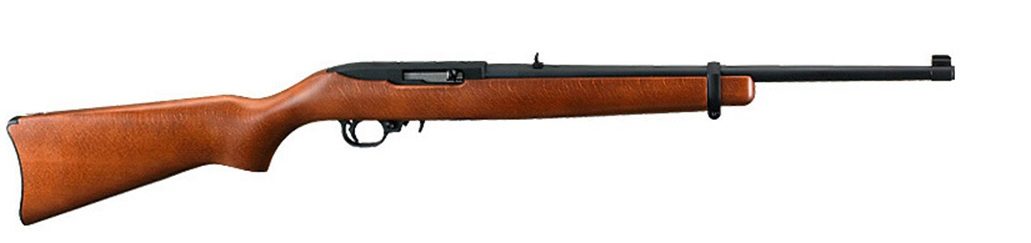
Shopping for a .22 rifle, you start with the Ruger 10/22, the most common choice. But the Smith & Wesson M&P15-22 trains AR-15 habits, a used Marlin Model 60 has a reputation for accuracy, and the Winchester Wildcat is light enough for a young shooter to hold steady. The right one depends on who will shoot it and why.
By the end you should be able to match a .22 rifle to the person who will shoot it and the job they will use it for.
Why the 10/22 is the standard
Ruger introduced the 10/22 in 1964, and it has become one of the best-selling rifles of any kind in the United States. Three design choices explain most of its reputation.
First is the blowback action. Nothing locks the bolt shut; the weight of the bolt and the pressure of its spring hold it closed just long enough for the bullet to leave the barrel. Then the pressure of the shot pushes the case and bolt back, ejecting the empty case and feeding the next round. That works well with a low-pressure cartridge like the .22 LR and keeps the design simple, with few parts to wear or fail.
Second is the rotary magazine. The standard 10-round magazine holds cartridges around a turning spool rather than stacked in a column, which feeds the rimmed .22 LR cartridge smoothly and sits flush with the stock. Ruger also makes higher-capacity magazines for the rifle.
Third, and probably most important, is aftermarket support. Triggers, stocks, barrels, sights and nearly every other part are available from Ruger and other makers. That means the rifle you buy today can change as your skills and interests change. Think of it like a basic pickup truck with a huge catalog of accessories: You can leave it plain or build it for almost any job. The 10/22 also comes in many factory versions, from wood-stocked carbines to takedown models that separate into two pieces for storage and travel. Our guide to the Ruger 10/22 covers the versions in detail.
Four rivals, and the question each answers
The 10/22 sets the standard, and each competitor below answers a slightly different question. Treating them that way makes the comparison much clearer than a list of features.
Smith & Wesson M&P15-22: "What if my .22 handled like an AR-15?"
The M&P15-22 copies the controls, layout and feel of an AR-15 in .22 LR: The same style of safety, magazine release, charging handle and adjustable stock. Practice with it builds habits that carry over to a full-size AR-15, at a fraction of the ammunition cost and with almost no recoil. It uses a detachable magazine that commonly holds 25 rounds and has a handguard with rails or attachment slots for lights and optics; our guide to rail systems explains those.
The cost is that it is a little heavier and more complex than a basic 10/22, and AR-style rifles are not welcome at every range or in every household. Choose it if you already own or plan to own an AR-15 and want inexpensive practice with the same controls.
Marlin Model 60: "Do I want a simple, traditional rifle?"
The Model 60 is a classic tube-fed semi-automatic with a hardwood stock, long admired for accuracy in a plain, inexpensive rifle. Its tubular magazine holds cartridges end to end under the barrel, so there is no separate magazine to lose, though reloading is slower than swapping a loaded box magazine. Production of the Model 60 ended in 2020 when Ruger bought Marlin, and as of 2022 Ruger said it had no plans to resume it, so check current listings; most Model 60s you find will be used. A used rifle should be inspected by a knowledgeable person, especially the magazine tube and its follower spring.
Consider a good used Model 60 if you value traditional design and accuracy and do not need quick reloads.
Winchester Wildcat: "Who will carry and shoot this most?"
At around 4 pounds, the Wildcat is among the lightest .22 rifles you can buy. That matters a great deal for young or small shooters, who may struggle to hold up a heavier rifle long enough to aim well. The Wildcat disassembles without tools for cleaning and accepts Ruger 10/22-style rotary magazines, so a family with a 10/22 can share magazines.
The catch is that a very light rifle can feel less steady for some adults, and it has a smaller aftermarket than the 10/22. Give it a close look if the main shooter is young or small, or if you want a light rifle to carry around the farm.
Savage A22: "Do I want a better trigger out of the box?"
The Savage A22 is a modern semi-automatic .22 with a synthetic or wood stock and a 10-round rotary magazine. Its standout feature is Savage's AccuTrigger, a user-adjustable trigger with a crisp break that helps you press the shot without disturbing your aim. A good trigger makes more difference to accuracy than most people expect, which is why upgraded triggers are among the most popular 10/22 modifications.
The catch is a smaller selection of aftermarket parts than the 10/22. Choose the A22 if you want a good trigger without buying and installing an upgrade.
Reading the comparison
| Rifle | Approximate weight | Magazine | What it does best | Main trade-off |
|---|---|---|---|---|
| Ruger 10/22 | About 5 lb | 10-round rotary, others available | All-around use and customization | Factory trigger is ordinary on many models |
| S&W M&P15-22 | About 5 to 5 1/2 lb | Detachable box, commonly 25 rounds | AR-15 training | More complex; AR styling not welcome everywhere |
| Marlin Model 60 | About 5 1/2 lb | Tubular, about 14 rounds | Traditional accuracy | Discontinued; slower reloads |
| Winchester Wildcat | About 4 lb | 10-round rotary (10/22-style) | Light weight for young or small shooters | Smaller aftermarket |
| Savage A22 | About 5 1/2 to 6 lb | 10-round rotary | Good trigger out of the box | Smaller aftermarket |
Weights are approximate and vary by version, so check the specific model. The weight column matters most for young shooters: A 2-pound difference between the lightest and heaviest is a big share of a child's strength. The magazine column tells you how you will reload and whether magazines can be shared. The last column is the honest one, because every rifle gives something up to be good at its strength. Choose the rifle whose weakness you will notice least.
What actually makes a .22 accurate
It is tempting to choose by looks or magazine size, but neither makes a rifle more accurate. Accuracy comes from four things: How well the rifle fits the shooter, how cleanly the trigger breaks, which ammunition the barrel likes, and the shooter's fundamentals. The .22 LR is notoriously particular about ammunition; two brands can group very differently in the same rifle, and a semi-automatic may cycle some loads better than others. Our guide to .22 LR ammunition selection explains how to test loads.
Choose the rifle that fits the shooter and the job, then spend on a few boxes of different ammunition to find what it shoots best, before spending on upgrades.
Key idea: The best .22 rifle is the one that fits the shooter's body and goal. Fit, trigger and ammunition decide accuracy far more than styling or magazine size.
Safety habits that matter with any .22
A .22 is gentle to shoot, which makes it easy to forget that its bullet can travel more than a mile. Treat it with the same respect as any firearm: Keep the muzzle in a safe direction, keep your finger off the trigger until you are ready to fire, and know what is beyond your target. Because .22 LR is rimfire, a round that fails to fire should be handled carefully: Keep the muzzle downrange and wait at least 30 seconds before opening the action. With a tube magazine like the Model 60's, make sure the tube is empty, not just the chamber, when you unload.
Common mistake: Assuming a semi-automatic .22 is unloaded because the chamber is empty. Check the magazine, or the magazine tube on rifles like the Model 60, every time you unload.
Checking fit before you buy
Fit decides between finalists, and it takes only a few minutes per rifle. With each rifle's action open and the chamber and magazine confirmed empty, muzzle in a safe direction and finger outside the trigger guard, shoulder it several times with your eyes closed, then open them. If your eye lines up with the sights without shifting your head, the stock fits. Hold it at your shoulder for half a minute to feel the weight, especially for a young shooter, and work the safety, magazine release and bolt to see which controls feel natural.
Putting it together
The Ruger 10/22 is the standard because it is simple, reliable and endlessly adaptable, which makes it the safe starting point for most shooters. Choose a rival when its particular strength matches your goal: The M&P15-22 for AR-15 practice, a used Model 60 for traditional simplicity, the Wildcat for a young or small shooter, the A22 for a good trigger out of the box. Then let fit decide between finalists, test several kinds of ammunition, and practice the fundamentals, because those make far more difference than the name on the receiver.
Check your understanding
Try answering these before you open the answer. If you can decide what to do and explain why, you have it.
1. Why might someone who plans to buy an AR-15 choose the M&P15-22 first?
It copies the AR-15's controls and handling, so practice builds habits that carry over, with cheaper ammunition and almost no recoil.
2. A family owns a 10/22 and wants a rifle for a young shooter. Which rival deserves a close look, and why?
The Winchester Wildcat, because it weighs about 4 pounds and accepts 10/22-style magazines. A hands-on fit check confirms it suits the child.
3. You see a new-looking Marlin Model 60 at a gun show, and the seller calls it current production. What should you know?
Production ended in 2020 after Ruger bought Marlin, and as of 2022 Ruger had no plans to resume it, so most Model 60s you find are used. Have someone knowledgeable inspect it, especially the magazine tube and its follower spring.
4. A friend wants to buy the rifle with the biggest magazine and the most aggressive look, figuring it will shoot best. What would you tell him?
Neither makes a .22 more accurate. Fit, a clean trigger, ammunition the barrel likes and the shooter's fundamentals do. Choose by fit and job, then test a few kinds of ammunition before spending on upgrades.
5. Why check the magazine tube on a Model 60 when unloading?
An empty chamber does not mean an empty rifle; cartridges may remain in the tube and feed when the action cycles.
Where to go next
You can find Ruger 10/22 rifles, magazines and accessories on our website, and anything listed there can be ordered if it isn't in stock.
For the full story of the 10/22, read our guide to the Ruger 10/22. Choosing the right .22 caliber rifle compares bolt-actions and semi-automatics for beginners. Because the .22 LR is so particular about loads, general considerations for .22 LR ammunition shows how to find what your rifle likes, and the .22 LR as a training tool explains how to turn range time into progress.
If this article helped you, we invite you to sign up for email notifications of new blog articles.