
A Guide to the Ruger 10/22: So Much To Know...
Joseph McLain Nov 07, 2026
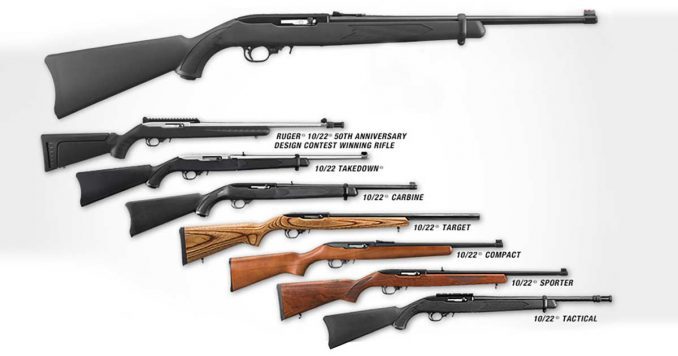
You are shopping for a first rifle, maybe for yourself, maybe for a son or daughter, or maybe for the back of the truck to deal with squirrels and groundhogs. The Ruger 10/22 is the obvious starting point, and a good one. Should you buy the cheapest and spend the rest on upgrades, or keep it stock? First comes the harder question: Which 10/22?
There are standard carbines, takedowns, target rifles and special editions, plus a huge catalog of upgrades. By the end you should understand what makes the rifle so enduring, pick the version that fits your goals, decide which upgrades are worth making and avoid the mistakes that waste money.
Why the Ruger 10/22 has set the standard since 1964
When Sturm, Ruger & Co. introduced the 10/22 in 1964, the goal was a high-quality, affordable and easy-to-use semi-automatic rimfire rifle. Semi-automatic means one pull of the trigger fires one round and the rifle reloads itself for the next. Millions of 10/22s have been sold since then, and the rifle has kept evolving, which is why many shooters call it the gold standard of rimfire rifles. If you are still deciding whether a .22 is the right place to start, read why the .22 LR is such a good firearm for building skills.
Three design choices explain the success. The first is the blowback action. When a cartridge fires, the pressure pushes the empty case backward, and that pushes the bolt back against a spring. The spring then drives the bolt forward, picking up a fresh round on the way. There is no complicated locking mechanism, so there is little to maintain, and the action handles a wide range of .22 LR loads.
The second is the rotary magazine. The 10 cartridges ride around a spinning spool inside a compact magazine, which keeps feeding smooth and dependable. Extended magazines in 15-, 25- or even 50-round sizes let you shoot longer between reloads. The third is the rifle's modular design. It is often compared to the AR-15 of rimfire rifles, because almost every part, including stocks, barrels, triggers and sights, can be swapped for an aftermarket upgrade. A basic 10/22 can become a very specialized tool.
Safety: Bigger magazines do not change the rules. A semi-automatic .22 will fire again with every trigger pull until it is empty, so treat every rifle as loaded, keep the muzzle in a safe direction and keep your finger off the trigger until the sights are on the target. When you stop shooting, open the action and look into both the chamber and the magazine well. Our guide to firearm safety for beginners covers the habits in detail, and good eye and ear protection belongs on every range trip.
How the 10/22 has improved over the years
Ruger has kept refining the rifle, and the changes all push in the same direction. Each one removes a source of variation or discomfort, which is why newer rifles are easier to shoot well.
- Trigger performance. Modern models have a lighter, crisper pull than earlier versions, which has contributed to tighter groups, especially in competition.
- Takedown and cleaning. Newer models are easier to disassemble and clean, which matters during high-volume shooting sessions.
- Ergonomics. Updated stocks and grip contours fit the hand more naturally and reduce fatigue over long sessions.
- Manufacturing tolerances. Tighter tolerances improve consistency in barrel alignment, trigger performance and cycling reliability.
- Finishes and accessories. Recent models have contemporary finishes and design details while keeping the classic look.
Two of these matter most to your results. A cleaner trigger lets you fire without disturbing your aim, and tighter tolerances mean each shot starts from the same conditions, a bit like a door that closes into the same frame every time. The rest improve comfort and upkeep, and a rifle that is comfortable and easy to clean is a rifle you will shoot and maintain more often.
Choosing a Ruger 10/22 model by what you want to do
The 10/22 comes in many versions, and the differences come down mostly to the barrel, the stock and the rails. Start with the one question that really decides it, which is what you will mostly do with the rifle.
| Model | What sets it apart | Best suited to |
|---|---|---|
| Carbine (standard) | Classic 10/22, typically with an 18.5-inch barrel and a wood or synthetic stock | Plinking, small-game hunting and target shooting |
| Takedown | Breaks into two pieces; often has a threaded barrel or backpacker stock | Camping, survival kits and backpacking |
| Target | Bull barrel, upgraded stock and optics-ready rails | Competition and long-range target shooting |
| Tactical | Threaded barrel for suppressor use and Picatinny rails for optics and accessories | Tactical-style training and shooters who enjoy accessorizing |
| Competition | Ruger Custom Shop line, often with fluted barrel, upgraded trigger and precision stock | Competitors who want the highest accuracy from a .22 LR |
| Special editions | TALO and distributor exclusives with distinctive finishes, engravings and stocks, made in limited runs | Collectors and enthusiasts |
Start from the last column: find the description that sounds like you, then see what hardware it adds. A bull barrel is a thick, heavy barrel, and the extra mass out front tends to hold steadier while you aim, which is why the Target model carries one. A fluted barrel has grooves cut along its length, and a threaded barrel has threads at the muzzle so a suppressor can be attached. Suppressors are regulated under the federal National Firearms Act; Congress eliminated the $200 tax, and since October 9, 2026, the ATF has said it will not enforce the NFA's approval and registration requirements for them (see ATF's current guidance), a policy that could change; Iowa has allowed suppressor ownership since 2016, but check current federal and state rules before you buy one, and see choosing the right ammunition for suppressors if you go that way. Rails give you a solid place to mount an optic.
Here is how it plays out. A parent buying a first rifle for a young shooter who will also hunt squirrels does well with the standard carbine, because it does everything reasonably well. A hiker who wants a rifle in the pack picks the takedown. Someone shooting paper at distance looks at the Target model. The special editions, including the ones covered in our look at TALO exclusive firearms, are chosen for style and collecting as much as performance.
Key idea: Match the rifle to the job. If you cannot say why you need a feature, such as a bull barrel or a rail, start with the simpler version and add it later. The 10/22's modular design makes that easy.
Customizing your 10/22 without wasting effort
The 10/22 invites tinkering, and that is half the fun. The trick is knowing which changes affect what you see on the target and which ones affect only how the rifle looks or feels.
- Triggers, such as a Timney or Ruger BX-Trigger
- Barrels, heavy bull or lightweight
- Stocks, including tactical chassis and thumb-hole styles
- Optics, including red dots, scopes and night-vision devices
- Magazines, such as BX-25 or drum styles
Of these, the trigger and the optic do the most to change your results. A smoother, lighter trigger, such as a Timney or Ruger BX-Trigger, can significantly improve accuracy because you can press it without pulling the sights off target (see trigger control tips for the technique side). A good sight you can see clearly does the same job from the other end. Heavy bull barrels enhance precision for target shooting, while lightweight barrels may improve handling for plinking and casual use, so the choice is steadiness against carrying comfort. Stocks such as tactical chassis or precision thumb-hole styles improve ergonomics and give the rifle a more modern look. Extended magazines like the BX-25 or drum magazines raise your round count for competition or long practice sessions, but they do not make the rifle shoot any tighter.
Common mistake: Changing several things at once, then guessing which one helped. If a rifle groups poorly after a new trigger and a different brand of ammunition on the same day, you cannot tell which change is responsible.
Testing one change at a time
An upgrade is worth it only if it changes your groups, and the only way to know is to measure. With one box of .22 LR for the whole test, eye and ear protection on and a steady rest, shoot three five-shot groups at a distance you can see clearly and note their sizes. Make a single change, such as a new trigger or a different optic, and shoot three more groups the same way. Comparing the two sets shows whether the change helped, hurt or made no difference, with numbers instead of a feeling.
Matching the 10/22 to the shooter
The same rifle can grow with you, which is what people mean when they call it a platform. For beginners, the low recoil, simple operation and affordability make it an excellent first rifle, because new shooters can build confidence and marksmanship without being overwhelmed by complexity. Pair it with sound basics from the fundamentals of shooting and the rifle will repay the effort.
For hunters, the light weight, reliability and ability to be customized for different scenarios make it well suited to small-game hunting and varmint control. If you are managing pests on an acreage, our varmint control guide explains how to plan it. For competitive shooters, the exceptional accuracy, modular design and aftermarket support allow precise customization, and the Target and Competition models deliver the performance needed for tight groups and high-level matches. For collectors and enthusiasts, the special editions and custom builds mean you can find a 10/22 that reflects your own style while carrying decades of firearms history.
Putting it together
The 10/22 is a sound choice because its simple blowback action, rotary magazine and modular design make it reliable, easy to learn on and easy to change later. Buying a basic model and upgrading is smart only if you upgrade for a reason you can name, because the parts that change your groups are few: Mainly the trigger and the sight. And a stock rifle is all many shooters need, because most of the accuracy in a .22 comes from the shooter and the ammunition. So decide what you will mostly do, buy the simplest model that does it, find the ammunition your rifle likes, and change one thing at a time when you know what problem you are solving.
Check your understanding
Try answering these before you open the answer. If you can decide what to do and explain why, you have it.
1. A friend wants a rifle that rides in a backpack on camping trips. Which 10/22 should you suggest, and why?
The takedown model. It breaks into two pieces for easy transport and storage, and it often comes with a backpacker stock or threaded barrel.
2. Your 10/22 groups worse after you install a new trigger and switch ammunition on the same day. What went wrong with your testing, and how do you fix it?
You changed two things at once, so you cannot tell which one caused the result. Go back to one load, shoot a baseline, then change only the trigger, and test the ammunition separately.
3. A friend who shoots AR-15s asks why people call the 10/22 "the AR-15 of rimfires." What would you tell him?
Its modular construction. Almost every component, including stocks, barrels, triggers and sights, has aftermarket options, so a basic rifle can become a specialized one, just as an AR can.
4. How does a Target model differ from the standard carbine, and why would that matter at the range?
The Target model typically adds a bull barrel, an upgraded stock and optics-ready rails. The heavier barrel and a clear optic help you hold steady and aim precisely, which matters most when every shot counts.
5. You have $150 to spend on your 10/22 and want tighter groups. A drum magazine or a better trigger?
The trigger. A better trigger, along with a sight you can see well, most directly improves accuracy. A drum magazine adds rounds for long sessions but doesn't tighten groups.
Where to go next
You can find Ruger 10/22 rifles, magazines and accessories on our website, and anything listed there can be ordered if it isn't in stock.
If you want to see how the 10/22 stacks up before you commit, read Exploring the Ruger 10/22 and Its Top Competitors. For a broader view of what to look for in any rimfire, choosing the right .22 caliber rifle is the natural companion. Ammunition choice matters as much as hardware, so General Considerations for .22 LR Ammunition Selection is the next step. When you are ready to add an optic, the beginner's guide to mounting a rifle scope walks you through it.
If this article helped you, we invite you to sign up for email notifications of new blog articles.