
Silhouette Shooting with Rifles
Joseph McLain Nov 07, 2026
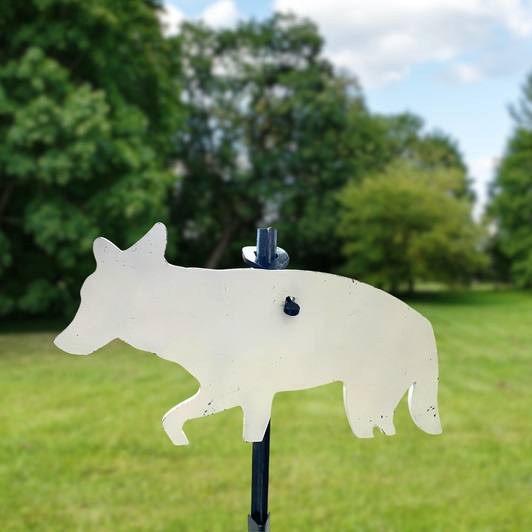
You have shot paper for years, and your groups are respectable. Then someone sets a steel deer, hog or turkey in front of you and asks you to knock it down. There is no wide scoring ring to forgive a slightly off shot. The target falls or it does not, and everyone on the line knows which. Do you need a dedicated silhouette rifle to compete, or will the rifle you already shoot well do? Silhouette asks particular things of a rifle shooter, and knowing them makes a first steel match a natural next step. By the end you should be able to choose a sensible rifle, scope and ammunition combination, turn a bullet drop number into a hit, and build a practice routine around it.
What silhouette shooting asks of you that paper does not
Silhouette shooting is a precision discipline in which competitors engage steel targets shaped like animals, most commonly deer, hogs or turkeys. Compared with the large scoring areas of a paper target, these are small, detailed shapes, so they take precise shot placement to knock down. They stand upright on a base and fall flat when hit, which gives you feedback that paper cannot. Paper tells you where a shot landed once you check the target. Steel tells you the instant the shot breaks whether it was good enough.
That feedback is a big part of why the sport teaches so much. It makes you manage bullet drop, account for the weather and find your next target quickly, all while keeping your fundamentals steady. A hunter who wants better long-range shot placement and a competitive shooter chasing tighter groups each benefit. The discipline has roots in hunting and military training, where shooters needed to engage targets that resembled live game quickly and accurately.
Over the decades it grew into an organized sport. National and international events, such as the NRA National Silhouette Shooting Championships, along with regional contests, helped standardize rules, distances and target types. Better rifle accuracy, optics and ammunition consistency, including match-grade loads such as Hornady Black, have made the sport steadily more precise. Today's competitors often shoot sub-MOA groups at small steel targets, meaning groups smaller than about one inch at 100 yards.
How a match is scored and laid out
Rules differ from one event to the next, so read the rules for the specific match you plan to shoot. In general, courses run from 50 to 300 yards, with separate stages for close-range and long-range targets. Some competitions simply count the targets you knock down in a set time, others award points based on where a target is hit, and some combine accuracy with the time you take to finish a stage. A few courses add moving targets or timed stages to simulate real-world hunting conditions.
The targets themselves are built to last. High-quality steel is designed to withstand hundreds of rounds with minimal denting, though repeated hits may eventually mean replacement.
Safety: Treat steel with respect. A bullet that strikes a hard target can send fragments back toward the line, so follow your range's rules on distances and approved ammunition, keep the muzzle downrange, and wear eye and ear protection every time. Our guide to eye and ear protection explains why both matter.
Choosing a rifle and caliber for silhouette work
Silhouette matches are open to a variety of calibers and platforms, but the rifles shooters gravitate toward share one quality, which is consistency. Match-grade bolt actions, AR-15s optimized with premium ammunition and custom-built rifles are all good fits when they are known for sub-MOA accuracy. The reason is practical. A small steel target leaves almost no margin for a rifle that scatters its shots, and a rifle that groups tightly means that when you miss, the cause is something you can find and fix.
| Caliber choice | What it offers | Where it fits |
|---|---|---|
| .22 LR | Low recoil and minimal noise | Many silhouette competitions, especially for beginners or in classes that prioritize low recoil and quiet |
| Centerfire (.223 Rem, .308 Win, 6.5 Creedmoor) | Higher energy and flatter trajectories | Higher-level competitions and longer distances |
Low recoil makes it easier to hold a steady sight picture and practice your fundamentals, which is why .22 LR is such a friendly way to learn the sport. Our guide to choosing the right .22 caliber rifle is a good place to start if that sounds like you. A flatter trajectory means the bullet drops less on its way to the target, so a mistake in estimating distance costs you less. Begin with .22 LR if you are new or the class favors it, and move to centerfire as your distances grow.
Whatever you choose, match the rifle to the ammunition. Longer barrels can extract maximum velocity and stability from a load, and the twist rate, which is how quickly the rifling spins the bullet, must properly stabilize your bullet weight. A bullet that is not spun fast enough for its weight will not fly true, and on a small steel target that means a miss. Our guide to barrel twist rate shows how to check the match.
Scopes and sights that make holdover fast
A high-quality scope with variable magnification is essential for silhouette work, because you do two jobs. You find and switch between targets quickly, and you see each one clearly enough to aim at a precise spot. Lower magnification helps with the first job and higher magnification with the second. Scopes in the 3-9x or 4-12x range are popular because they show targets at different distances clearly without becoming cumbersome.
The second feature to look for is help with bullet drop. Many competitors favor scopes with a BDC (Bullet Drop Compensator) reticle or adjustable turrets. A BDC reticle has extra aiming marks below the center crosshair, each placed to match the drop at a particular distance. Instead of touching a turret, you aim with the mark that fits the target. Reticles with multiple aiming points, such as the Vortex Dead-Hold and the Nikon CDS, simplify holdover, which is critical when targets sit at 100, 200 or 300 yards. There is one catch. The marks assume a particular bullet and velocity, so they only help if your own load behaves the way the reticle expects, and the only way to know is to test it. Our article on rifle scope reticles explains the types in more detail.
Some traditionalists still prefer ghost-ring iron sights, a rear peep sight with a large opening, for rapid target acquisition in close-quarters silhouette matches. For long-range stages, tripods, bipods or shooting rests add stability, and a steadier rifle means everything you do with the sights and turrets counts for more.
Ammunition: Why steady velocity beats raw power on steel
Ammunition is key to consistent performance, and what you want from it on steel is sameness. Every round should leave the barrel at nearly the same speed, because a slower round drops a little more on the way to the target and a faster one drops a little less. Spread that across a string of shots and you get vertical stringing, and on a target only so tall, stringing turns hits into misses. Shooters measure this with extreme spread, the difference between the fastest and slowest shot in a string. Low extreme spread means predictable trajectories, which matters most when a competition is held in changing weather. Our article on how ammunition affects your accuracy explains where that spread comes from.
Two kinds of ammunition do two different jobs.
- Match-grade loads. For competition, precision ammunition such as Hornady Black or, for .22 LR, Federal Gold Medal Rimfire provides tight groups, and premium match-grade products in centerfire calibers can yield tight groups too.
- Practice ammunition. For training, consistent, non-expanding ammunition such as CCI Standard or Federal American Eagle is useful for establishing your rifle's baseline performance.
Use the match load for the shots that count and the practice load to build fundamentals. If you train with one and compete with another, check where each one hits, since a different load can have a different velocity and a different drop. Weather matters as well, so try several loads on different days and see which holds up best against wind and changing temperatures.
Bullet drop, holdover and scope adjustments: Three ways to answer gravity
Why the bullet falls faster the farther it goes
Every bullet follows a curved path, because gravity pulls on it for the whole flight. The longer it flies, the more that pull has added up, so bullet drop becomes more pronounced as distance increases. The drop does not grow in even steps. The extra 100 yards between 200 and 300 costs you more than the first 100 did. Ballistic charts or apps can tell you the expected drop at various ranges for your load.
Your zero, the distance at which your sights and bullet meet, decides where that arc crosses your line of sight. Choose it for the distances you will actually shoot. A 100-yard zero might be perfect for wooded hunts, while a 200-yard zero can extend your effective range in open terrain. Our guide to sighting in rifles at different distances walks through the process.
Holdover, BDC marks and turrets
Once a target is beyond your zero, you have three ways to answer gravity.
- Manual holdover. You aim higher than the spot you want to hit. It is fast, but only as good as your estimate of how much higher.
- BDC reticle marks. You use the mark that matches the target's distance and shift your aim without touching a turret.
- Turret adjustments. You dial elevation for the distance so the crosshair sits where the bullet will land. It takes a moment per target, but it leaves you aiming at the exact spot.
A simple rule is to use holdover or BDC marks when speed matters and the correction is small, and to dial when you have time and the correction is large. You can also combine them. Gravity is not the only force at work, either. Wind pushes the bullet sideways, which is drift rather than drop, and changes in altitude and temperature change how the bullet flies, so practice in different conditions to learn how your adjustments should change.
Turning MOA into clicks
Scopes measure adjustments in angles. MOA, or minute of angle, is roughly 1 inch at 100 yards, 2 inches at 200 and 3 inches at 300. Some scopes use MRAD (milliradians) instead, a different unit built on the same idea, so check which one your scope uses before you do any math. Many modern scopes adjust in ¼ MOA clicks, which means four clicks equal 1 MOA.
Here is a worked example. Suppose your rifle needs a 6 MOA correction at 300 yards. At about 3 inches per MOA, that is roughly 18 inches of drop. With ¼ MOA clicks, 6 MOA times four clicks per MOA gives 24 clicks. Learn how many clicks correspond to a given drop on your scope and practice dialing with your own ballistic data. That training pays off in matches and on long-range hunts, and our article on understanding MOA goes deeper.
Ballistic calculators and DOPE cards
Digital tools such as Hornady's Ballistics Calculator, Applied Ballistics and Strelok Pro predict drop, wind drift and more from your bullet's velocity, its ballistic coefficient (how well it slips through the air) and the weather. They can help you build a custom DOPE card, short for Data on Previous Engagements, which is a record of your group sizes, holdover or turret settings and conditions at each distance. With one in hand you are prepared for any distance and can make quick adjustments in competitions or hunts.
A calculator is a prediction, though, and only live fire proves it. Always confirm your zero and holdover on the distances of your actual course, then fine-tune.
Building your first DOPE card
A DOPE card is how you carry your rifle's numbers to the line. Zero with the ammunition you'll shoot at a distance that suits your typical engagements, with eye and ear protection on and the muzzle downrange. Then shoot a group at 50, 100, 200 and 300 yards, or whatever distances your rifle and range allow, recording the group size, the holdover mark or turret clicks that centered it, and the temperature, wind and altitude. Where a ballistic calculator disagrees, believe the target and recheck what you entered, especially velocity. A second session in different conditions shows what changes. When you can read your card, make the correction and hit a steel target with the first shot, the card is ready.
Training drills that build silhouette skills
Good practice adds one demand at a time. Start with accuracy, then add speed, then add conditions. These drills follow that order.
- Static drills. Shoot baseline groups at fixed distances such as 50, 100, 200 and 300 yards to learn your rifle's drop, and record them as a reference. Then fire several groups in a row at one distance to build muscle memory and strengthen your fundamentals.
- Transition drills. Set up several steel silhouettes at different distances and practice moving from one to the next quickly without losing accuracy. Add a stopwatch to simulate competition pressure, with the goal of knocking down as many targets as you can in a set time.
- Dynamic drills. If your range offers moving silhouette targets, use them to practice tracking and adjusting for drop in real time. Include quick reloads, keeping the muzzle downrange and your finger off the trigger, because silhouette shooting also tests whether you stay composed under time pressure.
- Environmental drills. Practice on different days or at different locations to see how weather changes your drop. Some events may include low-light or night stages, so if your match does, practice with a scope and low-light reticle suited to it.
- Data drills. Keep your DOPE card current and use a ballistic app to understand how your load behaves.
Not all five carry the same weight. Static and consistency drills come first, because nothing else works without repeatable groups. Transition and timed drills pay off once those groups are solid, and environmental and data work keeps your numbers honest as conditions change.
Common mistake: Starting the timer before the groups are repeatable. A fast miss teaches you very little, so earn the speed after the accuracy.
Rifle setup and maintenance: Keeping your point of impact steady
Everything above assumes the rifle shoots to the same place when you do your part, and three habits protect that. First, make sure the action is well bedded, meaning it sits firmly in the stock, and that the stock is properly aligned with the barrel. That reduces shifting and improves group consistency. Second, clean the barrel and action regularly so fouling does not affect your groups, particularly with high-velocity loads. Third, recheck your zero before competitions or hunting trips, because small changes in temperature or barrel condition can change the point of impact.
Putting your zero, your data and your practice together
Key idea: Steel rewards the shooter who knows their own numbers. Zero, drop, clicks and conditions can all be measured, written down and rechecked.
Sighting in and mastering drop, holdover and scope adjustments is a critical skill, whether you are a hunter aiming for ethical kills at varied distances or a competitor chasing sub-MOA groups. Choose your zero for your typical engagement distances, learn your drop at each range with charts or digital tools, and practice holdover with BDC marks, manual aiming and custom turret settings. Verify your zero and your DOPE regularly, factoring in temperature and altitude, and invest in quality optics with magnification and reticle options that let you make accurate adjustments at multiple distances. With regular practice, silhouette shooting, long-range hunting and competitive marksmanship all become more accessible.
Putting it together
A dedicated silhouette rifle helps at the top of the sport, but a first match rewards the rifle you already know, as long as it is accurate enough to hold on the target and you have learned its drops. Start with what you have, confirm your zero and holdover at the course distances, practice from the positions the match uses, and let your results tell you which upgrade, if any, comes first.
Check your understanding
Try answering these before you open the answer. If you can decide what to do and explain why, you have it.
1. Your rifle groups tightly with match-grade ammunition but strings shots vertically with a bulk load. Why does that matter on steel, and what is the likely cause?
Velocity varies more with the bulk load. Slower rounds drop more and faster rounds drop less, so shots stack up and down the target, and on a small silhouette that turns hits into misses. Low extreme spread is what you want.
2. A calculator says you need 6 MOA of correction at 300 yards, and your scope adjusts in ¼ MOA clicks. How many clicks is that, and about how many inches?
Twenty-four clicks, because there are four clicks per MOA. At roughly 3 inches per MOA at 300 yards, that is about 18 inches of correction.
3. You are on a timed stage with targets at several distances. When would you rely on holdover or BDC marks instead of dialing the turret?
When speed matters and the correction is small. Marks let you shift your aim without touching a turret, while dialing is better when you have time and the correction is large.
4. Your friend says a BDC reticle is all the data you need. What would you tell them?
The marks assume a particular bullet and velocity, so they only help if your load behaves the way the reticle expects. Confirm your zero and holdover with live fire at your actual course distances.
5. You're eager to start timed transition drills, but your groups still vary from session to session. Why go back to static grouping first?
Speed only helps if your groups are repeatable. Static drills show your rifle's real drop and build the fundamentals that faster drills depend on.
Where to go next
For the full treatment of drop and zeroing, read sighting in rifles at different distances, which is the natural companion to everything in the middle of this article. Then the role of ballistics in long-range shooting adds wind and trajectory for the longer stages. Because steel puts you on the clock, the role of mental focus in shooting shows how to stay calm and focused under pressure. And if you also shoot handguns, silhouette shooting with pistols brings the same discipline to a handgun. Have fun at the range!
If this article helped you, we invite you to sign up for email notifications of new blog articles.