
Breaking in a Rifle: Precision, Performance, and Longevity
Joseph McLain Nov 07, 2026
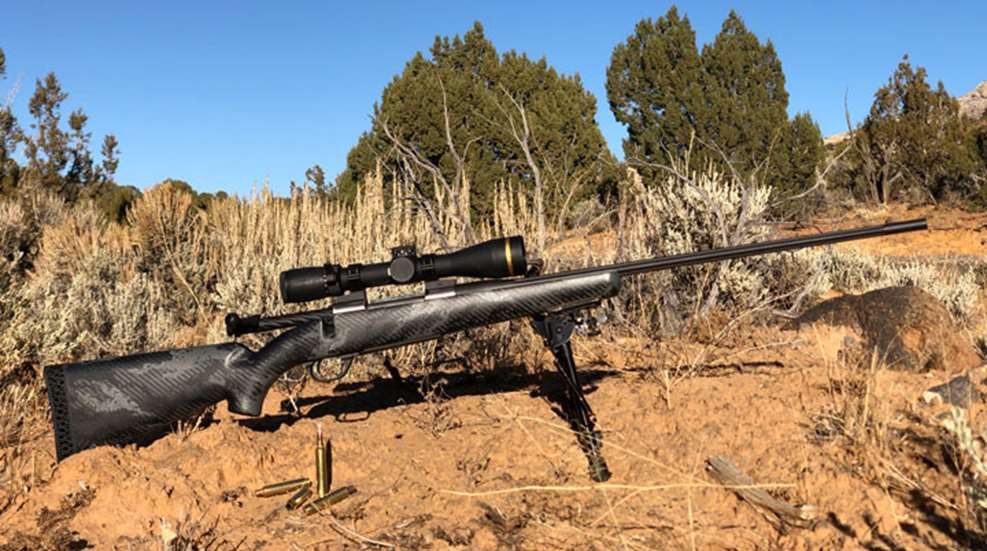
You have just brought home a new rifle, and by Saturday you want to be at the bench. Should you fire a few rounds and be done with it, or does a new barrel need a careful, shot-by-shot routine first? That question is about break-in.
By the end you will understand what break-in does inside the barrel, know how the routine changes for a bolt-action and a semi-automatic, and be able to follow a step-by-step plan and maintain the results.
One honest note first. There is no single proven answer to how much break-in a barrel needs. What follows is the careful, conventional approach, and it costs little beyond time and cleaning supplies. If your rifle's manufacturer gives different instructions, follow those first.
Why barrel break-in matters: What a new barrel is really like
Every new barrel, no matter how premium, leaves the factory with microscopic machining marks, tiny grooves and ridges left over from making it. Think of a fence rail fresh from the sawmill. It looks smooth, but slide your hand along it and you find rough spots that catch and shed little bits of whatever rubs against them. A bore is far finer than a fence rail, yet a bullet is driven down it under heavy pressure, pressed into the rifling (the spiral grooves that spin it), so it rubs against everything in there.
Those imperfections trap copper from the bullet jackets. Over time the buildup, known as fouling, can alter the bullet's trajectory and degrade accuracy. Break-in is meant to burnish the bore, which means smoothing it by rubbing. As the barrel sees more rounds, the rough surfaces gradually wear down and leave a more uniform channel. That smoother surface helps in two ways.
- Better bullet sealing. A smoother bore lets the bullet make better contact with the rifling, which optimizes pressure and consistency. In plain terms, the bullet fits the barrel the same way every time.
- A steadier trajectory. Fewer irregularities mean a more consistent flight path, which contributes to tighter groups.
There is a third payoff. Unchecked fouling can eventually become abrasive and speed wear on the barrel and other components, so a thorough break-in supports a longer service life.
Key idea: Break-in has two jobs. It smooths a rough new bore, and it keeps copper from building up in the rough spots while that smoothing happens. Cleaning at the right moments is how you do both.
What happens if you skip it
Skipping or rushing break-in can lead to three problems, and each follows from the chain above.
- Increased fouling. More copper buildup means more frequent and more intensive cleaning later.
- Inconsistent accuracy. Irregular bullet seating from uneven buildup can produce erratic groups.
- Reduced barrel life. Over time, abrasive fouling can cause premature wear of the rifling and the crown, the finished end of the barrel where the bullet exits.
Common mistake: Shooting a full box through a new rifle in one sitting and promising to clean it later. Say the groups start to wander by the end. You cannot tell whether it is you, the ammunition or the rifle, and uneven copper buildup is one possible culprit. Put the cleaning into the early rounds instead of saving it for the end of the day.
Bolt-action or semi-automatic: How the goal of break-in changes
Break-in is not one-size-fits-all. A bolt-action is usually built for precision, so its break-in is mostly about the barrel. A semi-automatic has to be accurate and also cycle reliably with different loads, so its break-in is also about the moving parts.
| Question | Bolt-action | Semi-automatic |
|---|---|---|
| Main goal | Precision. Tight tolerances and long-range use make a meticulous break-in worth the effort. | Smooth cycling and reliable extraction, more than sub-MOA groups. |
| Cleaning | The bore after every shot or small group of shots. | Regular cleaning, because fouling reaches the gas system and moving parts. |
| Ammunition | Match-grade or heavier bullets for a precision rifle. | Several different loads, because semi-autos are more sensitive to pressure differences. |
"Sub-MOA" means groups smaller than one minute of angle, about one inch at 100 yards, and understanding MOA explains the idea. The gas system appears in the semi-automatic column because many semi-autos tap a little gas from each shot to cycle the action, so residue gathers in those ports as well as in the bore. A bolt-action is loaded by hand, and that single-shot nature allows a very controlled break-in that focuses on the barrel's finish.
For a precision bolt-action, put the barrel first and be patient. For a semi-automatic, put cycling reliability first and give it a few different loads. If you own both, the bolt-action gets patience and the semi-auto gets variety.
A rifle break-in routine you can follow, step by step
Break-in is gradual and takes discipline. The plan has three parts. You prepare the barrel, fire and clean in stages, and choose ammunition that suits the rifle's job.
Before the first shot: Inspect and clean
Safety: Begin every cleaning session with the same safety check. Point the muzzle in a safe direction, remove the magazine, open the action, and look and feel into the chamber to confirm it is empty.
- Inspect the bore. Use a borescope, a small lighted scope for looking inside the barrel, and look for machining marks, debris or signs of factory fouling. Make notes, so you have a "before" picture.
- Protect the chamber. Fit a bore guide, which keeps the cleaning rod centered and protects the chamber from accidental damage.
- Clean thoroughly. Run a high-quality solvent through the barrel with a non-abrasive cleaning rod to remove residues left during manufacturing and initial testing.
- Lubricate lightly. Put a light coat of oil on moving parts. Excess oil attracts more fouling.
The shooting and cleaning cycle
Once the rifle is clean, you build round count in stages.
| Stage | How you shoot | When you clean | What it accomplishes |
|---|---|---|---|
| First 10 shots | One round at a time | After every shot, with a look at the bore | Gently removes manufacturing residue and begins burnishing |
| Next 50 to 100 rounds | Groups of 3 to 5 shots, once the bore looks smoother | After each group | Builds round count while fouling stays under control |
| After break-in | Normal shooting | Typically every 50 to 100 rounds | Keeps the smooth bore from filling with fouling |
Why one shot at a time? It prevents excessive buildup, and it lets you inspect the bore after each shot, so you can see what the barrel is telling you. Ten rounds is a start, not a finish line. When the bore appears smoother, move to groups of three to five shots, still cleaning after each group. The routine is slow on purpose. You are trading a few extra cleanings now for a barrel that behaves predictably for years.
Choosing ammunition and bullet weight
The goal during break-in is consistency, so use quality factory ammunition rather than a mix of whatever is in the cabinet. For a precision rifle, match-grade ammunition makes the groups you shoot along the way more meaningful, because the ammunition is less likely to be the cause of a flyer. Our guides to bullet weight and ammunition quality help you sort out what you are buying.
A hunting rifle has a slightly different job. Since you will zero with your hunting load anyway, it makes sense to finish the break-in with the polymer-tipped or soft-point load you intend to carry, so the last rounds through the barrel also tell you how that load groups and where it hits. If you plan to carry a particular load on opening morning, end the routine with that box. For a semi-automatic, try a few different loads to check cycling reliability and make sure the rifle handles varying pressures smoothly.
How much break-in your barrel needs
Not every barrel starts equally rough. Some premium barrels, such as those hand-lapped (polished smooth by hand) by makers like Krieger or Bartlein, come nearly polished from the factory. They may need only a few rounds with careful cleaning to confirm the bore is smooth. More common production-grade barrels often have a rougher finish and may need up to 100 rounds of deliberate break-in, with more frequent cleaning so abrasive fouling cannot take hold. For more on how barrels differ, see understanding rifle barrel design. If you are unsure which kind you have, treat the barrel as production-grade, since the extra cleaning costs very little.
Keeping a break-in log
A notebook turns break-in into a record you can use later. The first page holds the rifle, the date, the barrel type if you know it and what the borescope showed before the first shot. Each shot or group gets its round count, ammunition and cleaning noted, and a second look into the bore after the first 10 shots shows how it has changed. A group from a steady rest near the end of the 50 to 100 rounds closes the record. With it, you can always say how many rounds the barrel has seen, which loads it has run, and how the bore and groups changed.
Maintenance during and after break-in: Protecting what you built
Break-in does not end when the round count does. The smooth bore lasts only if you look after it, and a few areas deserve regular attention.
- Barrel crown. The very end of the barrel is essential to accuracy, so keep it intact and free of damage.
- Chamber and bolt. Wear here can affect both cycling and overall accuracy, so inspect them regularly.
- Gas system (semi-automatics). Keep gas ports and related parts clean, since residue and debris collect there and can cause malfunctions.
Use specialized copper solvents that dissolve copper fouling without aggressive scrubbing, which protects the delicate rifling. On a bolt-action, keep the action screws (the screws that hold the barreled action in the stock) torqued consistently, because that stability is vital for long-term accuracy. After break-in, a routine of cleaning every 50 to 100 rounds prevents excessive fouling. Check recoil springs, bolt lugs and other critical parts from time to time, since catching wear early prevents long-term damage, and use only light lubrication.
Troubleshooting common problems
| What you see | Likely cause | What to do |
|---|---|---|
| Inconsistent accuracy | Uneven copper buildup in the bore | Clean thoroughly and inspect for buildup. Repeating the break-in with careful cleaning can help. |
| Failure to cycle (semi-automatics) | Fouled gas ports or the wrong amount of lubrication | Check both. A different load may also be needed. |
| Erratic groups | Loose components | Inspect the scope mounts, action screws and overall barrel integrity. |
Start with the simplest, cheapest explanation, usually a dirty bore or a loose part, before you suspect the barrel itself. Loose components can undo the consistency your break-in built, so if you mounted the optic yourself, our guide to mounting a rifle scope is a good way to double-check your work.
What a properly broken-in rifle gives you
A smooth, burnished bore creates more consistent bullet seating and reduces the unpredictable effects of copper fouling, which means tighter groups, a big deal for long-range shooters and hunters alike. A semi-automatic cycles more reliably across different loads, with a lower risk of malfunctions. Keeping copper in check can significantly extend the effective life of the barrel, and a uniformly conditioned barrel is easier to clean and maintain. Even experienced shooters sometimes overlook this step, and a rifle broken in carefully rewards you every time you pick it up.
Putting it together
Some shooters and barrel makers swear by a careful shoot-and-clean routine; others see no measurable difference in factory barrels. What both sides agree on is cheaper to act on: A new rifle should be cleaned before its first shot, copper should not be allowed to pile up, a semi-automatic must prove it cycles your loads, and everything that holds the barrel and optic must be tight. So follow your manufacturer's instructions if it gives any. If it does not, the careful routine in this article costs only time and patches, which makes it a reasonable choice for a precision rifle, and a shorter version, with cleaning every few groups, is enough for most hunting and general-purpose rifles. Then keep a log, so the next time your groups wander you can tell the rifle's story from your own notes.
Check your understanding
Try answering these before you open the answer. If you can decide what to do and explain why, you have it.
1. A friend says cleaning a brand-new rifle after every shot is a waste of time. How would you explain why the early shots get special treatment?
A new bore has microscopic machining marks that trap copper from bullet jackets. Cleaning after each early shot removes that residue before it builds up, begins the burnishing process and lets you inspect the bore as it changes.
2. You own a bolt-action precision rifle and a semi-automatic. How does your main goal during break-in differ?
For the bolt-action it is the barrel's finish, so you clean after every shot or small group. For the semi-automatic it is smooth cycling and reliable extraction, so you test several loads and keep the gas system clean as well as the bore.
3. You are breaking in a deer rifle. Which ammunition would you choose, and why?
Quality factory ammunition throughout, finishing with the hunting load you plan to carry. Those last rounds double as a first look at where that load groups, so you arrive at zeroing with useful information.
4. You paid extra for a hand-lapped premium barrel. Does it need the same 100-round break-in as a factory barrel?
Probably not. A hand-lapped barrel comes nearly polished, so a few rounds with careful cleaning may be enough to confirm the bore is smooth. A rougher production barrel is the one that may need up to 100 rounds of deliberate break-in.
5. A semi-automatic you have already broken in starts failing to cycle. What do you check first?
The gas ports for fouling and whether the lubrication level is right. If both are fine, try a different load.
Where to go next
Once break-in is finished, the next job is zeroing, so start with sighting in rifles at different distances, using the load you plan to shoot. To see why a consistent load matters so much, read how ammunition affects your accuracy. If the rifling in your barrel has you curious, barrel twist rate explains how it keeps a bullet stable in flight.
If this article helped you, we invite you to sign up for email notifications of new blog articles.