
Understanding Rifle Barrel Design: Types, Twist Rates, and Bedding Systems
Joseph McLain Nov 07, 2026
Two rifles' spec sheets look very different. One reads "fluted barrel, free-floating, 1:8 twist, pillar bedding." The other says only "solid barrel" and is priced lower. Are those features the secret to accuracy, or marketing on a gun that shoots no better?
Both rifles will shoot, but those few words tell you how each rifle will carry, how it will group, and how it will behave after a long string of shots at the range. Three parts of the design sit behind them: the barrel type, the twist rate and the bedding. By the end you should be able to read a spec sheet, match a rifle to the way you will actually use it, and judge which upgrades are worth your money.
Why rifle barrel design matters more than you might expect
It is easy to think of a barrel as a steel tube that points the bullet at the target. In practice it does much more. When you fire, the barrel flexes and vibrates, heats up, and spins the bullet, all while sitting in a stock that can help or hurt each of those jobs. Picture a diving board. When a diver leaves it, the board bounces and rings for a moment, and a thicker, stiffer board moves less. A barrel behaves the same way, and shooters call that motion barrel whip.
Barrel design shapes four things you will notice at the range and in the field.
- Accuracy. Rigidity, internal rifling, and length
- Weight. Balance, recoil management, and portability
- Cooling. How well heat leaves the barrel during long sessions
- Ammunition compatibility. Twist rate and bedding alignment
These four pull against one another. The stiffest barrel is usually the heaviest, and the lightest barrel usually costs more to build. Cooling matters because a barrel's ability to dissipate heat can affect accuracy over a long shooting session. Compatibility with ammunition comes from how the twist rate stabilizes bullets and how the bedding keeps everything aligned, and we cover both below.
Key idea: Barrel design is a set of trade-offs among stiffness, weight, heat handling, and cost. No design wins in every category, so the best barrel is the one that fits how you will use the rifle.
Four types of rifle barrels and the trade-off each one makes
Rifle barrels come in four common designs. As you read about each one, keep three questions in mind. How far will you carry the rifle? How long will you shoot in one sitting? What do you want to spend?
Solid barrels
A solid barrel is the traditional design, a single-piece, non-fluted barrel made from steel or another high-strength material. It is durable and can take heavy use. Its uniform structure gives consistent internal dimensions, which supports predictable accuracy. It is also easier and cheaper to produce, so you find it on many budget-friendly rifles.
The costs are weight and heat. A solid barrel is heavier to carry, and it has less surface area than a fluted barrel, which can affect performance in extended shooting sessions. The Ruger American Predator is a good example, known for reliable performance and consistent accuracy out of the box.
Fluted barrels
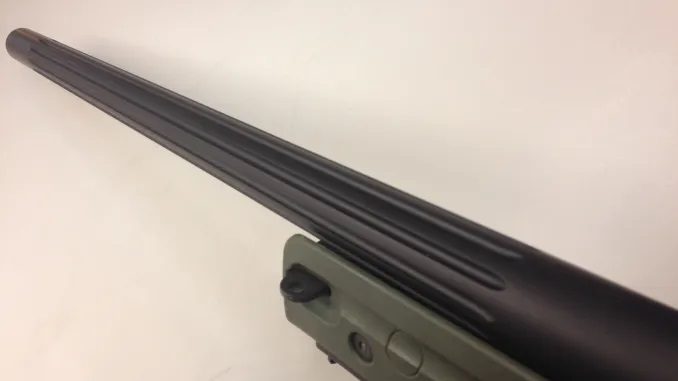
Fluted barrels have grooves machined into the outside surface to remove excess material. Less material means less weight, and fluting lowers the weight without sacrificing structural integrity. The grooves also increase surface area, so heat leaves more efficiently, much like the fins on an air-cooled engine. That helps during prolonged shooting, and many shooters simply like the distinctive, aggressive look.
The trade-offs are cost and a small durability question. The machining adds to the price, and in extreme conditions the reduced material can make a fluted barrel slightly more susceptible to damage than a solid one. High-quality fluted barrels are generally very durable. Fluting is common on lightweight hunting rifles, where it trims ounces without giving up much stiffness.
Bull barrels
A bull barrel is heavy and thick, designed for maximum rigidity and minimal barrel whip. Think again of the diving board. The added mass reduces vibration and movement, which produces tighter groups at long range. Heavier barrels also absorb more recoil energy, so the rifle shoots more smoothly.
The price is portability. A bull barrel is hard to carry over long distances, so it is best suited to benchrest or stationary shooting rather than dynamic field use. The Remington 700 SPS Tactical is a classic example, built for precision target shooting and long-range competitions.
Carbon fiber-wrapped barrels
These barrels have a traditional steel core wrapped in carbon fiber. The design aims to combine the strength and precision of steel with the light weight of carbon fiber, so the rifle stays light while the core keeps its rigidity. The wrap also helps dissipate heat, which allows longer shooting sessions, and it gives the rifle a modern look.
Advanced materials and construction raise the price, and the specialized manufacturing means these barrels are less common than solid or fluted ones, which can limit availability. The Christensen Arms Ridgeline is celebrated for its carbon fiber-wrapped barrel, a lightweight design with very high accuracy that suits hunters who need to balance mobility with precision.
| Barrel type | Main strength | Main trade-off | Best suited to |
|---|---|---|---|
| Solid | Durable, consistent, lowest cost | Heavier, less surface area for cooling | Budget-friendly rifles and general use |
| Fluted | Lighter, with more surface area for cooling | Higher cost, slightly more susceptible to damage in extreme conditions | Hunters who want light weight with good rigidity |
| Bull | Maximum rigidity, tighter groups, smoother recoil | Heavy and less portable | Benchrest and stationary shooting, long-range competition |
| Carbon fiber-wrapped | Light, rigid, and good at shedding heat | Higher cost, less common | Hunters balancing mobility and precision |
Each row is a bargain. Weight is the thread running through all four. If you walk a lot, weight will matter more than anything else, and a fluted or carbon fiber-wrapped barrel earns its price. If you shoot from a bench, a bull barrel's extra mass works for you instead of against you. If budget comes first, a solid barrel still gives consistent accuracy and durability.
Common mistake: Choosing a barrel for its looks or reputation instead of its job. A bull barrel is wonderful on a bench and tiring on a long hunt, while a light barrel may not be the right tool for a day of benchrest shooting.
Twist rate: Why the spin has to match the bullet
Inside the barrel are spiral grooves called rifling. The twist rate describes how fast the rifling spins the bullet as it travels down the bore. It is measured in inches per turn, so 1:7 means one full twist every 7 inches of barrel. A smaller second number means a faster, or tighter, twist.
Spin is what keeps a bullet stable in flight, the way the spiral on a well-thrown football keeps it from wobbling. This stability is called gyroscopic stability. A bullet that gets the right amount of spin for its weight and length stays pointed forward. If the twist rate is poorly matched to the bullet, the bullet may not stabilize properly, and accuracy drops. Different jobs call for different twist rates.
- Tighter twists (1:7, 1:8). They give heavier bullets the extra spin they need to stay stable. They suit long-range and precision shooting with heavier projectiles in calibers like .223 Remington or 6.5 Creedmoor.
- Moderate twists (1:9, 1:10). They offer balanced performance for mid-weight bullets. They fit general hunting and target shooting, and rifles in versatile calibers where shooters may use a range of bullet weights.
- Slower twists (1:12 or slower). They suit lighter bullets. Very fast spin can tear apart some thin-jacketed varmint bullets, so slower twists are common on varmint rifles and platforms shooting lighter projectiles.
| Twist rate | Example bullet weights in .223 Remington | Common applications |
|---|---|---|
| 1:7 or 1:8 | Heavier, longer bullets, about 69 to 80 grains (the longest 90-grain bullets need an even faster twist) | Long-range shooting, precision rifles |
| 1:9 or 1:10 | Mid-weight bullets, up to about 69 grains | General hunting, versatile target shooting |
| 1:12 or slower | Lighter bullets, up to about 55 grains | Varmint hunting, short-range applications |
Start with the bullet, then find the twist. The weights in the table apply to .223 Remington only; in a .308, for example, a 1:10 twist handles typical 150- to 180-grain hunting bullets. Longer bullets generally need more spin, and bullet length depends on caliber and design as well as weight, so the bullet maker's recommendation for your caliber is the best final check.
Here is how that plays out. Suppose a shooter wants to try 77-grain bullets in a .223 Remington. By the table, a 1:7 or 1:8 twist suits those heavier, longer bullets, while a 1:12 barrel is meant for bullets up to about 55 grains. The same bullet that flies true in the first rifle may not stabilize in the second. Our guide to barrel twist rate goes deeper into the numbers.
The practical rule is to decide which bullet weights you plan to shoot before you shop for a rifle, then confirm the barrel's twist rate suits them. If you expect to use a range of weights, a moderate twist is the versatile choice.
Bedding systems: How the barrel and action sit in the stock
Bedding is how the rifle's action and barrel are secured within the stock. A proper bedding system minimizes movement and keeps the barrel aligned with the action, which is crucial for accuracy. A barrel can be excellent and still shoot poorly if the rifle shifts in its stock, like a table with one short leg that rocks a little every time you lean on it.
Free-floating barrels
A free-floating barrel does not touch the stock along its length, so it is free to vibrate independently when the rifle is fired. With less interference from the stock, there is less barrel whip and less external pressure on the barrel. Because stock pressure does not change how the barrel moves, the point of impact stays more predictable and groups tighten.
The disadvantage is cost and complexity. A free-floating setup needs precise bedding and often a higher-priced stock to hold alignment. The Tikka T3x is renowned for its free-floating barrel design, which contributes to its high accuracy straight out of the box.
Pillar bedding
Pillar bedding places metal pillars between the action and the stock to create a uniform, rigid interface. The action screws pull the rifle into the stock with real force, and a soft stock can compress under that force. The pillars prevent the compression, so the action stays securely mounted and groups stay consistent, especially in high-precision rifles.
The cost is extra weight and money, so you see pillar bedding mostly in high-end rifles. Pillars are common in custom builds and in many higher-end factory stocks.
Glass bedding
Glass bedding uses a resin or similar compound to create a custom-molded interface between the action and the stock. Think of pressing your foot into soft clay. The mold fits that one foot exactly. Likewise, glass bedding gives your action a near-perfect fit that minimizes movement and stabilizes the action, reducing the chance of misalignment during firing.
The drawbacks are skill and permanence. Installation requires precision and often raises the overall cost, and once it is done, glass bedding is difficult to remove or modify. High-end custom builds of the Remington 700 often benefit from it, especially in competitive long-range rifles. If you are curious what the stock itself contributes, our guide to rifle stocks covers wood, synthetic, and modern designs.
These three ideas are not rivals. Free-floating describes the barrel's clearance from the stock, while pillar and glass bedding describe how the action sits in the stock, so a rifle can combine them. The Christensen Arms Ridgeline, for example, is typically paired with a free-floating or custom-engineered bedding system.
You can check whether a barrel is free-floating without tools. With the rifle unloaded and the action open, slide a folded strip of stiff paper into the gap between the barrel and the forend tip and push it back toward the receiver. If it travels the whole way, the barrel floats; if it catches, the barrel touches the stock there. A contact point isn't automatically a flaw, because some rifles are built with one on purpose, so ask a gunsmith before changing anything.
How barrel design shows up at the range and in the field
Picture two shooters. One climbs ridges at dawn and takes a single careful shot. The other spends a Saturday afternoon at the bench shooting group after group. They need different rifles, and the pieces above explain why.
For accuracy, rigid barrels (solid, bull, and carbon fiber-wrapped) reduce flex and barrel whip, which leads to tighter groups. A free-floating barrel paired with proper bedding generally offers better accuracy, because the barrel is not affected by stock pressure. For weight and recoil, heavier barrels like bull barrels absorb recoil better but are less maneuverable. Fluted and carbon fiber-wrapped barrels balance reduced weight with maintained rigidity, which is why they suit hunters who need a lightweight yet accurate rifle.
Cooling follows the same pattern. The grooves in a fluted barrel increase surface area and allow better heat dissipation, which matters during extended shooting sessions. Carbon fiber-wrapped barrels also offer excellent cooling while reducing overall weight.
Good practice: If your groups start to open up late in a long session, heat may be part of the reason. Pausing to let the rifle cool before you blame yourself or the ammunition is a common habit for this reason. Our article on how ammunition affects your accuracy helps you sort out the other causes.
Finally, a rifle does not have to stay as you bought it. Upgrading your bedding, such as moving from a basic stock setup to a free-floating or glass-bedded one, can help accuracy. Many modern rifles also allow easy barrel swaps, so you can experiment with different barrel types and twist rates to suit your ammunition preferences.
Five rifles that show these barrel design ideas at work
The following five rifles are popular, well-manufactured models, and each excels in specific areas. Between them they show how barrel type, twist rate, and bedding come together.
Remington 700 SPS Tactical. The Remington 700 series is legendary among precision shooters and hunters, and the SPS Tactical variant is prized for its heavy bull barrel option and the potential for glass bedding. The thick barrel minimizes whip and vibration, and glass bedding gives a custom-fit, stable platform for consistent point of impact shot after shot. It suits precision target shooting and long-range hunting, and it is a long-standing reference point for shooters who want the highest level of accuracy and are willing to invest in a robust, well-bedded rifle.
Savage Model 110 Tactical. The Savage Model 110 Tactical pairs a heavy, threaded barrel with Savage's AccuStock, which uses an internal aluminum rail to bed the action firmly along its length. The stiff barrel resists whip, and the rail keeps the action from shifting in the stock. It is built for tactical applications and precision shooting where consistent performance is critical. If you want a rugged, reliable platform for both field use and range sessions, it is an excellent choice.
Tikka T3x Lite. Known for outstanding out-of-the-box accuracy, the Tikka T3x Lite is a favorite among hunters and target shooters who appreciate a free-floating barrel that minimizes external interference. The barrel is precisely machined for consistent performance, and the lightweight construction makes the rifle easy to carry over long distances. It is versatile for general hunting and precision target shooting, offering precision, portability, and reliability without the extra weight of heavy-barrel rifles.
Ruger American Predator. For shooters on a budget who still want reliability and consistent performance, the Ruger American Predator delivers a well-manufactured rifle with a robust solid barrel. That barrel provides dependable accuracy and durability, even though it may be heavier than fluted designs. The rifle is a popular choice for beginners and field hunters, and it suits general hunting and recreational shooting where dependable performance matters most.
Christensen Arms Ridgeline. For those who prioritize both light weight and high precision, the Christensen Arms Ridgeline is a standout. Its carbon fiber-wrapped barrel reduces weight, maintains rigidity, and dissipates heat well. It is typically paired with a free-floating or custom-engineered bedding system for a stable precision platform. It suits long-range hunting and competitive shooting where mobility and sustained accuracy are paramount, and it is a favorite for hunters who cover rugged terrain.
| Rifle model | Barrel type | Bedding system | Twist rate (typical) | Ideal use |
|---|---|---|---|---|
| Remington 700 SPS Tactical | Heavy-contour barrel (solid) | Factory bedding; often glass-bedded in custom builds | Varies by caliber | Long-range precision, target shooting |
| Savage 110 Tactical | Heavy threaded barrel | AccuStock aluminum bedding rail | Varies by caliber | Tactical, precision shooting |
| Tikka T3x Lite | Free-floating barrel | Factory-bedded, free-floating | Varies by caliber | General hunting, target shooting |
| Ruger American Predator | Solid barrel | Factory bedding | Varies by caliber | Budget-friendly hunting, recreational shooting |
| Christensen Arms Ridgeline | Carbon fiber-wrapped, free-floating | Custom or free-floating | Varies by caliber | Lightweight, long-range hunting |
Notice how the first three columns explain the last one. The Remington and Savage pair heavy or stiff barrels with bedding that holds the action steady, which suits precision work from a bench or a firing line. The Tikka and Christensen pair light, free-floating setups with carrying comfort, which suits hunters on the move. The Ruger gives up some weight and refinement to stay affordable. Twist depends on caliber and the specific model, so confirm the rate in the maker's specifications for the exact rifle you are considering.
A simple way to use all of this is to choose by the job first. For hunting on foot, start with the Tikka T3x Lite or the Christensen Arms Ridgeline. For a modest budget and general hunting, look at the Ruger American Predator. For precision from a bench or in competition, start with the Remington 700 SPS Tactical or the Savage 110 Tactical.
Putting it together
Fluting, free-floating and pillars are real engineering, and each solves a specific problem: Weight, stock pressure or a shifting action. But a plain solid barrel in a well-made stock can shoot very well, and none of those features helps if the twist rate does not suit your bullet. Decide how you will use the rifle and which bullets you will shoot, then judge each feature by whether it serves that job.
Check your understanding
Try answering these before you open the answer. If you can decide what to do and explain why, you have it.
1. A friend plans long hunts on foot in rough country and wants an accurate rifle. Which barrel types would you point them toward, and why not a bull barrel?
A fluted or carbon fiber-wrapped barrel, because both reduce weight while keeping good rigidity. A bull barrel is more rigid, but its weight makes it better suited to benchrest or stationary shooting than to carrying over long distances.
2. Your .223 Remington has a 1:12 twist. A friend gives you a box of 77-grain match bullets, and at 100 yards the groups are wide and some holes are oblong instead of round. What's happening, and what should you shoot instead?
The bullets aren't stabilizing. Heavy, long 77-grain bullets need a tight twist like 1:7 or 1:8; a 1:12 barrel is meant for bullets up to about 55 grains. Oblong holes mean bullets are tumbling. Stick with lighter bullets in that rifle and save the 77s for a faster-twist barrel.
3. Your hunting rifle hits in one place off a sandbag and several inches away when you rest the forend on your hand or pull a tight sling. A strip of paper catches near the forend tip. What's the likely cause?
The stock is touching the barrel, so how you hold or rest the forend changes the pressure on the barrel and moves the point of impact. A free-floating barrel avoids this because nothing in the stock presses on it. Some rifles have a contact point on purpose, so talk with a gunsmith before changing anything, and in the meantime zero and shoot from the same position you'll hunt from.
4. A buddy says pillar bedding and a free-floating barrel are the same thing. How would you correct him?
Free-floating describes the barrel clearing the stock so it can vibrate on its own. Pillar bedding places metal pillars between the action and the stock so the stock cannot compress under the action screws. They address different things, and a rifle can have both.
5. Your factory deer rifle groups well enough for the shots you take a few times a year. A friend urges you to have it glass-bedded. Is it worth it?
Probably not. Glass bedding fixes an action that shifts in its stock, and it takes skill, adds cost and is hard to undo. If the rifle already groups well for your hunting, there's no problem for it to solve. It earns its place on precision and competition rifles where small gains matter.
Where to go next
You can find bolt-action rifles on our website, including the Tikka T3x Lite, Christensen Arms Ridgeline, Ruger American Predator and Savage 110, and anything listed there can be ordered if it isn't in stock.
Since the twist rate depends on the bullet, start with understanding bullet weight in rifle rounds to see how weight changes what a bullet needs from the barrel. Then read understanding MOA so you can measure whether a barrel or bedding change actually tightened your groups. If you are comparing real rifles, out-of-the-box hunting rifle quality at different price points shows what to expect as the budget changes.
If this article helped you, we invite you to sign up for email notifications of new blog articles.