
Rifles Chambered in Revolver Cartridges: .357, .44 Magnum, .45 Colt and Sharing Ammunition
Joseph McLain Nov 07, 2026
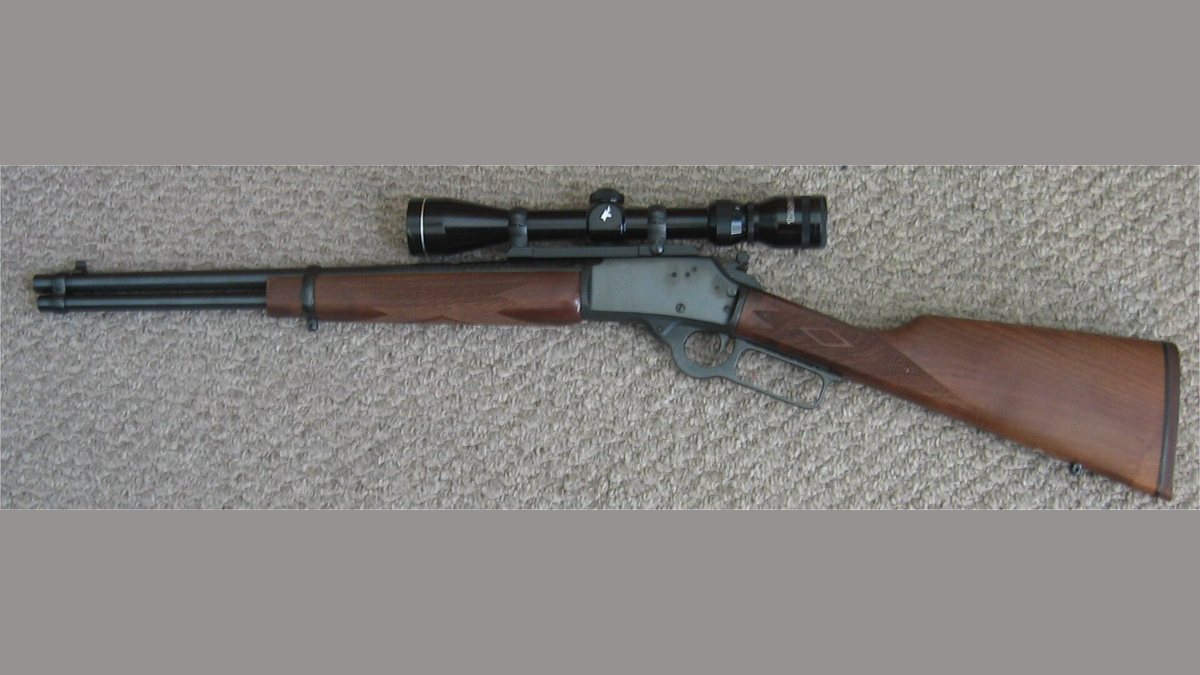
You own a .357 Magnum revolver and you are looking at a lever-action rifle in the same caliber. The idea is appealing: one box of ammunition for both guns, the way cowboys supposedly did it. But do revolver loads work well from a rifle, and why put a pistol cartridge in a rifle at all?
By the end you should understand why revolver cartridges gain performance from a rifle's longer barrel and how that changes what the bullet does, when sharing ammunition makes sense and when it doesn't, and which revolver cartridges are most common in rifles, so you can choose a cartridge and loads, follow the safety rules about which cartridges interchange, and decide whether one fits your shooting or hunting.
Why revolver cartridges work well in rifles
A revolver cartridge was designed to be burned in a short barrel. In a rifle with a barrel of 16 to 20 inches, the propellant gas pushes the bullet for much longer, so the same cartridge usually leaves the muzzle several hundred feet per second faster than it does from a typical revolver, especially with magnum loads. More velocity means more energy, a flatter trajectory over the ranges these rifles are used for and more reach. The rifle's weight, stock and longer sight radius also make it far easier to shoot accurately than a revolver, and recoil feels milder because the rifle is heavier and braced against your shoulder.
The result is a compact, light-recoiling rifle that is very effective at close to moderate ranges, typically inside about 100 to 150 yards depending on the cartridge and your sights. Lever actions are the classic platform, and our articles on the Smith & Wesson Model 1854 in .357 Magnum and lever-action rifles for deer show how these rifles are used.
Key idea: A revolver cartridge fired from a rifle goes noticeably faster. That extra speed is the whole appeal, and it is also why the bullet you choose matters more than you might expect.
Sharing ammunition: Can you, and should you?
You can fire the same cartridge in a revolver and a rifle chambered for it, as long as both are marked for that exact cartridge and the ammunition is within normal specifications. A .357 Magnum rifle can also usually fire .38 Special, because the .357 case is a slightly lengthened .38 Special; a .44 Magnum rifle can usually fire .44 Special for the same reason. Check your owner's manual, because some lever actions feed the shorter cartridge less reliably than the one they are chambered for. The reverse is never safe: Never fire .357 Magnum in a gun chambered only for .38 Special, or .44 Magnum in a gun chambered only for .44 Special.
Whether you should share depends on the job. For practice and plinking, sharing works well and is convenient. For hunting or defense, consider what the extra rifle velocity does to the bullet. Many bullets designed for revolvers are built to expand at revolver velocities. Driven several hundred feet per second faster, some of them can expand too quickly or come apart before penetrating deeply enough, especially on larger animals. That is the reason manufacturers make loads specifically for lever-action and carbine velocities, such as Hornady LEVERevolution and Federal HammerDown, with bullets designed to hold together at rifle speeds. Our comparison of Hornady LEVERevolution and Federal HammerDown explains the difference.
| Use | Sharing revolver ammunition | Why |
|---|---|---|
| Practice and plinking | Works well | Convenient and economical; bullet behavior on impact does not matter |
| Small game and pests at close range | Often fine | Lighter targets; choose loads that do not damage too much meat |
| Deer-sized game | Choose rifle-velocity or tough bullets | Some revolver bullets expand too fast or break apart at rifle velocity |
| Home defense | Test carefully | Know how your load performs from the rifle and what is beyond your target |
Down the table, the priority shifts from convenience toward bullet performance as the stakes rise. For a day of shooting steel with a revolver and rifle, one box of ammunition is a genuine pleasure. For a deer hunt, pick the bullet that is designed for the velocity your rifle produces, even if it means a different box.
Tubular magazines and bullet shape
Most revolver-caliber lever actions store cartridges nose to tail in a tubular magazine under the barrel. A pointed bullet resting against the primer of the cartridge ahead could, under recoil, set it off. That is why tubular-magazine rifles traditionally use flat-nose or round-nose bullets, and why polymer-tipped loads made for lever actions use a soft, flexible tip. Follow your manufacturer's guidance on bullet shape and overall cartridge length, and test feeding with any new load, because lever actions can be particular about both.
Common revolver cartridges in rifles
| Cartridge | Also fires | Strengths in a rifle | Watch for |
|---|---|---|---|
| .357 Magnum | .38 Special | Mild recoil, inexpensive .38 practice ammunition, effective at short range | Choose suitable bullets for deer, and confirm legality |
| .44 Magnum | .44 Special | More energy and a heavier bullet for deer-sized game at moderate ranges | More recoil and cost than .357 |
| .45 Colt | Some rifles also .45 Colt only; check markings | Heavy, slow bullets; classic cowboy cartridge | Not interchangeable with .45 ACP; load pressure varies, follow the rifle maker's guidance |
| .327 Federal Magnum | Often .32 H&R Magnum and other .32 cartridges, per the manual | Flat-shooting, low recoil, good for small game and pests | Less common; ammunition availability varies |
Treat the "Also fires" column as a starting point and confirm it in your own rifle's manual, because chambering marks and manufacturer guidance are what matter. The .45 Colt deserves special attention. Despite the similar name, .45 Colt and .45 ACP are entirely different cartridges with different case shapes; they are not interchangeable, and a rifle chambered for one cannot safely fire the other. Some .45 Colt loads are also loaded to higher pressures intended only for certain strong firearms, so read the box and follow your rifle maker's pressure guidance.
Common mistake: Assuming similar names mean similar cartridges. .45 Colt and .45 ACP, or .38 Special and .380 ACP, are different cartridges. Match the ammunition box to the exact cartridge marked on the barrel every time.
Hunting with a revolver-caliber rifle
Revolver-caliber rifles are popular for deer in thick cover and for hogs at close range, where their handling and quick follow-up shots are an advantage. Their effective range is shorter than that of a typical centerfire rifle cartridge, so keep shots within the distance where you can place the bullet precisely and where your load still has enough energy for a clean kill. Whether a revolver cartridge is legal for deer depends on your state and season. In Iowa, rifles used during the shotgun seasons must be .350 to .500 caliber and produce at least 500 foot-pounds of muzzle energy with an expanding bullet; magnum revolver cartridges such as .357 Magnum and .44 Magnum fall in that caliber window, but you should confirm the specific load and the current rules with the Iowa DNR before you hunt. Our guide to hunting licenses, tags and firearm restrictions in Iowa and neighboring states covers the details.
Setting up a revolver-and-rifle pairing
A good pairing starts with the exact cartridge marked on each gun and each owner's manual, which tells you what other cartridges, bullet shapes and lengths it accepts. From there, one practice load can be shared between them, and a separate hunting or defensive load designed for rifle velocity goes in the rifle when the job is serious. At the range, with eye and ear protection, fire the practice load from both guns and the serious load from the rifle, confirming that each feeds and ejects reliably, then zero the rifle with the load you'll hunt with and note how far the practice load's point of impact differs.
Putting it together
A revolver and rifle in the same cartridge really is a practical, enjoyable pairing, especially for practice. Revolver loads really can behave differently at rifle velocity, which is why rifle-specific loads exist for hunting. And a pistol cartridge in a rifle really does make sense, because the longer barrel turns it into a light-recoiling, accurate and effective short-range rifle. Match every cartridge to the exact marking on the barrel, share ammunition for practice, choose bullets built for rifle velocity when the job demands it, and keep your shots within the range where the cartridge performs.
Check your understanding
Try answering these before you open the answer. If you can decide what to do and explain why, you have it.
1. Your .357 load chronographs at 1,250 fps from your revolver and 1,700 fps from your lever rifle. Why the difference?
The rifle's longer barrel lets the propellant gas push the bullet for a longer distance before it leaves the muzzle, so it exits faster.
2. Can a .357 Magnum rifle fire .38 Special? Can a .38 Special gun fire .357 Magnum?
A .357 Magnum rifle can usually fire .38 Special, per its manual. A gun chambered only for .38 Special must never fire .357 Magnum.
3. You use a soft hollow point that works well on deer from your .44 Magnum revolver. Why might it disappoint from your .44 Magnum rifle?
It may be designed to expand at revolver velocity. At the rifle's higher speed it can expand too fast or break apart, cutting penetration, so choose a bullet built for rifle velocity.
4. Why do tubular-magazine rifles use flat-nose or soft-tipped bullets?
Cartridges rest nose to tail, so a hard pointed bullet could strike the primer ahead of it under recoil.
5. A friend wants to buy .45 ACP for his .45 Colt lever gun because both are ".45." What would you tell him?
Don't. They are different cartridges with different cases, and a gun chambered for one cannot safely fire the other. Always match the ammunition to the exact marking on the barrel.
Where to go next
For a modern revolver-caliber lever gun, read the Smith & Wesson Model 1854 in .357 Magnum. For rifle-velocity lever-action loads, see Hornady LEVERevolution versus Federal HammerDown. For a bigger lever-action cartridge, read lever-action .45-70 rifles for deer hunting. And to compare handgun calibers, see the personal protection caliber comparison.
If this article helped you, we invite you to sign up for email notifications of new blog articles.