
The Role of Ballistics in Long-Range Shooting: Understanding Trajectory, Windage, and Bullet Drop
Joseph McLain Nov 07, 2026
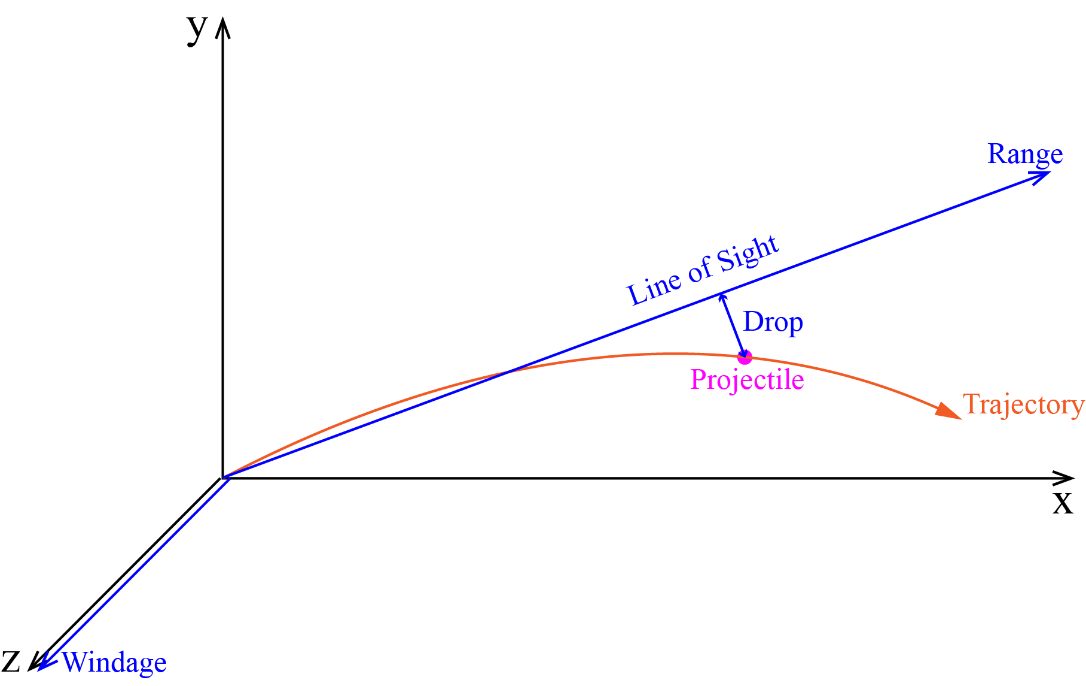
You are lying behind your rifle looking at a steel plate far downrange. Your first shot kicks up dirt below the plate, and your second, held higher, sails off to the right. Would a faster cartridge have helped, or a higher ballistic coefficient on the bullet box, or is it all about reading the wind?
By the end you should understand why a bullet drops, why wind pushes some bullets more than others, which numbers on the box matter and how temperature and altitude change the picture, so you can predict roughly how much your bullet will drop and drift, decide what to adjust, and keep a record of how your own rifle performs.
Gravity and time: Why bullets drop
From the instant a bullet leaves the barrel, gravity pulls it toward the ground. It does not matter how fast the bullet is going; gravity pulls just as hard on a slow bullet as a fast one. What speed changes is how long gravity has to work. A faster bullet reaches the target sooner, so it has less time to fall.
Fall also grows faster than time. Drop a stone from a bridge and it covers only a short distance in the first second but much more in the next, because it keeps speeding up. In the same way, doubling a bullet's time in flight roughly quadruples how far it falls below the line it started on. That is why a bullet can look nearly flat for a few hundred yards and then seem to fall away. On top of that, air drag slows the bullet throughout its flight, so each additional hundred yards takes longer than the last and the fall accelerates even more. The path is a curve that steepens with distance.
The useful lesson is that drop is predictable. Gravity does not change from shot to shot, so once you know your bullet's speed and how well it holds that speed, you can predict its drop at any distance and correct for it.
The numbers that shape trajectory
Three properties of your load do most of the work.
Muzzle velocity is the speed at which the bullet leaves the barrel. Higher velocity shortens flight time, so the bullet drops less. Your rifle's actual velocity may differ from the box, because barrel length and temperature change it.
Ballistic coefficient, or BC, describes how well a bullet keeps its speed against air drag. A long, pointed, streamlined bullet has a higher BC than a short, blunt one. A high-BC bullet loses speed more slowly, so it arrives sooner at long range and drops and drifts less.
Bullet weight works through the other two. In a given cartridge, a heavier bullet usually starts slower, which hurts at first, but heavy bullets in a given caliber are often longer and more streamlined, with higher BCs, so they hold their speed better. At short range the light, fast bullet usually shoots flatter; far out, the heavy, high-BC bullet often catches up and passes it.
Judge loads by velocity and BC together, and to look at a ballistic table for the actual distances you shoot rather than at either number alone. Our article on rifle bullet shapes explains what gives a bullet a high BC.
Key idea: Gravity and wind both work on the bullet for as long as it is in the air. Anything that gets the bullet to the target sooner, higher velocity and a better ballistic coefficient, reduces both drop and drift.
Two cartridges as examples
The .308 Winchester is a classic long-range and hunting cartridge. With a typical 175-grain match bullet at about 2,600 to 2,700 feet per second, it shoots relatively flat to several hundred yards, then drops more and more steeply. At long range it also slows toward the speed of sound, where bullets can become less stable and less predictable. Our guide to .308 Winchester and 7.62x51mm NATO covers the cartridge itself.
The 6.5 Creedmoor became popular for long-range target shooting because its long, high-BC bullets hold their speed well with modest recoil. Even so, at 1,000 yards its drop is measured in feet, not inches, which is why long-range shooters dial elevation from a ballistic table instead of guessing. Our comparison of the 6mm Creedmoor, 6.5 Creedmoor and 6.5 PRC shows how these trade-offs play out in a family of cartridges.
The rule these examples teach is that no cartridge shoots "flat" at long range. Every one needs elevation correction; good long-range cartridges simply need less and are more predictable.
Wind: Why the delay matters more than the distance
Wind pushes a bullet sideways for as long as it is in flight, but the amount of drift depends on something subtler than total time. If a bullet flew through air with no drag at all, a steady crosswind would carry it along with the air, and the bullet would drift very little. Drift happens because drag slows the bullet; the more it slows, the longer it lingers in the moving air compared with how long it would take in a vacuum. Ballisticians describe drift as roughly the wind speed multiplied by that delay.
That explains two things shooters notice. First, drift grows quickly with distance, because the bullet keeps slowing and the delay keeps growing. Second, a high-BC bullet drifts less, not just because it is faster, but because it slows less. As an example, a .300 Winchester Magnum with a high-BC 190-grain match bullet is known for bucking wind, yet a full-value 10 mph crosswind can still move it on the order of 10 inches at 500 yards. Run your own load through a ballistic calculator to see your numbers.
Wind direction matters too. A wind blowing straight across your line of fire, called a full-value wind, has the most effect. A wind at an angle has less, and a wind blowing straight toward or away from you mainly changes drop slightly rather than pushing the bullet sideways.
Picture paddling a canoe straight across a river. The current pushes you downstream the whole crossing, and the slower you paddle, the farther downstream you land. A bullet that slows down in the air is the slow paddler. You can't change the wind, but you can choose the bullet: If you expect to shoot in wind, choose a high-BC bullet, and still plan to correct for the wind that remains.
Common mistake: Treating a light breeze as no wind at all. At long range a breeze you barely feel at the firing line can move a bullet off a small target, and the wind downrange may be stronger or blowing differently than where you lie.
Reading the wind
Because you cannot measure the wind all the way to the target, long-range shooters learn to estimate it from what they can see: Grass and leaves moving, flags, dust, and mirage, the shimmer of heated air visible through a scope. A handheld wind meter tells you the wind where you are, which is a useful starting point. Experienced shooters watch for changes between shots and fire when conditions match what they have already corrected for.
Estimating wind is a skill that improves with feedback. Every time you make a correction and see where the bullet lands, you learn something about how the wind looked versus what it did. That is why keeping notes matters so much.
Temperature, altitude and the smaller effects
Air density changes drag. Thin air, at high altitude or on a hot day, offers less resistance, so bullets slow less and drop and drift less. Cold, dense air near sea level does the opposite. Temperature can also change muzzle velocity, because many powders burn a little faster when warm. For an Iowa shooter who practices in summer and hunts in December, those changes can move the point of impact noticeably at long range.
At very long distances, smaller effects appear: Spin drift, a slight sideways movement in the direction the rifling spins the bullet, and the effect of the earth's rotation. They matter mostly to shooters working well beyond typical hunting distances. Confirm your data in the conditions you will shoot in, especially before a hunt in very different weather.
Turning predictions into adjustments
Once you know how much your bullet drops and drifts, you correct in one of two ways. You can dial the scope's turrets, which are marked in angular units: Minutes of angle, where one MOA is about 1 inch at 100 yards, or milliradians, where one mil is about 3.6 inches at 100 yards. Or you can hold over and hold off, aiming above the target or into the wind using marks on the reticle. Our guides to understanding MOA and sighting in at different distances show how zero, drop and holdover fit together.
A ballistic calculator predicts what should happen, using your velocity, BC, sight height and conditions. Your shots show what actually happens. The two often differ a little, because your rifle's velocity or the bullet's real BC is not exactly what the box says. Long-range shooters keep a record of their real corrections, called DOPE, short for data on previous engagements, and adjust the calculator to match.
Starting a DOPE card for one load
A DOPE card turns predictions into your rifle's own record. One rifle, one load and only that ammunition for the session, at a range with a backstop rated for your distances, with eye and ear protection, is the starting point. Zero at 100 yards and note the date, temperature and load. At each farther distance the range allows, fire a group, adjust the elevation until it centers on your aim and record the correction, along with your estimate of the wind and the windage you needed. Entering your velocity and BC in a ballistic calculator and comparing its predictions with your card shows how far to trust it. When a distance you've already shot gets a first-round hit from the number on your card, the card is working.
Putting it together
Long-range shooting is a matter of time in the air. Gravity pulls the bullet down for every moment of its flight, and wind pushes it sideways in proportion to how much drag slows it. Higher velocity and a better ballistic coefficient reduce both, so judge loads by those two numbers together and by a ballistic table at your real distances. Learn to read the wind, account for big changes in temperature and altitude, and correct by dialing or holding. Above all, record what your rifle actually does, because your own data is the only data that matches your rifle.
Check your understanding
Try answering these before you open the answer. If you can decide what to do and explain why, you have it.
1. A bullet that seemed flat at 300 yards lands far below your aim at 700 yards. Why?
Gravity acts for the whole flight, fall grows faster than time, and drag slows the bullet so later yards take longer. Together they make drop increase steeply with distance.
2. Two bullets leave at the same speed into the same crosswind, and the higher-BC one drifts less. Why?
Wind drift depends on how much drag delays the bullet compared with a drag-free flight. A high-BC bullet slows less, so that delay is smaller and the wind has less time to act.
3. Two loads have the same muzzle velocity, and one has a much higher BC. Which shoots flatter at 800 yards?
The higher-BC load, because it keeps more of its speed and reaches the target sooner.
4. You zeroed and recorded your drops in August and will hunt in December. What should you do?
Confirm your zero and drops in cold weather, because denser air and cooler powder can change velocity and trajectory.
5. Your ballistic app is excellent, so why bother keeping a DOPE card?
The app predicts from published numbers. Your card records what your rifle actually did, which lets you correct the app and trust your adjustments.
Where to go next
Start with understanding MOA, because it explains the units behind every scope adjustment. Sighting in rifles at different distances shows how to turn drop into clicks. To see why some bullets hold their speed better, read understanding bullet shapes for rifle rounds, and for silhouette practice that puts these skills to work on steel, try silhouette shooting with rifles.
If this article helped you, we invite you to sign up for email notifications of new blog articles.