
Choosing an AR-15: Purpose, Caliber, Configuration and What Quality Means
Joseph McLain Nov 06, 2026
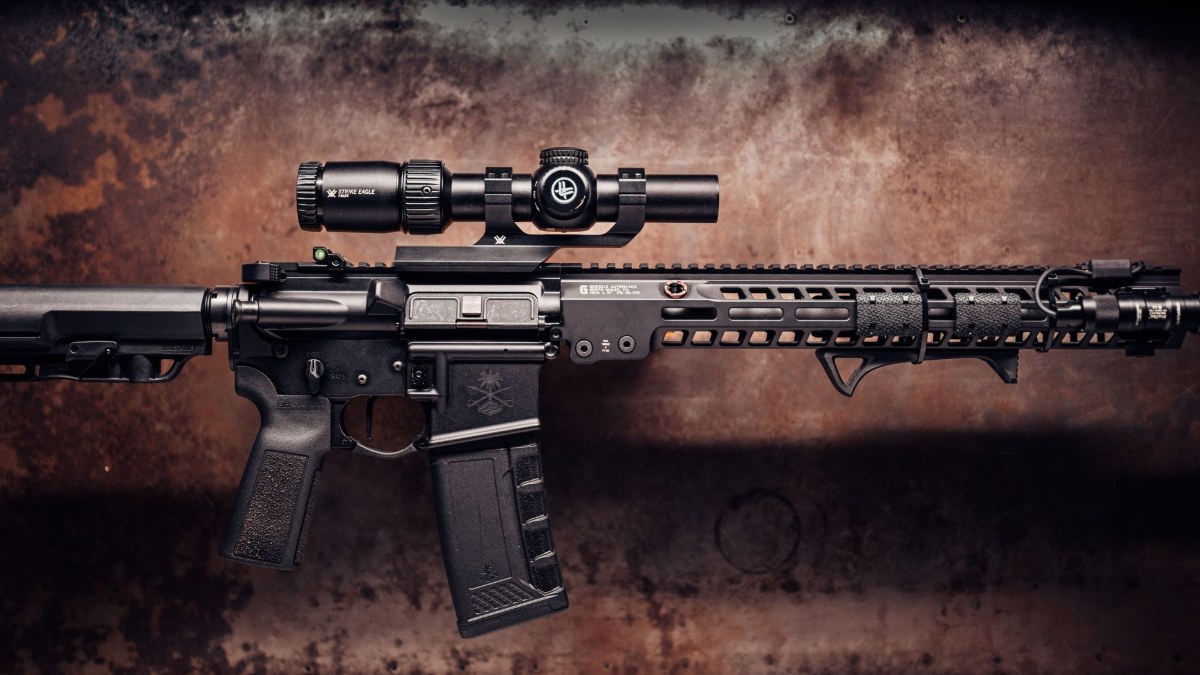
You have decided to buy an AR-15, and the choices multiply quickly: complete rifles or a build, 5.56 or .300 Blackout or 6.5 Grendel, budget brands and premium ones, all with parts that seem to interchange. It is easy to spend a month reading and still not know which rifle to buy.
By the end you should be able to describe the AR-15 you need in a sentence, read a spec sheet and recognize what matters, and choose between buying a complete rifle and building one.
For most first-time buyers, the answer is a complete 16-inch rifle in 5.56 with a mid-length gas system, from a maker with a record for reliability and a warranty you can use, plus a good red dot, a sling and a few quality magazines. Rifles such as the Ruger AR-556 and Smith & Wesson M&P15 Sport III are well-proven at a modest price; Bravo Company (BCM), Colt and Daniel Defense build to a higher standard for more money. Spend what is left on practice ammunition, and customize later once you know what you actually want to change.
What an AR-15 actually is
The AR-15 is a semi-automatic rifle design, originally developed by ArmaLite in the late 1950s, that is now made by many manufacturers to broadly shared dimensions. It has two main halves. The lower receiver holds the trigger group, the magazine well and the stock; under federal law, the lower is the serialized part that counts as the firearm. The upper receiver holds the barrel, the bolt carrier group, the charging handle and the handguard. Because so many parts follow common patterns, you can change barrels, stocks, triggers, handguards and optics, and you can even swap complete uppers to change caliber on the same lower in many cases.
That modularity is the AR-15's greatest strength and the source of most buying confusion. "All AR-15s are the same" is true only in the sense that the parts are designed to fit together. It is not true that all parts are made to the same quality, or that every combination works equally well.
Key idea: Decide the job first. The AR-15's modularity means almost any configuration is possible, so the only way to choose well is to start with what you will use it for.
Start with the job
| Main use | What matters most | A sensible starting configuration |
|---|---|---|
| Home defense | Reliability, handling indoors, a light, simple controls | 16-inch or 14.5-inch pinned-and-welded barrel in 5.56, red dot, weapon light, sling |
| General range use and classes | Reliability, comfort over many rounds, inexpensive ammunition | 16-inch 5.56 with a mid-length gas system, red dot or low-power variable optic |
| Predator and varmint hunting | Accuracy, a magnified optic, appropriate bullets | 16- to 20-inch barrel, free-float handguard, magnified scope, possibly a bipod |
| Deer hunting where legal | Cartridge and bullet suited to deer and allowed by your state | A cartridge and expanding bullet appropriate for deer, confirmed against your state's rules |
| Suppressed or short, quiet use | Cartridge efficiency in short barrels | .300 Blackout, short barrel, suppressor where legal |
Find the row that matches your main use, not every use you can imagine. A rifle built around a real primary job will do secondary jobs reasonably well. A rifle built to do everything perfectly usually ends up heavy and expensive. For barrel length choices, our guide to AR-15 barrel length explains the trade-offs and the 16-inch legal line.
Choosing a caliber
The standard AR-15 cartridge is 5.56 NATO, which most rifles marked "5.56" can safely fire along with .223 Remington. It is widely available, relatively inexpensive, mild in recoil and supported by more magazines and parts than anything else. For most buyers, especially a first AR-15, 5.56 is the right answer unless a specific job calls for something else. Our article on 5.56 NATO and .223 Remington explains why the barrel marking matters.
Other cartridges solve particular problems:
- .300 Blackout fires .30-caliber bullets from the standard AR-15 magazine and bolt, works efficiently in short barrels and is well suited to suppressed use with subsonic ammunition. It costs more per round and drops faster at distance. Our guide to the .300 AAC Blackout covers it in depth. One important caution: A .300 Blackout round can chamber in a 5.56 rifle and cause a dangerous failure, so owners of both should keep ammunition, magazines and rifles clearly marked and separated.
- 6.5 Grendel uses a different bolt and magazines to fire heavier, high-BC bullets with better long-range performance than 5.56 from the AR-15 size receiver.
- .224 Valkyrie pushes heavier .22-caliber bullets for long-range target work; see our article on the .224 Valkyrie.
- Straight-wall cartridges such as .350 Legend and .450 Bushmaster are offered in AR-15 uppers for deer hunters; check your state's rules for the season and cartridge.
Larger cartridges such as .308 Winchester need the larger AR-10 style platform, which is a different, heavier rifle family with less parts interchangeability.
What quality looks like on a spec sheet
Many specifications on AR-15 listings describe manufacturing choices that affect durability and reliability. A few of them are worth understanding:
- Barrel steel and finish. Barrels are commonly made from chrome-moly vanadium or stainless steel, and may be chrome-lined or nitride-treated inside for durability and corrosion resistance. Stainless barrels are often chosen for precision builds; chrome-lined and nitrided barrels for durability.
- Chamber. Look for a chamber marked for 5.56 NATO or a ".223 Wylde" chamber, both of which handle 5.56 pressures safely. A barrel marked only ".223 Remington" may not be intended for 5.56.
- Bolt and carrier. Quality bolts are made from suitable steel, and makers often advertise inspection processes such as magnetic particle inspection. The gas key on the carrier should be properly staked so its screws cannot loosen.
- Gas system. A gas system length matched to the barrel, commonly mid-length on a 16-inch barrel, tends to cycle more smoothly.
- Handguard. A free-float handguard does not touch the barrel, which helps accuracy and gives room for a light and other accessories.
No single specification guarantees a good rifle, and many well-made rifles do not advertise every detail. Reputation for reliability, warranty and service, and consistent reports from owners who shoot a lot matter as much as the spec sheet.
Common mistake: Spending the budget on accessories before the core rifle. A good optic and a reliable rifle with quality bolt and barrel are what make an AR-15 work. Rails, grips and cosmetic parts can wait.
Buy complete or build?
A complete rifle from a reputable maker is assembled, test-fired and usually backed by a warranty, which makes it the simplest, most reliable choice for a first AR-15. Building, either by assembling a complete upper and lower or by assembling from parts, lets you choose every component and learn how the rifle works, but it requires the right tools, attention to torque and headspace on barrel installation, and a careful function check. If you build, assembly errors are yours to find. Many owners start with a complete rifle and later customize it once they know what they actually want to change.
Remember that the lower receiver is the legally regulated part. Buying one requires the same background check as a complete firearm through a licensed dealer, and federal, state and local laws on configurations and accessories differ. Check the rules that apply to you before buying or modifying.
Where to put the money
For a first AR-15, spending priorities usually work best in this order: A reliable rifle with a quality barrel and bolt; a durable optic suited to the job, such as a red dot for close work or a low-power variable for general use; a good sling and, for home use, a weapon-mounted light; then quality magazines and enough practice ammunition to learn the rifle. Our guides to matching a scope to your rifle and rail systems help with optics and mounting.
Putting it together
A reputable complete rifle is the easiest way to get a reliable AR-15. Building gives you control and teaches you the rifle, at the cost of more responsibility. Caliber matters more than many buyers realize, though 5.56 is the right choice for most. And the parts do interchange, but quality varies. Start with your job, choose the caliber and configuration it calls for, look for the specifications and reputation that signal a reliable rifle, spend on the core rifle and optic before accessories, and follow the laws that apply where you live.
Check your understanding
Try answering these before you open the answer. If you can decide what to do and explain why, you have it.
1. You want to build an AR-15 and plan to order a stripped lower and an upper online. Which part arrives through a licensed dealer with a background check, and why?
The lower receiver. Under federal law it's the serialized part that counts as the firearm, so it goes through a dealer and a background check like any gun. An upper by itself isn't a firearm.
2. A friend urges you to make your first AR a 6.5 Grendel because it reaches farther. You'll mostly shoot at a 100-yard range and take a carbine class. What would you choose, and why?
5.56. It's widely available, cheaper per round, mild in recoil and supported by the most magazines and parts, which matters for a class and lots of practice. The Grendel earns its place at long range, which isn't the job you described. You can add a Grendel upper later if that changes.
3. You own a 5.56 AR and just bought a .300 Blackout upper. Both use the same black magazines. What's the danger, and how do you prevent it?
A .300 Blackout round fits a 5.56 magazine and can chamber in a 5.56 rifle, and firing it can blow the rifle apart. Keep the ammunition separate, mark the .300 Blackout magazines with a distinct color, and never have both calibers loaded on the bench at once.
4. Two otherwise similar rifles are on sale: one barrel is marked ".223 Rem," the other ".223 Wylde." Which would you buy if you want to shoot inexpensive 5.56 surplus, and why?
The .223 Wylde. Like a 5.56 NATO chamber, it safely handles 5.56 pressures as well as .223. A barrel marked only .223 Remington may not be intended for 5.56.
5. You have $1,200 for your first AR. The salesman suggests a $1,000 rifle with a fancy rail and grip, leaving $200 for an optic and ammunition. What's a better split?
Spend less on the rifle and more on what makes it work: a reliable rifle from a proven maker in the $600 to $800 range, a durable red dot, a sling, several quality magazines and practice ammunition. Rails, grips and cosmetic parts can wait until you know what you want to change.
Where to go next
You can find Bravo Company (BCM) rifles and parts and Hexmag AR magazines on our website, and anything listed there can be ordered if it isn't in stock.
For barrel length and gas system choices, read AR-15 barrel length. For ammunition, see our guides to Federal's 5.56mm ammunition and Hornady's 5.56mm ammunition. For a different cartridge, read understanding the .300 AAC Blackout. And for the optic, see matching a scope to your rifle.
If this article helped you, we invite you to sign up for email notifications of new blog articles.