
Choosing the Right .22 Caliber Rifle: A Guide to Versatile, Beginner-Friendly Rifles
Joseph McLain Nov 06, 2026
You walk up to the rifle rack intending to buy a first .22, and within a few minutes you are looking at four rifles and hearing four opinions. One person swears by the Ruger 10/22. Another points to the Winchester Wildcat. A third says the Savage Mark II is the accurate one, and someone else mentions the CZ 455 American. This article gives you a way to sort it out. By the end you should be able to explain how a semi-automatic and a bolt-action rifle differ in actual use, say what each of these four popular rifles does best, and choose one by matching it to what you really plan to do.
Why a .22 is such a good first rifle
The .22 LR cartridge produces very little recoil, and that single fact does a lot of teaching. When a rifle kicks hard, the body starts bracing for the shot, and a shooter who braces tends to flinch or jerk the trigger without realizing it. With a .22 there is little to brace against, so a new shooter can pay attention to what matters: Technique, trigger control and sight alignment. That is why a .22 is welcoming for youth, women and anyone easing into the sport.
Cost works the same way. .22 LR ammunition is among the lowest-cost options per round, and skill comes from repetition. Whether you are at the range every day or just plinking on a weekend, cheaper rounds mean more time on target. Add the low noise and light recoil and you get a rifle that is used for target practice, plinking, small-game hunting and even competition, and one that stays in the collections of beginners and seasoned shooters alike. Because the rifle is simple to operate and the cartridge is forgiving, you spend your effort on fundamentals, and as you upgrade and customize the rifle over time, the platform grows with your skills. Our article on why the .22 LR is ideal for building and refining shooting skills explores this idea further.
Safety: Low recoil and low noise do not mean low consequences. A .22 bullet is still a real bullet, so every rule in our guide to firearm safety for beginners applies to a .22 exactly as it does to a deer rifle. Keep the muzzle pointed in a safe direction, keep your finger off the trigger until you are on target, and know what is behind your target.
The first decision: Semi-automatic or bolt-action
Before you compare brands, decide how you want to load the next round. The Ruger 10/22 and Winchester Wildcat are semi-automatic rifles. Each pull of the trigger fires a round, and the rifle cycles itself and loads the next one from the magazine. The Savage Mark II and CZ 455 American are bolt-actions, which means you work the bolt by hand after every shot to eject the spent case and load a fresh round.
The difference changes what you practice. A semi-automatic lets you put more rounds downrange in a session and keeps your attention on the sights and trigger, which makes it fun and well suited to plinking. The risk is that the ease can turn into rapid, careless shooting, so you have to supply the discipline yourself. A bolt-action builds that discipline into the rifle. Because each shot is deliberate, many precision shooters value the pause, which gives you a moment to reset your position and think about the shot you just fired.
Common mistake: Assuming a rifle is unloaded because the magazine is out. A round can still be in the chamber. With any rifle, open the action and look and feel to confirm the chamber is empty every time you pick it up.
Here is the rule of thumb. If you want volume, variety and a rifle that can be changed over time, lean semi-automatic. If you want one deliberate shot at a time and the accuracy that tends to come with it, lean bolt-action.
Four popular .22 rifles and what their features mean in use
A feature list only helps when you know what each feature does for you. For each rifle below, notice the reason behind the feature as well as the feature itself.
Ruger 10/22: The iconic workhorse
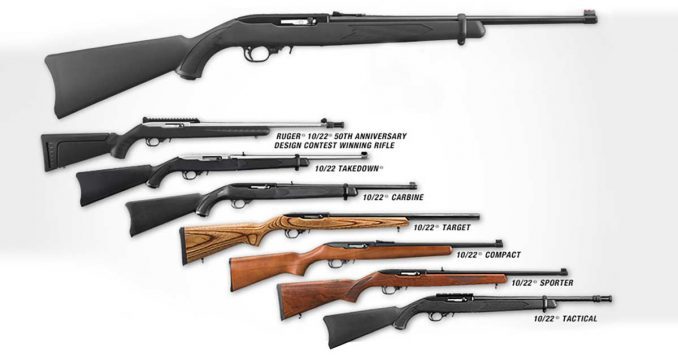
The 10/22 is arguably the most famous .22 rifle in America, and it has been a favorite for decades. It is celebrated for reliability, ease of use and virtually endless aftermarket support. Aftermarket simply means parts made by other companies, and for the 10/22 that includes barrels, stocks and match-grade triggers. Configurations run from basic models to tactical and takedown versions, so you can start simple and change it as your goals change.
It typically uses a detachable 10-round rotary magazine, which is known for smooth cycling and easy reloading, and higher-capacity magazines are available if you shoot high volume. The design also allows straightforward disassembly and cleaning, which matters because learning to care for a firearm is part of learning to shoot. One honest caution is that the huge variety of options can overwhelm a beginner. A good approach is to shoot it stock for a while, then change one thing at a time so you can tell what each change did.
Best fit: Beginners who want a versatile, upgradeable platform, recreational and competitive shooters who enjoy modifying their rifle, and anyone who wants a time-tested design with extensive parts and accessory support.
Winchester Wildcat: Innovation meets simplicity
The Wildcat is a newer entry, designed around modern features and user-friendliness. It has gained popularity for a lightweight build, a bolt system made for easy cleaning, and its unique compatibility with Ruger 10/22 magazines.
Think about what each feature saves you. A bolt designed for quick, easy disassembly means cleaning takes less effort, and cleaning that is easy is cleaning that actually gets done. The durable polymer stock keeps the weight down, which you will appreciate during field use and long shooting sessions, since a rifle that feels light at the start of a walk can feel heavy by the end. Using 10/22 magazines gives you flexibility when you need replacements or high-capacity magazines. And the built-in Picatinny rail, a standardized mounting strip, makes it easy to add optics and accessories. If you want to understand rails before you buy, see our guide to choosing the right rail system.
Best fit: New shooters who want a lightweight, low-maintenance rifle, hunters and recreational shooters who value portability and easy cleaning, and anyone who likes modern design combined with reliable performance.
Savage Mark II: Accuracy at an affordable price
The Mark II has long been a favorite of shooters who want precision and value. It is renowned for excellent out-of-the-box accuracy, which means it shoots well without paying for upgrades, and for a straightforward design that suits both target shooting and small-game hunting.
Savage builds its rifles with tight tolerances, and the Mark II's rugged construction translates into consistent accuracy. The operation is simple and no-frills, with reliable cycling and a crisp trigger pull. A crisp trigger breaks cleanly instead of dragging, so you are not disturbing the rifle while you squeeze, and that helps a new shooter concentrate on technique. Add the cost-effective price and you have a good match for a beginner who is serious about improving marksmanship.
Best fit: Beginners who want a highly accurate rifle without significant expense, shooters focused on target practice and precision, and hunters who want a reliable platform for small game and varmints.
CZ 455 American: European precision in a .22 package
The CZ 455 American is a bolt-action .22 that combines a classic European design philosophy with modern features. CZ has since replaced the 455 with the CZ 457, which carries the same idea forward, so you are more likely to find a 457 new and a 455 used. It is known for exceptional build quality, refined accuracy and elegant looks, and it gives a different experience from the semi-automatics. The bolt-action cycling is deliberate and controlled, which many precision shooters appreciate.
Its smooth, consistent operation and inherent accuracy are the main draws, and because every shot is deliberate, that can be an advantage in precision shooting. You get high-quality stocks in wood or synthetic and a meticulously finished receiver. Adjustable triggers and sights let you fine-tune the rifle to your own shooting style, which is a real advantage if precision is your goal. The trade-off is that customization options are not as extensive as those for the 10/22.
Best fit: Shooters who prefer the deliberate action of a bolt-action rifle, precision enthusiasts and competitors who value repeatability and refinement, and anyone who wants classic European design with modern performance for target shooting and small-game hunting.
Comparing the four side by side
| Rifle | Customization | Weight and portability | Maintenance | Price and value |
|---|---|---|---|---|
| Ruger 10/22 (semi-automatic) | Unmatched aftermarket support, virtually limitless | Generally moderate; takedown models for portability | Straightforward operation; the variety of options can overwhelm a beginner | Incredible value given its support and reliability |
| Winchester Wildcat (semi-automatic) | Modern, user-friendly; easy-clean bolt and 10/22 magazine compatibility | Notably lightweight thanks to the polymer stock | Fast, straightforward disassembly and cleaning | Competitive price point |
| Savage Mark II (bolt-action) | Little needed; accurate out of the box | Balances durability with portability; slightly heavier than some modern synthetic options | Rugged and user-friendly; works without fuss | Affordable, with exceptional out-of-the-box accuracy |
| CZ 455 American (bolt-action) | Adjustable features, but fewer options than the 10/22 | May be a bit heavier than semi-automatics; solid construction aids stability | Deliberate cycling, but smooth action and easy disassembly keep upkeep manageable | Typically slightly more expensive than some semi-automatics |
Read across a row to see one rifle's personality, and down a column to compare the four on a single question. Two patterns stand out. First, the rifles split between customization (the 10/22) and accuracy that arrives ready to use (the Savage Mark II and CZ 455 American). Second, weight is a trade-off rather than a flaw. A lighter rifle is easier to carry afield, while a heavier one, like the CZ 455 American, is more stable for precision shooting in controlled settings. The CZ costs a bit more, and for shooters focused on accuracy the bolt-action precision and refined build justify it.
Matching the rifle to what you will actually do
The best rifle on paper is the wrong one if it does not fit your use. Start with the activity you expect to do most, then follow the match.
- Versatile plinker or recreational shooter. You want something fun, easy to maintain and with good magazine capacity. The Ruger 10/22 Takedown is modular and easy to transport for outdoor plinking, and the Winchester Wildcat Compact is lightweight and streamlined, with quick maintenance.
- Competitive shooter or skill developer. You want high accuracy, a quality trigger and adjustable features. The Ruger 10/22 Target has a heavy bull barrel and upgradeable match-grade trigger options, so it can be fine-tuned for precision. The CZ 455 American offers a bolt-action design and adjustable sights for deliberate, consistent shot placement.
- Field hunter or small-game enthusiast. You want something rugged, lightweight and easy to carry on long hunts. The Winchester Wildcat has an ergonomic design, a quick-disassembly bolt and a durable polymer stock. The Savage Mark II is a bit heavier, but its proven accuracy and reliable performance make it a solid choice.
- Customization lover. You enjoy upgrading and personalizing. The Ruger 10/22, with aftermarket stocks, barrels and match-grade triggers, is a playground for shooters who like to modify and improve.
Notice what drives each list. The plinker's list is about fun and easy upkeep, the hunter's list is about carrying comfort, and the competitor's list is about precision. A bull barrel is a thick, heavy barrel, and the added weight out front helps many shooters hold steady. If you fit more than one group, pick the activity you will do most often. For example, picture yourself walking a fence line with a rifle for the occasional squirrel. Weight and easy cleaning will matter every outing, while a match-grade trigger will matter very little. Now picture yourself at a bench shooting paper targets for score. The reverse is true. If you want to see how the 10/22 stacks up against other rifles in more detail, read Exploring the Ruger 10/22 and Its Top Competitors.
Try this: The counter fit test
- Have the rifle handed to you with the action open, or open it yourself, and confirm it is unloaded. Keep the muzzle in a safe direction and your finger outside the trigger guard.
- Close your eyes and shoulder the rifle the way you would to aim at a spot on the far wall. Open your eyes. Are the sights close to lined up without you shifting your head?
- Work the action, whether bolt or charging handle, a few times. Does it move smoothly for your hands?
- Hold the rifle at your shoulder for about 30 seconds and notice how the weight feels at the front.
- Ask yourself whether you could carry it for an hour, and whether it suits the one activity you named at the start.
You will know it worked when you can say, in one sentence, why this rifle fits you better than the others you tried.
Accessories and upgrades: What each one is for
Accessories can improve your experience a great deal, but each one solves a specific problem. Knowing the problem keeps you from buying things you do not need.
Optics. Beginners should start with iron sights, the metal front and rear sights on the rifle, to develop fundamental sight alignment skills. A scope or red dot makes the target easier to see, yet it cannot fix poor alignment, so learn the basics first. Once you are comfortable, consider mounting one. Models like the Wildcat have integrated rails that make this easy, and a good scope with adjustable turrets, the knobs that move your point of impact, lets you dial in your zero and adjust for distance and wind drift. Our article on understanding rifle scopes explains the numbers on the tube.
Triggers. Upgrading to a match-grade trigger can improve your accuracy. A crisp, smooth pull minimizes movement at the moment of firing, and less movement means tighter groups. Many aftermarket trigger kits let you adjust the pull weight and travel, so you can tailor the trigger to your preference.
Stocks and ergonomics. If you choose a 10/22, you can pick from a vast range of aftermarket stocks, from a classic wood finish to a modern synthetic design, and the right one can improve both comfort and accuracy. Simple additions such as recoil pads and cheek rests make long sessions more comfortable, especially for younger or smaller-framed shooters. Fit matters because a rifle that fits you lets you get into the same position every shot. See choosing the right rifle stock for the differences among wood, synthetic and modern designs.
Maintenance and care. Regular cleaning is critical for accuracy and reliability, so keep the barrel, bolt and other parts in good condition with a consistent schedule. If you modify the rifle, make sure aftermarket parts are properly installed and maintained, because loose or poorly fitted components can hurt both accuracy and reliability.
If you must prioritize, learning on iron sights and keeping the rifle clean come first, and they cost almost nothing. Trigger and stock upgrades come after you have learned what your own shooting needs.
Choosing a .22 is a personal decision that should reflect your goals, lifestyle and preferences. Low recoil and affordable ammunition make the platform an ideal tool for building fundamentals, and by weighing customization, weight, ease of maintenance and intended use, you can pick a rifle that improves your early experience and grows with you.
Putting it together
Each of the four opinions at the rack is right about something. The 10/22 is a reliable, endlessly customizable semi-automatic, the Wildcat is a light, affordable semi-auto, the Savage Mark II is an accurate, simple bolt action, and the CZ 455 American, now succeeded by the CZ 457, is a premium bolt gun. Decide whether a beginner will learn better with a bolt action's one-shot-at-a-time rhythm or enjoy a semi-auto's quick follow-ups, match the rifle's weight and fit to the shooter, and then pick the model that does your main job best.
Check your understanding
Try answering these before you open the answer. If you can explain it in your own words, you understand it.
1. Why does a low-recoil .22 help a beginner learn faster?
With little recoil to brace against, a new shooter is less likely to flinch and can concentrate on technique, trigger control and sight alignment. The affordable ammunition also allows more repetition, and repetition builds skill.
2. A friend mostly wants a rifle to carry along fence lines for small game. Which features matter most, and which rifles from this article fit?
Rugged, lightweight and easy to carry matter most, along with easy cleaning. The Winchester Wildcat fits well with its polymer stock and quick-disassembly bolt, and the Savage Mark II is a solid choice if the friend does not mind a bit more weight.
3. You pick up a rifle with the magazine removed. Is it safe to assume it is unloaded, and what do you do?
No. A round can remain in the chamber. Open the action and look and feel to confirm that the chamber is empty, and keep the muzzle in a safe direction while you do it.
4. Why do instructors recommend iron sights before a scope?
Iron sights teach fundamental sight alignment. A scope makes the target easier to see, but it does not fix poor alignment, so the skill should come first.
5. You love tinkering and want a rifle that grows with you. Which rifle fits, and what should you watch for?
The Ruger 10/22, because of its unmatched aftermarket support. Watch for the variety overwhelming you, so change one thing at a time, and make sure every aftermarket part is properly installed so accuracy and reliability do not suffer.
Where to go next
If the 10/22 caught your attention, A Guide to the Ruger 10/22 goes much deeper into the rifle most people start with. Exploring the Ruger 10/22 and Its Top Competitors is the natural next read if you are still comparing models. Because the rifle is only half of accuracy, General Considerations for .22 LR Ammunition Selection shows how to choose what you feed it, and Mastering the Fundamentals of Shooting covers the technique that turns a good rifle into good groups.
No matter which model you choose, a .22 caliber rifle is a valuable addition to any shooter's collection, providing endless opportunities for fun, learning, and precision. Explore our selection of rifles here and let us know if you don't see what you're interested in so we can get it for you!
If you found this informative, we invite you to sign up for email notifications of new blog articles.