
Browning A‑Bolt vs. X‑Bolt Rifles: Evolution, Performance, and What Sets Them Apart
Joseph McLain Nov 07, 2026
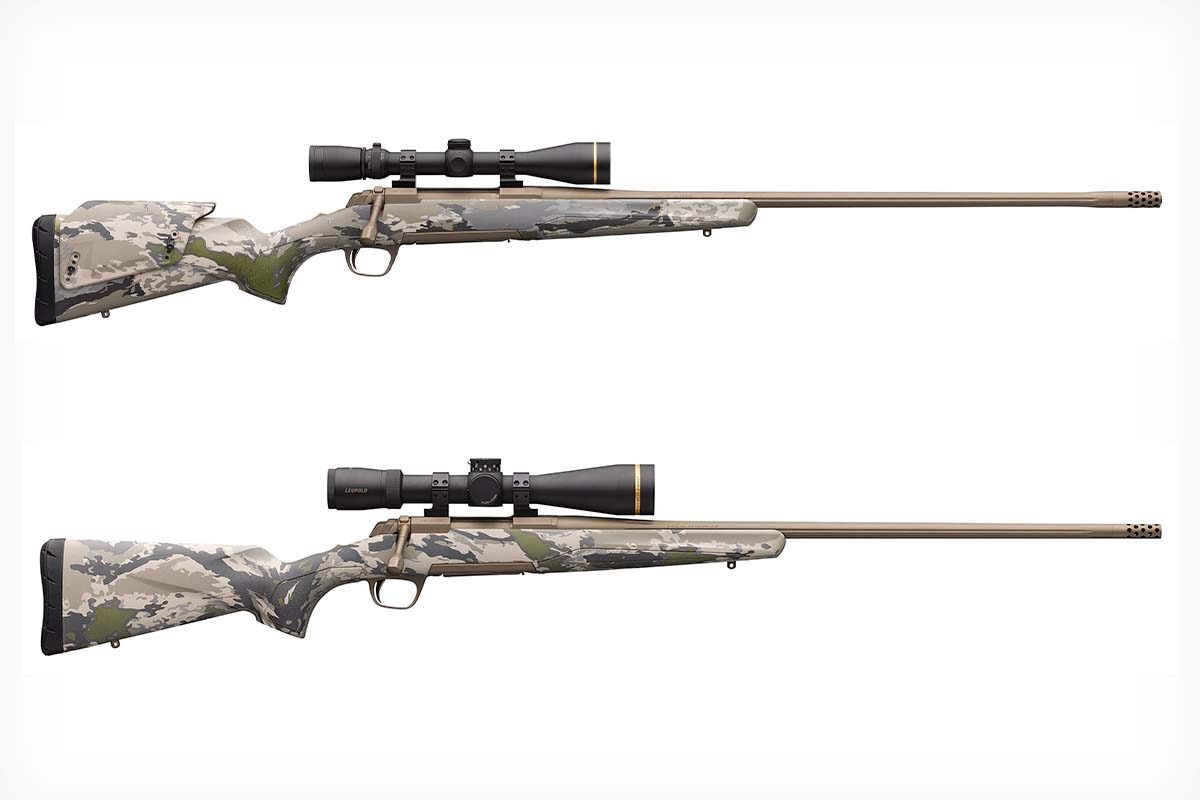
Two Browning bolt-action rifles share a family resemblance. The A-Bolt is a long-running favorite with hunters, now found mostly on the used market. The X-Bolt is Browning's newer answer to what shooters wanted next. Is the X-Bolt a real improvement, or mostly marketing?
The useful question is whether the changes matter for the way you shoot. Each difference between the two ties to something you can feel in your hands or see on the target, and that is how you decide which rifle fits your hunting or shooting.
Two Browning bolt actions, two design philosophies
Browning has long been a respected name in hunting and precision shooting, and the A-Bolt and X-Bolt are two of its most notable bolt-action lines. The A-Bolt has been a cornerstone of Browning's rifle offerings for decades. It is known for reliability, rugged design and time-tested accuracy. It came from an era when rugged, no-nonsense bolt actions were the norm, and it was designed with durability and simplicity in mind. That focus on reliability under harsh field conditions made it a favorite for big game hunting and long-range shooting.
The name covers more than one rifle. Browning's own guide explains that the original A-Bolt and the A-Bolt II are closely related, the later AB3 is a separate design, and all of them are separate from the X-Bolt, so stocks, magazines and some accessories do not interchange between them. If you are shopping the used market, find out exactly which A-Bolt you are looking at before you buy parts or mounts for it.
The X-Bolt is Browning's response to evolving shooter demands and technological advances. It builds on the strengths of the A-Bolt and adds modern design features aimed at better accuracy, lower weight and improved ergonomics. Browning engineered it for faster cycling, an improved trigger response and a more refined bolt mechanism, while keeping the reliability the brand is known for. Modern CNC machining supports tighter tolerances (how closely parts fit together), reduced weight and enhanced durability. Feedback from seasoned hunters and competitive shooters drove many refinements, including the trigger and the more ergonomic stock designs.
Key idea: The A-Bolt is built around dependable simplicity, and the X-Bolt keeps that dependability while adding refinement. Nearly every difference falls into three areas you can feel for yourself, the bolt, the trigger and the stock. Together they shape accuracy and recoil.
The bolt: How cycling speed and lockup affect your shots
Cycling means working the bolt to eject the empty case and load the next round. You lift the handle, pull it back, push it forward and lower it. The bolt lift is how far the handle must rotate upward to unlock the action, so less lift means a shorter, quicker motion. Lockup describes how securely and consistently the bolt seats against the receiver when it closes.
The A-Bolt has a short, smooth bolt throw that made it popular with hunters, and extraction, simply pulling the spent case out of the chamber, is reliable in field conditions. The X-Bolt keeps a short-throw bolt and adds a few practical features owners point to most. A small bolt-unlock button lets you open the bolt to unload while the safety stays on. The magazine is a detachable polymer box that holds cartridges in a circular, rotary arrangement, and the X-Bolt uses a four-screw scope base system instead of the two-screw arrangement on older A-Bolts. None of these changes the cartridge or the barrel; they change how you load, unload and mount optics.
Why does that matter to you? Picture a hunter climbing out of a tree stand. Being able to unload with the safety on is a real safety convenience. Picture a shooter who mounts and remounts scopes. A sturdier scope base can help a zero survive bumps and travel, though rings and torque matter just as much. If you value a proven design and are comfortable with a used rifle, an A-Bolt is a fine choice. If the unloading feature, the magazine and current parts support matter to you, the X-Bolt is the easier rifle to own today.
The trigger: Where precision is won or lost
A trigger has two qualities you can feel. Pull weight is how much force it takes to release the shot, and travel is how far the trigger moves before the rifle fires. A crisp trigger behaves like a light switch, with firm resistance and then a clean release. A mushy trigger behaves like a dimmer, so you cannot tell exactly when it will go. Crispness matters because you want the rifle to fire without your hand disturbing the sights.
The A-Bolt's trigger is known for a reliable pull that is tuned for steady performance in a variety of conditions. Its mechanism is straightforward, and many traditionalists appreciate that predictability. The X-Bolt's trigger is designed to be user-adjustable for pull weight on many models, which lets you set it lighter or heavier within the maker's range. Whether it feels crisper than a particular A-Bolt depends on that rifle, so try both. Because adjustability varies by model, confirm it on the exact rifle you are considering, and have any trigger work beyond the maker's adjustment done by a qualified gunsmith.
Common mistake: Expecting a better trigger to fix your groups by itself. A crisp trigger removes an obstacle, but steady position and smooth pressure still do the work. Our trigger control tips are written for pistols, but the idea of smooth, steady pressure carries over to rifles.
The stock: How the rifle carries, mounts and handles recoil
The stock is where a rifle meets your body, so it shapes how the rifle carries, how it mounts to your shoulder and how it feels when it fires. Three terms help. Length of pull is the distance from the trigger to the end of the stock. Cheek weld is how your cheek rests on the stock so your eye lines up with the sights or scope. Balance is where the rifle's weight sits when you hold it.
Both families have been offered in many stock styles, from walnut to synthetic, and weight varies far more between models within each family than between the families themselves. So compare the specific rifles, not the names. Some X-Bolt models offer adjustable length of pull or cheek height, which helps a rifle fit shooters of different sizes or work with a high-mounted scope. Our guide to choosing a rifle stock shows how wood, synthetic and modern stocks differ.
Recoil depends mostly on the cartridge, the rifle's weight and how well the stock fits you. A stock that fits, with a good recoil pad, lets you see your shot and get back on target, and a rifle that feels better to shoot is easier to shoot well, because you are less likely to brace for the kick.
Accuracy and consistency: What the differences add up to
Accuracy is really consistency, and all three areas feed into it. The A-Bolt earned a reputation for good out-of-the-box accuracy, and the X-Bolt has a similar reputation. Holding zero, the sight setting that puts the bullet where you aim at a chosen distance, depends heavily on solid scope mounting and on the stock and action screws staying tight. For most hunters, the difference between two good rifles is smaller than the difference ammunition and practice make.
Keep the rifle's share in perspective, because ammunition matters too. Our article on how ammunition affects your accuracy explains why one load can group beautifully while another strings shots. Once you choose a load, sight in the rifle at the distances you will actually shoot.
| Feature | Browning A-Bolt | Browning X-Bolt |
|---|---|---|
| Availability | Mainly the used market; check which version (A-Bolt, A-Bolt II, AB3) | Current production with many models |
| Unloading | Standard bolt operation | Bolt-unlock button lets you open the bolt with the safety on |
| Magazine | Varies by version | Detachable rotary-style polymer magazine |
| Trigger | Varies by version and condition | User-adjustable on many models; confirm on the rifle |
| Scope mounting | Two-screw bases on older A-Bolts | Four-screw base system |
| Parts and accessories | Not interchangeable between A-Bolt versions or with the X-Bolt | Current support from Browning and aftermarket makers |
These are practical differences, not a scorecard. Most rows are about owning and using the rifle, not about how far it can shoot. Decide which rows matter most for your use, then let those rows choose the rifle.
Choosing for your hunting or shooting
For hunting, a good used A-Bolt suits a buyer who values a proven design and a fair price and is willing to confirm its condition and version. The X-Bolt suits a hunter who wants a current rifle with current parts support, the safety-on unloading feature and a choice of lightweight or adjustable models. For target or competition use, choose by the specific model's barrel, stock and trigger rather than by family name.
Two real-life examples show how to apply this. Suppose you walk a long way to a stand each morning and carry the rifle all day. Weight and balance matter most to you, which points toward the X-Bolt. Suppose instead you want a no-frills rifle that you will use hard in rough weather. The A-Bolt's proven simplicity fits that job.
Customization follows production. Because the X-Bolt is current, stocks, magazines and mounts are easier to find for it, while parts for older A-Bolts can take some searching and must match the exact version.
Handling both rifles before you decide
Five minutes with each rifle tells you more than the spec sheets. Keep the muzzle in a safe direction and your finger off the trigger, and open the bolt to check the chamber and magazine yourself. Work the bolt five times, slowly and then briskly, and notice how much effort the lift takes. Close your eyes, mount the rifle, then open them: your eye should line up with the sights or scope without moving your head. Hold it in your shooting position for half a minute to feel the front-end weight. With the owner's permission, press the trigger on the empty rifle, still pointed safely, and feel for travel and a clean release. The rifle that feels quicker, steadier and better balanced to you is the one to buy.
Putting it together
The A-Bolt is a well-built rifle with a good reputation, and the X-Bolt is not just marketing; it adds features that make it easier to unload safely, mount optics and find parts for. But neither family is better in every way, because the rifle in front of you matters more than the name on it. Decide whether you want a current rifle or a used one, list the two or three features that matter for how you hunt or shoot, and then handle the actual rifles. Buy the one that fits you and has the features you will use, put a properly mounted scope on it, and spend the difference on ammunition and practice.
Check your understanding
Try answering these before you open the answer. If you can decide what to do and explain why, you have it.
1. You often unload your rifle before climbing down from a tree stand. Which X-Bolt feature helps, and how?
The bolt-unlock button. It lets you open the bolt and unload while the safety stays on, so the rifle never has to be in a fire-ready condition during the climb or while crossing a fence.
2. A hunter carries a rifle for miles each day. Should the family name decide the purchase?
No. Weight and balance vary more between models within each family than between the families, so compare the specific rifles, including the scope you plan to mount.
3. A friend plans to buy an X-Bolt just to fix poor groups. What might he be missing?
A crisper trigger and tighter lockup help, but steady position, smooth trigger pressure and the right ammunition still decide most results.
4. You found a used A-Bolt at a good price. What should you check before buying accessories for it?
Which version it is. Browning notes that the A-Bolt and A-Bolt II are related, but the AB3 and the X-Bolt are separate designs, so stocks, magazines and some accessories do not interchange.
5. A listing says an X-Bolt has an adjustable trigger and adjustable comb, but it's a different model from the one you handled. What should you do?
Confirm it on that exact rifle. Trigger and stock adjustments come on some X-Bolt models, not all, so check the specific model's specifications before you count on them.
Where to go next
You can find scope mounts and bases for the Browning X-Bolt on our website, and anything listed there can be ordered if it isn't in stock.
If price is part of your decision, out-of-the-box hunting rifle quality at different price points shows what to expect at each level. To compare another classic bolt action, read about the Remington 700 series. When you are ready to mount optics, understanding rifle scopes explains what the numbers mean.
If this article helped you, we invite you to sign up for email notifications of new blog articles.