
Understanding Barrel Twist Rate
Joseph McLain Nov 13, 2026
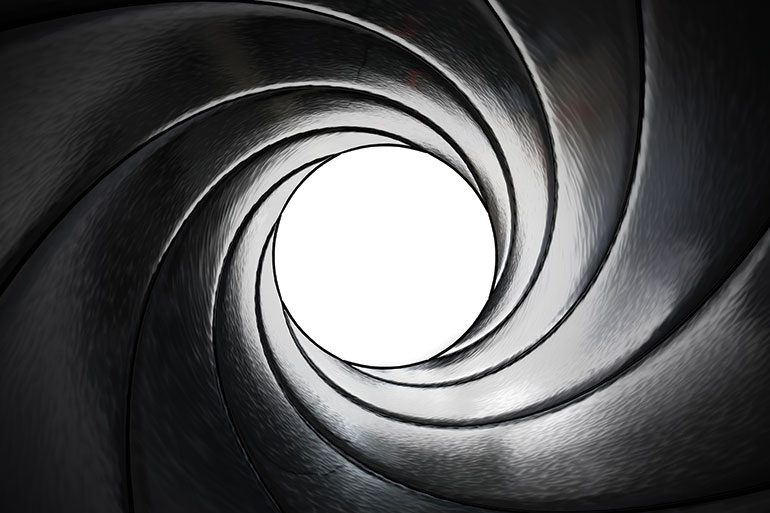
Two AR-15 barrels look the same, but one is marked 1:7 and the other 1:9. Or maybe you bought a box of heavy match ammunition and it leaves long, sideways tears in your paper. Barrel twist rate explains both situations.
By the end you will be able to read a twist marking, choose a barrel and bullet that belong together, recognize what an unstable bullet looks like on a target, and confirm your setup on paper.
The short answer
Pick the bullet first, then make sure your barrel's twist can spin it fast enough. Longer bullets need a faster twist (a smaller second number), and weight is only a rough guide to length. If the holes on your paper are long and oblong, the bullet isn't getting enough spin. If they are round and the group is still big, the problem is somewhere else.
What barrel twist rate tells you about a bullet's flight
Rifling is the set of spiral grooves cut into a bore. A spinning bullet behaves like a gyroscope: it resists tipping and holds its nose forward. You spin the bullet fast enough to stabilize it, and you match that spin to the bullet's shape and speed.
A twist rate like 1:7 means the rifling makes one full turn in 7 inches of barrel, and 1:12 means one turn in 12 inches. The smaller the second number, the faster the twist, and the more spin the bullet gets at a given velocity. Think of a top. Spun fast, it stays upright, and spun too slowly, it wobbles and falls. A bullet with too little spin yaws (wobbles nose to side), tumbles and "keyholes," which means it hits the target sideways and leaves an elongated, keyhole-shaped tear. Too much spin is rarely a problem, with a few edge cases we will cover below.
Key idea: Twist rate is the spin your barrel gives the bullet. The right amount depends on the bullet and its speed, so barrel, bullet and velocity have to agree. For more on how barrels are built, see our guide to rifle barrel design, twist rates and bedding.
Why bullet length, not weight, decides how much spin you need
Picture trying to push over a short block and then a tall pole. The taller the object, the more leverage the push has. Air does the same to a long bullet, and spin is what resists it. That is why longer bullets need more spin, and it is why the rule that really matters is bullet length, not weight by itself.
Weight and length usually rise together, so weight is a handy shortcut, but material changes the picture. A monolithic copper bullet is longer than a lead-core bullet of the same weight, so it usually needs a faster twist. Shape matters too. The sleek, high-ballistic-coefficient (BC) designs, such as VLD, ELD and hybrid ogives with long boat-tails, often demand faster twists than old-school flat-base bullets of the same weight. BC is simply how well a bullet slips through the air. Our article on rifle bullet shapes shows what those profiles look like.
The .223/5.56 shows how this plays out. Bullets of 40 to 55 grains are short, while 69 to 80 grain match bullets are long, so the lighter ones are happy with a slower twist and the heavier ones are not.
Common mistake: Choosing a twist by weight alone. Two bullets of the same weight can need different twists if one is longer or sleeker. When in doubt, look at the bullet's length and shape, not just the number on the box.
How velocity turns twist into spin
Spin rate, measured in revolutions per minute (RPM), depends on both twist rate and muzzle velocity. Here is a worked example. A .300 BLK subsonic bullet travels about 1,000 feet per second, or 12,000 inches each second. Through a 1:7 barrel it makes one turn for every 7 inches, so it spins roughly 1,700 times a second, or about 100,000 RPM. Keep the same twist and double the speed, and you double the RPM.
That is why short barrels (lower velocity) and subsonic loads produce fewer RPM, and why they may need a faster twist to compensate. At the other end, a high-velocity varmint load in a very fast twist can spin a thin-jacket bullet so fast that the jacket occasionally fails. It is rare, but it is real at the extremes.
The practical rule is simple. If you slow a load down, through a short barrel, a suppressor with subsonic ammunition or cold weather, your stability margin shrinks. A bullet that was borderline stable can start showing flyers or keyholes. The fix is either a faster twist or a shorter, less slender bullet. If you hunt in the cold, our guide to cold shot accuracy for winter deer hunting is worth a look.
Choosing a twist rate: Starting points by caliber and platform
Once you understand length and velocity, the common twist rates stop looking random. This table gives starting points for popular rifle cartridges.
| Cartridge | Bullet weights | Typical twist | Notes |
|---|---|---|---|
| .223/5.56 | 40 to 55 gr | 1:9 to 1:12 | Varmint and training loads |
| .223/5.56 | 62 to 69 gr | 1:8 to 1:9 | 1:7 to 1:8 also supports typical 62 gr duty loads |
| .223/5.56 | 69 to 80 gr | 1:7 to 1:8 | Shines with 69 to 77+ gr match bullets; favor 1:7 for heavy OTMs, tracers or subsonics |
| 6mm and 6.5mm rifles | Long-for-caliber bullets | 1:7.5 to 1:8 | Stabilizes bullets that shine at distance |
| 6.5 Creedmoor | 120 to 147 gr | 1:8 | The modern standard for high-BC long-range bullets |
| .308 Winchester | 150 to 168 gr | 1:11 to 1:12 | Excellent for traditional hunting and target, and for lighter flat-base varmint or mid-weight hunting bullets |
| .308 Winchester | 175 to 200+ gr | 1:10 | Stabilizes 180 to 200 gr game and match bullets, and works well with 150 to 168 gr too |
| .30-06 Springfield | 150 to 220 gr | 1:10 | Broad and forgiving |
| .300 Win Mag | 165 to 220+ gr | 1:10 | Some run 1:11 for midweights |
| 7mm Rem Mag | 140 to 175 gr | 1:9 to 1:9.5 | Favor the faster end for long, heavy 7mm bullets |
| .450 Bushmaster | 250 to 300+ gr | 1:24 to 1:28 | Big diameter, relatively short length |
To use the table, find your cartridge, then find the row nearest your bullet weight, and then remember that length and shape can push you toward the faster end. In .30 caliber, 1:10 is the workhorse because it comfortably stabilizes common hunting weights and many heavy match options. Our comparison of 6mm and 6.5mm Creedmoor and 6.5 PRC shows why those long, sleek bullets lead to 1:8-type twists.
Short barrels, suppressors and subsonic loads
Short barrels mean lower velocity and lower RPM at the same twist. To keep longer bullets stable, builders often choose faster twists, especially when running suppressors or subsonics. For .223/5.56 short-barreled rifles, 1:7 to 1:8 is common to stabilize 69 to 77 gr bullets despite reduced velocity. For .300 BLK subsonic, 1:7 to 1:8 stabilizes 200 to 230 gr bullets at around 1,000 fps (see understanding the .300 AAC Blackout). Suppressors do not inherently destabilize bullets, but subsonic velocity certainly can if the twist is marginal.
Handguns, rifled shotguns and muzzleloaders
| Platform | Typical twist | Why |
|---|---|---|
| 9mm | 1:10 to 1:16 | Long 147 gr subsonic bullets or unusual profiles may prefer the faster end |
| .45 ACP (many 1911s) | 1:16 to 1:18.8 | Plenty for common bullet shapes at ACP velocities |
| Revolvers (.357 Mag, .44 Mag) | 1:16 to 1:20 | Bullets are relatively short for their caliber, and velocity is adequate |
| Rifled shotguns with sabot slugs | 1:28 to 1:36 | Slugs are fat but not very long |
| Inline muzzleloaders | 1:24 to 1:28 | Common for saboted bullets |
| Traditional round-ball rifles | 1:48, 1:66 | Round balls need very little spin |
The pattern is the same as before. The shorter and fatter the projectile for its diameter, the slower the twist it needs. Match twist to projectile type, because a sabot slug designed for a slower twist might not tighten up in a very fast one, and overspinning can occasionally hurt accuracy with designs meant for slower spin. Inline muzzleloaders with sabots tend to thrive in the 1:24 to 1:28 range.
Reading your target: Too little spin, too much spin, or something else
Under-stabilization means too little spin. The usual causes are a bullet that is too long for the twist, or velocity (and so RPM) that is too low because of a short barrel, subsonic ammunition or cold weather. Over-stabilization means more spin than needed, and it is usually a non-issue for hunting and typical distances. In the extreme case, a very light, thin-jacket varmint bullet at very high velocity in a very fast twist may show jacket failure. This table helps you tell the difference.
| What you see | What it usually means | What to try |
|---|---|---|
| Keyholes, oblong holes, big random flyers, groups that will not tighten | Under-stabilized, so the bullet is too long for the twist or velocity is too low | Shorter or lighter bullet, different shape, faster twist barrel, or more velocity if it is safe and appropriate |
| Great at 100 yards, falls apart at 300 | Marginal stability that distance exposes | More RPM or a different bullet profile |
| Groups look like a shotgun blast, but holes are clean and round | Not a stability problem, but an ammunition harmony issue such as seating depth, powder node or barrel preference | Tune the load or try other ammunition |
| Occasional jacket "poofs" with ultra-light bullets at blistering speed | Over-spinning a thin jacket | A slightly slower twist or a sturdier bullet design |
The most useful clue in the table is the shape of the holes. Round holes mean the bullet is flying point-first, so look elsewhere, starting with our guide to how ammunition affects your accuracy. Oblong holes point straight to stability. If accuracy is good and the holes are round, you are fine, and most modern fast-twist barrels shoot light bullets acceptably well.
Matching twist to your shooting discipline
Hunting. Typical ranges inside about 200 yards are forgiving, and a moderate twist that cleanly stabilizes mid-weight hunting bullets often gives excellent field results. For long-range hunting with high-BC heavy bullets, confirm that your barrel's twist truly stabilizes those long projectiles at the lowest temperature you expect, because cold air is denser.
Precision rifle and match work. Heavy-for-caliber, sleek bullets dominate, and fast twists are the norm because competitors will not give up BC. Many choose the twist first and then pick bullets it stabilizes comfortably in all weather.
Tactical and defensive AR setups. AR platforms frequently run 1:7 so they can feed anything from common 62 gr to heavier 75 to 77 gr loads. If your carbine is a home-defense trainer that mostly shoots 55 gr bulk, 1:9 will shoot great. If you also run 77 gr duty ammunition, err on the 1:7 to 1:8 side.
So the sequence is: Pick the bullet your goal demands, then make sure your barrel's twist comfortably stabilizes it in the worst conditions you plan to shoot. Two apparently identical rifles may prefer different bullets, so let results, not assumptions, make the call.
Good practice: Treat the table values as starting points, not dogma. Your barrel is an individual, and paper is the final judge.
Proving the match on paper
The test starts with the job: decide what bullet weight and shape it calls for, then compare that bullet with the tables above. If it sits near the edge, plan on more velocity or a faster twist. Shoot at 100 yards first from a steady rest, with eye and ear protection, and look for round holes and groups that tighten as you tune. Oblong holes or sudden flyers point to stability. If your range allows, move back to 300 yards or more, where subtle stability problems show up. If results stay marginal, a slightly shorter bullet of similar BC or a faster-twist barrel is the fix. Round holes at every distance mean the match is right.
Putting it together
A faster twist isn't always better, and it rarely ruins light bullets. A twist rate has to suit the bullet's length: Too slow and long bullets tumble, while a faster twist usually still shoots lighter bullets well, apart from some very thin-jacketed varmint bullets. Read your barrel's marking, choose bullets the twist can stabilize, and let round holes on paper confirm the match.
Check your understanding
Try answering these before you open the answer. If you can decide what to do and explain why, you have it.
1. You plan to shoot 77-grain match bullets in your AR, and you're choosing between a 1:7 and a 1:9 barrel. Which do you pick, and why?
The 1:7. It makes a full turn in fewer inches, so it spins the bullet faster at the same velocity, and long, heavy bullets like a 77-grain match bullet need that extra spin to fly point-first. A 1:9 is better suited to 55- to 62-grain bullets.
2. Two bullets weigh the same, but one is monolithic copper and one has a lead core. Which one likely needs the faster twist, and why?
The copper bullet. Copper is less dense than lead, so for the same weight the bullet is longer, and length is what drives the spin you need.
3. A long, heavy bullet grouped well in warm weather but makes oblong holes on a cold morning. What is likely happening, and what could you do?
Stability margin has shrunk, because cold air is denser and velocity may drop. Choose a shorter or less slender bullet, or use a faster twist, and confirm your setup at the lowest temperature you expect to hunt in.
4. Your group is large, but every hole is clean and round. Is twist rate the problem?
Probably not. Round holes mean the bullet is flying point-first. Look at ammunition harmony, such as seating depth, powder node or barrel preference, and tune the load.
5. A muzzleloader hunter is surprised that his round-ball rifle has a 1:48 or slower twist when your 6.5 Creedmoor is 1:8. How would you explain it?
A round ball is short for its diameter and needs very little spin to stay stable. A long, sleek, high-BC bullet like the 6.5 Creedmoor's needs much more spin to stay point-first, so the twist rate follows the projectile's length and shape.
Where to go next
Once your bullet is stable, the next question is how to measure and describe what you see on paper, and understanding MOA teaches you how to compare groups at different distances. To see what happens to a stable bullet after it leaves the muzzle, read the role of ballistics in long-range shooting. If bullet choice is your next decision, understanding bullet weight in rifle rounds explains what the weight on the box means for your rifle.
If this article helped you, we invite you to sign up for email notifications of new blog articles.