
6mm Creedmoor vs. 6.5mm Creedmoor vs. 6.5mm PRC: A Comprehensive Comparison for Long-Range Rifle Buyers
Joseph McLain Nov 07, 2026
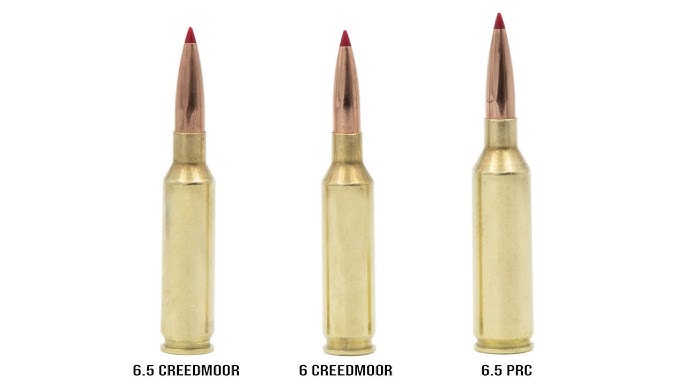
You are ready to buy a precision rifle, and one question stands in the way: Which caliber? Three names sound almost the same: 6 Creedmoor, 6.5 Creedmoor and 6.5 PRC. The 6 Creedmoor barely moves when you shoot, which is why it is popular in matches; the 6.5 PRC carries the power elk hunting asks for; and the 6.5 Creedmoor sits between them as an all-rounder.
The differences between them are real but easy to misjudge. By comparing ballistics, effective range, recoil, cost, barrel life and rifle availability, you should be able to match one of them to your own goals and explain your reasons.
Three related cartridges, three different jobs
It helps to see how these cartridges are related before comparing numbers. The 6.5mm Creedmoor was introduced by Hornady in 2007 for long-range target shooting, and it is also widely used in hunting because it balances power and recoil. The 6mm Creedmoor was developed from the 6.5 Creedmoor and has gained popularity in competitive shooting for its flat trajectory, reduced recoil, and accuracy. The 6.5mm PRC (Precision Rifle Cartridge), introduced by Hornady in 2018, is a different design: A short-action magnum built on a larger case derived from the .300 Ruger Compact Magnum. Its bigger case holds more powder, which is where its extra velocity and power come from.
A simple way to think about them is vehicles. The 6 Creedmoor is the nimble one, easy on the shoulder and comfortable to shoot all day. The 6.5 Creedmoor is the standard all-purpose pickup. The 6.5 PRC is the heavy-duty truck, which reaches farther and hauls more but costs more to run.
Speed, trajectory, and wind: What the ballistics numbers mean
Three terms drive most of what follows. Muzzle velocity is the bullet's speed as it leaves the barrel, measured in feet per second (fps). Trajectory is the bullet's curved path to the target, and a flat trajectory simply means less drop at a given distance. The ballistic coefficient, or BC, measures how well a bullet cuts through the air. A higher BC holds speed better and is pushed around less by wind.
| Cartridge | Typical bullet | Muzzle velocity | Trajectory |
|---|---|---|---|
| 6 Creedmoor | 108-grain | About 2,950 to 3,050 fps, depending on load and barrel length | Very flat out to 600 to 800 yards |
| 6.5 Creedmoor | 143-grain | 2,700 to 2,750 fps | Flatter than many similar calibers, with drop noticeable past 1,000 yards |
| 6.5 PRC | 143-grain | About 2,950 fps | Even flatter than the 6.5 Creedmoor, ideal for 1,000+ yard shots |
A faster bullet reaches the target sooner, so gravity has less time to pull it down, and that is why higher velocity gives a flatter trajectory. The 6 Creedmoor gets its speed from a lighter bullet, which offers high velocity with less recoil than the 6.5 variants. That bullet generates less energy than the 6.5 Creedmoor's, but it is ideal for flat trajectories in target shooting. The 6.5 Creedmoor combines moderate speed and energy retention for excellent accuracy up to 1,000 yards. The 6.5 PRC fires the same 143-grain weight roughly 250 fps faster (Hornady lists its 143-grain ELD-X at about 2,700 fps in the 6.5 Creedmoor and about 2,960 fps in the 6.5 PRC), so it shoots flatter still and retains energy better over extreme ranges.
Wind tells the other half of the story. Lighter 6 Creedmoor bullets generally have lower BCs than the 6.5 variants, which may lead to slightly more wind drift at extended distances. The 6 Creedmoor performs well in stable conditions but is less resistant to wind at extreme distances. Both 6.5 rounds use high-BC bullets. The 6.5 Creedmoor balances wind resistance and power for a wide range of environments, and the 6.5 PRC uses its extra velocity to take full advantage of the high BC, performing exceptionally in challenging conditions such as high altitude and wind. For more on drop and drift, see our article on the role of ballistics in long-range shooting.
Key idea: Velocity helps early, and ballistic coefficient helps late. A fast, light bullet starts strong, but a heavier high-BC bullet holds its speed and resists wind better as distance grows.
Effective range and what each cartridge is best at
- 6 Creedmoor. Highly accurate up to 1,000 yards and often favored for competitive shooting or varmint hunting. Its flat trajectory and low recoil also suit small to mid-sized game.
- 6.5 Creedmoor. Effective up to 1,000 yards with consistent accuracy. A versatile option for target shooting and mid-sized game such as whitetail deer, with manageable recoil for most shooters.
- 6.5 PRC. Carries more speed and energy farther than the 6.5 Creedmoor, which is why it is chosen for longer shots at larger game like elk and for precision competitions where extra power and range help. You will see claims of 1,500 yards and beyond; those are distances where skilled shooters hit steel in good conditions, not ethical hunting distances.
One note for Iowa hunters. All three of these fire bullets well under .350 inch in diameter, so none of them is legal for deer during Iowa's youth and disabled or first and second shotgun seasons, where Iowa Code section 481A.48 limits rifles to expanding bullets from .350 to .500 inch that produce at least 500 foot-pounds of energy at the muzzle. In Iowa they are target, varmint and out-of-state big-game cartridges. Iowa's January antlerless-only seasons are the exception, and all three cartridges fall inside their caliber limits. They open only in counties with unsold antlerless licenses, and in 2026 (January 11 to 25) the Excess Tag season allowed rifles from .223 to .500 caliber, while the Population Management season allowed rifles .223 caliber and larger along with other weapons. For 2026-27 the Population Management season is limited to Allamakee and Winneshiek counties, and only if more than 100 antlerless licenses remain unsold on the third Monday in December. Dates and counties are set each winter, so confirm them with the Iowa DNR.
These distances describe the cartridges, not you. Your own effective range is how far you can place shots reliably, and for most shooters that is shorter than the number on a spec sheet. In hunting, keep every shot within the distance where you are certain of a clean, humane result. Our article on hunting ethics explains what that means in the field.
Recoil, barrel life, and cost: What the extra power costs you
Power is never free, and with these three cartridges you pay in three places. The first is your shoulder. The 6 Creedmoor offers the least recoil of the three, which makes it comfortable for long sessions and a natural fit for shooters who prioritize recoil management. The 6.5 Creedmoor has moderate recoil that is manageable for extended shooting and hunting. The 6.5 PRC has the highest recoil because of its increased powder and higher velocity, and that can be tiring over extended shooting sessions.
The second place is the barrel. Higher velocity and heavier powder charges can wear the rifling, the spiral grooves inside the barrel, faster. The 6 Creedmoor is known for excellent barrel life, especially at moderate distances, and its lighter bullets are less taxing on barrels. The 6.5 Creedmoor is also known for long barrel life at moderate distances. The 6.5 PRC tends to have a shorter barrel life for the reasons above.
The third place is your budget. The 6.5 Creedmoor is widely available and generally affordable, with numerous options at different price points. The 6 Creedmoor is generally less expensive than the 6.5 PRC but may be harder to find than the 6.5 Creedmoor, and reloading is popular among its enthusiasts. If you reload, always follow published load data from a reputable source. The 6.5 PRC tends to cost more than the 6.5 Creedmoor because of its specialized nature and recent introduction.
Common mistake: Choosing the biggest cartridge because it reaches farthest. If you rarely shoot past 1,000 yards, the 6.5 PRC's extra reach brings more recoil, higher ammunition cost, and faster barrel wear for range you will not use.
Bullets, twist rates, and rifles: What you will actually buy
| Cartridge | Common bullet weights | Twist rate | Rifle availability |
|---|---|---|---|
| 6 Creedmoor | 95 to 115 grain | 1:7.5 or 1:8 | Fewer rifles, but high-quality models from competitive and hunting rifle manufacturers |
| 6.5 Creedmoor | 120 to 147 grain, with 140 to 143 popular for all-around shooting and hunting | 1:8 or 1:7.5 | Widely chambered across many manufacturers, in both bolt-action and semi-automatic platforms |
| 6.5 PRC | 140 to 150 grain | 1:8 or 1:7.5 | More limited, but high-end choices from brands like Christensen Arms and Browning |
The bullet weights explain a lot of what you saw earlier. The 6 Creedmoor's lighter bullets contribute to higher velocity and a flat trajectory, which is ideal for target shooting. The 6.5 PRC is designed for heavier bullets, which maximize energy retention and ballistic performance at long ranges. Our guide to bullet weight in rifle rounds shows how weight changes performance.
Twist rate, how fast the rifling spins the bullet, matters because spin keeps a bullet stable. The 6 Creedmoor generally benefits from a 1:7.5 or 1:8 twist to stabilize its lighter bullets. Both 6.5 rounds are optimized with fast twist rates (1:8 or 1:7.5) for stability with heavier, high-BC bullets. Our barrel twist rate guide explains the notation.
Your choice of rifle matters as much as the cartridge, and the 6.5 Creedmoor is the easiest to find. For a look at a modern precision hunting rifle from one of the makers above, read about the Christensen Arms Ridgeline.
Pros and cons of the 6 Creedmoor, 6.5 Creedmoor, and 6.5 PRC at a glance
| Feature | 6 Creedmoor | 6.5 Creedmoor | 6.5 PRC |
|---|---|---|---|
| Effective range | Up to 1,000 yards | Up to 1,000 yards | 1,500+ yards |
| Recoil | Low | Moderate | Higher |
| Ammunition cost | Moderate | Affordable | Higher |
| Barrel life | Long | Long | Shorter |
| Rifle options | Limited but available in high-quality models | Broad range, widely available | Limited (but high-end choices) |
| Applications | Competition, small to mid-sized game hunting | Versatile, mid-range target, mid-sized game | Long-range hunting, large game, extreme range |
Read down the 6.5 PRC column and you will see the pattern. Its advantages are range and big-game applications, and its costs are recoil, price, barrel life, and fewer rifle options. The 6 Creedmoor mirrors that pattern in reverse. The 6.5 Creedmoor sits in the middle, which fits its role as the balanced, all-around choice.
Which caliber should you choose?
Choose the 6 Creedmoor if you prioritize low recoil, especially for competitive shooting, you are focusing on small to mid-sized game or targets within 1,000 yards, and you want excellent barrel life with manageable maintenance costs.
Choose the 6.5 Creedmoor if you want a versatile, all-around caliber that performs well up to 1,000 yards, you value moderate recoil and broad availability for affordable shooting, and you want a balance between target shooting and hunting.
Choose the 6.5 PRC if you are aiming for extreme long-range precision and high-power shots beyond 1,000 yards, you plan to hunt larger game at extended distances, and you are comfortable with higher recoil and willing to invest in premium ammunition and rifle setups.
Matching a caliber to your real shooting
Three honest answers decide it. Your farthest realistic shot sets how much reach you need. The largest animal you will hunt, or targets only, sets how much energy you need. And how many rounds you fire on a typical outing, with how much recoil you enjoy, sets how much comfort and barrel life matter. Long days on steel with little recoil point to the 6 Creedmoor. Targets plus deer-sized game at moderate range point to the 6.5 Creedmoor. Larger game at long range, with the recoil and cost accepted, points to the 6.5 PRC.
Putting it together
All three cartridges trade the same three things against each other: Reach, comfort and cost. The 6 Creedmoor buys comfort and spotting your own hits with a lighter bullet, and pays for it with more wind drift and less energy. The 6.5 PRC buys reach and energy with more powder, and pays for it with recoil, ammunition cost and barrel life. The 6.5 Creedmoor sits in the middle and gives up a little of each. So start from your realistic longest shot and your largest animal, not from the biggest number on a chart. If you mostly shoot paper and steel inside 800 yards and want to shoot all day, lean toward the 6 Creedmoor. If you want one rifle for targets and deer-sized game out of state, the 6.5 Creedmoor is the safe default. Choose the 6.5 PRC only when you know you need its extra reach on larger game and you are willing to practice enough with it to use that reach responsibly.
Check your understanding
Try answering these before you open the answer. If you can decide what to do and explain why, you have it.
1. A friend says the 6 Creedmoor is faster, so it must beat the wind better than the 6.5 Creedmoor at long range. What is missing from that argument?
The 6 Creedmoor's lighter bullets generally have lower BCs, so they can drift more in wind at extended distances. The 6.5 rounds use high-BC bullets that resist wind better.
2. You shoot targets and hunt whitetail, and you want affordable, widely available ammunition with moderate recoil. Which cartridge fits best, and why?
The 6.5 Creedmoor. It is versatile for target shooting and mid-sized game such as whitetail deer, and it is widely available, generally affordable, and moderate in recoil.
3. You're drawn to the 6.5 PRC, but you also plan to shoot 200 rounds a month at steel. What two costs should you expect, and why do they come from the same place?
Heavier recoil and shorter barrel life. Both come from its larger powder charge and higher velocity: more powder pushes harder against your shoulder, and the hotter, faster charges wear the throat of the barrel sooner.
4. A hunter never shoots beyond 400 yards but wants the cartridge with the longest effective range. What would you tell him?
Effective range describes the cartridge, not the shooter's needs. At 400 yards, the 6.5 PRC's extra reach adds recoil, cost, and barrel wear he does not need, so the 6.5 Creedmoor or the 6 Creedmoor is likely a better fit.
Where to go next
Once you pick a cartridge, sighting in rifles at different distances turns trajectory numbers into scope adjustments. To understand the barrel choices behind these rifles, read understanding rifle barrel design. And because the 6.5 PRC calls for premium ammunition, ammunition quality from cheap to match grade helps you decide where your money does the most good.
If this article helped you, we invite you to sign up for email notifications of new blog articles.