
Understanding the 5.7x28mm Round
Joseph McLain Nov 13, 2026
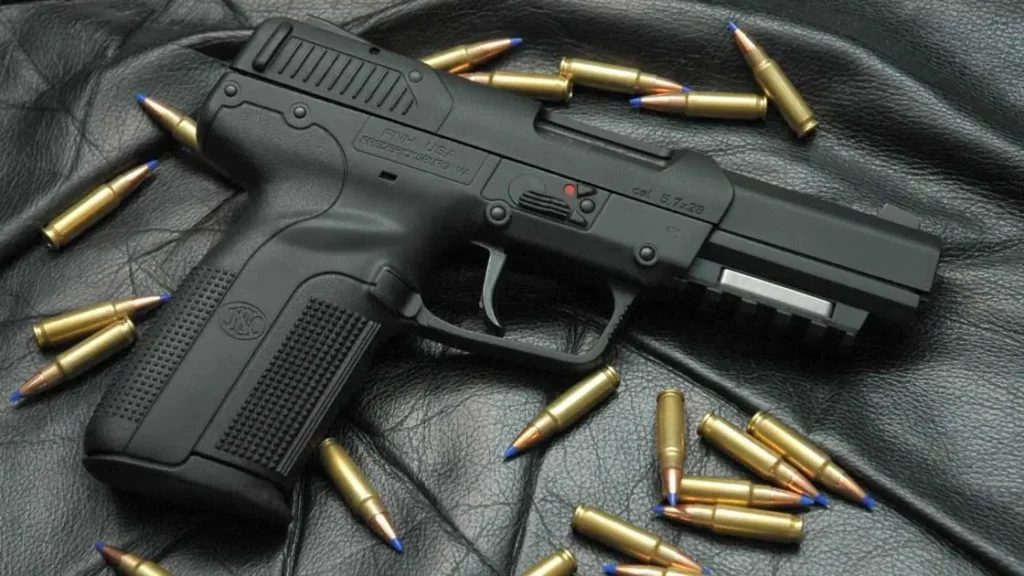
You are holding a pistol with a 20-round magazine, chambered for a cartridge that looks like a miniature rifle round. It shoots flat and barely kicks, but the bullet is light and the ammunition costs more than 9mm. Is that light bullet something you can rely on for defense?
By the end you should know where the 5.7x28mm came from, what its light, fast bullet does differently, how it compares with the 9mm, which firearms use it, and how to choose ammunition for practice and defense, so you can decide whether the 5.7 suits what you want to do.
Where the 5.7x28mm came from
FN Herstal developed the 5.7x28mm in the late 1980s and 1990s for a military concept called the personal defense weapon: A compact firearm for soldiers whose main job was not rifle fighting, such as vehicle crews, that could outperform a 9mm submachine gun against body armor. FN's P90 carbine and Five-seveN pistol were built around it.
For years the cartridge was expensive and associated with law enforcement, partly because FN's armor-piercing military load, the SS190, is not sold to civilians. Civilian ammunition, such as FN's SS197SR sporting round and loads from Federal and others, uses ordinary bullets, not armor-piercing cores. The cartridge moved toward the mainstream when more affordable pistols such as the Ruger-57 and the Palmetto State Armory Rock, and carbines such as the Ruger LC Carbine, arrived and more companies began loading ammunition.
Common mistake: Assuming the ammunition on store shelves behaves like the military load you read about. Civilian 5.7 ammunition does not have the military load's armor-piercing core.
Light bullets, high speed
Nearly everything distinctive about the 5.7 comes from one design choice: A light bullet, usually around 27 to 40 grains, pushed fast. A grain is a small unit of weight; a typical 9mm bullet weighs 115 to 147 grains, so a 5.7 bullet is a third or less of that.
Think of a hard-thrown dart compared with a tossed baseball. The dart is light and fast and flies flat; the baseball is heavy and slower and arcs more. From a pistol, common 5.7 loads leave the muzzle at roughly 1,650 to 2,000 feet per second, much faster than most 9mm loads, and a carbine's longer barrel adds more speed. That brings four practical effects. The trajectory is flatter, so hits at longer handgun distances are easier. Recoil is mild, because a light bullet produces little push, which helps quick follow-up shots. Capacity is high, because the slim cartridge stacks compactly; most 5.7 pistols hold 20 or more rounds. And muzzle blast is noticeable, because a lot of powder burns in a short pistol barrel.
Key idea: The 5.7 trades bullet weight for speed. You gain flat flight, gentle recoil and large capacity, and you give up the bullet mass that traditional defensive cartridges rely on.
How it compares with familiar defensive cartridges
| Compared with | Where the 5.7 leads | Where the other cartridge leads |
|---|---|---|
| 9mm | Flatter trajectory, milder recoil, more rounds in a full-size pistol | Heavier bullets with well-documented defensive performance; cheaper, more widely available ammunition and pistols |
| .380 ACP | Far more velocity and reach | Much smaller, easier-to-conceal pistols |
| .45 ACP | Capacity and recoil | Much heavier, larger-diameter bullet |
Read each row as a trade. The 5.7's advantages are speed, capacity and comfort; the traditional calibers' advantages are bullet mass, cost and a long record of defensive use. For the common defensive calibers side by side, see our personal protection caliber comparison.
The question most people ask is whether a light, fast bullet is adequate for defense. Its performance depends heavily on the specific bullet. Some 5.7 loads are designed to fragment or expand rapidly, which can limit how deeply they penetrate compared with defensive 9mm loads in standardized gelatin tests. If you choose the 5.7 for defense, choose a load designed and tested for defensive use, look for published penetration results, and confirm it cycles reliably in your firearm. Our article on ballistic gelatin testing explains how to read those results.
The firearms
FN Five-seveN. The original 5.7 pistol, with a 20-round magazine, a polymer frame and a long service history.
Ruger-57. A more affordable full-size pistol with a 20-round magazine; some versions accept optics. Its magazines also fit the Ruger LC Carbine in 5.7, so a pistol and carbine can share magazines.
Palmetto State Armory Rock. A budget-priced pistol with 23-round magazines.
Carbines. Carbines such as the Ruger LC Carbine and AR-style options from makers like CMMG use longer barrels that add velocity and make the cartridge easier to shoot accurately at longer distances. Our guide to pistol-caliber carbines explains the trade-offs of carbines in general.
All of these are full-size firearms. The 5.7's long, slim cartridge makes pistols with long grips front to back, so check that the grip fits your hand. Handle any 5.7 pistol before buying, because grip size varies more than you might expect.
Choosing ammunition for practice and for defense
The bullet decides the job. Full metal jacket loads, such as Federal American Eagle 40-grain FMJ, are economical practice ammunition. Polymer-tipped and hollow-point loads, such as FN's SS197SR and various makers' tipped loads, are designed to expand or fragment and suit defense or small varmints depending on their design. Our guides to Federal American Eagle and Hornady BLACK describe two of those lines.
Cost is the cartridge's main practical drawback. Practice ammunition generally costs more per round than 9mm, and availability can vary. Practice with an affordable FMJ load that hits close to your defensive load, buy practice ammunition in bulk when prices are good, and save the defensive load for carry, confirming its function with at least a few magazines.
For hunting, the 5.7's light bullet suits only small game and pests at modest distances, and it is not legal for Iowa deer, which requires an expanding bullet .350 to .500 inch in diameter with at least 500 foot-pounds of muzzle energy. Check the Iowa DNR's current regulations for what is legal for each animal.
Good practice: Some 5.7 firearms are particular about ammunition. Test a full box of any new load, and a few full magazines of your carry load, before relying on it.
Zero and barrel length
Because the 5.7 shoots flat, many owners zero pistols at 15 to 25 yards and carbines at 50 yards, which keeps the bullet close to the aiming point across the distances they shoot most. Barrel length changes velocity noticeably, so the same load will shoot flatter from a carbine than from a pistol. Our guide to sighting in at different distances explains how the zero distance changes where you aim.
Putting it together
The 5.7x28mm trades bullet weight for speed, which gives it a flat trajectory, mild recoil and high capacity in full-size pistols and carbines, at the cost of more expensive ammunition and less bullet mass than traditional defensive calibers. It is a strong choice for shooters who value low recoil, capacity and reach, and who will select a defensive load carefully and verify it in their own firearm. If you want the widest choice of affordable ammunition and defensive loads with long track records, the 9mm remains the conventional answer.
Check your understanding
Try answering these before you open the answer. If you can decide what to do and explain why, you have it.
1. You fire a 5.7 pistol and a 9mm side by side; the 5.7 kicks less and drops less at 50 yards. Why both?
Its light bullet produces little recoil, and its high speed means less time in flight, so gravity pulls it down less.
2. A friend says all 5.7 ammunition goes through body armor. How do you correct that?
The armor-piercing military load is not sold to civilians. Civilian 5.7 ammunition uses ordinary bullets.
3. What should you look for if you choose the 5.7 for defense?
A load designed and tested for defense, with published penetration results, that cycles reliably in your firearm.
4. You've read great reviews of a 5.7 pistol and want to order one sight unseen. Why handle one first?
The long cartridge makes for long grips front to back, and fit varies a lot between models. A grip that is too large for your hand hurts control and accuracy.
5. Can you use a 5.7 for Iowa deer?
No. Iowa allows rifles for deer only with expanding bullets .350 to .500 inch in diameter and at least 500 foot-pounds of muzzle energy, and the 5.7 is far smaller and weaker.
Where to go next
You can find 5.7x28mm pistols and carbines on our website, including the Kel-Tec PR-57 and Sub-2000 and the Diamondback DBX57, and anything listed there can be ordered if it isn't in stock.
If you are weighing the 5.7 for defense, the personal protection caliber comparison puts it in context, and selecting personal and home defense ammunition explains how to judge a carry load. Pistol-caliber carbines covers the carbine side, and ballistic gelatin testing helps you read the penetration tests that matter for this cartridge.
If this article helped you, we invite you to sign up for email notifications of new blog articles.