
Understanding the .300 AAC Blackout: Versatility Redefined
Joseph McLain Nov 07, 2026
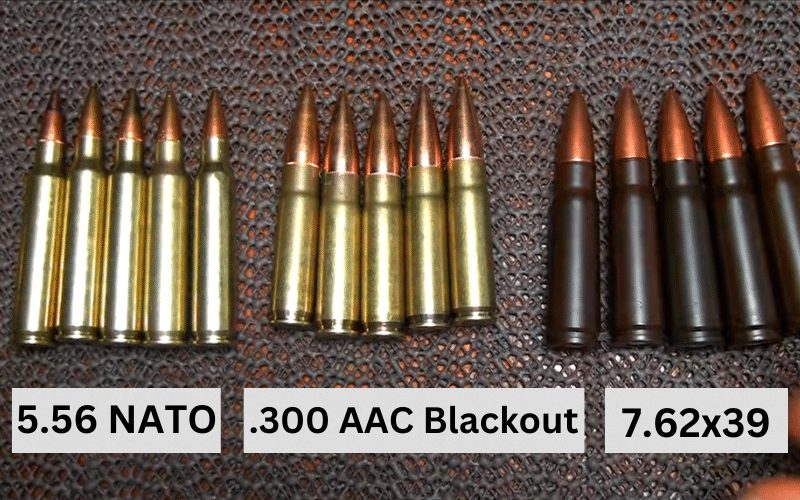
You own an AR-15 chambered in 5.56, or you are thinking about building one, and you are looking at the .300 AAC Blackout, the cartridge known as "the quiet one" and "the short-barrel one." Both nicknames fit, but neither tells you whether it belongs in your safe or solves a problem you actually have.
What the cartridge was built to do, and why the design works the way it does, answers that. By the end you should be able to decide whether the .300 AAC Blackout (also written .300 BLK) fits your hunting, home defense or range plans, choose between its two very different kinds of ammunition, and avoid the one mistake that matters most when you own more than one AR-15 caliber.
The problem the .300 AAC Blackout was built to solve
The .300 BLK was developed by Advanced Armament Corporation and standardized by SAAMI, the industry group that publishes official cartridge dimensions and pressure limits, in 2011. It came out of a specific military need, and each part of that need shaped the cartridge.
- Subsonic suppressed operations. Operators wanted effective close-quarters performance from a round that stays very quiet when suppressed.
- AR-15 compatibility. Designers wanted a cartridge that could use the same bolt, the same magazines and the same receivers as a 5.56 platform, needing only a barrel swap.
- Optimized for short barrels. Where 5.56 loses significant velocity in a short barrel, the .300 BLK's heavier bullet and powder configuration retain energy more effectively.
The third goal is the one that surprises people, so it is worth slowing down. A bullet is pushed by expanding gas for as long as it is in the barrel. Cut the barrel short and the bullet leaves the muzzle before the push is finished, so it carries less speed. Picture a sprinter who gets only half the usual run-up before the starting line. The .300 BLK answers with a heavier bullet and a powder load suited to short barrels, so it holds on to more of its energy when the barrel is only a few inches long.
That is the gap the cartridge bridges. It gives you the AR-15's convenience with ballistic heft closer to larger calibers, especially in short-barreled setups.
Two kinds of ammunition in one cartridge
The feature that sets the .300 BLK apart is that few calibers let you switch between subsonic and supersonic ammunition without changing anything on your rifle except what you put in the magazine. Subsonic means the bullet travels slower than the speed of sound, and supersonic means faster. In the .300 BLK, subsonic loads use heavy bullets (190 to 240 grains, a grain being a small unit of bullet weight) and supersonic loads use light ones (about 110 to 130 grains).
Why does that split matter? A bullet that travels faster than sound makes its own sharp crack in flight, a tiny sonic boom, and a suppressor cannot remove it. A subsonic bullet never makes that crack, so all a suppressor has to quiet is the gunshot itself. That is why subsonic .300 BLK is exceptionally quiet when suppressed, while a suppressed 5.56 is still loud. The trade is energy. A slow bullet carries less of it, so makers use heavy bullets to make up some of the difference.
| Aspect | Subsonic loads | Supersonic loads |
|---|---|---|
| Bullet weight | 190 to 240 gr | About 110 to 130 gr |
| Best distance | Close range, about 100 yards or less | Medium range, effective to about 200 yards, realistically 200 to 250 yards for hunting |
| Main strength | Very quiet when suppressed, reduced muzzle blast | .30-caliber energy, around 1,000+ ft-lbs at moderate ranges |
| Typical jobs | Quiet hunting, indoor use, relaxed range days | Deer and hog hunting, varmints, plinking |
Start with distance. If your shots stay inside about 100 yards and noise matters, the subsonic column fits. If you want to reach farther or need more energy on the target, the supersonic column does. The same rifle can do both jobs, which is the whole appeal.
Common mistake: Treating the two kinds of ammunition as interchangeable. They fly differently, so zero your rifle with each load you plan to use instead of assuming one zero covers both.
Why short barrels favor the .300 BLK
Many people picture the .300 BLK as a hunting round, but its real home is the short rifle. The 5.56 typically sees major drops in velocity and performance below 14.5 to 16 inches of barrel. The .300 BLK retains robust energy in barrels as short as 9 inches, or even less. That means you can build a compact AR pistol or SBR (short-barreled rifle) and still get reliable terminal performance, which helps in a few practical settings.
- Home defense in tight quarters
- Vehicle carry or discreet transport
- Urban or thick-woodland hunts
The common thread is a rifle that is easy to turn, carry and maneuver. Think of a hunter working through a tangled woodlot or sitting in a cramped blind, where a long rifle catches on every branch.
Barrel length also affects how the action runs. An AR-15 cycles on gas taken from the barrel, so shortening the barrel changes how much gas reaches the action. Barrels of 8.5 to 10.5 inches are extremely popular because they give good muzzle velocity and bullet expansion in a compact package. Many of these short builds use a pistol-length gas system to ensure reliable cycling with subsonic loads, particularly when running suppressed. If you prefer a 16-inch barrel, perhaps to stay clear of NFA and brace questions, the .300 BLK still performs well. You gain some muzzle velocity with supersonic loads and can still shoot subsonic effectively. Rules on short-barreled rifles, pistols and braces change, so confirm the current requirements with the ATF or a qualified professional before you buy parts.
Key idea: The .300 BLK is not trying to beat the 5.56 at everything. It is trying to be the better choice when the barrel is short, the shot is close or moderate, and quiet matters.
One rifle, two calibers: The compatibility advantage and its safety catch
Another major draw is that you need no special magazines, because standard 5.56 magazines feed .300 BLK just fine, and you do not need a different bolt. Upgrading from a standard AR-15 can be as simple as a barrel swap. If you already own AR-15 lowers, lowers with braces or a collection of AR parts, it is a cost-effective route to a new caliber. Many shooters add a .300 BLK upper and keep their 5.56 upper for the same lower.
The catch is that the two cartridges look alike and share magazines, so a mix-up is easy to make and dangerous. A .300 BLK round can fit into a 5.56 chamber, and firing it there can seriously damage the rifle and injure you. A few habits prevent it.
- Mark .300 BLK magazines clearly
- Store each caliber in separate, labeled containers
- Read the headstamp on the case before loading
- Check the caliber stamped on the barrel
Of these, the clearly marked magazines and the headstamp check do the most work, because a magazine is the last thing your hands touch before the round is in the rifle. Make the marking permanent and obvious enough that you could spot it across a dim shed. Also treat every rifle as loaded until you have checked it yourself, as with any firearm.
.300 BLK support has grown well beyond its early days. Once a niche offering, it is now widely available in loads from budget to premium, with an array of barrel lengths, suppressors and dedicated firearms from many manufacturers. The ammunition is no longer hard to find or overly expensive compared with earlier years, though it still generally costs more than 5.56.
What the .300 BLK does in the field
Hunting
For medium-sized game such as deer and hog, supersonic loads of roughly 110 to 130 grains can deliver around 1,000+ ft-lbs (foot-pounds, a measure of a bullet's energy) at moderate ranges. That is quite effective up to about 200 yards. Realistically, plan on 200 to 250 yards at the most for hunting with supersonic loads, and about 100 yards or less with subsonic. Hornady Sub-X 190 to 200 grain, for example, is a good choice for deer or hogs within 100 yards. The cartridge is also suited to black bear at moderate range.
The quiet side of the cartridge is a real advantage afield. A subsonic load with a suppressor helps minimize spooking other animals and reduces noise pollution in hunting areas. Treat those distances as a ceiling, not a goal. Shot placement, and staying within the range you have practiced, matter more than the cartridge, and our article on hunting ethics explains how to keep every shot clean and humane. Check your state wildlife agency for current caliber and suppressor rules before you hunt.
Home defense
Even with a 9-inch or 10.5-inch barrel, you retain substantial muzzle energy, which makes the .300 BLK appealing in a compact defensive rifle. Subsonic loads reduce muzzle blast, which helps control recoil, muzzle flash and overall noise, all useful indoors.
Overpenetration, a bullet passing through a wall or other barrier, is the question people ask most. Some users find that subsonic loads can reduce wall overpenetration compared with certain 5.56 loads, but bullet choice remains critical, and no one can promise a result for your particular load. Always test your chosen load, and read how to select personal and home defense ammunition before you decide.
Tactical, law enforcement and recreational use
The .300 BLK suits suppressed operations in tight spaces, combining .30-caliber impact with AR-15 ergonomics, and law enforcement and tactical teams value it where discreet or indoor solutions are needed. Heavier bullets can offer improved barrier performance over 5.56 in certain scenarios. For recreation, subsonic ammunition fired through a suppressor is extremely quiet, which makes a range day enjoyable. Loads range from lightweight supersonics for plinking to heavy subsonics for stealth, so the round is fun to experiment with.
Safety: Quiet is not the same as silent. Even a suppressed rifle can be loud enough to need hearing protection, so wear it every time. Our guide to eye and ear protection explains why. If you are new to suppressors, what suppressors are and how they work is a good primer.
Subsonic .300 BLK also appeals to shooters who want a quieter rifle without giving up as much punch as a pistol-caliber carbine would. The round's heavy bullet gives respectable terminal effect at close to moderate ranges.
How the .300 BLK compares with 5.56, 7.62x39 and .308
A cartridge makes sense once you see what it trades away. Here is how the .300 BLK stacks up against three cartridges you may already know, starting with 5.56 NATO.
| Aspect | .300 BLK | 5.56 NATO |
|---|---|---|
| Ballistics | Higher energy within about 200 yards, especially in an SBR | Flatter trajectory at longer distances |
| Suppressor use | Excels in subsonic mode, very quiet | Still loud even when suppressed (supersonic crack) |
| Barrel length | Optimized for short barrels (8 to 12 inches) | Loses significant velocity under 14.5 to 16 inches |
| Effective range | About 200 to 250 yards (supersonic) for hunting | Can push 300+ yards effectively |
| Ammo cost | Generally more expensive than 5.56 | Widely available, typically cheaper |
The pattern is that 5.56 wins on distance and cost, and the .300 BLK wins on short-barrel energy and quiet. If you prefer short, suppressed builds or want a bigger bullet punch at moderate range, the .300 BLK stands out. If you typically shoot beyond 300 yards, 5.56 may remain more cost-effective and flatter shooting.
| Aspect | .300 BLK | 7.62x39mm |
|---|---|---|
| Platform | AR-15 friendly with no special bolt or magazine needed | Typically AK platform (or specialized AR) |
| Ballistics | Modern bullet designs, often more accurate | Similar ballistic performance, cheaper steel case ammo |
| Availability | Growing ammo selection, can be pricier | Widely available, often cheaper (especially steel-cased) |
| Accuracy | Potentially better in AR setups | AKs can be accurate, but are typically less consistent in stock form |
Notice that much of this table is about the rifle as much as the cartridge. The 7.62x39 is cost-effective, especially if you like AK rifles or cheap ammo, as our look at the AK-47 and SKS shows. The .300 BLK is a smoother fit in AR-15 builds and offers advanced bullet technology such as bonded and subsonic designs.
| Aspect | .300 BLK | .308 Winchester |
|---|---|---|
| Intended range | Short to mid-range (up to about 250 yards) | Mid to long range (400+ yards easily) |
| Rifle platform | AR-15 platform (light, compact) | AR-10 or bolt-action (heavier platform) |
| Recoil | Relatively low | Noticeably higher |
| Suppressor use | Top-notch subsonic potential | Good with suppressors, but typically supersonic loads |
| Hunting profile | Deer, hogs, black bear at moderate range | Larger game at longer distances, more muzzle energy |
The .308 is the heavier hitter for big game at extended distances, and you will find its story in our guide to .308 Winchester and 7.62x51mm NATO. The .300 BLK is friendlier for short barrels, subsonic use or an ultra-compact AR build. On recoil, expect the .300 BLK to be manageable, slightly more than 5.56 and less than .308.
Choosing ammunition and suppressors
Ammunition follows the job. Decide first whether the rifle will run supersonic or subsonic, then match the bullet to the purpose. These are the loads and suppressors we know of, grouped by role.
- Hornady Black 110 gr V-MAX (supersonic). Rapid expansion, good for varmint or personal defense. See our guide to Hornady BLACK ammunition.
- Barnes TAC-TX 110 to 120 gr (supersonic). Designed for deep penetration and expansion on medium game.
- Remington Premier Match, various bullet weights (supersonic). A choice for shooters who want accuracy-oriented loads.
- Hornady Sub-X 190 to 200 gr (subsonic). Reliable expansion at subsonic velocities, good for deer or hogs within 100 yards.
- Sig Sauer Elite Performance 220 gr (subsonic). Consistent cycling and very quiet when suppressed.
- Winchester Subsonic 200 to 220 gr (subsonic). Another good subsonic load, widely available.
- SilencerCo Omega 300. A popular multi-caliber suppressor, one rated for several calibers, that handles .300 BLK easily.
- Dead Air Nomad-Ti. Lightweight, good for short-barreled setups.
- Q Trash Panda. Compact and specifically marketed for .300 BLK AR builds.
Nine names is a lot, so here is what matters most. Pair the bullet weight with the job. For subsonic shooting with a suppressor, aim for heavier projectiles of 190 to 240 grains. For supersonic, 110 to 130 grains is typical and offers a balance of velocity and bullet mass. A subsonic bullet has to open up at low speed, which is harder than at high speed, so subsonic loads are built around bullets designed for exactly that. Suppressor choice comes after ammunition, and our article on choosing the right ammunition for suppressors shows how the two work together. Our article on bullet weight explains what the grain numbers mean for performance.
Comparing subsonic and supersonic at the range
One session shows why each load needs its own zero. With eye and ear protection on, the muzzle downrange, and the barrel stamp, magazines and ammunition headstamps all confirmed as .300 BLK, zero the rifle at 50 yards with a supersonic load. Then shoot a five-shot group with it and with a subsonic load at the same aim point from a rest, and repeat at 100 yards. The subsonic group usually lands lower, and the gap grows with distance, because the slower bullet spends more time in the air for gravity to work on. Recording both points of impact lets you switch loads without guessing.
Which .300 BLK build fits you
Here is the shortcut. If you want a short, suppressed AR-15 that moves between quiet subsonic hunting or home defense and a supersonic ".30-cal punch," the .300 BLK is hard to beat. If your shooting is mostly beyond about 300 yards, 5.56 or .308 may suit you better. If sub-300-yard performance, versatile ammunition choices and quiet operation rank high on your list, the .300 BLK fills that niche well. Because it only needs a barrel swap, it is also a logical second caliber for anyone who already owns a 5.56 AR-15.
Putting it together
The .300 BLK shines in short barrels and with suppressors, especially with subsonic loads, and it hits harder than 5.56 up close, but it drops faster and carries less reach at distance. Decide whether you want subsonic quiet or supersonic power, choose loads built for that job, mark your magazines and rifles clearly so a .300 BLK round never goes into a 5.56 chamber, and test your loads for function and point of impact.
Check your understanding
Try answering these before you open the answer. If you can decide what to do and explain why, you have it.
1. Why does a suppressed 5.56 stay loud while a suppressed subsonic .300 BLK is very quiet?
The 5.56 bullet is supersonic, so it makes a crack in flight that a suppressor cannot remove. A subsonic .300 BLK bullet never breaks the sound barrier, so the suppressor only has the gunshot to quiet.
2. You want one rifle for deer at about 150 yards and also for quiet shooting close to the house. Which loads do you choose for each?
Use a supersonic load of about 110 to 130 grains for the deer, since subsonic is best at about 100 yards or less. Use a heavier subsonic load (190 to 240 grains) with a suppressor for the close, quiet shooting. Zero the rifle with each load.
3. You want a 9-inch AR pistol for a compact truck gun. Why is that a poor fit for 5.56 but workable for .300 BLK?
The 5.56 loses significant velocity, and much of its effectiveness, below about 14.5 to 16 inches of barrel. The .300 BLK's heavier bullet and fast-burning powder retain energy far better in a short barrel.
4. What habits keep you from mixing up 5.56 and .300 BLK ammunition?
Mark .300 BLK magazines clearly, store each caliber in separate labeled containers, read the headstamp before loading, and check the barrel stamp. A .300 BLK round can fit into a 5.56 chamber, and firing it there is dangerous.
5. You mostly shoot coyotes across open fields at 250 to 400 yards. Is a .300 BLK upper the right choice?
Probably not. Beyond about 300 yards the 5.56 shoots flatter, reaches farther and costs less to feed. The .300 BLK's advantages, short-barrel energy and suppressed quiet, matter most at closer range.
Where to go next
You can find .300 Blackout ammunition and AR pistols on our website, including Hornady Sub-X and BLACK, Barnes TAC-TX, Federal Power-Shok Copper and Cor-Bon DPX subsonic loads, and anything listed there can be ordered if it isn't in stock.
Since suppressed shooting is where the .300 BLK shines, start with choosing the right ammunition for suppressors, which explains how the load and the can work together. If hunting is your goal, hunting deer with suppressors shows how quiet shooting changes the experience in the field. Because each load needs its own zero, sighting in rifles at different distances is the next skill to build. And if you want to see how much more power a larger cartridge brings, .308 Winchester and 7.62x51mm NATO is a good comparison.
If this article helped you, we invite you to sign up for email notifications of new blog articles.