
The .22 Caliber Round: Evolution, Variations, Compatibility, and Best Practices
Joseph McLain Nov 06, 2026
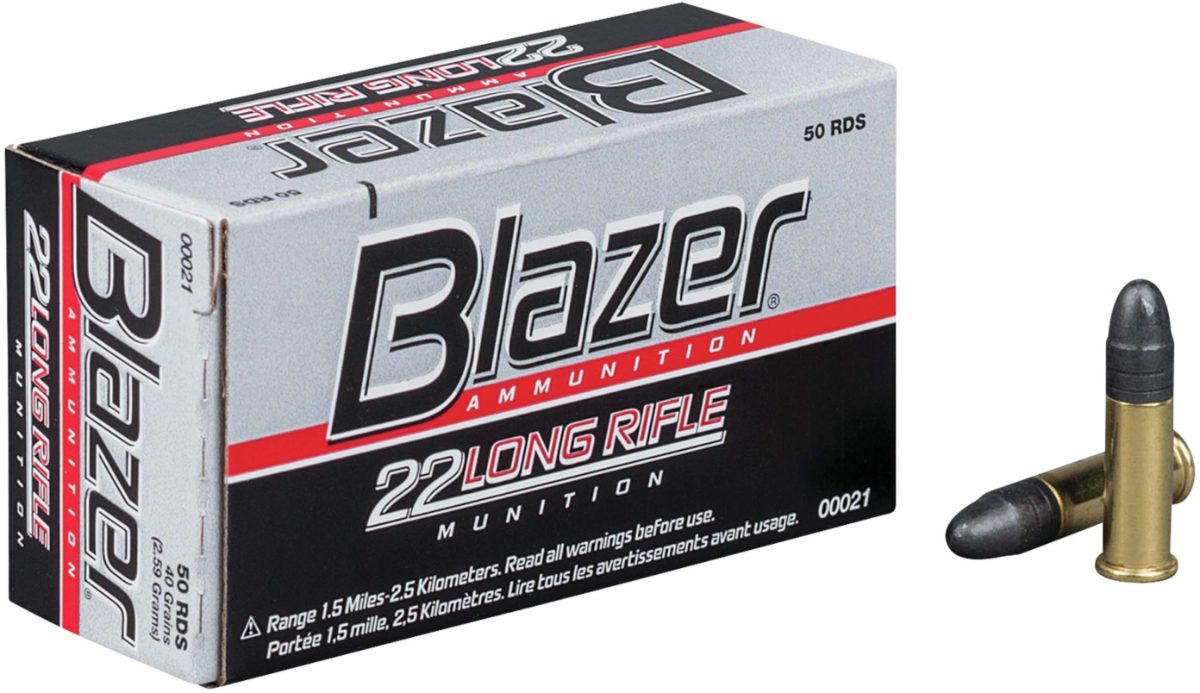
You have a .22 rifle at home, and the boxes on the shelf are marked .22 LR, .22 Short, .22 CB and .22 Magnum. They all say .22. Do they all work in your gun?
No, and "it's a .22, so it fits" is how people get hurt. Some of those cartridges are safe in your rifle, one can slide in and still be dangerous, and each is built for a different job. By the end you should be able to read your gun's marking and know exactly which .22 cartridges are safe in it, explain why the wrong one is dangerous even when it slides in, and choose the right .22 for practice, pests or small game.
Start with the marking on your gun
Every firearm is stamped with the cartridge it was built to fire, usually on the barrel near the chamber or on the receiver. With the gun unloaded and the action open, read it before you buy ammunition. That marking, not whether a round seems to fit, decides what you may shoot.
- If it says ".22 LR" or ".22 Long Rifle," shoot .22 Long Rifle. Most of these guns can also safely fire .22 Short and .22 Long if the maker says so, though a semi-automatic usually won't cycle them.
- If it says ".22 Magnum" or ".22 WMR," shoot only .22 Winchester Magnum Rimfire. Nothing else.
- If it says ".22 Short" only, as some old rifles and small revolvers do, shoot only .22 Short.
Key idea: ".22" names a family of cartridges with different case sizes and pressures, not one round. The stamp on your gun names the one it was built for.
Why the wrong .22 is dangerous even when it fits
The dangerous mix-up is a .22 LR in a .22 Magnum gun. The .22 LR is a slightly narrower cartridge, so it drops into a Magnum chamber with room to spare. When it fires, the thin brass case swells into that extra room and can split, sending hot gas and brass fragments back toward your face. The reverse fails differently: a .22 Magnum case is wider than a .22 LR chamber and shouldn't go in at all. Never force one.
Some revolvers come with two cylinders, one for .22 LR and one for .22 Magnum. That's safe because each cylinder is made for its cartridge; just make sure the matching cylinder is in the gun before you load.
Common mistake: Storing .22 LR and .22 Magnum loose in the same can. A Magnum shooter grabs a handful, and one LR round ends up in the cylinder. Keep different .22 cartridges in their own labeled boxes.
The .22 family, from quietest to most powerful
The family grew one step at a time, each cartridge a little more powerful than the last.
.22 CB and BB caps date from the mid-1800s and were made for shooting indoors. They're very quiet and very weak, useful only for pests at a few yards, and they won't cycle a semi-auto.
.22 Short (1857) was the first American metallic cartridge. It's quieter and weaker than the Long Rifle, fine for close pests or old rifles made for it. Firing many Shorts in a .22 LR chamber can leave a ring of fouling where the shorter case ends, which makes .22 LR rounds harder to chamber until you clean it.
.22 Long Rifle (1887) is the standard: accurate, mild, inexpensive and sold everywhere. It's what nearly every .22 rifle and pistol fires, and the right cartridge for practice, plinking and squirrels and rabbits.
.22 Magnum (1959) is longer and noticeably more powerful, with a flatter path. It's the better choice for coyotes at close range, groundhogs and other larger pests, out to about 125 yards.
Choosing the right .22 for the job
- If you're practicing or teaching, choose standard-velocity .22 LR, because it's quiet, accurate and cheap, so you'll shoot more.
- If you're hunting squirrels and rabbits, choose high-velocity .22 LR hollow points, and keep shots inside about 75 yards.
- If you're dealing with larger pests or coyotes at close range, choose a .22 Magnum rifle, because the extra energy and flatter path make clean kills more likely.
- If you need quiet pest control around buildings, choose subsonic .22 LR, but know that it may not cycle a semi-auto.
If you're not sure, choose a rifle in .22 LR. It does most jobs, and its ammunition is the easiest to find and the cheapest to practice with.
Whatever you shoot, know what's beyond your target: a .22 LR bullet can carry more than a mile. No .22 rimfire is legal for deer in Iowa, and small-game and furbearer rules are set by the Iowa DNR each season. And a .22 isn't a good choice for self-defense, because it's far less powerful than common defensive cartridges and rimfire primers misfire more often. Train with it, but defend with a cartridge built for defense.
Check your understanding
Try answering these before you open the answer. If you can decide what to do and explain why, you have it.
1. A friend says his .22 Magnum rifle "shoots .22 LR fine, it's just a little less powerful." What do you tell him?
Stop. A .22 LR in a .22 Magnum chamber fits loosely, and when it fires the case can split and blow gas and brass back toward his face. His rifle is marked .22 Magnum; it should fire only .22 Magnum.
2. You inherit a .22 revolver with two cylinders. How do you use it safely?
Check which cylinder is in the gun before loading, and use only the cartridge stamped on that cylinder: .22 LR in the LR cylinder, .22 Magnum in the Magnum cylinder. Keep the two kinds of ammunition in separate boxes.
3. Your semi-auto .22 rifle fires .22 Shorts but won't eject them. Is the rifle broken?
No. Shorts don't have enough energy to cycle most semi-autos. If you want to shoot Shorts, load them one at a time and work the action by hand, then clean the chamber before going back to .22 LR.
4. You want one .22 for squirrels at 50 yards and target practice. Which cartridge?
.22 Long Rifle. It's accurate and cheap for practice, and high-velocity hollow points take squirrels cleanly at that distance.
5. A neighbor wants a .22 for coyotes coming to his calving barn at 80 to 100 yards. .22 LR or .22 Magnum?
.22 Magnum. It carries considerably more energy and drops less at that distance, so clean kills are more likely. Better still for coyotes is a centerfire such as .223, if he's willing to step up.
Where to go next
You can find .22 LR ammunition and .22 Magnum ammunition on our website, and anything listed there can be ordered if it isn't in stock.
To compare the .22 LR, .22 Magnum and .17 HMR side by side, read .17 HMR vs .22 WMR vs .22 LR. For choosing among .22 LR loads, see .22 LR ammunition selection. And for the difference between rimfire and centerfire, read rimfire vs. centerfire.
If this article helped you, we invite you to sign up for email notifications of new blog articles.