
The .204 Ruger: The Ultimate High-Velocity, Flat Trajectory Cartridge
Joseph McLain Nov 07, 2026
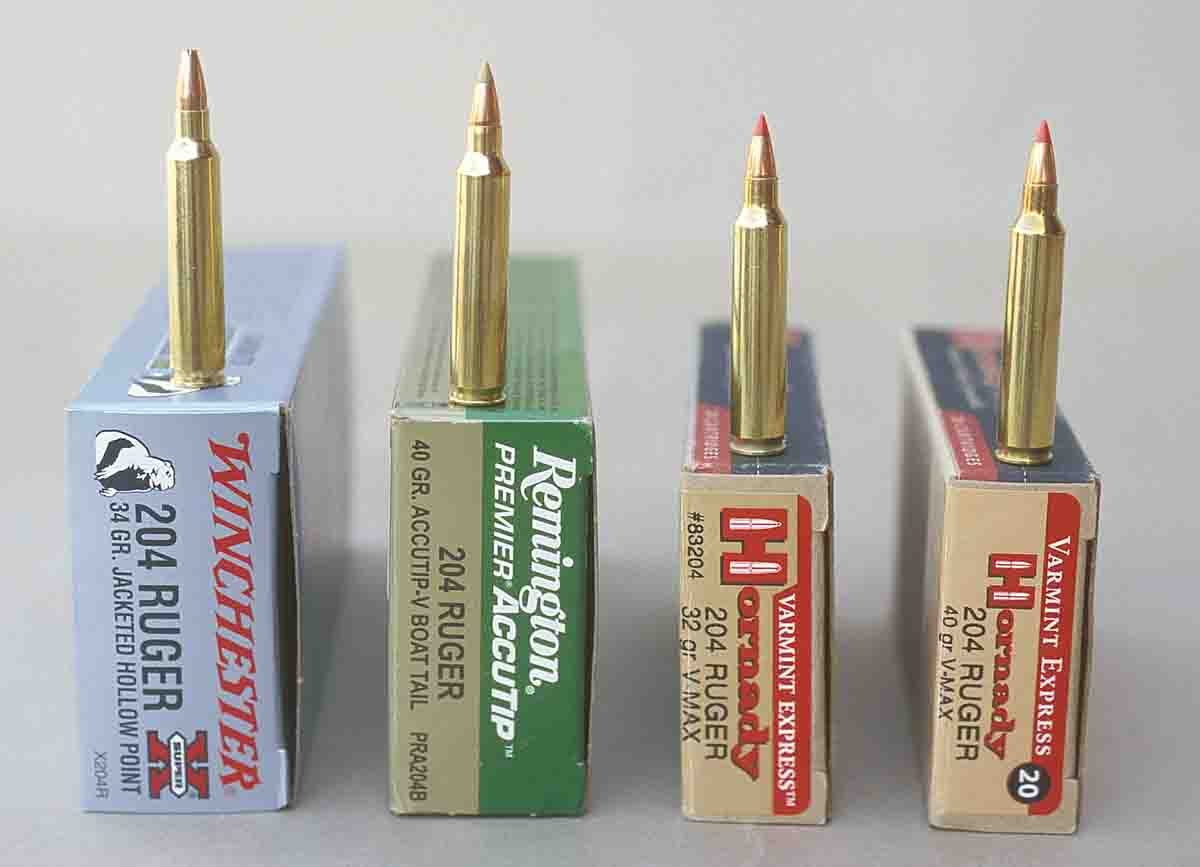
It is a still evening at the edge of a pasture, and ground squirrels keep popping up farther out than you would like. The .204 Ruger is known for a number that sounds almost made up, more than 4,000 feet per second, and you are weighing it against a .223 that might do the same job for less money.
By the end you should understand what that speed does for you and what it costs, so you can decide whether the .204 fits your varmint hunting or target shooting, choose a rifle that suits it, and know how it behaves in real conditions.
Why a faster bullet shoots flatter: The idea behind the .204 Ruger
The .204 Ruger fires a bullet .204 inches across, which is where its name comes from. Hornady and Ruger introduced it in 2004, and most factory loads use bullets of about 24 to 40 grains. A grain is a tiny unit of weight, and it takes 7,000 of them to make a pound. A bullet this light, pushed hard, leaves the muzzle at roughly 3,800 to over 4,000 feet per second (fps), depending on the load and barrel length. That makes it one of the fastest commercial centerfire cartridges available today.
Why does speed give you a flat path? Gravity pulls on a bullet from the instant it leaves the barrel, and it pulls at the same rate no matter how fast the bullet is moving. A fast bullet simply reaches a given target sooner, so gravity has less time to drag it down. Picture two baseballs headed for the same spot, one lobbed and one thrown as hard as you can. The lob rises and then falls, while the hard throw arrives on an almost straight line. A flat trajectory is that second throw. At a given distance there is less drop, so you need less holdover (aiming above the target to make up for drop) and a poor range estimate costs you less.
That goal drove the design. The cartridge was developed for varmint hunters and long-range shooters who wanted a round that could outpace traditional varmint calibers while keeping a flat path. Three choices work together to deliver it.
- Very light bullets. The 25 to 40 grain range lets the cartridge reach very high muzzle velocity.
- Streamlined bullets. Ballistic coefficient (BC) describes how well a bullet slips through the air. A higher BC means the bullet resists drag, holds its speed and is pushed around less by wind. Pointed .204 bullets are streamlined for their size, but because they are so light, their BC is modest compared with heavier bullets.
- Low recoil. A light bullet and an efficient powder burn mean less push back into your shoulder, so you stay on target and can follow up quickly.
Of the three, speed is the one that does most of the work for trajectory, and the other two help it last. Advances in powder chemistry, bullet design and case engineering, along with manufacturers like Ruger and influential reloaders and competitive shooters, have produced a round that performs consistently across different rifles and conditions.
Key idea: Flat trajectory comes from speed, and speed comes from a light bullet in a cartridge designed to launch it hard. The strengths and the limits of the .204 Ruger both follow from that one design choice.
What "flat" does and does not mean
People often explain flat trajectory with MOA, or minute of angle. One MOA is roughly 1 inch at 100 yards, about 2 inches at 200 yards and so on, because it is an angle that widens as distance grows. It is a handy way to describe group size and scope adjustments, and our guide to understanding MOA covers it in depth. It does not by itself tell you how far a particular bullet drops, though. For that you need a ballistic chart or calculator for your actual load.
Flat also does not mean wind-proof. Speed helps, but wind drift remains a factor at long range, and a bullet this light has little mass to resist a crosswind. Choose the most streamlined bullet your rifle shoots well and practice reading the wind. On a gusty day, shorten your shot rather than trusting the flat path to cover for the breeze.
Common mistake: Assuming a flat-shooting cartridge removes the need to judge distance and wind. It shrinks the penalty for a small error. It does not erase it.
Where the .204 Ruger excels: Varmints and precision targets
Speed pays off most with small, quick targets. For varmint hunting, the short time between lining up the shot and impact matters when the animal is small and may move. The flat path means fewer holdover calculations, so you can shoot quickly even at long range. The low recoil makes quick, successive shots possible, which helps when several animals show up at once. Typical quarry includes prairie dogs, ground squirrels and other small varmints, and coyotes with careful shot placement. If you manage pests on an acreage, our guide to varmint control for rural areas shows how a rifle like this fits into a larger plan.
Imagine a prairie dog town. One animal drops out of sight and another stands up fifty yards farther on. A rifle that barely moves in your hands lets you keep the scope on the field and send the next shot without relocating your sight picture.
For precision shooting, the consistent velocity and light recoil of the .204 Ruger support tight groups. It suits benchrest competitions, long-range target matches and precision shooting contests. It also makes a good training platform, because competitive shooters can use it to refine technique and learn the nuances of long-range ballistics. Light recoil helps here too, since it is easier to see your own mistakes when the rifle is not shoving you around.
Against the .22-250 Remington and the .223 Remington, which are both popular varmint cartridges, the .204 Ruger is typically faster than the .223 and similar to or a little faster than the .22-250 with light bullets. That gives it a very flat trajectory out to typical varmint distances, while the .22-250 can carry heavier bullets that buck the wind better. Its low recoil allows rapid follow-up shots, which is vital with agile, fast-moving targets.
A small bullet also puts a premium on shot placement, so take only the shots you are confident you can place well. Our article on hunting ethics explains the thinking behind that. This is a specialized tool. It is not necessarily the best choice for every application, so if you want one rifle for many jobs, weigh that carefully. For varmint hunting and competitive precision shooting, it offers a level of velocity and flat trajectory that few other cartridges can match.
Choosing a rifle for the .204 Ruger
High velocity and high pressure call for a rifle built to handle them, and for the precision that makes the cartridge worth owning. Three rifles come up most often.
| Rifle | Standout features | Best suited to |
|---|---|---|
| Ruger bolt actions in .204 | Precision free-floating barrel, lightweight and balanced, comfortable stock and trigger | Varmint hunting and long-range target shooting, with quick target acquisition |
| Savage 10/110 in .204 Ruger | Adjustable stock and trigger, free-floating barrel, robust construction for the cartridge's high pressures | Long-range varmint hunting and precision target shooting |
| Tikka varmint rifles | High build quality, lightweight and balanced, free-floating barrel and quality trigger | Competitive varmint shooting and long-range precision |
All three share a free-floating barrel, which means the barrel does not rest against the stock along its length. A barrel vibrates slightly every time it fires, and if the stock presses on it unevenly, the vibration and the point of impact can change. Floating the barrel lets it behave the same way shot after shot. Our article on rifle barrel design explains barrels and bedding in more detail. Since the three rifles agree on that feature, the difference between them is mostly fit and feel.
Ruger launched the cartridge in its own bolt-action rifles, which are lightweight and balanced, which is welcome when you are carrying it across a field. Savage rifles are known for out-of-the-box accuracy and consistency, and the adjustable stock and trigger let you tune the rifle to you. Tikka is celebrated for superb out-of-the-box accuracy and is popular with competitive varmint shooters. Tikka makes several rifle lines, so confirm the exact model and chambering with us before you order.
Good practice: Handle the rifles before you decide. Ask for each one with the action open, keep the muzzle in a safe direction and your finger off the trigger, then check that the stock fits you, the trigger feels crisp and the weight suits how you will shoot. A rifle you carry all day should be lighter than one that lives on a bench.
Barrel length, ammunition and weather: What changes your results
The performance of the .204 Ruger depends heavily on barrel length. A longer barrel allows a more complete powder burn, which can maximize velocity and give a flatter trajectory. A slightly shorter barrel is easier to maneuver in tight field conditions. Match the barrel to the job. Pick a longer barrel if you shoot mostly from a bench or a fixed spot, and consider a shorter one if you move a lot in cover.
Ammunition quality matters more than usual with a specialized cartridge. At these speeds, slight variations in powder charge or bullet weight can have a noticeable effect on accuracy, and consistency is what you are paying for. High-quality factory ammunition is made to deliver it. Our article on how ammunition affects your accuracy explains why, and it makes a good companion to this one. If you reload, follow recommended load data strictly.
Then there is the weather. High-velocity cartridges can be sensitive to temperature changes, so test your rifle with your chosen loads in conditions like those you will meet in the field. Wind drift still applies, so favor streamlined bullets.
Learning how your rifle handles real conditions
A light, fast bullet tells you a lot about conditions if you pay attention. With eye and ear protection on, the muzzle downrange and a steady rest, shoot a five-shot group with each of two or three factory loads at the same distance, and zero with the one that groups best. Shooting the same load on a day with a noticeably different temperature shows whether your point of impact moves, and a group at a longer distance on a breezy day shows which way and how far the wind pushes these light bullets. Those observations are what let you adjust in the field instead of guessing.
Putting it together
The .204 Ruger really is one of the flattest-shooting varmint cartridges, with recoil light enough to watch your own hits through the scope. The .223 really is cheaper to feed and more versatile, and the .22-250 handles wind a little better with heavier bullets. If your shooting is mostly small varmints at long distances, the .204 earns its place; if you want one rifle for many jobs, a more general cartridge may serve you better. Either way, test loads in your rifle and learn how wind and temperature move them.
Check your understanding
Try answering these before you open the answer. If you can decide what to do and explain why, you have it.
1. Your .204 and a friend's .243 are both zeroed at 200 yards, and at 350 yards the .204 hits higher. Why?
Gravity pulls at the same rate regardless of speed. The .204's faster bullet reaches the target sooner, so gravity has less time to pull it down.
2. A friend says the .204 Ruger drops only 1 inch per 100 yards because 1 MOA is about an inch. What is wrong with that reasoning?
MOA is a unit of angle used to describe group size and scope adjustments. It is not a measure of bullet drop. For real drop numbers, use a ballistic chart or calculator for your specific load.
3. It is a windy day and your target is far away. What should you do?
Remember that a flat trajectory does not stop wind drift, and light .204 bullets drift readily. Use the most streamlined bullet your rifle shoots well, read the wind, and consider waiting or taking a shorter shot.
4. You're choosing between two .204 rifles, and only one has a free-floating barrel. Why does that matter?
A free-floating barrel doesn't touch the stock along its length, so the stock can't press on it unevenly. The barrel vibrates the same way each shot, and accuracy stays consistent.
5. You will mostly walk fields and hunt from cover. How should that shape your barrel and rifle choice?
A lighter rifle with a slightly shorter barrel is easier to carry and maneuver, at a small cost in velocity. A longer barrel suits a shooter working from a bench or fixed spot.
Where to go next
You can find .204 Ruger ammunition and rifles on our website, including Hornady and Federal V-MAX and Remington AccuTip loads and the Ruger American Gen II, and anything listed there can be ordered if it isn't in stock.
To turn velocity into real aiming numbers, read the role of ballistics in long-range shooting, which shows how drop and drift are calculated. Then work through sighting in rifles at different distances, since zeroing is where all of this becomes practical. If you want to see where this rifle fits in a real pest-control plan, try varmint control for rural areas. And to compare it with another modern small-bore cartridge, see The .224 Valkyrie.
If this article helped you, we invite you to sign up for email notifications of new blog articles.