
Thermal Scopes for Coyotes: Hunting Iowa Nights Safely and Legally
Joseph McLain Nov 07, 2026
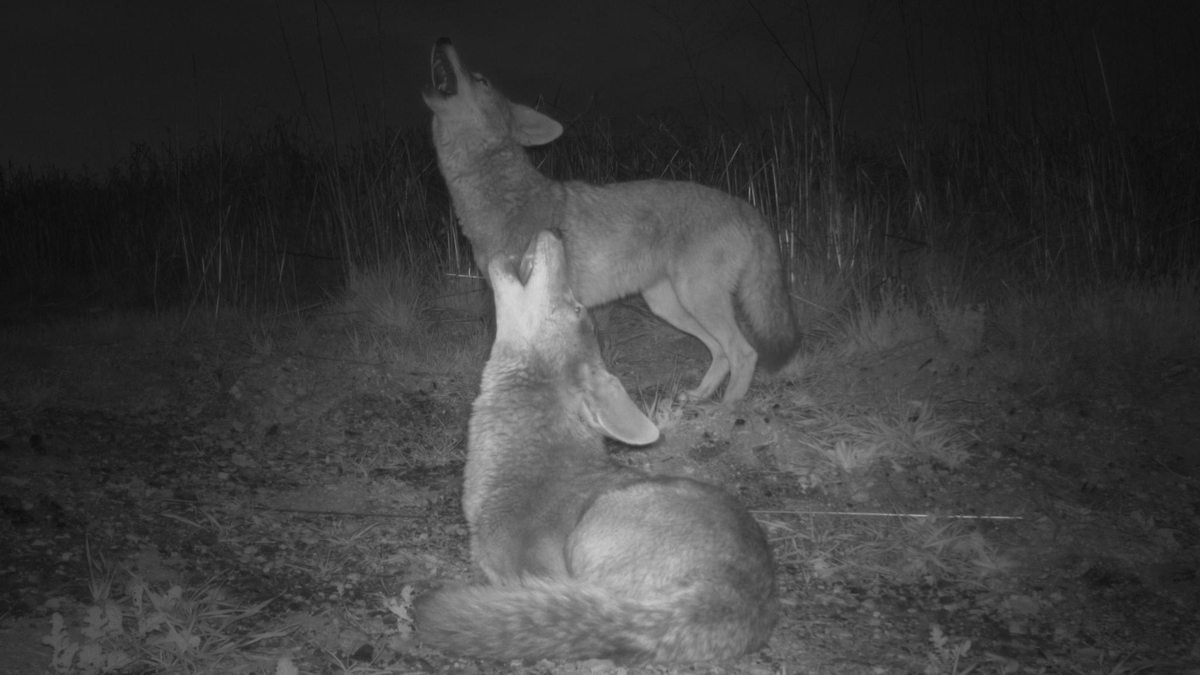
It is a still January night, ten degrees, with a skiff of snow on the pasture. You have permission to hunt a neighbor's farm because coyotes have been working his calving lot. You sit against a round bale, start the call, and a few minutes later a bright white shape trots out of the creek bottom on your thermal screen. In the dark, with your bare eyes, there is nothing out there at all.
Will any thermal do? Do you need a separate handheld to scan with as well as a thermal riflescope? And how do you know what's behind the coyote in the dark? Thermal makes night coyote hunting practical, but it changes what you can see, what you can't, and what the law allows.
By the end you should understand how a thermal scope works and how to read its specifications, what Iowa law says about night coyote hunting, why identification and backstops get harder at night, and how to set up, zero and plan a safe night hunt, so you can decide before you ever press the trigger what a safe and legal shot looks like.
How thermal works: Seeing heat, not light
A regular riflescope gathers light. When there is no light, it shows you nothing. A thermal scope does not use light at all. Its sensor, usually a grid of tiny heat-sensitive elements called a microbolometer, measures the infrared energy that everything gives off because it is warm. A coyote's body, the engine block of a truck, a cow and a person all glow because they are warmer than the snow around them.
Think of a thermal image as a temperature map, not a photograph. The scope takes those temperature differences and paints them in shades of white and black, or in color palettes. That is why a coyote stands out so clearly on a cold night: It is very different in temperature from the field. It is also why thermal can struggle in the hours around sunrise and sunset, when the ground, the trees and the rocks have warmed or cooled to nearly the same temperature as everything else. Hunters call this thermal crossover, and it is a real limitation on mild, damp days.
A few other surprises come with seeing heat. Thermal does not see through glass, so you cannot scan out of a closed truck window. It does not see through brush or tall grass any better than your eyes do, because the leaves have their own temperature. Heavy fog, rain and falling snow soften the image. And a wet coyote that has just crossed a creek can look much dimmer than a dry one.
Key idea: A thermal scope shows you differences in temperature. It can make an animal pop out of a dark field, but it cannot show you fine detail, it cannot see through glass, and it works best when the animal is much warmer than its surroundings.
Reading the specifications: Sensor, lens and refresh rate
Thermal spec sheets are full of numbers, and the biggest price differences come from a few of them. Understanding these lets you compare scopes honestly instead of by the brand or the advertised range.
- Sensor resolution. The number of heat-sensing pixels, such as 384×288 or 640×512, which sets how much detail the scope can capture.
- Pixel pitch. The size of each pixel, usually 12 or 17 microns, which along with the lens affects how much magnification you get.
- Lens focal length. The size of the objective lens in millimeters, such as 35 or 50; a longer lens gives more base magnification and a narrower view.
- Thermal sensitivity (NETD). The smallest temperature difference the sensor can detect, in millikelvins; a lower number means a cleaner image when temperatures are close together.
- Refresh rate. How many times per second the image updates, usually 30 or 50 to 60; a higher rate keeps a trotting coyote from looking jerky.
- Display. The small screen you actually look at, which matters for eye comfort over a long night.
Of these, sensor resolution and lens do the most work. Picture two cameras taking a picture of the same coyote at 200 yards. One has many more pixels landing on the animal. That one shows you the shape of the ears, the length of the legs and the way it carries its tail. The other shows you a warm blob. Digital zoom does not fix that, because it only enlarges the pixels you already have. Zooming in on a small sensor is like enlarging a grainy photo: It gets bigger, but not clearer.
What you pay with is cost, size and field of view. A big lens on a high-resolution sensor shows more detail far away, but it costs more and gives a narrower view up close. Match the lens to the distance of your typical shot. Most Iowa coyotes come in across a pasture, a picked cornfield or out of a timber edge, often well inside 200 yards, and a moderate lens with a wide view is often more useful there than the most magnification you can buy.
Detection, recognition and identification
The advertised range on a thermal box is usually a detection range. That number is a fair way to compare one scope with another, but it is the most misleading number for a hunter. It helps to think in three steps, the same way people think about any optic used at night.
Detection means you can tell something warm is out there. Recognition means you can tell what kind of thing it is, a four-legged animal rather than a hay bale that has kept its daytime heat. Identification means you can tell exactly what it is: A coyote rather than a neighbor's dog, a fox, a bobcat or a deer fawn bedded in the grass. A scope may detect a warm spot at 1,000 yards and identify it at a small fraction of that.
Only identification is good enough to shoot. Iowa has a lot of farm dogs, and wolves occasionally wander into the state. The Iowa DNR reminds hunters that wolves are protected and that shooting one can bring state or federal penalties. Its advice is simple: If what you see is larger than the average coyote, do not shoot. In thermal, size is hard to judge without a reference, so that advice matters even more at night.
Common mistake: Shooting at a warm shape because it moves like a coyote. A dog, a fox and a coyote can all look like a bright four-legged shape on a small screen. If you cannot see the features that make it a coyote, you have detected it, not identified it.
What Iowa law says about hunting coyotes at night
Iowa has a continuous open season on coyotes, and the DNR lists no restriction on shooting hours, so night hunting is allowed. You need a hunting license or a furharvester license, and there is no bag limit. The DNR also reminds hunters not to shoot over any road right-of-way, gravel or paved, and to get permission before hunting private land. This article is education, not legal advice, and the rules can change, so check the current Iowa DNR regulations before every season.
The most important night rule is about light. Under Iowa Code 481A.93, while you have a gun, bow or other device capable of killing an animal, you may not cast the rays of a spotlight, headlight or other artificial light in a field, woodland or forest to spot, locate or take wildlife. The DNR's own summary says hunters cannot pursue coyotes with the aid of artificial light, regardless of light color. A red or green "predator light" counts as artificial light.
The same section contains one exception that matters to night hunters. You may use an infrared light source to hunt coyotes if it is mounted to the gun or to a scope mounted on the gun. That exception does not apply during any established muzzleloader, bow or shotgun deer season. Many digital night vision scopes rely on a built-in or add-on infrared illuminator, so this rule decides when those scopes can legally be used for coyotes.
A true thermal scope does not shine any light at all, which is why it is so useful under these rules. But read the features list of any scope carefully. Some thermal scopes include a laser rangefinder or an aiming laser, and Iowa's hunting regulations state that sights that project a light beam, including laser sights, are not legal for hunting. If a scope you are considering projects any kind of beam, ask the Iowa DNR how the rules apply before you hunt with it.
| Equipment | What it does | How Iowa's rules treat it |
|---|---|---|
| Spotlight, headlight, red or green hunting light | Shines visible light on the animal | Not allowed for spotting or taking coyotes while you have a weapon |
| Infrared illuminator mounted on the gun or scope | Shines light people cannot see, for a night vision scope | Allowed for coyotes, except during muzzleloader, bow or shotgun deer seasons |
| Thermal scope or handheld thermal | Reads heat; projects no light | Not addressed by the light rule; watch for built-in lasers |
| Laser sight or aiming laser | Projects a beam onto the target | Iowa's regulations say laser sights are not legal for hunting |
The table is a series of questions about light. Does the device throw light onto the field? If so, it falls under the artificial light rule, with only the narrow infrared exception. Does it project a beam onto the animal? Then the laser rule applies. Passive thermal, which only receives heat, is the setup that avoids both questions. Two more rules apply on every hunt: You may not shoot within 200 yards of a building inhabited by people or livestock, or a feedlot, without the owner's or tenant's consent, under Iowa Code 481A.123, and the deer seasons bring their own requirements, so hunting coyotes during deer season deserves a careful read of that year's regulations.
The backstop problem: What thermal does not show you
The old-timer at the coffee shop has a real point. In daylight you see the coyote, the hill behind it, the farmhouse a half mile away and the gravel road beyond the fence. At night, your thermal shows you a bright animal and a field that fades into dark gray. A cold building, a parked machine, a distant road or a cow lying in a draw can blend into the background, and anything over the horizon is invisible.
A rifle bullet that misses or passes through a coyote can travel well over a mile. That is why every safe night hunt starts in daylight. Walk or drive the property before dark. Note where every house, barn, road, feedlot and livestock lot sits. Pick setups where the coyote will come in against a hillside, a terrace or a creek bank, not against a skyline. Then decide, before it gets dark, which directions you will not shoot no matter what comes out.
If you cannot name what is behind the animal from what you saw in daylight, you do not have a backstop, and you do not take the shot.
Safety: Take a phone picture of the property map with your no-shoot directions marked, and look at it after you set up. In the dark and the excitement, people forget which way the neighbor's house is far more often than they expect.
Scan with a handheld, shoot with the scope
Your brother-in-law's advice about a separate handheld thermal monocular is one of the most important safety ideas in night hunting. A thermal riflescope is a sight. Every time you sweep it across the dark to see what is out there, you are pointing a loaded rifle at everything it crosses, and at night you do not know what that is until you have already pointed at it.
Think of how you would never use a riflescope as binoculars to look at people across a field in daylight. A handheld thermal is the binoculars of night hunting. You scan with it, find a warm shape, watch it until you have identified it, and only then bring the rifle and its scope onto the animal. A handheld also lets your partner watch the background and the area around the coyote while you aim.
The cost is money, since a good handheld adds to the price of the setup. If your budget allows only one thermal, consider a handheld first and hunt with a partner who can call the shot, before you buy a scope you will be tempted to scan with.
Setting up the rifle: Mounts, zero and power
A thermal scope is an electronic device on a rifle that recoils, and the basics of mounting still apply. The scope must be mounted solidly, at a height that lets your cheek rest naturally on the stock, with the right distance between your eye and the eyepiece. Our guide to mounting a rifle scope explains the steps. Most thermal scopes use a Picatinny-style mount, and some have a quick-detach mount that is supposed to return to zero when you remove and replace it. Check that claim with your own rifle at the range before you rely on it.
Thermal scopes are zeroed in menus rather than with turret clicks on most models, and many let you store more than one zero profile. To zero, you need a target that shows up in thermal. A paper target does not, because it is the same temperature as the backer behind it. Hunters use hand warmers taped behind the aiming point, heated target pads, or squares of reflective foil tape, which look very different from the paper around them. Our guide to sighting in a rifle scope covers the step-by-step method, which is the same idea with a different target.
Power is the other part of setup. Batteries lose capacity in the cold, and Iowa coyote hunting happens in the cold. Keep spare batteries or a charged power bank in an inside pocket, and learn how long your scope actually runs on a cold night. Some scopes take a few seconds to start, so turn the scope on before you begin calling, not when the coyote is already coming.
On caliber, coyotes do not require a deer-sized rifle, and Iowa's .350-inch minimum is a deer rule, not a coyote rule. Many hunters use a .223 Remington or similar varmint cartridge. Our article on varmint and predator ammunition explains how bullet design affects coyotes and fur. The rule for the whole setup: Zero it, test it in the cold and know its battery life before the night you need it.
Thermal riflescope, clip-on or night vision?
There are three common ways to put a night sight on a rifle, and each has a place.
- Dedicated thermal riflescope. A complete thermal sight with its own reticle, which is the simplest setup but means the rifle becomes a night-only rifle unless you swap scopes.
- Thermal clip-on. A thermal unit that mounts in front of your existing day scope, so you keep your regular zero and reticle, at a higher price and with more weight up front.
- Digital night vision scope. A sight that amplifies light and usually needs an infrared illuminator on dark nights, which costs less but runs into Iowa's deer-season limit on infrared lights.
Of these, the dedicated thermal scope is the most common choice for a rifle used mainly for coyotes, because it is simple and passive. The clip-on makes sense if you want one rifle with one zero for both day and night, and you are willing to pay for it. Digital night vision shows more detail on things like fence wires and branches, which thermal can lose, but it needs some light, and the infrared limit during the fall and winter deer seasons is a real drawback in Iowa, since those seasons cover much of prime coyote time.
Planning a night hunt in daylight
A safe night hunt is planned while you can still see. With the landowner's permission, learn where the house, livestock, buildings and roads are, including those you can't see from the field. Walk to each setup in daylight, without a firearm, and look in every direction, marking every building, road, feedlot and livestock area, and the 200-yard circle around occupied buildings and feedlots. For each setup, decide which directions have a natural backstop and which you won't shoot toward. A visit at dusk with your handheld thermal, still without a firearm, shows what the same field looks like on the screen. You're ready when you can stand at each setup and say where you can shoot, what stops the bullet, and where you won't shoot.
Putting it together
Thermal turns a dark field into a map of warm and cold. That is what makes night coyote hunting possible, and it is also what makes it demanding. It shows warm animals clearly, but it hides fine details, cold buildings and anything over the horizon. The specifications that matter most are the sensor and lens, because they decide whether you can identify an animal, not just detect it.
Iowa allows coyote hunting at any hour, but it does not allow hunting with spotlights or colored lights, it limits infrared illuminators during deer seasons, and its regulations rule out laser sights. Thermal, which projects nothing, fits those rules best. The rest is preparation: Scout in daylight, decide your no-shoot directions, scan with a handheld instead of your rifle, zero with a heat target, carry warm batteries, and do not shoot anything you have not identified with a safe backstop behind it.
Check your understanding
Try answering these before you open the answer. If you can decide what to do and explain why, you have it.
1. Your thermal box advertises a 1,500-yard range. Can you shoot coyotes at 1,500 yards with it?
No. That is almost certainly a detection range, the distance at which the scope can show something warm. Identification, the level of detail you need before shooting, happens at a much shorter distance that depends on the sensor and lens.
2. A friend wants to use a green LED hunting light because "coyotes can't see green." Is that legal in Iowa?
No. Iowa Code 481A.93 prohibits casting artificial light to spot or take wildlife while you have a weapon, and the DNR says this applies regardless of light color. The narrow exception is an infrared light source mounted on the gun or scope, and only outside muzzleloader, bow and shotgun deer seasons.
3. It is mid-December during shotgun deer season. You want to use your digital night vision scope with its infrared illuminator. What does the law say?
Iowa does not allow an infrared light source for coyote hunting during any established muzzleloader, bow or shotgun deer season. A passive thermal scope that projects no light avoids that problem, but deer season brings other rules too, so check that year's regulations.
4. A large, bright shape comes out of the timber and walks like a coyote, but it looks bigger than the coyotes you usually see. What should you do?
Do not shoot. It could be a dog, or it could be a wolf, which is protected in Iowa. The DNR's advice is that if it looks larger than the average coyote, you should not shoot.
5. Why should you scan with a handheld thermal instead of your thermal riflescope?
Because scanning with a riflescope means pointing a loaded rifle at everything you look at, including things you have not identified, such as people, livestock and dogs. A handheld lets you search and identify first and bring the rifle up only when you have a target you are allowed to shoot.
Where to go next
If you are new to calling coyotes, read our guide to varmint control on rural acreages for the bigger picture of managing predators on a farm. For choosing bullets that put coyotes down cleanly, see varmint and predator ammunition. Our article on hunting ethics explains shot placement and what you owe the animal, and cold shot accuracy explains why your first shot on a frigid night may not hit where your summer zero says it will.
If this article helped you, we invite you to sign up for email notifications of new blog articles.