
Iowa's Straight-Wall Deer Rifle Rules: Which Cartridges Qualify
Joseph McLain Nov 14, 2026
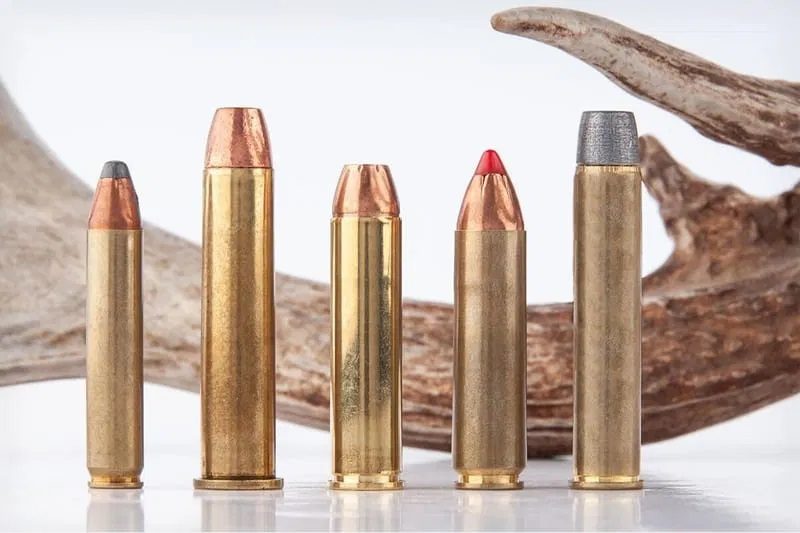
It is a few weeks before Iowa's shotgun season, and the rifle in your hands, or in the store case, may not be legal for deer. You have probably heard that Iowa wants a "straight-wall" cartridge. That phrase is half right, and the wrong half is the one that decides whether your rifle qualifies.
Iowa's rule measures the bullet, not the case. Once you know the three things it measures, you can check any cartridge yourself, including ones that did not exist when this article was written.
The short answer
In Iowa's youth and disabled-hunter season and its first and second shotgun seasons, a deer rifle must fire an expanding bullet from .350 to .500 inch in diameter with at least 500 foot-pounds of muzzle energy. In the January antlerless-only seasons, centerfire rifles from .223 inch up are allowed.
That puts the .350 Legend, .400 Legend and .450 Bushmaster inside the rule, along with the .444 Marlin, the .45-70 Government and the .44 Magnum in a rifle. A .308 Winchester, a .30-06 and a .30-30 do not qualify in the shotgun seasons. A .35 Whelen does, even though its case is shaped like a bottle.
Why "straight-wall" misleads
A cartridge case comes in two basic shapes. In a straight-walled case the sides run straight from base to mouth, like a pencil sliding into a tube. In a bottleneck case the body narrows through a shoulder to a smaller neck that grips the bullet, the way a soda bottle narrows at the top. Straight-walled cartridges tend to launch larger, heavier bullets at moderate speeds, and bottleneck cartridges tend to launch smaller, sleeker bullets much faster.
Most of the cartridges that pass Iowa's rule happen to be straight-walled, because that design suits big, heavy bullets, and that is where the nickname comes from. The rule itself never looks at the case. The .35 Whelen passes with a bottleneck case, and the .30-30 fails with a nearly straight one. Anyone who shops by case shape will sooner or later buy a rifle that is not legal.
Key idea: Iowa checks the bullet, not the case. If the bullet is the right size, expands and carries enough energy at the muzzle, the cartridge qualifies.
The three tests
- Diameter. The bullet must measure from .350 to .500 inch across. The .350 Legend's bullet is .357 inch, the .400 Legend's is .400 and the .450 Bushmaster's is .452. The .30-30 and .308 fire a .308-inch bullet, which is under the minimum.
- Expansion. The bullet must be one that expands, such as a soft point or a polymer-tipped bullet. A full metal jacket bullet does not expand, so it is for the range only.
- Energy. The load must carry at least 500 foot-pounds at the muzzle. Energy equals the bullet's weight in grains times its speed in feet per second squared, divided by 450,240. A .350 Legend 150 grain bullet at 2,325 feet per second works out to about 1,800 foot-pounds, more than three times the minimum.
Whatever reasons lie behind the numbers, they work as a floor and a ceiling: they keep very small bullets and very light loads out of the shotgun seasons, and they keep the biggest cartridges out as well.
Checking some familiar cartridges
| Cartridge | Bullet diameter | Typical muzzle energy | Meets the shotgun-season rule? |
|---|---|---|---|
| .350 Legend | .357 inch | About 1,800 ft-lb | Yes |
| .400 Legend | .400 inch | About 2,430 ft-lb | Yes |
| .450 Bushmaster | .452 inch | About 2,690 ft-lb | Yes |
| .444 Marlin | .430 inch | About 2,800 ft-lb | Yes |
| .45-70 Government | .458 inch | About 2,280 ft-lb with a 300 grain bullet | Yes |
| .44 Magnum from a rifle | .429 inch | About 1,730 ft-lb | Yes |
| .30-30 Winchester | .308 inch | About 1,900 ft-lb | No, the bullet is too small |
| .308 Winchester | .308 inch | More than 2,500 ft-lb | No, the bullet is too small |
Common mistake: Assuming the .360 Buckhammer and the .30-30 are the same because the Buckhammer is built on a .30-30 case. The Buckhammer fires a .358-inch bullet and qualifies. The .30-30 fires a .308-inch bullet and does not.
Which seasons the rule covers
The 500 foot-pound rule applies in the youth and disabled-hunter season and in the first and second shotgun seasons. The January antlerless-only seasons are different: centerfire rifles from .223 inch up are allowed, so a .223, a .243 or a .308 can be legal then even though none of them is legal in the shotgun seasons. The rifle on your shoulder, in other words, may be legal in January and not in December.
These rules are current as of November 2026 and can change. Read the current regulations on the Iowa DNR deer hunting page before every season. If you hunt in another state, check its rules too, because states measure different things.
Choosing among the cartridges that qualify
Once a cartridge passes, the choice comes down to recoil and what you hunt. Recoil is the push back into your shoulder, and it grows with the bullet's weight and speed, so a heavier bullet pushes harder. Here are the common choices:
| Cartridge | Approximate speed and bullet weight | Where it shines |
|---|---|---|
| .350 Legend | About 2,250 to 2,325 fps with a 150-grain bullet | Moderate ranges with low recoil |
| .400 Legend | About 2,200 to 2,400 fps with a 190- to 215-grain bullet | About a third more energy than the .350 Legend |
| .450 Bushmaster | About 2,200 fps with a 250-grain bullet | Heavy bullet in thick cover |
| .45-70 Government | About 1,800 to 1,900 fps with a 300-grain bullet; heavy 405-grain factory loads are much slower | Classic, deep-penetrating bullet at moderate ranges |
| .444 Marlin | About 2,300 fps with a 240- to 265-grain bullet | A flatter path than the .45-70, with less recoil than the .450 Bushmaster |
| .44 Magnum | About 1,800 fps with a 240-grain bullet from a rifle | Short to moderate ranges with lighter recoil |
Most of these travel in the same general speed band, so the real difference is the bullet. The .350 Legend's 150-grain bullet is the lightest and gives the lowest recoil, which is why it suits younger hunters and anyone sensitive to kick. The .400 Legend steps up to a heavier bullet and about a third more energy for about a third more push. The .450 Bushmaster pushes back harder still. The comparison of the .350 Legend, .400 Legend and .450 Bushmaster puts the three side by side.
The .45-70 and .444 Marlin are lever-gun cartridges with long histories, and the .44 Magnum is a handgun cartridge that also works in rifles at short to moderate range. Check your rifle's chambering against the table above, and read about lever-action .45-70 rifles for deer hunting if that cartridge appeals to you.
Safety: A rule about cartridges is not a backstop. A bullet from any of these rifles can travel well past your target, so always positively identify what you are shooting at and know what is behind it before you pull the trigger.
Matching the rifle to the cartridge
Choose the cartridge first, because the rule and your recoil tolerance decide that. Then choose the kind of rifle by how you hunt. Bolt actions are the most common, single shots ask you to make the first shot count, and lever actions are traditional and quick to handle. Which models come in which cartridges changes as makers update their lines, so confirm that the exact rifle you want is offered in your chosen cartridge.
Whatever you choose, shoot the rifle from the position you will hunt in before the season, and pick the cartridge you can shoot well without flinching. A well-placed bullet from a milder cartridge beats a poorly placed one from a bigger cartridge, and a cartridge you dread will not get practiced. Hunting ethics and a clean, humane kill goes deeper on why that matters.
Check your understanding
Try answering these before you open the answer. If you can decide what to do and explain why, you have it.
1. Your uncle offers his old .30-30 lever gun for the shotgun season, saying the .360 Buckhammer is "just a .30-30 anyway." Can you use it?
No. The .30-30 fires a .308-inch bullet, below the .350-inch minimum, even though its energy is high. The .360 Buckhammer is built on a .30-30 case but fires a .358-inch bullet, so it qualifies. Iowa checks the bullet, not the case.
2. A new cartridge fires a .358-inch expanding bullet weighing 200 grains at 2,000 feet per second. Does it meet the shotgun-season rule?
Yes. The diameter is inside .350 to .500 inch, and the bullet expands. The energy is 200 times 2,000 squared, divided by 450,240, which is about 1,780 foot-pounds, well over the 500 minimum. All three tests pass.
3. A friend says his .223 AR is fine for Iowa deer. When is he right?
Only in the January antlerless-only seasons, when centerfire rifles from .223 inch up are allowed. In the youth and disabled-hunter season and the shotgun seasons the bullet is too small, so he needs a different rifle.
4. A .350 Legend and a .450 Bushmaster both qualify. What should decide between them?
Recoil and the hunting you do. The .450 carries a heavier bullet and more energy, and it pushes back harder. If you shoot the .350 more accurately, or the rifle will be shared with a young or recoil-sensitive hunter, the .350 is the better choice.
5. A full metal jacket practice load has a .357-inch bullet and plenty of energy. Can you hunt deer with it in the shotgun seasons?
No. The diameter and energy pass, but the bullet does not expand. It is for the range only.
Where to go next
You can find .350 Legend, .400 Legend and .450 Bushmaster ammunition and rifles on our website, including Hornady American Whitetail, Winchester Deer Season XP and Power-Point, and Barnes TSX, and anything listed there can be ordered if it isn't in stock.
Start with hunting licenses, tags and firearm restrictions in Iowa and neighboring states, because the rules decide your options before any cartridge does.
If this article helped you, we invite you to sign up for email notifications of new blog articles.