
The Ruger M77: How a Practical Hunting Rifle Became a Platform
Joseph McLain Nov 07, 2026
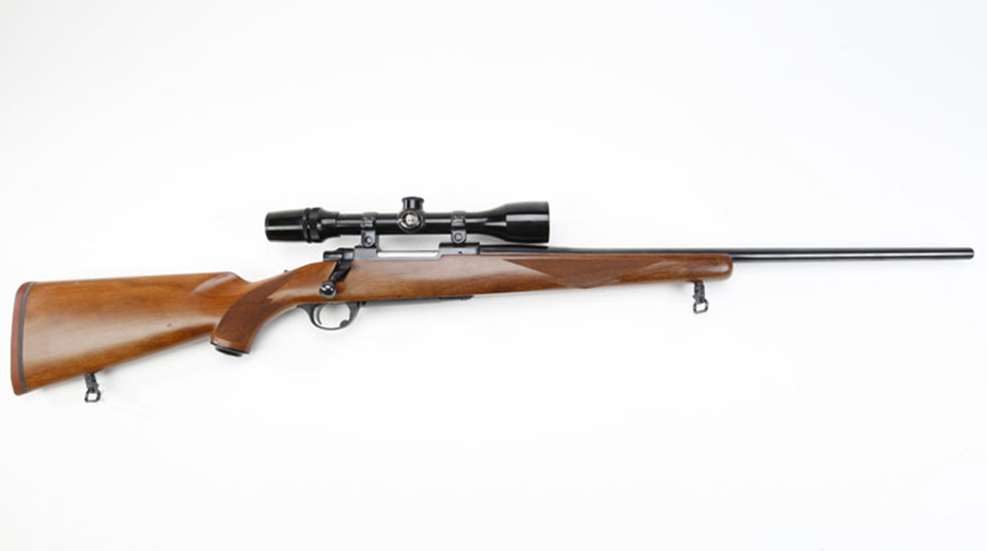
Picture several bolt-action rifles that all say Ruger 77 on the receiver, yet carry different names. One is marked Mark II, another Hawkeye, another has a stock that runs all the way to the muzzle. Some are older tang-safety rifles, and some are the newest Hawkeyes. Which one should you pick up, and what are you supposed to look for?
The answer is not to memorize model names. It is to understand a handful of design decisions Ruger made, what problem each one solves, and how each one changes what you feel when you work the rifle in the field. By the end you will be able to read an M77 by its mechanics, explain the terms that set the versions apart, and handle one more safely.
Why 1968 mattered: The rifle Ruger set out to build
The Ruger M77 was never meant to be a fragile showpiece. It was built to be carried hard, used in ugly weather, and trusted when the follow-up shot matters. In 1968, Ruger entered a bolt-action market that was crowded but vulnerable. Hunters still respected the older field virtues of strong extraction, dependable feeding and robust actions, which they associated with classic Mauser-style thinking. At the same time, manufacturers were under pressure to build rifles efficiently and keep prices realistic. That tension left an opening for a company that could deliver rugged, traditional function without boutique pricing.
Ruger’s approach stayed consistent from the start.
- Built to live outdoors. Rain, snow, dust, temperature swings and routine bumps.
- Optics as part of the system. Not an afterthought.
- Reliable function over slickness. Smooth is nice, but dependable is better.
- Repeatable manufacturing. The same rifle could be built consistently for decades.
The last priority is the one that is easy to overlook, and it is why the M77 became more than one rifle. Over the decades, Ruger kept these priorities while refining the mechanics, and the M77 became a platform, a recognizable bolt-action system that could stretch across calibers, barrel profiles, stock styles and even niche roles without losing its identity.
Key idea: Think of a truck chassis that can carry a flatbed, a cab or a dump bed. The M77 is the chassis. The model names describe what was built on top of it.
Start with the bolt cycle, because every feature attaches to it
Lists of M77 facts do not stick because the words have nothing to hang on. If you can picture the bolt cycle, each feature in this article attaches to one specific moment in it. Here is the sequence in plain language.
- Feeding. The bolt strips a cartridge from the magazine.
- Chambering. The cartridge aligns and enters the chamber.
- Locking. The bolt lugs lock into the receiver, and the rifle becomes a sealed pressure system.
- Firing. The firing pin strikes the primer and the cartridge ignites.
- Unlocking. The bolt handle lifts, breaking the seal and beginning extraction.
- Extraction. The extractor holds the case rim and pulls the case out of the chamber.
- Ejection. The case is kicked clear of the action.
Keep those seven stages in mind. When people discuss the M77 intelligently, they are talking about how Ruger improved one or more of them in real hunting conditions. Controlled-round feed is about stages one and two. The ejector is about stage seven. The three-position safety is about everything around the cycle that keeps your muzzle and your fingers out of trouble.
Three engineering choices that made the M77 a platform
Investment casting, used as a strength
Ruger leaned heavily into investment casting at a time when many shooters assumed “cast” automatically meant “weak.” Ruger’s long-term bet was that controlled casting, combined with modern metallurgy and heat treatment, could produce strong, consistent parts at a realistic cost. For you, that meant a rifle that stayed attainable for working hunters, with the same core geometry year after year, so the M77 could grow into a long-running family instead of a short-lived model. It is a big part of why the rifle earned a tool-like reputation. That is not a sign it was crude. It was built to be used rather than protected.
The angled front action screw
This detail does not sound exciting until you see what it does. Most rifles pull the action straight down into the stock. The M77’s angled front screw pulls the action down and rearward at the same time, much like closing a drawer by tugging it toward the back corner so it seats tight. The practical intent is to help the action seat consistently and firmly, so it does not settle differently after you take the rifle apart or shift subtly under recoil.
That matters to you because bedding consistency is a major driver of the question every hunter eventually asks, “Why did my point of impact move?” Repeatable action seating helps keep the rifle predictable from season to season, and it shows Ruger building consistency into the architecture rather than relying on hand-fitting every rifle. If you want to learn more about bedding, see Understanding Rifle Barrel Design.
Integral scope mounting: What it actually means on an M77
This is one of the most misunderstood phrases in the rifle world. Many people assume integral mounts means a Picatinny rail is milled into the receiver. On most centerfire Ruger M77 rifles, it does not. It means the receiver is machined with built-in mounting cuts, Ruger’s proprietary scope ring interface, and Ruger rings clamp directly to those cuts. The receiver itself acts as the scope base.
Why does that help in the field?
- Fewer parts, because the classic setup needs no separate bases
- Fewer screws that can loosen under recoil and time
- Fewer interfaces that can introduce cant or misalignment
The first two are easy to picture, and the third is the one that matters most. Each extra joint between rifle and scope is another place for error to creep in, and many accuracy complaints turn out to be mounting problems. Hunters often discover the hard way that “the rifle shoots fine” but “the system around it moves.” Ruger built the optics interface into the rifle so that system is harder to shake loose. For the mechanics of putting a scope on any rifle, our beginner’s guide to mounting a rifle scope is a good companion.
How the M77 changed over time, and what each change solved
Most confusion about the M77 comes from treating model names as the story. The story is what changed mechanically and what those changes solved.
| Era | What it established or changed | What you notice |
|---|---|---|
| Original M77 | Durable hunting rifle, integral ring mounting, practical ergonomics, a Mauser-inspired look and feel | Feeding behavior closer to push-feed than to strict controlled-round feed |
| Mark II | A redesign of key parts of the operating system, affecting feeding, extraction, ejection and safe handling | The clearest move toward controlled-feed behavior as most shooters mean the term |
| Hawkeye | Refinement of ownership experience while keeping the M77’s identity | Better trigger feel and stock ergonomics |
The table tells one story in three steps. The original built the identity and the trust. The early rifles look Mauser-like and use a prominent extractor, but they are not best described as strict Mauser controlled-round feed. That is not an insult. It is history, because Ruger was balancing reliability, manufacturability and cost, and the original rifle earned a following anyway. The Mark II is the pivot point, where Ruger responded to shooters who wanted more classic controlled-feed behavior. By the Hawkeye era the fundamentals were set, and the work shifted to how the rifle feels to own, because a platform has to keep working comfortably and predictably after years of use.
Controlled-round feed: What it is and when it matters
Controlled-round feed is often treated like a magic word. It is not magic. It is a design philosophy about when the rifle takes control of the cartridge during the feeding stage. In a controlled-round feed system, the cartridge is captured and managed earlier as it leaves the magazine and moves toward the chamber. The idea is to reduce the free moments when a cartridge can misalign, pop loose or behave unpredictably during fast or awkward cycling.
An analogy helps. Imagine a relay race. In one version, the next runner already has a hand on the baton before the first runner lets go. In the other, the baton is tossed and the next runner catches it. The toss usually works, and geometry does most of the work. The handoff takes control the whole way. Controlled-round feed is the handoff, and it is what separates positively managing the cartridge from the magazine to the chamber from simply pushing it forward.
It tends to show its value when conditions are not polite.
- You cycle the bolt quickly for a follow-up shot.
- You cycle at awkward angles where gravity is not helping.
- The rifle is dirty, icy, wet or dusty.
- The stakes are higher than inconvenience, such as with dangerous game.
Those situations all share one thing, which is that you cannot count on the clean, gentle bolt stroke you would use at a bench. That is why controlled feed is about reliability when things go wrong.
Common mistake: Assuming every M77 is controlled-round feed, or that controlled-round feed makes a rifle more accurate. The M77 story is an evolution, and the Mark II era is the clearest turning point. Controlled feed is about reliability and control during feeding, not group size on paper.
Ejector systems: Plunger versus fixed blade
The ejector is the part that finishes the cycle, and it turns out there are two common ways to do it. The behavior is different enough that you can feel it, and each one rewards a different kind of shooter.
| Feature | Plunger ejector | Fixed blade ejector |
|---|---|---|
| How it works | A spring-loaded pin in the bolt face pushes against the case head, and once the case clears the port the spring kicks it sideways and out | A stationary piece in the receiver contacts the case head as the bolt pulls back, which pivots the case around the extractor and flips it out |
| What controls ejection | The spring, so ejection stays consistent even if you run the bolt gently | Your bolt speed, so a hard stroke launches the case decisively and a gentle one eases it out |
| What you notice | Forgiving behavior across different bolt speeds and shooter technique | Control, and fewer spring-loaded parts in the bolt face |
| Prefer it when you value | Consistency, forgiveness when technique is not perfect (cold hands, stress, awkward position), and a compact, widely proven modern system | Control (bolt speed acts like an ejection dial), mechanical simplicity in the bolt face, and a traditional controlled-feed lineage |
A plunger ejector is a common modern approach, especially on many push-feed designs, and it does the kicking for you. A fixed blade moves the kicking function out of the bolt face, which means you decide how hard to kick. Neither is automatically better. One mistake people make is to assume the fixed blade wins because it sounds more traditional. They behave differently, and a good comparison teaches you to predict the behavior instead of crowning a winner. If you hunt with cold hands from awkward positions, the forgiving plunger may suit you. If you like to ease a case out quietly at the range, a fixed blade gives you that control.
Seeing the cycle on your own rifle
The seven stages are easiest to understand with the rifle in your hands. With the rifle verified unloaded, the muzzle in a safe direction and inert dummy rounds made for the purpose, load a dummy, close the bolt, open it and watch it come out, naming each stage as it happens. Run it once slowly and once briskly and watch what the case does at ejection: a plunger ejector throws it about the same either way, while a fixed blade throws it harder the faster you work the bolt. If the rifle has a three-position safety, move it through each position and notice what the bolt handle will and won't do.
The three-position safety: Separating safe carry from safe unloading
Many M77 rifles use a three-position bolt-shroud safety. Safety layouts can differ between rifles and generations, so learn the one on your rifle from its manual. Most three-position bolt-shroud safeties work like this.
- Rear position. Safe, bolt locked. The firing mechanism is blocked and the bolt handle is held down. This is ideal for carrying through brush, climbing into a stand or moving in a vehicle, because it reduces the chance the bolt gets bumped open.
- Middle position. Safe, bolt can move. The firing mechanism stays blocked, but you can operate the bolt to unload or clear the chamber.
- Forward position. Fire. The rifle is ready to fire when the trigger is pressed.
The real value is in the middle position. Simpler safeties force you to combine two jobs that deserve to be separate. One is safe carry, where you want the rifle secure and resistant to accidental bolt lift. The other is safe unloading, where you want to clear the rifle without putting it into a fire-ready condition. A two-position safety often forces you to take the rifle off safe to cycle the bolt. A three-position safety lets you unload with the firing system still blocked. That supports safe habits during the moments when accidents are most likely, which are loading, unloading, clearing and moving.
Safety: A safety is a mechanical aid, not a substitute for good habits. Keep the muzzle in a safe direction, keep your finger off the trigger until you are ready to fire, and treat every rifle as loaded. Our guide to firearm safety for beginners covers the rules that apply to every gun you will ever handle.
Why the M77 platform has so many versions
Listing every catalog item is not education, but explaining why variants exist is. Each one stretches the same platform to fit a different problem.
General-purpose hunting rifles sit at the center. They are meant to be carried a lot, shot a moderate amount and relied on heavily, so the priority is balanced competence. International full-length stock models exist because balance and carry feel matter. They appeal to hunters who like compact handling, classic style and a rifle that carries well in dense terrain, without losing the M77’s working-rifle identity. If stock choices interest you, see Choosing the Right Rifle Stock.
Heavy-barrel target and varmint variants change the problem. When you shoot longer strings, heat and stability matter more. Heavier barrels help manage heat and reduce certain vibration effects, and stiffer stocks and more deliberate configurations support consistent shooting over time. The point is not that this is a target model. It is that Ruger stretched the same platform into a different use without changing its identity. Safari and dangerous game variants sit at the other end. In big-bore hunting, confidence in feeding and extraction becomes central, so the controlled-feed philosophy and robust extraction design become part of the safety margin rather than a matter of preference.
Did police or the military use the Ruger M77?
The honest answer is that the M77 was not adopted as a standard military bolt rifle platform in the way certain dedicated sniper systems became institutional defaults. That is not a quality judgment. It is how procurement works, because large-scale adoption depends on logistics, training pipelines, parts standardization and long-term support contracts as much as mechanical merit. The M77’s reputation was built mainly in the field, by hunters and hard-use shooters. A rifle does not have to be a military standard to be serious. The M77 became influential because it earned trust in real use over decades.
What it means to understand the Ruger M77
Put the pieces together and you have the real answer to the rack of rifles from the opening. Ruger built a bolt-action around field-relevant priorities, namely durability, reliable feeding and extraction, safe handling, and an optics system designed into the receiver rather than bolted on. The early rifles set the identity, the Mark II era refined the operating system and the handling philosophy in ways that strengthened the controlled-feed reputation, and later refinements improved how the rifle feels to own and shoot while keeping its core character. It didn't earn its reputation by being trendy. It earned it by working for decades in the conditions that make hunters trust a rifle, or replace it.
Putting it together
Either era of M77 can be a fine hunting rifle. What matters is which features you value: The controlled-round-feed extractor, the safety design, the integral scope bases and the stock and trigger of a particular model. Identify the model and era, check how its safety and trigger work, handle it with the action open, and choose the one whose features serve how you hunt.
Check your understanding
Try answering these before you open the answer. If you can decide what to do and explain why, you have it.
1. You need to unload your M77 in a tree stand before climbing down. How does the three-position safety help?
Put it in the middle position. The firing mechanism stays blocked, but the bolt can move, so you can work the cartridges out without ever putting the rifle in a fire-ready condition. With a two-position safety you would often have to take the rifle off safe to cycle the bolt.
2. A friend says his M77 groups tighter because it uses controlled-round feed. What is wrong with that reasoning?
Controlled-round feed is about reliability and control during feeding, not group size. It also is not true of every M77, since the Mark II era is the clearest turning point toward it.
3. You will be hunting with cold, stiff hands and sometimes from awkward positions. Which ejector style might suit you, and why?
A plunger ejector, because the spring does the kicking and ejection stays consistent across different bolt speeds and technique. A fixed blade ejector makes ejection depend on how hard you run the bolt.
4. A friend wants to put a Picatinny base on his Hawkeye before mounting a scope. What would you tell him?
He probably doesn't need one. Most centerfire M77s have mounting cuts machined into the receiver that accept Ruger rings directly, so the receiver itself is the base. Fewer parts and screws means fewer places for the scope to loosen or shift.
5. A shooter says the M77 must be weak because its receiver is investment cast. How would you answer?
Controlled casting with modern metallurgy and heat treatment produces strong, consistent parts at a realistic cost. That consistency is what let Ruger build the same core action for decades and stretch it across many versions, and the rifle earned its hard-use reputation in the field.
Where to go next
You can find the Ruger Hawkeye on our website, along with Ruger scope rings, and anything listed there can be ordered if it isn't in stock.
To compare the M77 with another famous bolt-action platform, read about the Remington 700 series and Browning A-Bolt versus X-Bolt rifles, since seeing how their designers solved the same bolt-cycle problems will sharpen what you learned here. If you want a modern, affordable Ruger bolt-action to set beside it, see The Ruger American Predator Rifle Series. And once you have your rifle, The Beginner’s Guide to Mounting a Rifle Scope is the natural next step.
If this article helped you, we invite you to sign up for email notifications of new blog articles.