
Lever Action .45-70 Rifles for Deer Hunting
Joseph McLain Nov 07, 2026
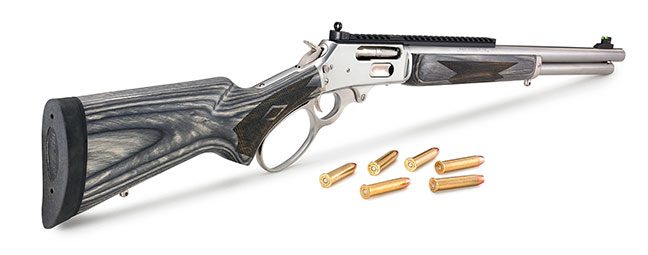
You are looking at a lever-action .45-70 and wondering whether it is the right deer rifle for the thick cover you hunt. It has a reputation as the best brush gun ever made, and another as a hard-kicking cartridge that drops like a rock past 150 yards. Both come from the same heavy bullet, and at least five rifles deserve a look, each with its own feel and its own ammunition advice.
By the end you will be able to choose a .45-70 lever gun that fits how and where you hunt, pick a load that suits both the rifle and the distance, manage the recoil so you can shoot well, and set a zero you can trust.
Why the .45-70 still works for deer, and what it asks of you
The .45-70 Government debuted in 1873 as a US military cartridge. It has stayed relevant thanks to its adaptability and raw stopping power. Modern loads are more efficient and flatter-shooting (out to 150 to 200 yards) than the older black powder loads, which makes the cartridge a robust choice for medium-sized game such as whitetail.
The heart of the idea is the bullet. Bullets generally range from 300 to 405 grains (a grain is a small unit of weight, with 7,000 in a pound), and that wide, heavy bullet makes a substantial wound channel for a quick, humane harvest. Many hunters also value it in brush. Heavy .45-70 bullets tend to carry through light cover, which appeals in the dense undergrowth typical of whitetail habitat, though no bullet is immune to deflection, so wait for a clear lane.
Then there is the rifle. Lever actions have a following of their own, with an engaging manual cycle and deep roots in American firearms history. Modern metallurgy, CNC machining and advanced sighting systems also make today's rifles more reliable and accurate than older ones.
Key idea: The .45-70 does its best work with a heavy, wide bullet at short to moderate range. Choosing a rifle and a load is mostly a matter of matching them to the distance and cover where you actually hunt.
Reading .45-70 ammunition: Bullet weight, trajectory and recoil
Picture throwing a softball and a shot put toward the same spot with the same effort. The shot put leaves slower and starts falling sooner, but it arrives with authority. Bullets behave in a similar way. Loads of 300 to 350 grains are favored for flatter trajectories (roughly 150 to 200 yards) and reduced recoil. Loads of 400 to 405 grains are the traditional heavy hitters, giving deeper penetration but a more pronounced drop. Neither is simply better. They are tools for different distances and different shooters.
| Brand and load | Bullet weight | Approx. velocity | Recommended use |
|---|---|---|---|
| Hornady LEVERevolution (FTX) | 325gr | ~2,000 fps | Extended range (~200 yds), flatter than classic loads |
| Federal HammerDown (Bonded SP) | 300-325gr | ~1,900-2,000 fps | Designed for lever feeds, deep penetration |
| Remington Core-Lokt | 405gr | ~1,300-1,400 fps | Old-school heavy bullet for close-range brush hunts |
| Winchester Super-X (JHP or FP) | 300-405gr | ~1,300-1,900 fps | Broad selection, standard hunting reliability |
| Barnes VOR-TX (TSX) | 300gr | ~1,850 fps | All-copper bullet, controlled expansion |
By speed, the loads fall into two groups. The 300 to 325 grain loads (Hornady LEVERevolution, Federal HammerDown and Barnes VOR-TX) run roughly 1,850 to 2,000 fps and suit longer shots out to about 200 yards. The 405 grain Remington Core-Lokt runs far slower and suits close-range brush hunts, where its old-school heavy bullet gets the job done. Winchester Super-X sits across both groups because it covers a broad selection of weights and speeds. Velocity and energy vary with barrel length and rifle specifics, so check your rifle's manual and ballistic charts.
Why bullet shape matters in a tube-fed rifle
Most of these rifles feed from a tubular magazine under the barrel, where cartridges sit end to end. A hard, pointed bullet could press on the primer of the round ahead of it, so the advice is to seek flat or round noses for tubular magazines. It is also why some loads are built with lever guns in mind. HammerDown, for example, uses a bonded bullet specifically engineered for lever-action feed reliability.
The overall length of a loaded cartridge (OAL) matters for the same reason. Some rifles may struggle with polymer tips or heavier bullet shapes, so always function test a load, which means cycling it through the rifle and checking that it feeds, chambers and ejects smoothly, before you rely on it.
A note on handloading
If you reload, remember that the .45-70 has historically recognized pressure tiers, and rifles of different eras are built to handle different levels. Stick to "lever gun safe" data from a reputable published source when loading for these rifles. Popular powders include IMR 3031, H4198 and RL7 for consistent velocities and adequate case fill. Hornady, Barnes and Speer all make .45 caliber bullets specialized for the .45-70.
Five lever-action .45-70 rifles and who each one fits
Five models consistently rank among the most sought-after for .45-70 enthusiasts. Each marries heritage with modern design. The table gives the numbers side by side, and the sections after it explain what those numbers feel like in the field.
| Rifle | Barrel | Magazine | Weight | Notable features |
|---|---|---|---|---|
| Marlin 1895 (Ruger-made) | 16.1" (Trapper), 18.5" (Guide/GBL), SBL | Typically 4+1 | ~7 lbs on average | Smooth cycling bolt, side ejection port, peep or ghost ring sights, some optics-ready |
| Henry H010 | 18.43" round barrel | Typically 4 rounds, tubular | ~7 to 7.5 lbs | No manual safety (half-cock notch), walnut furniture, side gate variation |
| Henry X Model | 19.8", factory threaded (commonly 11/16x24) | Typically 4 rounds, side gate plus removable tube | ~7.5 lbs | Polymer stock, large loop lever, M-Lok or Picatinny on some models |
| Winchester 1886 | Varies by model (Short Rifle and other configurations) | Typically 5 rounds, depending on barrel length | ~8 lbs | Walnut stocks, polished or color-case finishes, minimal safety beyond half-cock |
| Rossi Model R95 | Varies by model | Usually 4+1 | ~7 lbs | Top or side ejection, simpler internal parts, hardwood or walnut with a blued finish |
Notice that the weights cluster between about 7 and 8 pounds. That is light enough to carry through the woods and heavy enough to take some of the sting out of the recoil, and it explains why the heaviest rifle, the Winchester, is also the one that handles heavier loads most comfortably. The differences that matter most are barrel length, the safety arrangement and whether the rifle is set up for accessories.
Marlin 1895 (Ruger-made): The classic guide gun, refreshed
The Marlin 1895 design has seen various iterations, and under Ruger's stewardship, quality control and machining tolerances have noticeably improved. Three variants show the range. The 1895 SBL has stainless steel, a laminate stock, a large-loop lever and a Picatinny rail on top. The 1895 Trapper has a compact 16.1" barrel for dense brush and minimal overall length. The 1895 Guide/GBL has an 18.5" barrel, a wood or laminate stock and a more traditional look. The action cycles smoothly with updated internals and a side ejection port, and the sights are often Skinner-style peep sights or ghost rings. A peep or ghost ring sight is an aperture, a small hole you look through, which helps your eye center the front sight quickly. This is also a premium-priced rifle that reflects the quality control under Ruger's production.
For ammunition, the Hornady LEVERevolution 325gr FTX gives flatter trajectories out to about 200 yards, and the Federal HammerDown (300 to 325gr) is a bonded bullet built for lever-action feed reliability. Heavier 405gr loads suit those who prefer a more traditional approach. This rifle suits guide gun enthusiasts who want maneuverable barrels and robust construction for dense cover or short to medium range, and hunters wanting a "modern Marlin" that merges vintage charm with contemporary accuracy and reliability.
Henry H010: Traditional lines and a famously smooth lever
The H010 is 100% made in the USA and known for a smooth lever throw. The H010 Standard has an 18.43" round barrel, a tubular magazine and walnut furniture, and the side gate variation combines the classic removable magazine tube with a side loading gate. There is no manual safety. The rifle relies on a half-cock notch, a hammer position that stops the hammer partway back so it cannot fall on a cartridge. That appeals to lever-gun purists. The stock is straight American walnut with well-fitted recoil pads, and the price is mid-range, moving up with special finishes or wildlife engravings.
Good ammunition pairings are Winchester Super-X (300gr JHP or 405gr) for straightforward deer performance and Hornady LEVERevolution for extended range or ballistic tip improvements. With factory iron sights, accuracy is usually around 1.5 to 2 MOA at 100 yards. MOA, or minute of angle, is about one inch of spread per 100 yards, so that means roughly a 1.5 to 2 inch group, and our guide to understanding MOA explains the idea in depth. The H010 suits classic aesthetic fans who like polished bluing, an old-school lever cycle and minimal frills, and anyone who prefers simplicity with just a smooth lever and reliable feeding.
Henry X Model: Lever action for the modern hunter
The X Model is Henry's "tactical" lever approach, with a polymer stock, blacked-out metal and muzzle threading for accessories. Its 19.8" barrel has a factory thread (commonly 11/16x24) for suppressors or muzzle brakes. A large loop lever simplifies gloved operation, which matters on a cold morning, and some models have integrated M-Lok or Picatinny on the forearm for flashlights or bipods. The magazine typically holds 4 rounds, with a side gate plus a removable tube. Its price falls in the mid range.
Ammunition pairings include Barnes VOR-TX (300gr TSX), an all-copper bullet with reliable expansion, and Hornady LEVERevolution or Federal HammerDown for ballistic or feeding advantages. Heavier 405gr loads can be used, but a muzzle brake or suppressor helps tame the recoil. The Henry X suits modern shooters who want big bore power with a polymer stock, rails for optics or muzzle devices, and hog or brush hunters, since a handy barrel, a threaded muzzle and the .45-70's stopping power are an excellent combination for up-close hunts.
Winchester 1886: Heritage with modern build quality
The 1886 is a John Browning design from 1886, revered for its robust action. Today's models are produced in Japan by Miroku and imported by Winchester. Options include a Short Rifle and Deluxe or limited editions with fancy wood, color-case hardened receivers or octagon barrels. Historically it was one of the strongest lever designs, able to handle heavier .45-70 loads within safe lever thresholds. It has premium walnut stocks, polished or color-case finishes and minimal external safety beyond the half-cock. It is a premium-priced rifle, and special runs cost more.
Pair it with Remington 405gr for the vintage heavy bullet approach, or Hornady LEVERevolution for a more modern ballistic arc, provided the feed ramp accommodates polymer tips. Accuracy of about 1.5 to 2 MOA is common, though some owners see about 1 MOA with carefully matched ammunition. It suits collectors and traditionalists who value historical authenticity with modern reliability, and anyone who wants the craftsmanship and pride of ownership the Miroku 1886 is known for.
Rossi Model R95: A budget-friendly entry to the .45-70
The Rossi R95 aims to bring .45-70 lever action to price-conscious shooters, typically inspired by the 1895 or 1886 design. The furniture is basic hardwood or walnut with a blued finish. Capacity is usually 4+1, with top or side ejection and simpler internal parts than the premium brands. Safety varies by model year, with either no manual safety or a simple cross-bolt, so check the exact rifle in your hands. Its price is considerably lower than most Henry or Marlin equivalents.
For ammunition, Federal Power-Shok (300gr) or Winchester Super-X are cost-effective deer loads. Check the cartridge OAL, because some rifles may struggle with polymer tips or heavier bullet shapes, and always function test. Expect practical hunting accuracy out of the box, improving with upgraded sights or optics and consistent ammunition. It suits first-time big bore shooters who want .45-70 punch without a premium price, and anyone on a budget who hunts at typical ranges, though fit, finish or quality control might lag behind pricier brands.
How to choose among them
Start with your cover and your carry. If you hunt dense cover and want a handy rifle, the Marlin Trapper's short barrel is the one built for it. If you value tradition and simplicity, the Henry H010 is the straight-line choice, and if you want accessories and muzzle devices, the Henry X is. If heritage and a robust action matter most, the Winchester 1886 is the rifle, and if the budget matters most, the Rossi R95 is the way into the cartridge.
Then match the ammunition to the rifle, because each lever gun may prefer certain bullet weights or profiles. Test a few loads for the best feeding and accuracy before you decide. If you cannot pick between the two most popular lever-gun loads, our comparison of Hornady LEVERevolution and Federal HammerDown sets them side by side.
Common mistake: Assuming a bigger bullet always means a better deer load. A heavy 405gr bullet penetrates deeply but drops faster past 150 yards, and it kicks harder. If your shots are close, that is fine. If your shots are farther, a lighter bullet may serve you better.
Recoil: Why it happens and how to tame it
A 405gr bullet at about 1,400 fps in a 7 lb rifle can produce substantial recoil. The shoulder pushes back as hard as the bullet pushes forward, and a lighter rifle moves more. Many shooters then develop a flinch, an unconscious jerk of the trigger hand in anticipation of the kick, which pulls shots off target. You cannot out-aim a flinch. The goal is to reduce the kick enough that you stop expecting it, then build tolerance gradually.
- Proper stock fit. Make sure the rifle's length of pull (the distance from the trigger to the end of the stock) and comb height match your build, which reduces felt recoil.
- A quality recoil pad. It is a simple upgrade that can improve comfort a great deal, and some modern pads absorb much of the shock.
- Added weight or accessories. A few ounces from a scope mount or sling can offset the recoil impulse slightly.
- Muzzle brakes or porting. These help reduce shoulder punishment, though the muzzle blast gets louder, so hearing protection matters even more.
- Reduced recoil loads or mid-range bullet weights. Some manufacturers offer "reduced recoil" .45-70 loads for those concerned about flinching or shoulder fatigue.
Of these, stock fit and load choice are the best places to start, because they cost the least and change the most. Pads, brakes and weight are second steps if you still feel punished. After that, build the skill. Dry fire, which means practicing the trigger pull on a rifle you have verified is unloaded, helps you master the trigger break without a flinch. Then use gradual load progression, starting with lighter or mid-range loads and stepping up to heavier bullets or more potent powders as your comfort grows.
Good practice: If you start flinching, drop to a lighter load for a session and rebuild. Ten good shots with a mild load teach more than ten bad shots with a heavy one.
Choosing sights and optics for short-range deer woods
Many .45-70 lever guns come with buckhorn or ghost ring iron sights as standard, and they are effective under about 150 yards if your vision is good. If you prefer an optic, a low-power scope suits this kind of hunting. Options like 1-4x, 2-7x or a fixed 2.5x give you a wide field of view and a quick sight picture on a close animal in brush. Extended eye relief "scout scopes" (scopes designed to sit farther from your eye) or peep sights can also be beneficial.
For mounting, a receiver top rail is common on newer Marlin or Henry X models and allows red dots or low-magnification scopes. Some shooters prefer a scout configuration, with the optic mounted forward, which frees up the receiver top for quick reloading or quick target acquisition. If you are weighing scopes, our article on what the numbers on a rifle scope mean explains magnification and field of view.
Hunting deer with a .45-70: Zero, range and handling
Many hunters use a 100 or 150 yard zero. Establish yours at 100 yards, then confirm your drop chart if you are using heavier bullets or LEVERevolution loads. Heavier 405gr bullets can have a steep drop past 150 yards, and lighter 300 to 350 grain or polymer-tip bullets help flatten out your trajectory. Our guide to sighting in rifles at different distances shows how to turn a zero into a drop chart.
On shot placement, the .45-70 makes large wound channels, so the job is to focus on vital-zone shots. Maximum ethical range is typically 150 to 200 yards, beyond which bullet drop becomes significant unless you use a ballistic reticle or a carefully dialed scope. Treat that as a ceiling, not a target. Your own limit is the distance at which you can put every shot into the vital zone from a hunting position, and our article on hunting ethics explains why that line matters.
In the field, practice lever cycling until it is smooth, so you do not lose your sight picture or waste time, and keep the action well lubricated. Modern rifles may have cross-bolt or tang safeties, so familiarize yourself with yours to avoid accidental discharges, especially in thick brush. On a rifle with no manual safety, such as the Henry H010, your safety is muzzle and finger discipline. Keep the muzzle in a safe direction and your finger outside the trigger guard until you are on target and ready to shoot.
Zeroing and learning your drop
One load and one range session give you what you need. With eye and ear protection on and the muzzle downrange, shoot a three-shot group at 100 yards from a steady rest, then adjust and confirm your zero. Holding the same aim, shoot at 150 yards and measure how far below your zero the group lands; repeat at 200 if you hunt that far. Cycle the lever between shots with your head on the stock and your eyes on the target, so working the action stops pulling you off the sight picture. Dry fire at home, with the rifle verified unloaded, builds a clean trigger press without the recoil.
Putting it together
The .45-70 does hit hard and penetrate deeply, which is why it shines in thick cover, and its heavy bullets do drop quickly at longer range and push back hard, which is why it rewards a hunter who keeps shots modest and practices. Choose the rifle that fits your hands and budget, match the load to the rifle's feeding and your distances, tame recoil with fit and technique, and set a zero for the ranges you actually hunt. In Iowa's shotgun seasons, the .45-70 fits the .350 to .500 caliber window, but confirm the current rules before the season.
Check your understanding
Try answering these before you open the answer. If you can decide what to do and explain why, you have it.
1. You hunt from a stand and expect shots out to about 200 yards. Would you choose a 325gr LEVERevolution or a 405gr Core-Lokt, and why?
The 325gr LEVERevolution. Lighter bullets give flatter trajectories out to about 150 to 200 yards and less recoil, while the 405gr is better suited to close-range brush with a more pronounced drop.
2. A friend wants to load pointed spitzer bullets in his tube-fed lever gun because they fly flatter. What's the danger?
In a tube magazine the cartridges sit nose to primer. A hard, pointed bullet can press on the primer of the round ahead of it under recoil and set it off. Flat or round noses, or a soft-tipped design like Hornady's FTX, avoid that.
3. You hunt dense brush and want a maneuverable rifle you can operate with gloves on. Which features should you look for?
A shorter barrel such as the Marlin 1895 Trapper's 16.1", and a large loop lever, which simplifies gloved operation. Low-power optics or iron sights suit brush distances.
4. A new Rossi R95 will not feed a polymer-tipped load smoothly. What should you do?
Check the cartridge OAL and function test the load. Some rifles struggle with polymer tips or heavier bullet shapes, so choose a load that feeds reliably in your rifle.
5. You are flinching with heavy loads. What changes would you make, and in what order?
Start with stock fit and a lighter or mid-range load, then consider a recoil pad, added weight or a brake. Build skill with dry fire and a gradual load progression.
Where to go next
You can find .45-70 lever-action rifles and ammunition on our website, including Federal HammerDown and Fusion .45-70 loads, and anything listed there can be ordered if it isn't in stock.
If you are still undecided about ammunition, start with Hornady LEVERevolution vs Federal HammerDown, because those two loads show up on nearly every rifle above. Then read the legalities of hunting in Iowa and neighboring states to confirm which firearms are allowed for the season you plan to hunt. And if you want to see more than iron sights can offer, understanding rifle scopes is the next logical read.
If this article helped you, we invite you to sign up for email notifications of new blog articles.