
Out-of-the-Box Hunting Rifle Quality: What to Expect at $500, $1000, $1500, and $2000 Price Points
Joseph McLain Nov 07, 2026
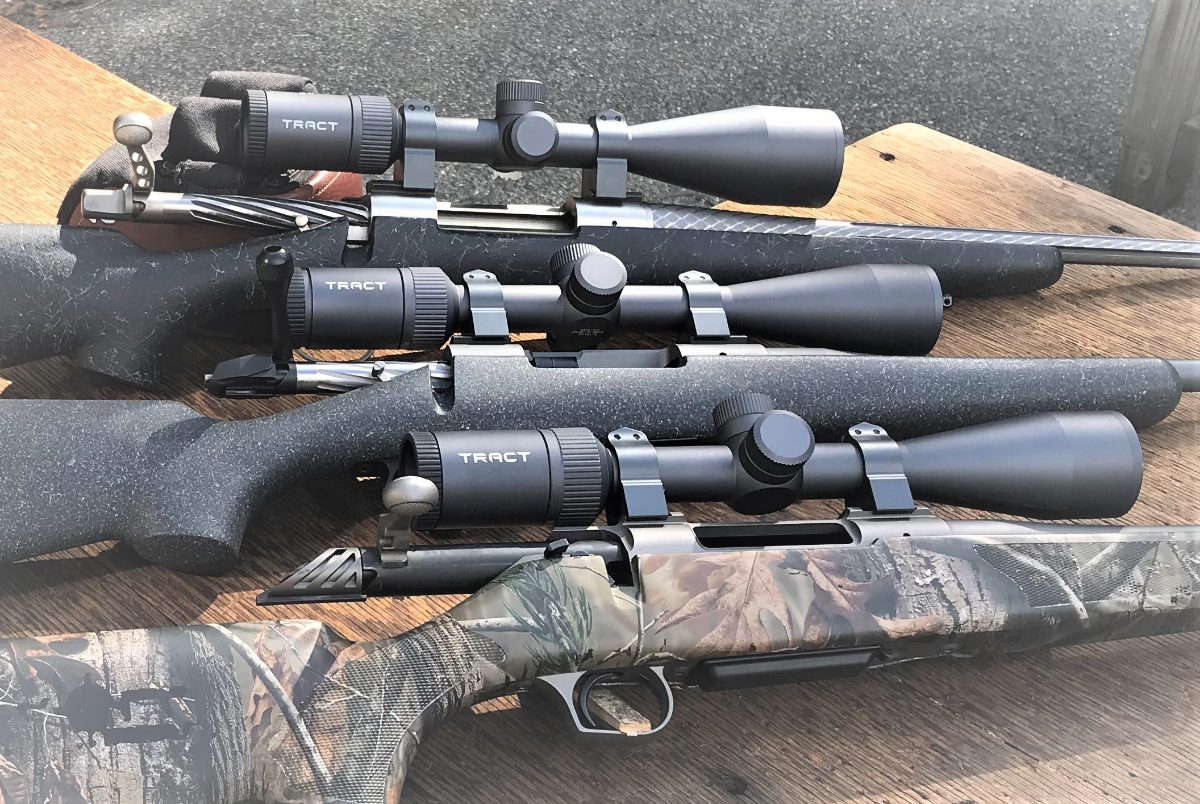
Hunting rifles run from around $500 to $1,000 and well beyond. They all fire the same cartridges, and any of them can put a deer in the freezer. Will a $500 rifle shoot as well as you need, or do you get what you pay for? What is the extra money actually buying, and is it worth it for the way you hunt?
By the end you will be able to read a rifle's price as a set of specific features, decide which ones matter for your hunting, and avoid spending money in the wrong place.
What a higher price actually changes in a hunting rifle
A rifle's price tag is not just brand prestige. Components, manufacturing processes and attention to detail vary widely across price tiers, and the differences show up in four places you can feel and measure. Many hunters prefer a rifle that is ready to perform right out of the box, even though barrels, triggers and stocks can all be upgraded later, so it helps to know what each tier delivers on day one.
Accuracy is usually described in MOA, or minute of angle, which is about one inch of group size for every 100 yards. A rifle that shoots 2 MOA puts its shots inside roughly a 2 inch circle at 100 yards and a 4 inch circle at 200 yards. A sub-MOA rifle shoots groups smaller than an inch at 100 yards. A quick way to find yours is to divide the group size in inches by the distance in hundreds of yards, so a 3 inch group at 200 yards is about 1.5 MOA.
Durability is how well the rifle holds up in harsh weather, through many recoil cycles, or in high-volume shooting. Trigger feel ranges from a heavy, non-adjustable unit to a crisp, user-adjustable match trigger, and it matters because a heavy, gritty pull moves the rifle as you squeeze, while a crisp break lets it stay on target. Stock quality covers ergonomics, bedding (how the action sits in the stock) and recoil management, and a stiff, well-fitted stock keeps the point of aim steady from shot to shot.
Key idea: Most of what you pay for is consistency. A better rifle repeats itself, with a barrel that behaves the same on shot ten as on shot one, a trigger that breaks the same every time and a stock that does not flex. Tighter groups are the result.
The material behind those four points is covered in more depth in our articles on rifle barrel design and choosing a rifle stock, and the sections below show how each tier handles them.
The four price tiers at a glance
| Tier | Typical accuracy | Trigger | Stock | Realistic range | Representative models |
|---|---|---|---|---|---|
| Around $500 | ~1.5-2 MOA | Non-adjustable or basic adjustable, often 4-6 lbs | Injection-molded synthetic | 100-300 yards | Savage Axis II, Ruger American Ranch |
| Around $1000 | 1 MOA or better with good ammo | Adjustable, crisp break around 3-4 lbs | Better synthetic or laminate wood | Roughly 300-500 yards | Tikka T3X Lite, Browning X-Bolt Hunter |
| Around $1500 | Sub-MOA, many approach 0.5-0.75 MOA with match ammo | Crisp, often user-adjustable; commonly set around 2.5-3.5 lbs for hunting | Carbon fiber or advanced laminate, with pillars or bedding blocks | 500-600 yards | Christensen Arms Mesa and similar premium production rifles |
| $2000+ | Sub-MOA expected, some 0.5 MOA or better with suitable ammo | Match-quality feel with minimal overtravel; can go lighter, but most hunters keep 2.5 lbs or more | Full carbon fiber or premium composite, multi-axis adjustable | 600+ yards | Proof Research Elevation, Seekins Precision Havak Pro Hunter |
From top to bottom, the table is a staircase. Each step shrinks the group, lightens and cleans up the trigger, makes the stock more adjustable and stretches the range at which the rifle itself is not the limiting factor. At 200 yards, 2 MOA, 1 MOA and 0.5 MOA are roughly 4, 2 and 1 inch groups, so you can see how much room each tier gives you for your own shooting errors. The steps also get smaller as the price climbs. Moving from 2 MOA to 1 MOA is a much bigger change in what you will see on target than moving from 0.75 MOA to 0.5.
Around $500: Budget-friendly and functional
At around $500 you generally get a no-frills hunting rifle that is adequate for deer-sized game within moderate ranges of 100 to 300 yards. The stock is typically an injection-molded synthetic, which is lightweight but can feel hollow or less refined, with minimal adjustability. Some have checkering or molded texturing, but usually not an adjustable comb or butt pad.
The barrel is mass-produced, often cold hammer-forged or button-rifled, which are two efficient ways to cut the rifling, and it is good enough for roughly 1.5 to 2 MOA. It might not handle rapid heating as gracefully as a higher-end barrel, so groups can open up as it gets hot during a long string of shots. The action is a simple bolt design with minimal polishing. It is functional, though cycling may feel stiff or slightly rough. The trigger is usually non-adjustable, or a basic adjustable design with a heavier pull of 4 to 6 lbs. Some budget rifles, like the Savage Axis II, include a better trigger (the AccuTrigger), but that is not universal.
With decent factory ammunition, expect around 1.5 to 2 MOA, which is fine for typical hunts up to 300 yards, although headshots on varmints might be trickier. You must do your part with good fundamentals, and potentially some minor bedding improvements if you want consistent groups.
- Savage Axis II. The AccuTrigger allows a somewhat lighter, crisper break, and it is known for out-of-the-box accuracy that is surprisingly good for its price. See our guide to the Savage Axis line.
- Ruger American Ranch. Short, handy barrels in popular calibers, with good reliability for small to medium game hunts, and often a decent (if simple) marksman adjustable trigger. See our guide to the Ruger American Ranch series.
This tier is for beginners, budget-conscious hunters, or someone wanting a backup or rainy-day rifle. If you can accept a simpler stock and a heavier trigger, these rifles will harvest deer effectively at normal ranges.
Around $1000: Mid-tier performance and better features
Around $1000, rifles step up in build quality, barrel refinement and stock design. The stock may be a higher-quality synthetic, with fiberglass reinforcement or better ergonomics, or a laminate wood stock. The shape and checkering give a more comfortable hold, and some have adjustable comb height or recoil pad systems.
Barrels typically have better finishing and consistent rifling, and are potentially free-floated from the factory. Free-floated means the barrel does not touch the stock along its length, so it vibrates the same way each shot and the stock cannot push on it. The action is smoother, with better lock-up and minimal slop (the play that lets parts shift). Bolts are often lightly polished or have better lug engagement, which means the locking lugs seat more evenly and help accuracy.
Adjustable triggers are common here, with a crisp break in the 3 to 4 lb range or a user-tunable design. Some rifles have specialized trigger systems (Tikka T3X, Browning's adjustable triggers) that can approach a near match-grade feel. Sub-MOA potential becomes increasingly common, and 1 MOA or better with good ammunition is a realistic expectation, which supports consistent hits at mid to longer ranges of roughly 300 to 500 yards.
- Tikka T3X Lite. Loved for its smooth bolt action, with a light, crisp trigger and a factory accuracy guarantee of 1 MOA (three-shot groups at 100 yards).
- Browning X-Bolt Hunter. A classic walnut stock and adjustable feather trigger in a balanced design for general big-game hunts, with that "premium but not overly expensive" feel. See our comparison of the Browning A-Bolt and X-Bolt.
This tier suits hunters who want a step up from budget rifles and need moderate to long-range capability, comfortable stocks and better triggers. You value a consistent sub-MOA grouping for longer shots or precise shot placement on big game.
Around $1500: Premium features and enhanced precision
At around $1500 you enter the premium production tier, with advanced materials, better finishing and sometimes partial custom touches. Stocks are carbon fiber or advanced laminate, or a higher-quality synthetic with pillars or full aluminum bedding blocks (rigid supports that hold the action steady). They may have an adjustable comb, length of pull systems or shapes for prone or bench shooting, and they are typically engineered for less flex and a more stable point of aim.
Barrels are often free-floated and possibly fluted, with grooves cut to reduce weight while maintaining stiffness. Some are hand-lapped (polished by hand) or use better steel for longevity and consistent internal dimensions, and you should expect extremely consistent muzzle crowns, the finished end of the barrel where the bullet exits. Triggers are crisp and often user-adjustable from reputable makers or in-house custom designs, and Timney or match triggers might be standard. Many can be set quite light, but for a rifle carried in the field, where cold or gloved fingers and the stress of a shot at game come into play, a pull of about 2.5 to 3.5 lbs is a common, safer choice.
Sub-MOA is common at this level, and many rifles approach 0.5 to 0.75 MOA with match ammunition in stable conditions. That makes it a strong choice for hunts requiring absolute confidence at 500 to 600 yards or serious predator and varmint control.
- Christensen Arms Mesa. A lightweight design with stainless, fluted or carbon barrels in certain variants, aimed at backcountry hunters who need top-tier performance without excessive weight.
- Sako. Known for refined finish, tight tolerances and smooth actions, for hunters who want a high-end production rifle with strong accuracy out of the box. Sako's lineup and prices change over time, so check its current models, some of which sit in a higher tier.
This tier is for serious hunters who do more demanding hunts, such as mountain hunts or long-range shots, or who want a near semi-custom feel in a factory rifle. You pay more but get reliability and near match-level precision.
Safety: A lighter trigger is not automatically better for hunting. Pulls of 1 to 2.5 lbs reward good trigger discipline, so keep your finger off the trigger until you are on target and ready to shoot, especially with cold hands or gloves.
$2000 and up: Maximum precision and craftsmanship
At $2000 and beyond you are looking at high-end or semi-custom rifles. Stocks are full carbon fiber or premium composite with advanced bedding systems, or possibly custom wooden stocks with intricate checkering, with a multi-axis adjustable comb and butt plate for a perfect shooter fit.
Barrels are match-grade and hand-lapped, possibly carbon-wrapped or in thick bull profiles. Actions may be blueprinted (machined to exact specifications) or custom, with extremely tight tolerances, a smooth bolt throw and improved lock time, which is the delay between releasing the trigger and the firing pin striking the primer. Some actions use stainless or exotic materials for maximum durability. Triggers are often match-level, set in the 1 to 2 lb range with a crisp break and minimal overtravel (the extra movement after the trigger breaks). Some use recognized boutique trigger brands or in-house custom triggers with advanced sear geometry.
Sub-MOA is expected, and some rifles are built to hit 0.5 MOA or better with suitable ammunition. They are capable of consistent performance well beyond typical hunting distances (600+ yards), which for certain hunts can be an advantage.
- Proof Research Elevation. Known for carbon-fiber-wrapped barrels that combine light weight with match-level precision, and perfect for demanding mountainous hunts.
- Seekins Precision Havak Pro Hunter. A lightweight yet robust design with a fully adjustable stock, built for extreme range accuracy, with a smooth action and top-tier fit and finish.
This tier is for hunters who demand the absolute best, such as professionals, guides or enthusiasts wanting a near-custom rifle for extended-range hunts or tough environments. The higher cost invests in craftsmanship, consistent sub-half-MOA performance and long-term reliability.
What else decides how your rifle performs
A rifle is only one part of the system. Ammunition and optics can make or break the accuracy you paid for, and the best results come from matching them to the tier.
- Around $500. Standard or mid-priced hunting ammunition such as Federal Power-Shok or Hornady American Whitetail, which is great for deer out to about 200 yards.
- Around $1000. Match and hunting lines such as Hornady Precision Hunter, Federal Fusion or Hornady Black can exploit the better performance, with sub-MOA potential.
- Around $1500. Modern premium ammunition such as Hornady ELD-X or Federal Terminal Ascent, which often extends effective range and gives consistent groups.
- $2000 and up. Match and hunting combinations from Lapua, Hornady Match or Federal Gold Medal, for consistent 0.5 MOA at distance.
The pattern is simple. A rifle that can group 0.5 MOA is wasted on ammunition that cannot, and an inexpensive rifle gains little from the priciest load. If you invest in a top-tier rifle, match it with top-tier ammunition for the best results.
Optics matter as much as the rifle's inherent accuracy. A $1500 rifle with a $200 scope can underperform a $500 rifle with a $1000 optic, because you can only hit what you can see clearly and hold on. Bipods, slings and muzzle devices also enhance or hamper performance, so do not skimp on accessories if you are climbing the price ladder for the rifle itself. Our article on what the numbers on a rifle scope mean explains what to look for.
Common mistake: Buying a rifle for the shot you might take someday instead of the shots you take every season. Your rifle's capability and your own are two different numbers, and the second one is usually smaller. Spend the difference on a good optic, good ammunition and range time.
Which tier fits the hunting you actually do
Out-of-the-box hunting rifle quality naturally scales with price. The real question is how accurate and refined your rifle must be for your hunting style, environment and personal taste. Three situations show how the tiers line up.
- Deer at 200 yards. Even a $500 rifle is adequate if you practice. If you shoot a handful of rounds each season for local whitetail, it can absolutely get the job done.
- Elk at 500 yards. A mid- to premium-tier rifle gives you the sub-MOA capability that helps reliable shot placement. If you chase elk in open country or regularly shoot beyond 400 yards, investing $1000 to $1500 might significantly improve your success.
- Competition or specialized hunts. Premium rifles help if you want extreme accuracy or face tough conditions, such as Alaskan hunts. For the absolute best craftsmanship, advanced materials and guaranteed sub-MOA or half-MOA performance at extended distances, the $2000+ range is your go-to.
For standard deer hunts in typical wooded or open terrain, a mid-tier rifle at $1000 is often the sweet spot. If you want to "buy once, cry once" or you are a ballistic perfectionist, jump to the $1500 or $2000 bracket. Recognize your true needs, whether that is a rifle that endures repeated hunts in rugged climates or just an accurate, dependable rifle for standard whitetail hunts, and align your budget accordingly. Regardless of tier, modern manufacturing means even lower-priced rifles can deliver the accuracy needed for ethical shots with the right practice and ammunition.
Finding your rifle's real MOA
Before you spend on a better rifle, measure the one you have. With one load you trust, a steady rest at 100 yards, eye and ear protection on and the muzzle downrange, shoot three groups of three shots, letting the barrel cool between groups. Measure each group from the centers of the two farthest holes; at 100 yards, inches are very nearly MOA. The average of the three is your rifle's real accuracy with that load, and comparing it with the tier table shows whether the rifle, the ammunition or your hold is the limiting factor, and so whether your next dollar belongs in the rifle, the ammunition, the optic or practice.
Putting it together
A well-made $500 rifle with good ammunition really can do everything most deer hunters ask of it inside 300 yards. The extra money buys smoother actions, better triggers, stiffer stocks and more consistent barrels, and those matter most at longer distances, in harsh conditions or when the rifle has to be light. Decide how far you will realistically shoot and where you will carry the rifle, buy the tier that serves that, and put the rest of the budget into optics, ammunition and practice.
Check your understanding
Try answering these before you open the answer. If you can decide what to do and explain why, you have it.
1. Your rifle puts three shots into a 3 inch group at 200 yards. About how many MOA is that, and which tier does that resemble?
About 1.5 MOA, since 200 yards is two hundreds of yards and 3 divided by 2 is 1.5. That is in the range typical of an around-$500 rifle, or a better rifle with ammunition that does not suit it.
2. Your rifle groups well from a rest, but in the field your shots wander when you press a heavy, gritty trigger. Would a trigger upgrade help even though it does nothing to the barrel?
Yes. A heavy, gritty pull moves the rifle while you squeeze, which pulls the shot off the aim point. A crisp, lighter break lets the rifle stay still as it fires.
3. Why might a $500 rifle with a $1000 optic outperform a $1500 rifle with a $200 scope?
You can only place a shot as well as you can see and hold the target. A better optic can offset a rifle's accuracy limit, while a weak optic can waste a more accurate rifle.
4. You hunt local whitetail with a handful of rounds each season. Which tier is enough, and where should extra money go?
A $500 rifle can absolutely get the job done. Extra money is better spent on a good optic, suitable ammunition and range practice than on a more expensive rifle.
5. You hunt deer to 350 yards across open fields and are choosing between a $500 and a $1,000 rifle. Why is the $1,000 tier often the sweet spot for that kind of hunting?
It brings a smoother action, a crisper adjustable trigger, a better stock and realistic 1 MOA or better accuracy with good ammunition, which covers mid to longer ranges without the cost of the premium tiers.
Where to go next
Since MOA is the language of this whole article, read understanding MOA next to see how it connects to drop and adjustments. Understanding rifle scopes follows naturally because optics matter as much as the rifle. If you are deciding where ammunition fits in your budget, ammunition quality, from cheap to match grade helps you spend wisely. And because a rifle's capability is not the same as your own, hunting ethics is a good companion read.
If this article helped you, we invite you to sign up for email notifications of new blog articles.