
Binoculars for Iowa Hunters: What 8x42 and 10x42 Mean and How to Choose
Joseph McLain Nov 07, 2026
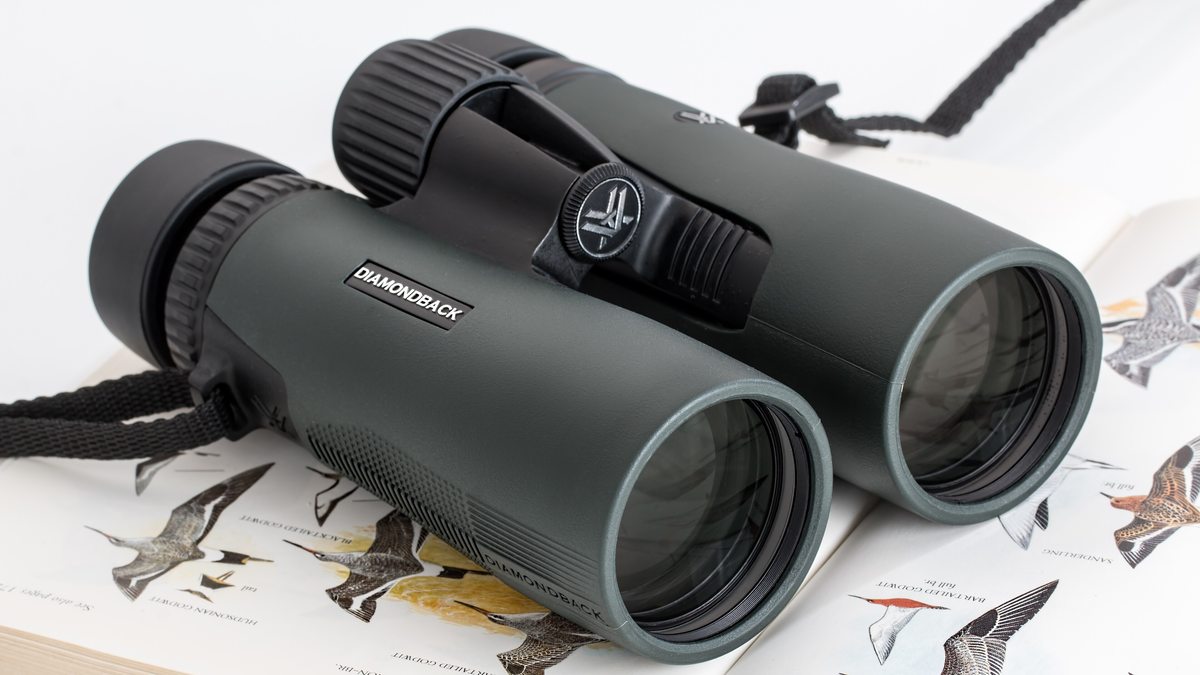
It is the first morning of shotgun season and you are on a fence line overlooking a picked bean field with timber behind it. In the gray light before shooting hours, something moves at the edge of the trees. Is it a doe, a buck or another hunter in orange working toward his stand? You could raise your gun and look through the scope, but you know better. You reach for your binoculars, and for the first time you wonder whether the ones you bought on sale years ago are any good.
Do you need 10x, or is 8x steadier and brighter? Should you spend as much as you did on your scope, or will any binocular do in Iowa, where you rarely see far? The numbers on a binocular describe real trade-offs, and the best choice depends on where and when you hunt.
By the end you should be able to read a binocular's specifications, understand how magnification, objective size and exit pupil affect what you see at dawn and dusk and what makes one binocular clearer than another, set one up for your eyes, and pick the right size for how you hunt.
Why a hunter needs binoculars, not just a scope
The most important reason is safety. A riflescope is a sight, and looking through it means pointing your firearm at whatever you are looking at. That shape at the edge of the timber could be another hunter, a farmer checking cattle or a kid on a four-wheeler. Binoculars let you look closely at anything without pointing a gun at it. Think of them as your eyes and your scope as your trigger finger. You do not want them to be the same tool.
Binoculars are also simply better for looking. With two eyes instead of one, you see with depth, you can look for longer without eye strain, and the field of view is usually wider. That makes them much better for picking apart brush, spotting the flick of an ear or watching a deer to see whether it is a buck.
Carry binoculars on every hunt and never use your scope to look at something you have not already decided is a legal target.
Key idea: Binoculars are for looking; your scope is for aiming. Keeping those jobs separate is one of the simplest ways to keep yourself and other hunters safe.
Reading the numbers: 8x42, 10x42 and beyond
Every binocular has two numbers. The first is magnification. An 8x binocular makes things look eight times closer than they appear to your bare eye. The second is the diameter of each front lens, called the objective, in millimeters. A 42 mm objective is a common full-size binocular.
More magnification sounds like more is better, but it has costs. Every bit of shake in your hands is magnified too, and the field of view, the width of what you see, gets narrower. A 10x binocular will make a deer look bigger, but it will also make it bounce more in the image and make it harder to find in the first place.
A larger objective lens gathers more light, which helps at dawn and dusk. But larger objectives also make the binocular heavier and bulkier. A 10x50 sounds great on paper, but you will carry it around your neck for hours.
Choose magnification for your typical distance and steadiness, and choose objective size for how dark it gets when you hunt and how much weight you are willing to carry.
Exit pupil: Why some binoculars look brighter at dawn
Exit pupil is the size of the little circle of light you see if you hold a binocular at arm's length and look at the eyepiece. You can calculate it by dividing the objective size by the magnification. An 8x42 has an exit pupil of about 5.25 mm. A 10x42 has about 4.2 mm.
Your own pupil gets larger in dim light to let in more light. In young eyes, it can open to around 7 mm. With age, the maximum shrinks, often to around 5 mm or less. When the binocular's exit pupil is at least as large as your pupil, you get the most light the binocular can deliver. When it is smaller, the image looks dimmer in low light, even if the glass is excellent.
| Binocular | Exit pupil | What it means at dawn and dusk |
|---|---|---|
| 8x32 | 4 mm | Light and compact, but dimmer in the last light |
| 8x42 | 5.25 mm | A bright, steady all-around choice |
| 10x42 | 4.2 mm | More detail at distance, a little dimmer and shakier |
| 10x50 | 5 mm | Bright with more magnification, but heavier |
Keep Iowa shooting hours in mind. Deer shooting hours run from a half hour before sunrise to a half hour after sunset, and those first and last minutes are often when deer move. A binocular with a larger exit pupil will show you more in that window. Notice that the 8x42 and 10x50 come out close in brightness, but one is much lighter to carry. That is why 8x42 is such a common choice.
Glass quality: What you pay for
Two binoculars with identical numbers can look completely different. The difference comes from the glass, the coatings and how carefully they are made.
- Lens coatings. Thin layers on the glass reduce reflections, so more light reaches your eye; "fully multi-coated" means every glass surface has several layers.
- Low-dispersion glass. Often labeled ED or HD, it reduces color fringing, the purple or green outlines on dark branches against a bright sky.
- Prism coatings. In roof-prism binoculars, phase and reflective coatings keep the image sharp and bright.
- Sealing. Waterproof and fog-proof binoculars are sealed and filled with a dry gas, so they do not fog inside when you go from a warm truck to a cold stand.
Of these, coatings and sealing do the most work for a typical hunter, because they decide whether the binocular is bright and clear in low light and still works after a wet morning. Better glass shows its value most in the last light of the day and when you are trying to pick a deer out of brush.
You will also see two body styles. Roof-prism binoculars are straight, slim tubes that are easy to carry. Porro-prism binoculars have the familiar offset shape. Porro designs can deliver excellent images for the price, while roof designs are more compact and usually more weatherproof at a given price.
When budget is limited, a well-made, sealed, fully multi-coated 8x42 is a better buy than a cheaper binocular with bigger numbers.
Choosing for how you hunt in Iowa
Iowa hunting covers a lot of ground, from thick timber and river bottoms to open crop fields and grasslands. The right binocular follows the terrain.
Timber and river bottoms
In the woods, most deer are seen inside 100 yards, often moving through brush. A wide field of view and a bright image matter more than magnification. An 8x42 or even 8x32 lets you find the deer quickly and see it clearly in the shadows.
Field edges and open country
When you watch a long field edge or a hillside of grass, a 10x42 helps you judge antlers and spot a coyote across the pasture. Because 10x magnifies shake, rest the binocular against a tree, a fence post or your knees.
Turkey and late-season hunts
In spring, binoculars help you study a strutting tom and look for beards in tall grass. In late season, they help you pick out deer bedded in snow-covered cover. Bright, sharp glass makes both easier.
If you hunt mostly timber, choose 8x. If you hunt mostly open fields, consider 10x. If you do both and can own only one, 8x42 is the safest single choice.
Common mistake: Buying 12x or higher binoculars for general Iowa deer hunting. Without a tripod, most people cannot hold them steady, and the narrow field makes it hard to find a deer in the first place.
Setting up binoculars for your eyes
Many hunters never adjust their binoculars, and they never see what the glass can really do. Three adjustments make a big difference.
First, set the width. Bend the two halves until you see one round image, not two overlapping circles. Second, set the eyecups. If you wear glasses, twist or fold them down; if not, extend them so your eyes sit at the right distance. Third, set the diopter, the small adjustment, usually on the right eyepiece, that corrects for differences between your two eyes.
To set the diopter, look at something with fine detail, such as a sign. Close your right eye and focus with the center wheel until the image is sharp in your left eye. Then close your left eye and turn only the diopter until the image is sharp in your right eye. Open both eyes. From then on, use only the center wheel. Note where the diopter is set so you can return it if it gets bumped.
Good practice: A binocular harness that holds the glass on your chest keeps it from swinging, protects it and makes it much more likely you will use it. Binoculars left in a pack seldom get used.
How to glass instead of just looking
Glassing means searching an area methodically, not just raising the binocular when you see something. It is how experienced hunters see deer that others walk past.
Pick a section of cover and search it in overlapping strips, like mowing a lawn. Look for pieces of a deer instead of a whole deer: The horizontal line of a back, the flick of a tail, an ear, the shine of an antler or an eye. Look into shadows and under branches. Then move to the next section. Rest your elbows on your knees or the binocular against a tree so the image holds still.
Glass before you move, and glass again every time you stop. It is better to spend ten minutes searching than to walk into a deer you would have seen.
Testing binoculars in the last light of day
The last minutes of legal light show what a binocular is worth. Take yours outside about twenty minutes before sunset and stay until a half hour after, with width, eyecups and diopter set as described above. Every five minutes, look at a dark spot at the edge of a tree line or a shadowed corner of a building, and note when detail disappears to your bare eyes and when it disappears through the binocular. Comparing two binoculars side by side in the same light makes the differences plain, and tells you which you'd want in the stand.
Putting it together
Binoculars let you see game, other hunters and everything around you without pointing your firearm at anything. Magnification makes things look closer but magnifies shake and narrows the view. A larger objective gathers more light but adds weight. Exit pupil explains why some binoculars look brighter in the dawn and dusk minutes that matter most in Iowa. Glass quality, coatings and sealing decide how clear and reliable the image is.
For most Iowa hunters, a sealed, fully multi-coated 8x42 is the best all-around choice. Hunters who glass open fields may prefer 10x. Whatever you choose, set it up for your eyes, carry it where you can reach it and learn to glass methodically.
Check your understanding
Try answering these before you open the answer. If you can decide what to do and explain why, you have it.
1. Something moves at the edge of the timber before shooting hours. Why raise binoculars instead of your scope?
Looking through the scope means pointing your firearm at whatever you're looking at, which could be another hunter. Binoculars let you identify it without pointing a gun at anyone.
2. You're comparing an 8x42 and a 10x50 for dawn hunts. What is the 10x50's exit pupil, and why does it matter?
About 5 mm: the 50 mm objective divided by 10x. The 8x42's is about 5.25 mm. A larger exit pupil delivers more light to your eye in dim conditions, up to the size your own pupil can open, so both are bright at dawn, with the 8x42 a touch brighter and steadier.
3. You hunt mostly thick timber where deer appear inside 80 yards. Which magnification fits better, 8x or 10x?
8x. It gives a wider field of view and a steadier, brighter image, which helps you find and see deer quickly at short range in shadowed cover.
4. Your binocular shows two overlapping circles and the right side looks a little blurry. What should you adjust?
Adjust the width until you see one image, then set the diopter so the right side is sharp after focusing the left side with the center wheel.
5. Your binocular fogs inside every time you leave the warm truck. What does that tell you?
It is likely not sealed and gas-filled. A waterproof, fog-proof binocular is sealed with a dry gas inside so moisture cannot condense on the inner lenses.
Where to go next
Once you can see a deer clearly, the next question is often how far away it is, which our article on rangefinders explains. For the ethics of when to shoot and where to aim, read hunting ethics. If you hunt late in the season, cold shot accuracy covers how cold changes your rifle and your shooting. And to understand the scope on your rifle as well as you understand your binocular, see understanding rifle scopes.
If this article helped you, we invite you to sign up for email notifications of new blog articles.