
Hornady's .350 Legend Ammunition: A Deep Dive for Deer Hunters
Joseph McLain Nov 07, 2026
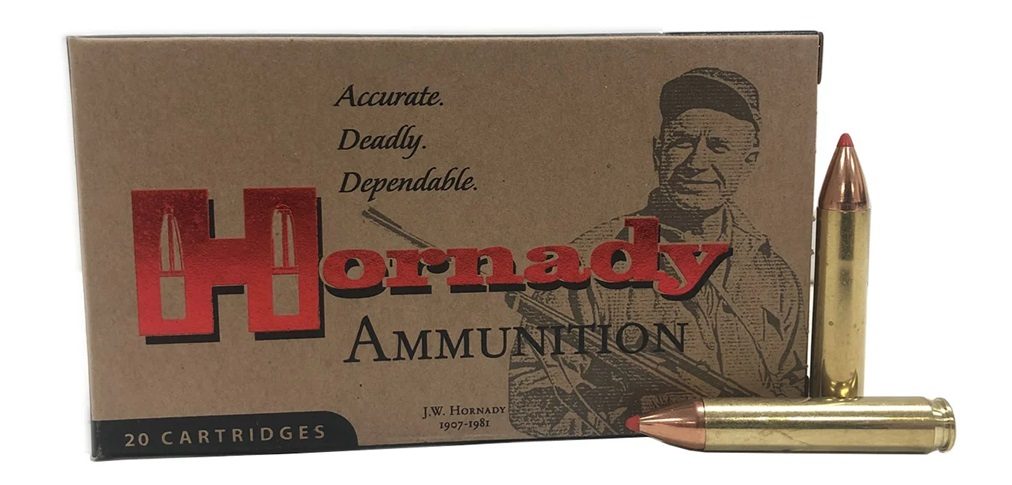
Deer season is a few weeks away and you have a new rifle in .350 Legend. Three Hornady boxes fit it: a plain soft point, a tipped bullet that costs more, and a heavy subsonic load made for suppressors. They all say .350 Legend on the front, and each is built for a different kind of shot.
By the end you should be able to pick the Hornady load that fits your rifle, your hunting spot and your shooting, and prove it at the range before opening day.
Why so many Iowa deer hunters choose the .350 Legend
The .350 Legend is a straight-walled cartridge, which means the sides of the case run straight from base to mouth instead of narrowing at a shoulder like a .30-06. Winchester introduced it in 2019 for states that restrict deer rifles to straight-walled or larger-diameter cartridges. In Iowa, rifles used for deer must fire a bullet at least .350 inch and no more than .500 inch in diameter, and the .350 Legend's .357-inch bullet meets that rule; the Iowa DNR's deer hunting guidance confirms the .350 Legend is legal. Seasons and weapon rules can change, so check the current Iowa Hunting and Trapping Regulations each year, and see straight-walled cartridges for deer hunting for other states.
The rules explain why the cartridge exists, and its manners explain why it caught on. It has mild recoil for a deer cartridge, so new and young hunters can practice without developing a flinch. Ammunition is widely available and reasonably priced. It works in bolt-action rifles, single-shots and AR-style rifles built for it. Its limit is reach: Its bullets are relatively blunt and slow compared with traditional bottlenecked deer cartridges, so they drop and lose energy faster. Think of it as a dependable pickup truck rather than a sports car. It does the everyday Iowa deer job very well, inside its range.
The three Hornady loads most deer hunters choose between
| Load | Bullet | Weight | Listed muzzle velocity | Muzzle energy | Built for |
|---|---|---|---|---|---|
| American Whitetail | InterLock soft point | 170 grains | About 2,200 fps | About 1,830 ft-lbs | Everyday deer hunting at typical distances |
| Custom FTX | FTX polymer-tipped | 165 grains | About 2,200 fps | About 1,770 ft-lbs | A flatter-shooting, tipped hunting bullet |
| Subsonic | Sub-X | 250 grains | About 1,050 fps | About 610 ft-lbs | Quiet shooting with a suppressor at close range |
Figures are the listed values for a 20-inch test barrel as published on retailer listings of Hornady's data; a shorter barrel gives somewhat less speed. A grain is a small unit of bullet weight, fps is feet per second, and ft-lbs (foot-pounds) measures the energy the bullet carries. The table splits in two. The first two loads leave the muzzle at about the same speed with about the same energy, so what separates them is how the bullet is built and how it holds speed downrange, not how hard it starts. The subsonic load is in a different category entirely: A heavy bullet moving slowly, so it carries about a third of the energy, which is the price of being quiet. Hornady and other makers add and drop loads over time, so check the current catalog for anything else on the shelf.
American Whitetail: The everyday soft point
The American Whitetail load uses Hornady's InterLock bullet, a soft point with exposed lead at the tip and a raised ring inside the copper jacket that locks the jacket and lead core together. A soft point is designed to flatten and widen as it pushes into the animal, which creates a larger wound and slows the bullet so it releases its energy inside the deer. The interlock ring helps keep the jacket and core from separating, so the bullet holds together and keeps penetrating rather than breaking into small pieces.
Because it is a fairly blunt bullet, it loses speed faster than a pointed one. With retailer-listed Hornady data showing about 1,840 fps at 100 yards and about 1,530 fps at 200 yards, most of its useful work happens inside 200 yards, which covers the large majority of Iowa deer shots in timber, field edges and river bottoms. If your shots are inside about 150 to 200 yards and you want a proven, affordable deer load, start here. Our American Whitetail guide covers the line across other calibers.
Custom FTX: A tipped bullet for a little more reach
The FTX bullet has a soft, flexible polymer tip. The pointed shape cuts drag, so the bullet keeps its speed a little better as it travels, and the tip is pushed back into the bullet on impact to start expansion. Hornady designed the FTX originally for lever-action rifles, where a soft tip can sit safely against the primer of the next cartridge in a tube magazine, and it works just as well in a .350 Legend's box magazine.
At the muzzle, the Custom FTX and American Whitetail are nearly identical. The difference shows up farther out, where the tipped bullet's better shape keeps it moving a bit faster and dropping a bit less. Picture two cars leaving a light at the same speed, one with a boxy shape and one more streamlined. Side by side at the start, the streamlined car slowly pulls ahead. The cost is price and, for some hunters, meat: A fast-opening tipped bullet can do more damage to meat on close shots than a conventional soft point. Choose the FTX when your setup includes longer field-edge or food-plot shots, and to stay with the soft point when your shots are close and you want the most economical practice.
See the Hornady Custom line for how FTX fits among Hornady's other bullets.
Subsonic Sub-X: Quiet, slow and short-range
Sound travels at roughly 1,100 to 1,130 feet per second depending on temperature. A bullet faster than that makes a sharp crack, a small sonic boom, all along its flight, and a suppressor cannot remove that crack. Hornady's Subsonic .350 Legend load keeps a heavy 250-grain Sub-X bullet below the speed of sound, so a suppressed rifle is much quieter. The Sub-X bullet uses a flexible tip and a construction meant to expand even at that low speed.
The cost is energy and trajectory. At about 610 ft-lbs at the muzzle, the subsonic load starts with roughly a third of the energy of the full-power loads, and the slow bullet drops much more steeply. That makes it a close-range load, suitable for short, carefully placed shots. Two practical cautions go with it. Low-pressure subsonic loads may not cycle a semi-automatic rifle reliably, so test function in your own rifle. And because the bullet drops so much more than the full-power loads, your scope must be zeroed with the subsonic load itself. Suppressors are legal to own and hunt with in Iowa. Since October 9, 2026, ATF has said it will not enforce its approval and registration requirements for suppressors (see ATF's current guidance), but that is an enforcement policy that could change, and state law still applies; our article on choosing ammunition for suppressors explains how subsonic loads and suppressors work together.
Key idea: Choose the load by the job and the rifle. The two full-power loads start out alike and differ in how they carry downrange. The subsonic load trades most of its energy for quiet, which limits it to close shots.
Zeroing and knowing your drops
Every load leaves the barrel at its own speed and with its own bullet shape, so each one hits a little differently. A zero made with one load can be inches off with another, and the subsonic load can be off by a great deal. Always zero with the exact load you will hunt with, and if you change loads, zero again.
Many .350 Legend hunters use a 100-yard zero because most of their shots are inside 150 yards and it is easy to set and check. If your stand overlooks a long field edge, you may prefer to zero a little farther so the bullet stays closer to your aim out to your longest likely shot. Either way, shoot your load at the distances you expect and write down where it lands. Our guide to sighting in rifles at different distances explains how zero distance changes holdover.
Common mistake: Zeroing with inexpensive practice ammunition and hunting with a different load. Sight in and confirm with the same ammunition you will carry on opening day.
Ethical range is set by you, not the box
The distance at which you can hunt ethically depends on two things: Whether the bullet still has enough speed to expand properly when it arrives, and whether you can put it in the vital area reliably from the position you will actually shoot from. For most hunters with a .350 Legend, the second limit comes first. A shot you can make every time from a bench may be a shot you miss from a tree stand with cold hands.
Your limit is the distance at which you can keep every shot inside a paper plate from your real hunting position, even if the ballistics suggest more. Wait for a broadside or slightly quartering-away deer, and do not count on any bullet to push through brush; even heavy, slow bullets can be deflected by twigs. Our article on hunting ethics goes deeper into shot placement and recovery.
Sighting in the way you hunt
A zero only helps if it matches how you will shoot. With eye and ear protection on and the muzzle downrange, shoot a three-shot group at 100 yards with your hunting load from a solid rest, adjust the scope until the group centers on your aim, and confirm with a second group. Then put up a paper plate and shoot from the positions you'll really use, seated with shooting sticks or braced the way your stand allows. Move the plate out in steps. The last distance where every shot stays on the plate is your limit, whatever the ballistics chart says.
Putting it together
For most Iowa deer hunters with a .350 Legend, the American Whitetail soft point is the sensible starting point: Proven, affordable and well suited to shots inside about 150 to 200 yards. The Custom FTX makes sense if your hunting includes longer field-edge shots and you want a bullet that holds its speed a little better. The Subsonic Sub-X belongs with a suppressor and close, carefully chosen shots. Whatever you choose, confirm it is legal for the season you hunt, zero with that exact load, and set your range limit by what you can do from your real hunting position.
Check your understanding
Try answering these before you open the answer. If you can decide what to do and explain why, you have it.
1. A friend wants to use his .308 Winchester for Iowa's shotgun season, since it is more powerful than your .350 Legend. Why can't he?
Iowa allows rifles in those seasons only with an expanding bullet .350 to .500 inch in diameter and at least 500 foot-pounds at the muzzle. The .308's bullet is .308 inch, too small for the rule no matter how much energy it carries. The .350 Legend's .357-inch bullet fits.
2. Your stand overlooks a 200-yard bean field, and you're choosing between American Whitetail and Custom FTX. Which fits better, and why?
Custom FTX. The two leave the muzzle at about the same speed, but the FTX's pointed, tipped shape holds its speed better and drops a little less at the far edge of the field. At closer timber distances the cheaper soft point does the same job.
3. Why does the Subsonic load have so much less energy, and what does that mean for how you use it?
Its 250-grain bullet moves at only about 1,050 fps, so it carries roughly a third of the energy of the full-power loads and drops steeply. It is for close, carefully placed shots, usually with a suppressor.
4. You zeroed with American Whitetail and switch to the subsonic load. What do you do?
Zero again with the subsonic load. Its much slower bullet will strike far lower than your full-power zero.
5. The ballistics say your load is effective to 200 yards, but from your tree stand you can only keep shots on a plate to 120. What is your limit?
120 yards. Your limit is the shorter of what the bullet can do and what you can do from your real hunting position.
Where to go next
You can find .350 Legend ammunition on our website, including Hornady American Whitetail, and anything listed there can be ordered if it isn't in stock.
To compare Hornady's loads with Federal's, read our guide to .350 Legend ammunition. If you are still choosing a cartridge, the .350 Legend, .400 Legend and .450 Bushmaster compared shows what each gives up and gains. For the legal side before opening day, hunting licenses, tags and firearm rules in Iowa explains what you need, and hunting ethics covers shot placement and recovery.
If this article helped you, we invite you to sign up for email notifications of new blog articles.