
Shooting Positions for Hunters: Building a Steady Shot in the Field
Joseph McLain Nov 06, 2026
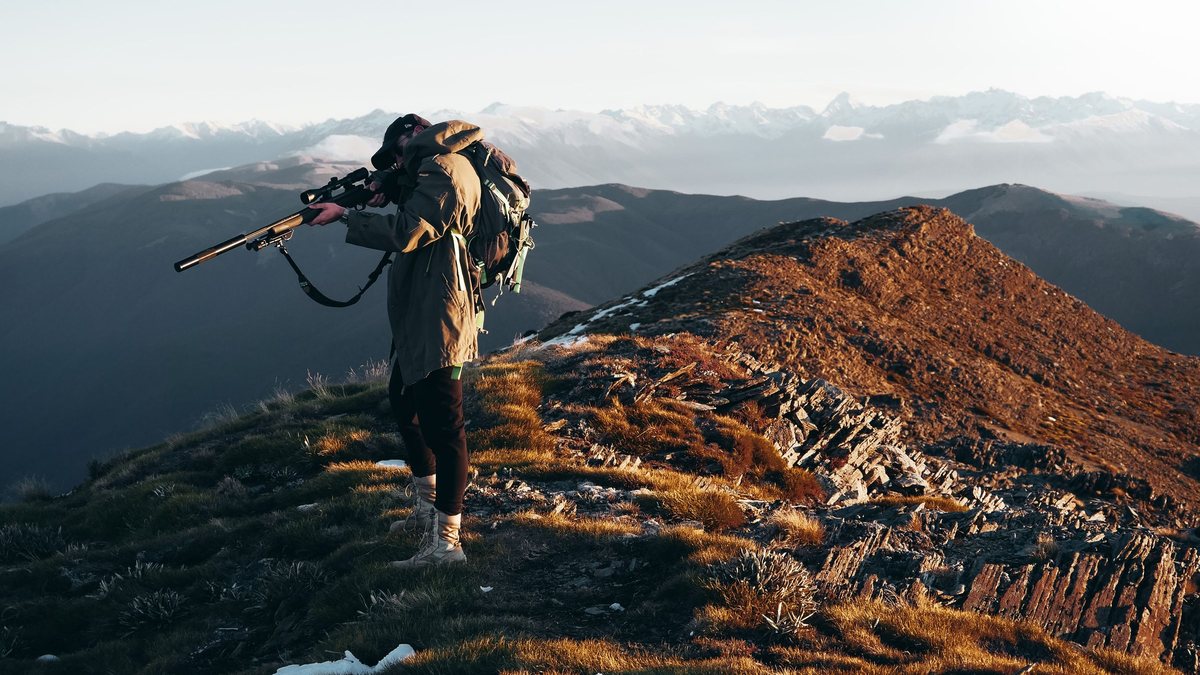
Picture a neighbor who shoots tight groups off a bench every September. On opening morning a buck steps out at 120 yards, he raises his rifle standing in the open, the crosshairs swim all over the deer's chest, and he misses clean.
It wasn't his scope, and he didn't need to become a great offhand shooter overnight. The bench taught him nothing about the field, because the bench was doing the work his body would have to do on opening day. Steadiness in the field comes from the position you build and the rest you find, and from knowing how far you can reliably shoot from each.
By the end you should be able to pick the steadiest position the situation allows, build it quickly, and know whether the shot in front of you is one you should take.
Why some positions are steadier than others
A rifle wobbles because the body holding it is never perfectly still. Muscles tire and tremble, breathing moves the chest, and the heartbeat moves everything a little. A steady position reduces how much of that motion reaches the rifle.
Three ideas explain almost all of it. The first is a low center of gravity: The closer you are to the ground, the less you sway. The second is bone support: Bones stacked on bones or on the ground do not tire, while muscles holding a weight up do. The third is contact points: Every place your body or rifle touches something solid, the ground, a tree, a pack, removes a direction the rifle can wander.
Think of a camera tripod compared with holding the camera at arm's length. The tripod is low, rigid and touching the ground in three places. Your goal in the field is to build something as close to that tripod as the terrain and time allow. Lower, more bone and more contact means steadier.
Prone: The steadiest, when you can use it
Lying flat with the rifle supported on a bipod or a pack is the steadiest field position. Your whole body is on the ground, and both elbows carry the weight. Prone is the position for long shots across open ground, such as a crop field edge or a pasture.
The trouble is that Iowa's field edges, standing corn, grass and brush often block the view from the ground. Prone also takes time to set up and is hard to adjust if the animal moves. When you do go prone, lie slightly angled behind the rifle rather than straight in line, so recoil moves through your shoulder, and keep a pack or bipod under the forearm, not your hand under the barrel.
Use prone whenever the line of sight is clear and you have the time, especially for anything beyond your comfortable sitting range.
Sitting: The hunter's workhorse
Sitting is the position most hunters should practice most, because it is nearly as steady as prone and high enough to see over grass and low brush. You sit on the ground with your knees raised and rest your elbows on or just inside your knees, so the bones of your arms rest on the bones of your legs.
There are three common variations.
- Open-leg. Feet apart and flat on the ground, knees up, elbows resting inside the knees. It is quick and comfortable for most people.
- Cross-legged. Legs crossed at the shins, elbows over the knees. It sits lower and steadier for those flexible enough.
- Cross-ankle. Legs out in front and crossed at the ankles, elbows on the knees. It is a good compromise when the ground slopes.
Of these, the best one is the one your body lets you hold without strain. Try all three at home and pick the one that lets you settle the crosshairs with the least effort. Adding shooting sticks or a pack across your knees makes any sitting position steadier still. If you have a few seconds and the line of sight allows it, sit.
Kneeling: Quick, but less steady
Kneeling puts one knee on the ground and the other leg up, with the elbow of your support arm resting just over the raised knee. It is faster to get into than sitting and gets your eye higher, which helps in tall grass.
The weakness is the shooting side. Only the support elbow rests on bone, and the whole upper body balances on a narrow base, so kneeling wobbles more than sitting. It shines when paired with a rest. Kneeling behind a fence post, a log or short shooting sticks turns a wobbly position into a solid one.
Common mistake: Putting the point of the elbow directly on the point of the kneecap. Bone on bone at two points rolls. Rest the flat of the arm just above the elbow on the flat of the knee instead, and the position locks in.
Kneel when you need to be fast and a little higher, and find a rest whenever you can.
Standing: The last choice, made better with support
Standing unsupported, called offhand, is the least steady position because the rifle is held entirely by muscles, high above a narrow base. Even good shooters wobble offhand, which is why it belongs to short distances and quick shots, such as a deer that steps into a timber opening at 40 yards.
Standing becomes far steadier with support. Lean your support hand or the forearm of the rifle against the side of a tree, a fence post or the edge of a building, with your hand between the rifle and the support. Tall shooting sticks set at chest height give you the same help anywhere. A sling can help too. With a hasty sling, you wrap your support arm through the sling so its tension pulls the rifle back into your shoulder and steadies it.
Shoot offhand only at short range, and lean on something whenever you are standing.
Natural rests and shooting sticks
The field is full of rests: Trees, fence posts, rocks, logs, the frame of a blind window, your pack. A rest steadies the rifle, but how you use it affects where the bullet goes.
The key is never to rest the barrel directly on something hard. A barrel touching a rock or post vibrates differently than it does when free, and the shot can go high or wide of where you zeroed. Rest the forearm of the stock, or put your hand between the rifle and the hard surface. A soft pack or a folded jacket makes a good cushion.
Shooting sticks, two or three legs joined at the top with a yoke for the rifle, give you a portable rest at whatever height you need. Bipods do the same thing attached to the rifle, mainly for prone or sitting. Tripod sticks are steadier than bipod sticks. Whatever you use, practice with it before the season, because a rest you have to fiddle with costs you the shot.
Key idea: A rest steadies the rifle only if the rifle sits on the stock, not the barrel. Hand or soft pad between the rifle and the hard surface, every time.
Use whatever solid rest the field offers, but rest the stock, not the barrel.
Natural point of aim
Even a steady position can pull a shot if you are forcing the rifle onto the target. Natural point of aim is where the rifle points when your body is relaxed in the position. If you have to push or pull with your muscles to keep the crosshairs on the deer, the rifle will drift back toward where your body wants it to point as you press the trigger.
Check it by settling into position on the target, closing your eyes, taking a breath, relaxing, and opening your eyes. If the crosshairs have drifted off to one side, shift your whole body, not just your arms, until the rifle naturally rests on the target. In prone and sitting, you do this by moving your hips or feet. It takes seconds and fixes many misses blamed on the scope.
Adjust your body to the target, not your muscles.
Breathing and the trigger
Every position moves slightly with your breath. A practical method is to breathe normally, then exhale and pause naturally, the respiratory pause, and make the shot during that pause of a few seconds while the crosshairs settle. If the pause runs too long and the reticle starts to wobble, breathe again and start over rather than forcing the shot.
Then press the trigger smoothly straight back without disturbing the rifle. Our article on trigger control covers this in depth, and if you are anticipating recoil, our guide to fixing a flinch explains how to stop it. Shoot during the pause or not at all.
Know your range from each position
Every hunter has a maximum distance at which they can reliably hit a deer's vital zone, and that distance is different for each position. A deer's heart and lung area is roughly eight inches across. Someone who can keep every shot in an eight-inch circle at 250 yards prone may only be able to do it at 100 yards sitting and 50 yards offhand.
Finding those numbers is the most valuable practice a hunter can do. It turns a guess on opening day into a simple decision: This position, this distance, yes or no. Our guide to hunting ethics explains why shot placement and honest limits matter so much.
Know your number for each position, and if the deer is beyond it, get steadier or get closer.
Finding your number for each position
A paper plate and an afternoon at the range turn your maximum distances from guesses into facts. Here is how.
- At the range, wearing eye and ear protection, with the muzzle downrange and your finger off the trigger until you are on target, set up an eight-inch paper plate at 50 yards.
- Fire three shots each from offhand, kneeling, sitting and prone, using your hunting rifle and ammunition, and write down how many hit the plate.
- For any position where all three hit, move the plate out 25 yards and repeat.
- Stop each position at the farthest distance where all three shots still land on the plate. That is your maximum for that position.
- Write the four distances on a card and keep it with your hunting license.
With those numbers in your pocket, you can look at a deer in the field, judge the distance, and know at once which positions give you a shot you can trust.
Putting it together
Go back to the neighbor and his missed buck. The scope was fine, and he did not need to become a great offhand shooter overnight. He needed to drop to a sitting position, or rest the rifle on the fence post a few steps away, and he needed to know in advance how far he could reliably shoot from each.
The order of choices in the field is simple. Look for the lowest position the terrain allows. Add any rest you can find, resting the stock, not the barrel. Settle into your natural point of aim, shoot during the respiratory pause, and take the shot only if the distance is inside your proven range for that position.
Check your understanding
Try answering these before you open the answer. If you can decide what to do and explain why, you have it.
1. A buck stands at 150 yards across a hayfield. You are standing next to a fence post, and the grass is knee high. What position should you use?
Sitting would put you above knee-high grass, or you could stand and brace the rifle against the post with your hand between the post and the stock. Choose whichever gives you a steady hold within your proven range.
2. You rest your barrel on a rock for a long shot, and the bullet goes high. Why?
A barrel resting on a hard surface vibrates differently than a free barrel, which can shift where the bullet goes. Rest the stock or put your hand or a pad between the rifle and the rock.
3. Your crosshairs keep drifting left of the deer as you settle. What should you do?
Your natural point of aim is off. Shift your whole body, by moving your hips or feet, until the rifle rests on the target without muscle effort.
4. You can keep shots in eight inches at 200 yards prone but only 75 yards offhand. A deer appears at 120 yards and you have no time to get down. What do you do?
Pass, or find a rest quickly that gets you steadier. At 120 yards offhand you are beyond your proven range, and a poor hit is worse than no shot.
Where to go next
You can find bipods and shooting rests on our website, including the BOG DeadShot sitting bipod and Allen Helix rifle bipods, and anything listed there can be ordered if it isn't in stock.
To improve the trigger press that finishes every shot, read our guide to trigger control. If you jerk the shot as the rifle fires, fixing a flinch explains why and how to stop. To be sure your rifle is zeroed for your hunting distance, see sighting in rifles at different distances. And for practice beyond positions, our rifle practice drills give you a plan for every range trip.
If this article helped you, we invite you to sign up for email notifications of new blog articles.