
Federal Power-Shok: Reliable and Affordable Hunting Ammunition
Joseph McLain Nov 06, 2026
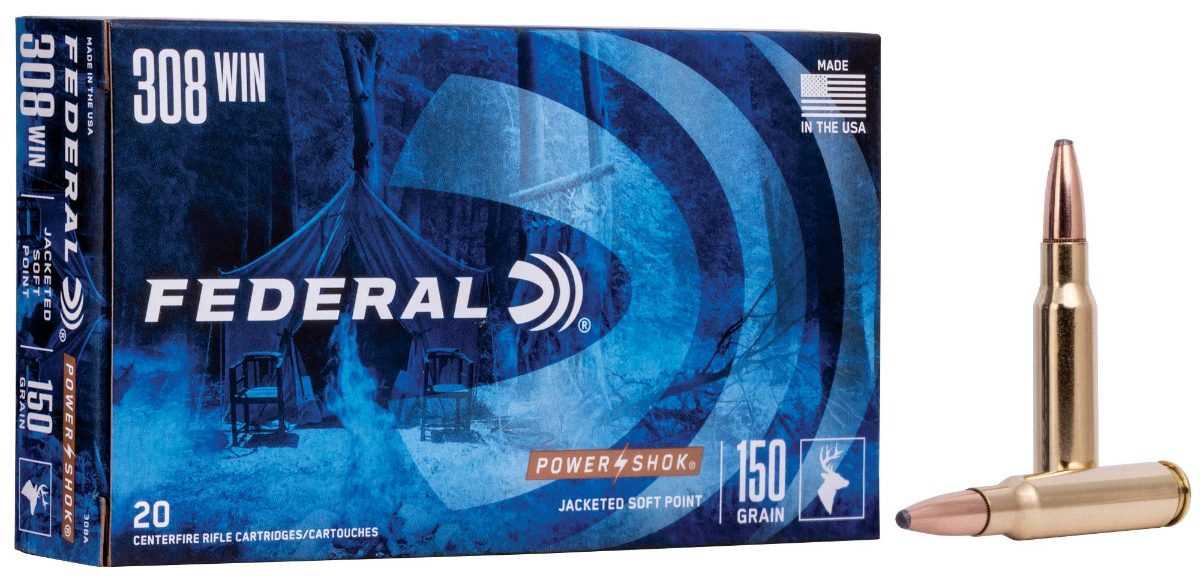
Deer season is coming, and your budget has to cover practice as well as hunting ammunition. The plain Federal Power-Shok box costs a fraction of the premium bonded loads beside it. Is it enough bullet for your deer?
For most Iowa deer hunting it is, because the best bullet is the one you've practiced with enough to put in the right place. By the end you should be able to say when a traditional soft point like Power-Shok is all you need and when it isn't, pick the right Power-Shok load for Iowa's seasons, including the slug that fits your shotgun barrel, and turn the money you save into the practice that matters more.
What a soft point does, and where it falls short
Power-Shok is Federal's traditional hunting line. Its rifle bullets are classic soft points: a lead core inside a copper jacket, with lead exposed at the nose. When one hits a deer, the soft nose flattens and the bullet mushrooms, making a wide wound, while the jacket keeps the opening under control. At ordinary hunting speeds and distances it opens reliably and keeps enough weight to reach the heart and lungs. That simple design has filled freezers for generations.
Its weak point is the hard hit. The core and jacket are pressed together, not bonded, so a fast impact on heavy bone, such as a shoulder at close range from a fast cartridge, can tear them apart. The bullet sheds weight and may stop short. Premium bonded bullets fix exactly that, and copper bullets go further. That's what the extra money buys.
Key idea: A plain soft point is enough for deer at ordinary distances when the shot is broadside or close to it. Premium bullets earn their price on hard angles, big animals and fast cartridges.
- If you hunt whitetail at timber or field-edge distances and wait for broadside shots, choose Power-Shok, and spend the savings on practice.
- If you'll take quartering shots, hunt big-bodied animals, or shoot a fast magnum, step up to a bonded bullet such as Federal Fusion, because it holds together through bone.
- If you want lead-free venison, Federal makes Power-Shok Copper in several calibers.
Power-Shok for Iowa deer
Iowa narrows the shelf before bullet design matters. During the regular gun seasons, deer may be taken with 10-, 12-, 16- or 20-gauge shotguns firing single slugs (buckshot isn't allowed for deer), with muzzleloaders, with handguns that qualify, and, in certain seasons, with rifles that fire an expanding bullet from .350 to .500 inch with at least 500 foot-pounds of published energy under Iowa Code 481A.48. Most classic Power-Shok rifle cartridges, the .243, .270, .308, .30-06 and .30-30, are too small for Iowa deer. The Power-Shok loads that fit Iowa are:
- Rifles: .350 Legend 180-grain, .360 Buckhammer 180- and 200-grain, .45-70 300-grain and .44 Magnum 240-grain.
- Shotguns: Power-Shok rifled slugs in 10, 12, 16 and 20 gauge, and Power-Shok sabot slugs in 12 and 20 gauge.
The rules change, so check the current Iowa DNR regulations each season.
Rifled slug or sabot slug? Your barrel decides
This is the Power-Shok choice Iowa shotgun hunters get wrong most often, and the answer comes from your barrel, not the box.
A rifled slug (sometimes called a Foster slug) is a soft lead slug with angled ribs on its side. It's made for a smooth barrel, the ordinary kind on a bird gun, where it stays reasonably accurate out to about 75 to 100 yards. The ribs don't make it spin much; the slug flies point-first because most of its weight is in the nose, like a badminton shuttlecock.
A sabot slug is a smaller, more aerodynamic projectile held in a plastic sleeve. It's made for a rifled barrel, one with spiral grooves inside, or a rifled choke tube. The rifling grips the sleeve and spins the slug, which makes it far more accurate at longer distances. From a smooth barrel, a sabot slug doesn't spin and can be wildly inaccurate.
- If your shotgun has a smooth barrel, buy Power-Shok rifled slugs, because they're designed to fly straight without spin.
- If your shotgun has a fully rifled slug barrel, buy Power-Shok sabot slugs, because the rifling spins them and they'll group much tighter.
- If you don't know which barrel you have, look down it with the action open and the gun unloaded: spiral grooves mean rifled; a smooth, shiny bore means smooth. Rifled slug barrels are usually marked "rifled" or "slug."
Common mistake: Buying expensive sabot slugs for a smooth-barreled bird gun because they're "better." Without rifling to spin them, they often group worse than the cheap rifled slugs the barrel was made for.
Sight in, then practice with the same load
Every load hits a little differently, and slugs especially so, so sight in with the exact box you'll hunt with. With eye and ear protection on and from a solid rest, shoot three-shot groups at 50 yards, then at the farthest distance you'll take a shot, and adjust your sights so the load hits where you aim there. If your rifle or shotgun groups one load clearly better than another, hunt with that one.
Then practice from the position you'll actually shoot from, such as seated against a tree or off shooting sticks. The point of an affordable load is that you can afford to shoot it, and finding the distance at which you can keep every shot in a deer's 8-inch vital area from that position matters more than any bullet upgrade.
Check your understanding
Try answering these before you open the answer. If you can decide what to do and explain why, you have it.
1. You hunt Iowa's first shotgun season with your granddad's smooth-barreled 12-gauge pump. Which Power-Shok load?
Power-Shok 12-gauge rifled slugs. They're built to fly straight from a smooth barrel without needing spin. Sight in at 50 yards and keep shots inside about 75 yards.
2. Your new deer gun has a fully rifled barrel and groups the rifled slugs poorly. What do you try?
Power-Shok 12-gauge sabot slugs. A rifled barrel spins a sabot slug, which is what makes it accurate. Rifled slugs are made for smooth barrels, so they often group worse in a fully rifled one.
3. You shoot a .350 Legend from a stand over a food plot and take only broadside shots under 150 yards. Do you need a premium bullet?
No. At those distances, on broadside shots, the Power-Shok 180-grain soft point opens reliably and reaches the vitals. Spend the difference on practice.
4. A friend plans to use Power-Shok 00 buckshot for Iowa deer because "it's what the police use." What do you tell him?
It's not legal for deer in Iowa, which requires a single slug from a shotgun. Buckshot is a home-defense and short-range load. For Iowa deer he needs slugs that match his barrel.
5. You're hunting elk in Montana with a .300 Win Mag. Is Power-Shok a good choice there?
Not the best one. A fast magnum hitting a big-boned elk is exactly when a soft point is most likely to come apart. Choose a bonded bullet such as Fusion or a premium bonded or copper bullet.
Where to go next
You can find Federal Power-Shok ammunition on our website, including .350 Legend, .360 Buckhammer, .45-70 and .44 Magnum loads and rifled and sabot slugs, and anything listed there can be ordered if it isn't in stock.
For more on slugs and shotgun deer hunting, see shotgun slugs for deer. If your hunt calls for a tougher bullet, Federal Fusion explains the bonded step up. And for Iowa's rifle choices, read choosing a straight-wall deer rifle.
If this article helped you, we invite you to sign up for email notifications of new blog articles.