
Federal Premium Barnes TSX: Precision Hunting with Superior Performance
Joseph McLain Nov 06, 2026
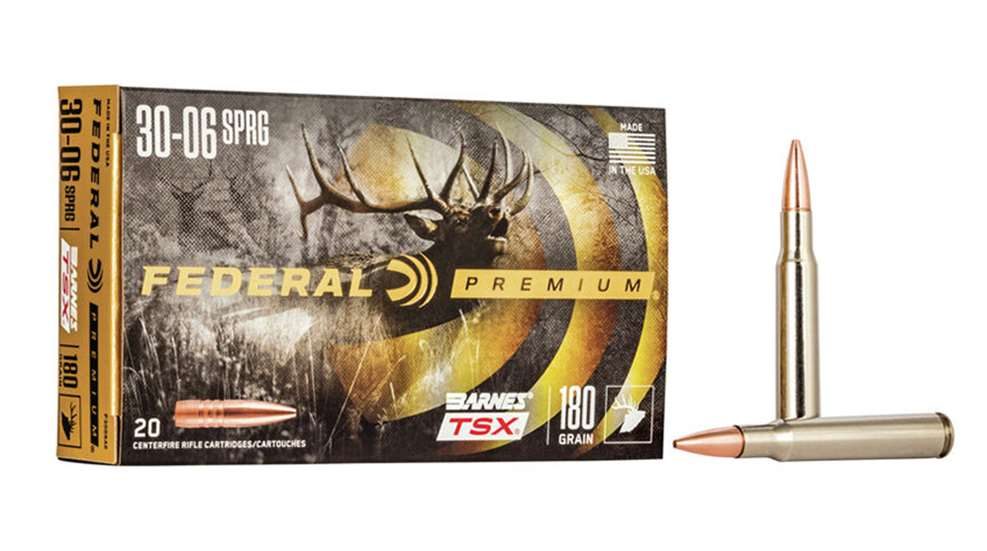
Elk season is a few weeks off, or maybe the whitetail rut. A box of Federal Premium Barnes TSX costs noticeably more than a box of standard soft points in the same caliber. What does that extra money buy, and does your hunt need it? By the end you should be able to decide whether this load belongs in your rifle.
For whitetails at ordinary Iowa distances, a good soft point such as Federal Power-Shok kills just as cleanly for less money. The TSX earns its price on elk, moose and other heavy-boned game, on hard-angled shots where the bullet must break bone and keep going, and wherever lead-free bullets are required or wanted. If you choose it, keep your shots inside the distance where the bullet still arrives fast enough to open, and confirm it groups in your rifle.
How the Barnes TSX bullet is built, and why that changes what happens on impact
Federal Premium's partnership with Barnes Bullets paired the copper-alloy TSX projectile with Federal's top-tier manufacturing. Most hunting bullets are jacketed, which means a lead core wrapped in a copper jacket. The TSX is monolithic, a single piece of copper alloy with no lead core at all. That one choice drives most of what the bullet does, so it helps to take the features one at a time.
The first feature is weight retention. A jacketed bullet can lose pieces of its jacket or core as it works through an animal. A monolithic bullet has no core to separate, so it rarely loses mass and often retains 90 to 100 percent of its weight. Think of driving a nail through a board compared with throwing a snowball at it. The nail keeps its shape and keeps going, and the snowball crumbles against the first hard thing it meets. Heavy bone and thick hide are the hard things in a hunt, and a bullet that stays whole keeps a straight path to the vitals. That matters most on big game like elk or moose, where the bullet may have to punch through muscle and bone.
The second feature is controlled expansion. On impact the TSX peels open into four petals, a bit like a flower opening at the front while the stem keeps pushing forward. The petals widen the wound channel for quick, humane kills while the intact shank drives deep. The design also has a wide velocity window, the range of impact speeds over which a bullet expands the way it should. A bullet slows as it travels, so a 40-yard shot in dense timber arrives much faster than a shot across an open field. Some bullets expand well only at close range or very high speed. The TSX opens across a wide range of close and moderate distances, but like every copper bullet it needs enough impact speed to expand. Barnes has generally told hunters that TSX bullets need roughly 1,800 feet per second or more at impact to open reliably, and the figure varies by caliber and weight, so from a slower cartridge or at long range the bullet may arrive too slow to open fully. Barnes can give you the number for your exact bullet. That is the real limit on how far to shoot it.
The third feature is the grooved shank. Rings around the bullet's shank reduce friction in the bore. Copper is harder than lead and does not squeeze into the rifling as easily, so the grooves give displaced metal somewhere to go. Federal and Barnes designed them to help manage chamber pressure and reduce copper fouling, and less friction with steadier pressure often translates into tighter groups.
Key idea: Every hunting bullet balances two jobs. It has to open up enough to damage tissue and stay together enough to reach the vitals. The TSX does both by letting only the front of the bullet open into petals while the solid body keeps going.
There is also a practical benefit, since the bullet contains no lead. That means fewer toxins left in the field, which matters in places with lead bans or strict environmental rules. Many hunters also like that a lead-free bullet does not deposit lead in the environment or in game meat.
Matching the TSX to your game, caliber and bullet weight
The TSX handles medium to large and even dangerous game, but you still choose the load by the animal. The bigger and tougher the animal, the more penetration you need, and that usually means a heavier bullet in a cartridge with more power behind it. Here is how the line breaks down.
- Medium game. Whitetail deer, mule deer and pronghorn. Controlled expansion creates ample wound channels for quick, ethical kills. Popular choices are .243 Winchester (around 80 to 85 grains) and .270 Winchester (130 to 140 grains).
- Large game. Elk, moose and black bear. Deep penetration and near-total weight retention are assets against big-boned animals. The .30-06 Springfield (180 grains) and .300 Win Mag (180 to 200 grains) deliver the extra power needed for thick hides and substantial muscle.
- Tough and potentially dangerous game. African plains game such as kudu and wildebeest, feral hogs, or any species that demands serious stopping power. The monolithic design maintains momentum after hitting tough barriers. Typical choices are .338 Win Mag (225 grains) and .375 H&H Magnum (270 grains).
Here is a sample of the calibers Federal offers in the Barnes TSX line, with suggested uses. Offerings and bullet weights change, so check the current box for your cartridge.
| Caliber | Grain weight | Best use |
|---|---|---|
| .243 Winchester | 80 gr | Deer, varmints (distance shots) |
| .270 Winchester | 130 gr | Mule deer, pronghorn, whitetail |
| .308 Winchester | 150, 165 gr | Deer, black bear, moderate-range elk |
| .30-06 Springfield | 180 gr | Elk, moose, heavier game |
| .300 Win Mag | 180, 200 gr | Long-range big game, elk, moose |
| .338 Win Mag | 225 gr | Larger North American game, African plains game |
| .375 H&H Magnum | 270 gr | Dangerous game, heavy-boned animals |
From top to bottom, the table is a ladder of animal size. The .308 row shows the pattern clearly, because the 150 grain bullet suits deer while the heavier 165 grain bullet is listed for black bear and moderate-range elk. A heavier bullet carries more momentum, which helps it keep driving through the tougher tissue of a bigger animal. Our guide to bullet weight explains that trade-off in more detail.
Choose the animal first, then think about the distances you actually shoot, and then pick from the cartridges you already shoot well. A bigger caliber is no help if you flinch from the recoil, because a well-placed shot from a rifle you handle comfortably does more good than a hard-kicking one you cannot place. Shot placement is the heart of hunting ethics and a clean, humane kill.
What to expect at the range and in the field
At the range, the TSX has a good reputation for accuracy. Federal's loading standards, combined with the pressure-relief grooves, help many rifles achieve sub-MOA groups at 100 yards. MOA stands for minute of angle, and one MOA is about an inch at 100 yards, so a sub-MOA group is smaller than an inch (our article on understanding MOA covers the idea). Whether your rifle reaches that depends on the rifle, the load and you, but if your rifle and technique are solid you can expect impressively tight groups.
In the field, hunters report that TSX petals peel back uniformly and create a large wound channel with minimal fragmentation. Hunters often recover bullets with all four petals intact, which fits the robust monolithic construction. Range matters too. At close range, high-velocity impacts can cause over-expansion in some bullets, where the bullet opens too violently and breaks up. The TSX remains controlled and resists that blow-up. At longer ranges, what matters is whether the bullet still arrives above its expansion speed. From a fast magnum that can be well past 300 yards, while from a .308 or .30-06 it comes sooner, so check the impact velocity at your longest shot on the maker's ballistics chart.
Common mistake: Expecting a premium bullet to rescue a poorly placed shot. Penetration and expansion only help where the bullet lands. Keep your shots within the distance where you can place them confidently, and practice until that distance is honest.
How the Federal Barnes TSX compares with other premium ammunition
Two other premium bullets are often mentioned in the same breath. The Nosler AccuBond is a bonded design, which means the lead core is bonded to the copper jacket so the two stay together. The Hornady GMX is another copper-alloy bullet. This table shows how they differ.
| Feature | Federal Barnes TSX | Nosler AccuBond | Hornady GMX |
|---|---|---|---|
| Material | 100% copper | Bonded lead core + poly tip | Copper alloy |
| Expansion style | 4 petals, wide expansion | Traditional mushroom | Controlled expansion |
| Weight retention | Near 100% | Roughly 70 to 90% (bonded design) | Typically high (lead-free) |
| Environmental impact | Completely lead-free | Lead present, but bonded | Lead-free |
| Best suitability | Medium to dangerous game | Broad usage, sweet spot in mid-range | Big game, lead-free compliance |
Material decides environmental impact. The all-copper bullets contain no lead, while the AccuBond keeps lead bonded inside its jacket. Weight retention numbers vary with the load and with what the bullet hits, so treat the percentages as rough guides rather than guarantees.
Two differences are worth remembering. First, the TSX is purely copper, which typically means less fragmentation and no lead left in the environment. Second, TSX expansion is known for uniform petals, whereas some bonded or monolithic bullets might expand in a different shape or show partial petal shear. And yes, premium is premium. TSX loads can cost more than standard cup-and-core ammunition, which is the price of that consistency on hunts where a second chance may not come. If you want a more affordable everyday hunting load for deer-sized game, Federal Power-Shok is the line to look at.
Who gets the most from the TSX, and why hunters like it
- Precision hunters. If you want sub-MOA capability and consistent shot placement, the TSX is a strong choice.
- Ethical harvesters. The bullet's expansion helps ensure quick, humane kills, even on large animals.
- Hunters in lead-restricted areas. Where lead is banned or restricted, an all-copper bullet like the TSX can meet that requirement without compromising performance.
- Big-game enthusiasts. Elk, moose, bear and African plains game all reward a bullet that punches through bone and muscle.
The first two groups describe nearly every serious hunter, so they matter most. The third depends on where you hunt, and rules differ by area and change over time. Check with your state wildlife agency or the managers of the land you hunt before the season. As for popularity, Barnes introduced the original X bullet decades ago, and continuous refinements led to the TSX, which earned a loyal following among serious hunters. Many hunters appreciate a “green” bullet, and since one load can handle a wide range of distances and game sizes, there is less need to switch ammunition from season to season.
Getting the best results from the TSX in your rifle
Even a great bullet has to suit your particular rifle. These five habits make the difference.
- Match your bullet weight. Heavier bullets (180 to 200 grains in .300 Win Mag) add punch for thicker-skinned game. Lighter bullets (130 to 150 grains in .270 or .308) fly flatter and still penetrate plenty for deer. Because a copper bullet holds its weight and runs longer than lead, Barnes often suggests going a step lighter than you would with a lead-core bullet, which keeps velocity up so it opens reliably.
- Confirm your barrel twist rate. Fast-twist rifles stabilize heavier bullets better, and slow twists might prefer mid-range bullet weights. Check Federal's published information for the recommended twist for each bullet weight.
- Perform a proper zero. Sight in at 100 or 200 yards, depending on your preference. Monolithic bullets can have slightly different ballistic coefficients than lead-core designs.
- Test different loads. Even within the TSX line you might find multiple bullet weights or slight velocity differences, so see which one your rifle groups best.
- Understand the expansion range. For shots under 50 yards the TSX can handle high impact velocities. At longer range, make sure the bullet still arrives fast enough to open, and know your drop and wind drift.
Weight, twist and zero matter most, because they decide whether the bullet flies true and where it lands. Copper is less dense than lead, so a copper bullet is generally longer than a lead-core bullet of the same weight, and longer bullets need enough spin to stay stable. That is why twist rate deserves a look, and our guide to barrel twist rate shows how to read it. To work through the zeroing step, see our article on sighting in rifles at different distances.
Putting it together
The right choice depends on the hunt. On deer at ordinary distances, a well-placed soft point does the job, and the TSX's extra cost buys little. On tough or heavy game, bad angles, or where lead-free bullets are required, the TSX's weight retention and deep, straight penetration earn their price. Match the bullet to your game and your state's rules, keep impact velocity within the bullet's window, and confirm that your rifle groups the load before you hunt with it.
Check your understanding
Try answering these before you open the answer. If you can decide what to do and explain why, you have it.
1. A soft point has worked fine on your whitetails, but next fall you're hunting elk with your .30-06 and may get a quartering shot through the shoulder. Is the TSX worth the extra money for that hunt?
Yes, that's the kind of shot it's built for. With no lead core to separate, the TSX usually keeps 90 to 100 percent of its weight, so it holds its momentum and a straight path through heavy bone toward the vitals. On deer at ordinary angles your soft point is still fine.
2. You plan to take a 150-grain TSX in your .308 on a pronghorn hunt where shots may stretch to 400 yards. What should you check before you go?
The bullet's impact speed at your longest shot. Copper bullets need enough speed to open, and for the TSX that is roughly 1,800 feet per second or more, depending on the bullet. Look up the load's velocity at 400 yards on the maker's chart. If it falls below that, shorten your maximum range or choose a faster cartridge or a bullet built to open at lower speed.
3. You hunt mule deer with a .270 Winchester and plan an elk hunt next year with a .30-06. Which TSX weights fit, and why?
The 130 grain .270 load fits mule deer, and the 180 grain .30-06 load fits elk. Larger, tougher animals call for a heavier bullet that carries more momentum for penetration.
4. Your rifle groups TSX ammunition at two inches. What should you check before deciding the bullet is the problem?
Check your barrel twist rate against the bullet weight, since a bullet that is too long for the twist may not stabilize well. Then try another bullet weight or load, and make sure your rest and technique are not adding the error.
5. Your rifle is zeroed with Power-Shok, and you buy a box of TSX the week before season. What do you do before you hunt with it?
Shoot it from a rest at 100 or 200 yards and re-zero if it hits somewhere different. A copper bullet has a different length and shape from a lead-core bullet of the same weight, so its point of impact and drop can shift. If you can, also check that it groups well enough in your rifle.
Where to go next
You can find Barnes copper hunting ammunition and bullets on our website, including Barnes VOR-TX loads and TTSX bullets for reloaders, and anything listed there can be ordered if it isn't in stock.
If you want a baseline to measure the TSX against, read about Federal Power-Shok, a reliable and affordable hunting load. To see how Barnes builds other hunting loads, try Digging Into the Barnes VOR-TX Product Lineup. And if long shots are part of your hunting, Federal ELD-X covers a different premium bullet built for long-range hunting.
If this article helped you, we invite you to sign up for email notifications of new blog articles.