
Christensen Arms Ridgeline: A Precision Rifle for the Modern Hunter
Joseph McLain Nov 06, 2026
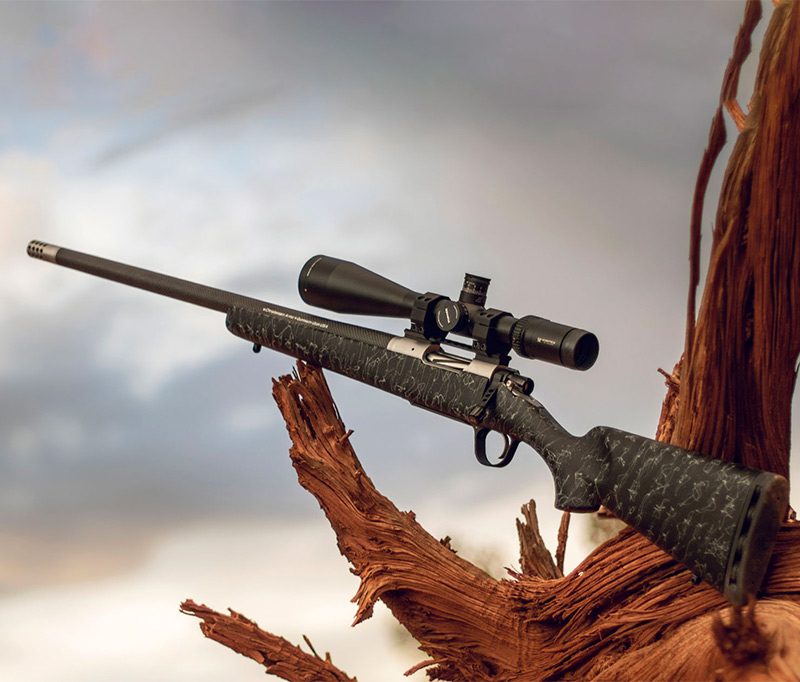
Picture yourself well away from the truck, climbing a ridge before daylight with a rifle slung on your shoulder. Every extra pound feels like two by the time you reach the top. A lighter rifle would help on the climb, but light rifles kick harder and can be harder to shoot well at the moment that counts.
The Christensen Arms Ridgeline is built around exactly that tension. By the end you should be able to decide whether a lightweight carbon-fiber hunting rifle fits the way you hunt.
Why weight is the first question to ask about a hunting rifle
Every hunting rifle balances two jobs. It has to be easy to carry for hours, and it has to be steady and accurate when the moment comes. Weight pulls those jobs in opposite directions. A heavier rifle soaks up recoil and hangs steadier in your hands, and a lighter one saves your legs and shoulders on a long walk. The Ridgeline's answer is to remove weight with materials rather than by giving up features.
Christensen Arms, founded in 1995, was one of the first makers to build rifles around carbon fiber. The Ridgeline is its practical hunting rifle, and, depending on caliber and barrel length, weighs roughly six to seven pounds without a scope, which places it among the lighter rifles in its class. Check Christensen's current specifications for the exact configuration you are considering.
Key idea: A lighter rifle is only a good deal if you can still shoot it well. Carry weight and shooting steadiness trade against each other, so look for the rifle that gives you the lightest carry you can still shoot accurately.
What carbon fiber does in the barrel and the stock
The Ridgeline's barrel is built around a 416R stainless steel core with a carbon-fiber wrap. The steel core does the essential job of guiding the bullet, and the carbon-fiber wrap adds rigidity and durability for much less weight than a solid steel barrel of the same stiffness. Think of it as the difference between a solid steel rod and a steel tube reinforced with a lightweight shell. The design is also intended to improve heat dissipation. That matters because a barrel heats up as you fire, and a hot barrel can shift where your shots land. On a hunt you usually take only a few shots, so heat matters most during range sessions, sighting-in and practice. For the hunt itself, the shot that counts is usually the first one from a cold barrel, which our article on cold shot accuracy for winter deer hunting explains in depth.
The stock follows the same philosophy. It is a carbon-fiber composite sporter-style stock, which provides a natural grip, and an integrated recoil pad reduces felt recoil. Recoil is the push back against your shoulder when the rifle fires, and a pad spreads that push over time and area so it feels less sharp. A light rifle moves more under recoil than a heavy one chambered for the same cartridge, so features that tame recoil matter more on a lightweight rifle.
The Ridgeline is described as capable of sub-MOA accuracy with quality ammunition. MOA stands for minute of angle, and one MOA is roughly one inch of spread at 100 yards, so a sub-MOA rifle can put its shots inside a group smaller than that. Treat it as a goal your own rifle and ammunition have to prove, rather than a promise. Our guide to understanding MOA shows how to measure it honestly.
The trigger and the muzzle: The parts you feel
The Ridgeline uses an adjustable TriggerTech trigger, known for a crisp, consistent pull and minimal overtravel. A crisp trigger breaks cleanly, like snapping a dry twig, rather than creeping. Overtravel is the extra movement of the trigger after the shot breaks. Less of it helps you stay still while the rifle fires, and a consistent pull lets you repeat the same technique on every shot. Because the trigger is adjustable, you can tune it to your preferences. Make adjustments carefully, following the maker's instructions or with a qualified gunsmith, and remember that lighter is not automatically better. A trigger set too light is a safety concern, since it can fire before you intend it to.
At the muzzle, the barrel is threaded for easy attachment of a suppressor or other muzzle device. It also carries a side-baffle stainless steel muzzle brake, which reduces recoil and makes follow-up shots faster and more accurate. A brake works by redirecting some of the gas sideways as it leaves the barrel. The cost is that the blast is directed to the sides, so it feels louder to people standing near you, and it makes good hearing protection even more important. If a suppressor interests you, our guide to hunting with suppressors covers what to expect.
Choosing a caliber and barrel length
The Ridgeline is offered in a wide range of calibers, from versatile options like .308 Winchester and 6.5 Creedmoor to more powerful choices like .300 Winchester Magnum. Barrel lengths range from 20 to 26 inches, depending on the caliber. These two choices work together, so think about them in a particular order.
Choose the caliber first, based on the animal and the distance you expect. A mild cartridge is easier to shoot well, and a powerful one gives you more reach and energy at the cost of more recoil. Our comparison of 6mm Creedmoor, 6.5mm Creedmoor and 6.5mm PRC shows how to think about a popular family of choices. Then choose the barrel length for how you hunt. A shorter barrel is easier to maneuver in brush, in a blind or around a tree stand. A longer barrel can improve velocity and precision, because the powder has more time to push the bullet before it leaves the muzzle. If you carry the rifle over long distances through open country, the longer barrels are worth a look, and if you work through thick cover, lean shorter.
For Iowa hunters, one more point decides the caliber question: Popular Ridgeline chamberings such as 6.5 Creedmoor, .308 Winchester and .300 Winchester Magnum are not legal for Iowa deer, because Iowa Code 481A.48 limits deer rifles to expanding bullets from .350 to .500 inch in diameter. The exception is the shorter Ridgeline Scout, which comes in .450 Bushmaster, a cartridge that is legal for Iowa deer. Otherwise, a Ridgeline is a rifle for coyotes in Iowa and for elk, mule deer or whitetails in other states. Christensen also makes the Ridgeline FFT, an even lighter version with a stock made by a different carbon process. Check the Iowa DNR hunting regulations, and the rules of any state you hunt, before you choose.
How the Ridgeline compares with other premium rifles
| Rifle | What it is known for | Where the Ridgeline differs |
|---|---|---|
| Ruger Precision Rifle | Chassis rifle built mainly for long-range target and competition shooting | Much heavier; the Ridgeline is built to be carried, the Precision Rifle to be shot from a bench or prone |
| Browning X-Bolt (steel-barreled models) | Traditional steel construction; many calibers and stock options | The Ridgeline uses carbon fiber to cut weight; a steel barrel is heavier but simpler |
| Tikka T3x Lite | Lightweight, simple and well regarded for accuracy at a lower price | The Ridgeline adds a carbon-wrapped barrel, a muzzle brake and an adjustable TriggerTech trigger at a higher price |
All three competitors are accurate, and so is the Ridgeline, so accuracy is rarely the tiebreaker. The differences show up in weight, handling and what you want in your hands. If you plan to carry the rifle a long way, weight matters most, and the Ridgeline and the Tikka T3x Lite are the closest contenders. If your focus is competition or a heavier platform, the Ruger Precision Rifle is aimed at that job. If you prefer traditional steel construction with a wide choice of calibers, look at the Browning X-Bolt, and our article on the Browning A-Bolt and X-Bolt gives more background. When you compare, make sure you are comparing like for like. Ask whether the listed weight includes the scope, sling and ammunition, since those add up fast.
Common mistake: Choosing a rifle on carry weight alone. A rifle that is a pleasure to carry but kicks harder than you enjoy, or that you cannot hold steady, will cost you accuracy when the shot matters.
Is the Ridgeline right for you?
Match your hunting to the rifle's strengths. The Ridgeline makes the most sense when you walk a long way to hunt, such as mountain or western hunts, and want a rifle that is light but still steady enough for a careful long shot. It makes less sense if you hunt from a stand or blind near the truck, where weight hardly matters and a heavier, less expensive rifle shoots just as well, or if you mainly shoot matches from a bench. So pay for light weight only when you will carry the rifle far enough to feel the difference, and then make sure the lighter rifle still lets you shoot the groups you need.
Putting it together
The Ridgeline answers the hunter's oldest rifle question, how to carry less weight without giving up accuracy, with materials: A carbon-wrapped steel barrel, a carbon composite stock, a recoil pad and a muzzle brake to tame the extra recoil a light rifle brings. Choose the caliber for the animal, the distance and the law where you hunt, then the barrel length for the cover you hunt in. Compare it with other light rifles on equal terms, including scope and sling. If you're weighing it against the Savage 110 Ultralite, the two share the same recipe; the Ridgeline adds a muzzle brake and a TriggerTech trigger, and the Savage adds an adjustable stock and usually costs less, so let fit and price decide. If you will carry the rifle far, the Ridgeline's light weight is worth paying for; if you will not, a heavier rifle may serve you just as well for less.
Check your understanding
Try answering these before you open the answer. If you can decide what to do and explain why, you have it.
1. You hunt whitetail from a ladder stand 300 yards from your truck. Is the Ridgeline worth its price for you?
Probably not. You never carry it far enough to feel the weight savings, and a light rifle kicks harder and holds less steadily. A heavier, less expensive rifle would shoot as well or better from the stand.
2. Your Ridgeline's muzzle brake makes your hunting partner flinch when you shoot near him. What are your options?
The brake redirects blast sideways, which is what makes it loud beside you. Make sure everyone near you wears hearing protection, or replace the brake with a suppressor or a plain thread protector and accept a little more recoil. The barrel is threaded, so either swap is simple.
3. You mostly hunt thick brush and tight stands. Which barrel length range would you lean toward, and why?
The shorter end of the 20 to 26 inch range, because a shorter barrel is easier to maneuver in tight cover. A longer barrel adds velocity and precision but is harder to handle in close quarters.
4. A friend says the Ridgeline is better than the Tikka T3x Lite because it is lighter. What should you check before agreeing?
Compare actual weights on a like-for-like basis, including the scope, sling and ammunition, and decide whether the trigger, the caliber options and the handling matter to you as well. Both are described as lightweight, accurate rifles.
5. Can you use a 6.5 Creedmoor Ridgeline for Iowa deer?
No. Iowa deer rifles must fire bullets from .350 to .500 inch in diameter. Check the Iowa DNR regulations for current rules.
Where to go next
You can find Christensen Arms Ridgeline rifles on our website, including Ridgeline FFT and Ridgeline Scout models, and anything listed there can be ordered if it isn't in stock.
If you want to understand what makes the barrel work, understanding rifle barrel design explains types and twist rates. If you want to see how stock materials affect handling, read choosing the right rifle stock. Because the Ridgeline is a premium rifle, out-of-the-box hunting rifle quality at different price points helps you judge what to expect for your budget before you decide.
If this article helped you, we invite you to sign up for email notifications of new blog articles.