
Digging Into the Barnes VOR-TX Product Lineup
Joseph McLain Nov 06, 2026
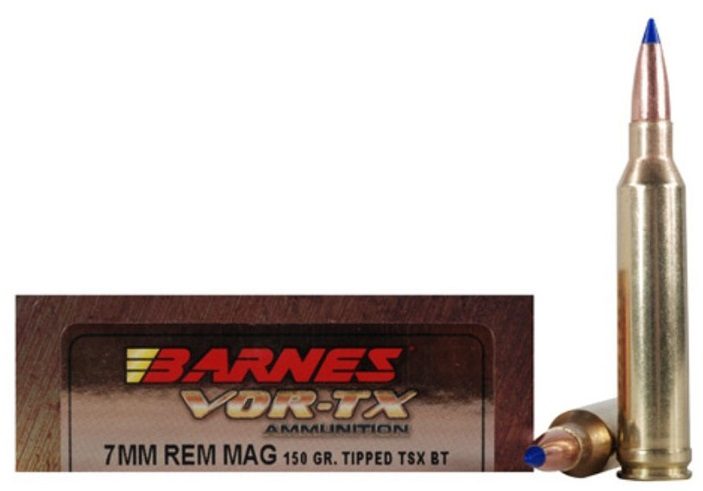
You're holding a box of Barnes VOR-TX, and the boxes beside it carry three bullet names: TSX, TTSX and LRX. Maybe you're planning an elk hunt, or you want lead-free venison, or a hunting area requires non-lead bullets. You've heard that copper bullets are the toughest you can buy, and also that one "pencilled through" a deer without opening.
Both stories are true, and the same fact explains both. By the end you should be able to explain what a solid copper bullet does differently, choose among TSX, TTSX and LRX for your animal and distance, know the one limit copper has, and set up your rifle so the load performs.
Why copper bullets behave differently
Most hunting bullets are a lead core inside a copper jacket. On a hard hit, especially into heavy bone, the jacket and core can separate and the bullet loses weight and stops short. A Barnes bullet is one solid piece of copper, with a hollow cavity in its nose. There's no core to lose, so it typically keeps 95 percent or more of its weight. On impact the cavity peels back into sharp copper petals, four on the TSX, that roughly double the bullet's width, and the solid shank behind them keeps driving. That's why copper is trusted on elk, moose and big hogs, and why it tends to exit, giving you a blood trail.
The limit is speed. Copper is harder than lead, so the nose needs a harder hit to peel open. Barnes generally advises an impact speed of about 1,800 feet per second for its TSX and TTSX bullets to open fully, and less for the LRX; the exact figure varies by bullet, and Barnes will give it for yours. Below that speed a copper bullet may open only partway and punch a narrow hole, which is where the "pencilled through" stories come from. A lead-core bullet opens at a lower speed, so it's more forgiving when the shot is long or the cartridge is slow.
Key idea: A copper bullet's strength and its limit come from the same fact: it's one hard piece of metal. It won't come apart, and it needs speed to open.
TSX, TTSX or LRX?
TSX (Triple-Shock X) is the original: a flat-nosed or hollow-nosed copper bullet with grooves around its shank that ease pressure and fouling in the barrel. It's the toughest of the three and the most blunt, so it slows faster in flight.
TTSX (Tipped Triple-Shock X) adds a polymer tip. The tip makes the bullet sleeker, so it holds speed and drops less, and on impact it's driven into the cavity to start the petals opening. Holding speed matters doubly for copper, because speed at the animal is what opens it.
LRX (Long-Range X) is sleeker still, with a long tip and tapered base, and is built to open at lower speed than the TSX and TTSX. It's the copper bullet for long shots.
- If you hunt elk, moose or big-bodied game in timber where shots are close, choose TSX or TTSX, because at close range the bullet is fast enough to open fully and the copper holds together through bone.
- If you hunt deer or pronghorn in open country out to about 300 yards, choose TTSX, because the tip keeps more speed for opening at distance.
- If your shots may stretch past 300 yards, choose LRX, because it's built to open at the lower speed a long shot arrives with.
- If you shoot a slow cartridge, such as a .30-30, .45-70 or .350 Legend, keep your shots close, because those bullets start slow and fall below copper's opening speed sooner. A lead-core bullet built for those speeds is often the better choice there.
If you're not sure, start with TTSX. It covers most deer and elk hunting within ordinary distances.
Common mistake: Choosing a lighter, faster copper bullet "to be safe" and then taking a 400-yard shot with a standard TTSX. Distance, not toughness, is what limits a copper bullet. Find your load's speed at your longest shot and keep it above Barnes's minimum for that bullet.
Choosing a weight
Copper is lighter than lead, so a copper bullet is longer than a lead-core bullet of the same weight. That has two practical results. Hunters often step down one weight from what they'd use in lead, for example a 150- or 168-grain TTSX in .308 instead of a 180-grain lead bullet, because the copper bullet penetrates as deeply anyway and the lighter weight leaves the muzzle faster, which helps it open. And a long bullet needs enough spin from your barrel's twist rate to fly point-first; if your groups show oval or sideways holes, try the next lighter weight.
Lead-free hunting
Some states and areas require non-lead ammunition, California being the best-known. Iowa doesn't require it for deer. Many hunters choose copper anyway because a lead-core bullet can scatter small lead fragments through the meat around the wound, while a copper bullet that holds together leaves essentially none. If you feed venison to children or share it widely, that's a reasonable reason to choose copper. For Iowa deer, the Barnes loads in legal cartridges include the .45-70 300-grain TSX and the .350 Legend; check that your cartridge meets Iowa's rule of an expanding .350- to .500-inch bullet under Iowa Code 481A.48.
Copper in your barrel
Copper bullets can leave more copper fouling in the bore than jacketed bullets, and heavy fouling opens groups. The grooves on Barnes bullets reduce this, but some rifles still need cleaning with a copper solvent more often than you're used to. Clean the barrel before you sight in, then expect accuracy to settle after a few shots as the bore takes on a light coating. If groups that were good start opening during a long session, fouling is the likely cause; clean and try again.
Changing to a copper load moves where your rifle hits, so sight in again with the exact box you'll hunt with, with eye and ear protection on and from a steady rest, at the distance you expect to shoot.
Check your understanding
Try answering these before you open the answer. If you can decide what to do and explain why, you have it.
1. Your elk hunt is in dark timber where shots are 50 to 150 yards, with a .300 Win Mag. Which Barnes bullet, and why?
TSX or TTSX. At those distances the bullet arrives well above the speed it needs to open, and the copper holds together through heavy bone. A long-range LRX adds nothing you need here.
2. A friend's deer "pencilled through" with a copper TSX from his .30-30 at 200 yards. What happened?
The .30-30 starts slow, and by 200 yards the bullet had likely dropped below the speed copper needs to open fully, so it made a narrow hole. With a slow cartridge, keep copper shots close, or use a lead-core bullet built to open at those speeds.
3. You shoot a 180-grain lead-core bullet in your .30-06 and want to switch to Barnes. Which weight do you try first?
A lighter one, such as 150 or 168 grains. A copper bullet of the same weight is longer and doesn't need the extra weight to penetrate, and the lighter bullet leaves faster, which helps it open at distance. Sight in again either way.
4. Your groups with a new copper load were tight for the first ten shots and then opened up. What's the likely cause, and what do you do?
Copper fouling building up in the bore. Clean with a copper solvent and shoot again. If it's a pattern, clean more often with that load.
5. A new copper bullet from another maker advertises "reliable expansion" but no minimum speed. How do you decide where it's safe to use?
Ask the maker for the lowest impact speed at which it opens, then compare that with your load's speed at your longest shot. Without that number, keep shots close, where any copper bullet is still moving fast, because copper's limit is speed.
Where to go next
You can find Barnes VOR-TX ammunition on our website, including TSX, TTSX and LRX loads in most popular hunting calibers, and anything listed there can be ordered if it isn't in stock.
For Federal's loading of the same bullet, see Federal Premium with Barnes TSX. To see how a bonded lead-core bullet compares for long shots, read Federal Terminal Ascent. And for the rest of the elk decision, see choosing elk ammunition.
If this article helped you, we invite you to sign up for email notifications of new blog articles.