
The 6.8 Western: A Modern Heavy-Hitting Cartridge for Hunters and Precision Shooters
Joseph McLain Nov 07, 2026
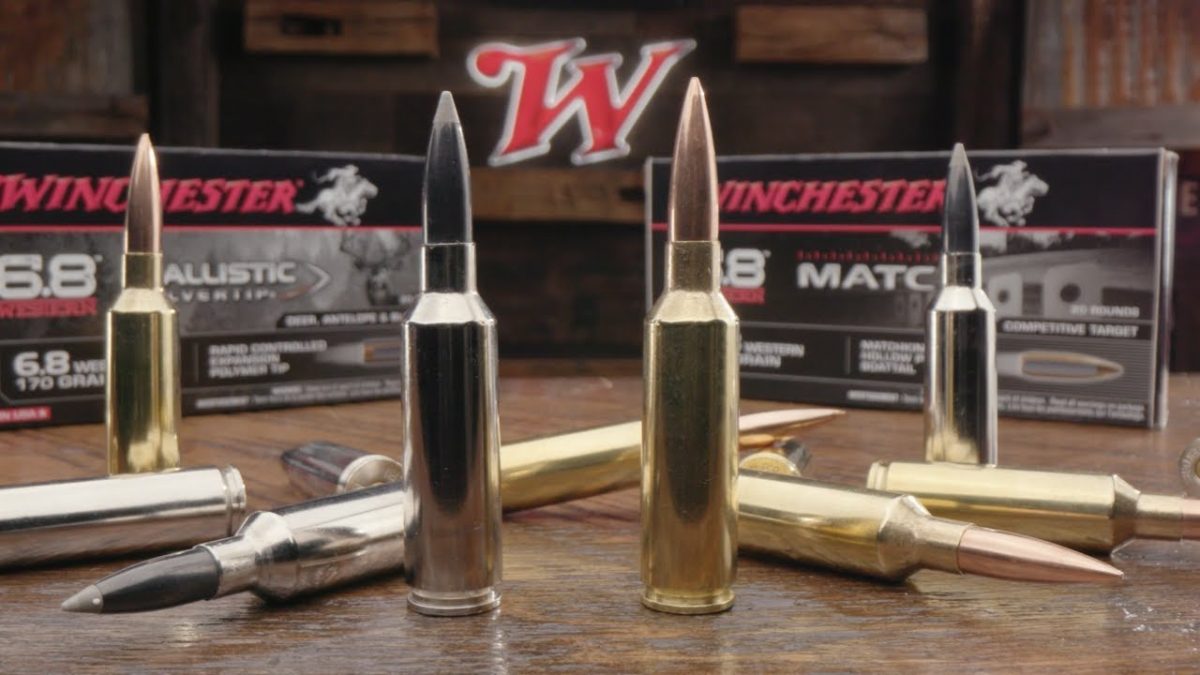
You are planning an elk hunt out west, or building a rifle for long-range matches, and the 6.8 Western is on your list. It was designed to do much of what a .300 Magnum does with less kick. Yet a .270 Winchester has killed elk for generations, and ammunition for the newer round can be harder to find.
By the end you should understand what problem the 6.8 Western was designed to solve, why its heavy bullets need fast-twist barrels, and how it compares with the .270, 6.5 Creedmoor, 6.5 PRC and .300 Winchester Magnum, so you can decide whether it suits your hunting or shooting.
The problem it was built to solve
Winchester and Browning introduced the 6.8 Western in 2021. It fires a .277-inch bullet, the same diameter as the .270 Winchester, from a short-action case. To see why that combination matters, look at the cartridges hunters were choosing between.
The .270 Winchester is a proven deer and elk cartridge, but its traditional barrels spin bullets too slowly to stabilize the long, heavy, streamlined bullets that hold speed best at long range. Magnums such as the .300 Winchester Magnum carry heavy bullets with lots of energy, but they kick hard and need a longer, heavier long-action rifle. The 6.8 Western's designers wanted heavy, long-range bullets in a short-action rifle with less recoil than a .300 Magnum.
Think of choosing a farm truck. One tows anything but rides rough and drinks fuel; another rides easy but cannot pull the big trailer. The 6.8 Western tries to pull most of the load with a gentler ride. Like any compromise, it does not do everything the bigger truck does.
Heavy bullets and fast twist
The 6.8 Western is designed around bullets of roughly 160 to 175 grains in .277 caliber, which is heavy for that diameter. Heavy bullets of a given diameter are long, and long, pointed bullets usually have a high ballistic coefficient, or BC, a measure of how well a bullet holds its speed against air drag. A high-BC bullet drops less, drifts less in wind and keeps more energy at distance.
Long bullets need more spin to fly point-forward, which is why 6.8 Western rifles use fast-twist barrels, commonly around one turn in 7.5 or 8 inches. That fast twist is a key part of the design; it is what lets the cartridge use bullets a traditional .270 barrel could not stabilize. Our guide to barrel twist rate explains why bullet length decides the spin required.
The short action matters too. A short-action rifle can be a little lighter and more compact, with a shorter bolt throw. The rule that follows is that the 6.8 Western's advantage depends on using the heavy, high-BC bullets it was designed for; with light bullets it gives up much of what makes it different.
Key idea: The 6.8 Western pairs heavy, streamlined .277 bullets with fast-twist barrels in a short action, aiming for much of a magnum's long-range performance with less recoil and a lighter rifle.
How it compares with familiar cartridges
| Compared with | Where the 6.8 Western leads | Where the other cartridge leads |
|---|---|---|
| .270 Winchester | Heavier, higher-BC bullets; more energy and less wind drift at long range | Milder recoil with typical loads; cheaper, more widely available ammunition |
| 6.5 Creedmoor | More energy and heavier bullets for larger animals | Noticeably less recoil; very wide ammunition and rifle choice |
| 6.5 PRC | Heavier bullets and more energy | Somewhat less recoil |
| .300 Winchester Magnum | Less recoil; shorter, lighter rifles | More energy with heavier bullets; enormous ammunition selection |
The pattern is clear: Nearly every rival wins on recoil or ammunition availability, and the 6.8 Western wins on bullet weight and long-range energy for its recoil. The .300 Winchester Magnum still carries more energy, so the 6.8 Western is best understood as giving up some of the magnum's power to gain a lighter rifle and gentler recoil. Our comparison of the 6mm Creedmoor, 6.5 Creedmoor and 6.5 PRC covers the lighter end of this family.
Where it fits, and where it does not
The 6.8 Western makes the most sense for hunters who pursue large animals such as elk at longer distances, want a lighter rifle than a typical magnum, and will shoot it enough to be confident. It also suits long-range target shooters who want heavy, high-BC bullets with manageable recoil.
It makes less sense for deer at ordinary distances, where milder cartridges do the job with less recoil and cheaper ammunition. For Iowa hunters, it is not legal for deer, because Iowa allows rifles for deer only with expanding bullets .350 to .500 inch in diameter that produce at least 500 foot-pounds of energy at the muzzle; it is a cartridge for western hunts and other states and seasons where it is legal. And because it is newer, ammunition selection is narrower and prices are often higher than for long-established cartridges.
Choose the 6.8 Western when your hunting genuinely calls for heavy bullets at distance in a lighter rifle, and a milder, more common cartridge when it does not.
Common mistake: Confusing how far a cartridge can reach with how far you can hunt ethically. Your ethical distance is set by your skill from field positions, the wind and the animal, not by a ballistic chart. Our article on hunting ethics explains why.
Choosing a load
Start with the job, then pick the bullet built for it. Winchester and Browning loads designed for the cartridge include long-range hunting bullets for large game, such as Winchester's Expedition Big Game Long Range and Browning's Long Range Pro Hunter, and lead-free copper bullets such as Winchester's Copper Impact for places that restrict lead or for hunters who prefer it. Check current listings, because offerings change.
Two terms help when comparing loads. Controlled expansion means a bullet opens on impact but holds together rather than breaking apart, and weight retention describes how much of the bullet remains after it penetrates; both matter for large animals. For long-range hunting, a bullet must also expand reliably at the lower speeds it has at distance, which is what long-range hunting bullets are designed to do.
Choose a bullet designed for the largest animal you will hunt at the longest distance you will shoot, then confirm it groups well in your rifle.
Testing loads from a rest
A short range session tells you which load your rifle prefers and whether you shoot the cartridge well. With eye and ear protection on and the muzzle downrange, fire a three-shot group at 100 yards from a solid rest with each of two loads built for your hunt, letting the barrel cool between groups, and notice how the recoil feels. If you own a milder rifle, shoot a group with it in the same session and compare how calmly you shoot each. Finish with a few shots from a field position, such as seated with shooting sticks, using the load that grouped best. If you shoot the 6.8 Western as well as a gentler cartridge, its extra reach is yours to use; if not, the milder rifle is the better tool.
Putting it together
The 6.8 Western puts heavy, high-BC .277 bullets in a short-action, fast-twist rifle, aiming for long-range energy and wind resistance with less recoil and weight than a traditional magnum. It outperforms the .270, 6.5 Creedmoor and 6.5 PRC in bullet weight and energy, and gives up some energy to the .300 Winchester Magnum in exchange for gentler recoil. It shines for large game at distance and long-range shooting, is more than you need for most deer hunting, is not legal for Iowa deer, and has a narrower ammunition selection. Choose it when your hunting calls for what it does best.
Check your understanding
Try answering these before you open the answer. If you can decide what to do and explain why, you have it.
1. A hunting partner asks why anyone needed the 6.8 Western when the .270 Winchester fires the same .277 bullet. What would you tell him?
Traditional .270 barrels have a twist too slow to stabilize the long, heavy, high-BC .277 bullets that carry energy and resist wind at long range. The 6.8 Western puts those bullets in a short-action, fast-twist rifle with less recoil than a magnum.
2. You want to rebarrel an old .270 to shoot 175-grain .277 bullets. Why won't the original barrel work well?
Those heavy bullets are long, and long bullets need more spin to fly point-forward. A standard .270 twist won't stabilize them reliably, which is why 6.8 Western rifles use fast-twist barrels.
3. Does the 6.8 Western match the .300 Winchester Magnum's energy?
No. The .300 Magnum carries more energy with heavier bullets. The 6.8 Western trades some energy for less recoil and a lighter rifle.
4. Your cousin wants to use his new 6.8 Western in Iowa's first shotgun deer season. Can he?
No. Iowa allows rifles for deer only with expanding bullets from .350 to .500 inch in diameter, and the 6.8 Western's .277 bullet is far smaller. It's a cartridge for western hunts and other states where it is legal.
5. You mostly hunt deer at ordinary distances and dislike recoil. What might suit you better?
A milder cartridge legal where you hunt, which does the job with less recoil and more affordable ammunition.
Where to go next
You can find 6.8 Western rifles and ammunition on our website, including Browning X-Bolt 2, Winchester XPR and Model 70 rifles, and anything listed there can be ordered if it isn't in stock.
To see the lighter end of this family, read 6mm Creedmoor vs. 6.5 Creedmoor vs. 6.5 PRC. Barrel twist rate explains why the 6.8 Western needs its fast twist, and the role of ballistics in long-range shooting shows how BC turns into drop and drift numbers. Hunting ethics helps you decide how far is too far.
If this article helped you, we invite you to sign up for email notifications of new blog articles.