
.400 Legend: Ballistics, Recoil and Range for Deer Hunters
Joseph McLain Nov 03, 2026
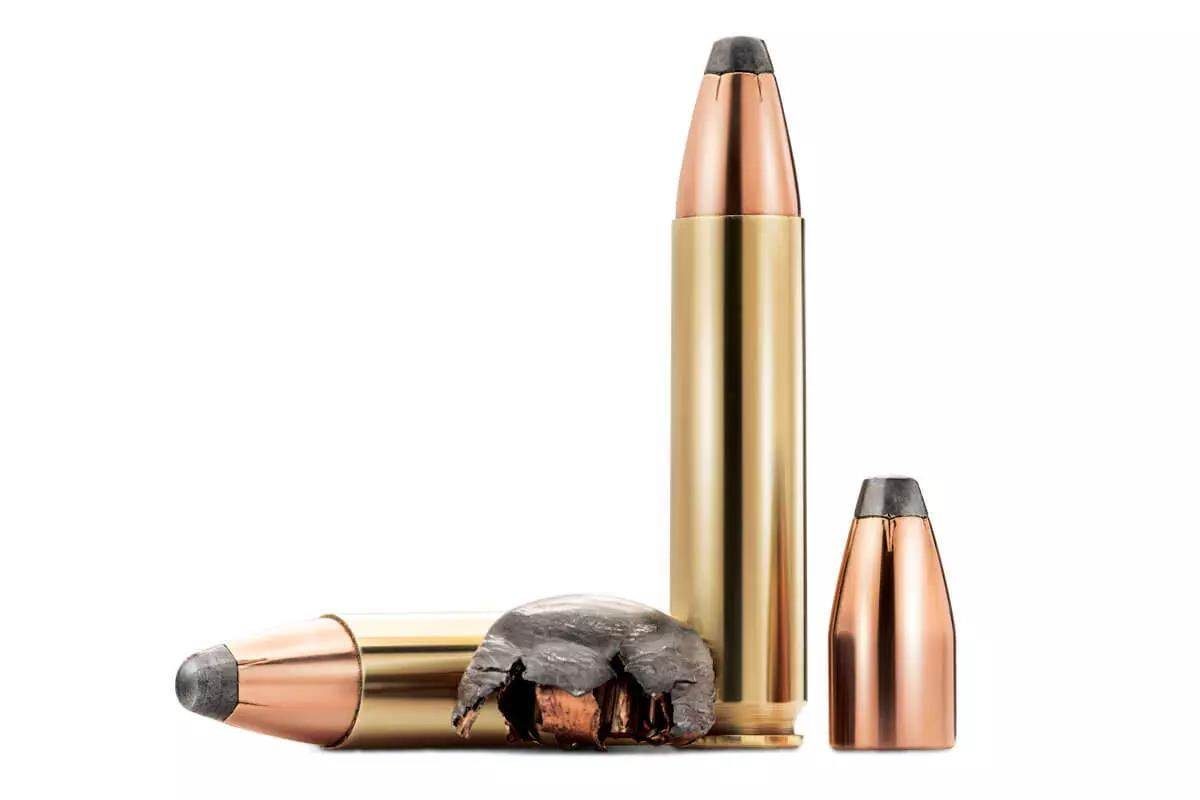
You are getting ready for deer season in Iowa, and you want to carry a rifle instead of a slug gun. One buddy tells you it has to be a straight-walled cartridge. Another says any .35-caliber or bigger is fine. At the counter you hear three names. The .350 Legend is easy on the shoulder, the .450 Bushmaster hits hard and kicks hard, and now there is a newer one in between, the .400 Legend. This article explains why the .400 Legend exists, what its numbers mean in the field, and how it stacks up against its neighbors. By the end you should be able to decide whether it fits your hunting and your shoulder, choose a hunting load and a practice load, and set up your rifle so you shoot it well.
Why the .400 Legend exists: A rule and a gap
The .400 Legend was developed by Winchester and introduced in 2023. It was designed with performance and regulatory requirements in mind, and it answers two needs at once.
The first is regulatory. Several Midwestern states that once allowed only shotguns, muzzleloaders and bows for deer have opened their seasons to rifles, but with limits. Some of them, such as Ohio, require a straight-walled cartridge, one whose case is the same width, or nearly so, from base to mouth, unlike a bottleneck case that narrows toward the bullet. Others have relaxed their rules; Michigan, for example, dropped its straight-wall zone for the 2026 season. Iowa draws its line differently. Under Iowa Code section 481A.48, a rifle may be used during the youth and disabled season and the first and second shotgun seasons if it fires straight-walled or other centerfire ammunition with an expanding bullet between .350 and .500 inch in diameter and at least 500 foot-pounds of muzzle energy. So in Iowa the bullet diameter and energy decide legality, not the shape of the case, and that is why popular cartridges like the .308 and .30-06 are still not legal there for those seasons. Winchester built a round that meets the straight-wall rules in the strictest states and still performs in the field, and its .400-inch bullet fits Iowa's window as well. Rules change and differ by season and by state, so confirm the current requirements with the Iowa DNR or the agency in the state where you hunt. Our articles on straight-walled cartridges for deer hunting and hunting licenses, tags and firearm restrictions in Iowa and neighboring states are good starting points.
The second need is a gap in the lineup. The .350 Legend, introduced in 2019, is known for mild recoil and effective terminal performance, which makes it an excellent choice for smaller deer or for hunters who prefer low recoil. The .450 Bushmaster delivers significant stopping power with much heavier recoil, which can be daunting over long hunting days. The .400 Legend was engineered to sit between those extremes, with greater energy transfer than the .350 Legend and less recoil than the .450 Bushmaster.
Think of choosing a hammer. A light tack hammer is easy to swing all day but does little against a stubborn nail, and a sledge drives anything but wears out your arm. The .400 Legend is meant to be the framing hammer in between.
Key idea: Choosing a deer cartridge is a trade between power and comfort. A load you can shoot accurately and confidently will beat a more powerful one you flinch from.
What the numbers mean in the field
Start with the size of the bullet. The .400 Legend fires a .400-inch diameter bullet, which is a significant increase in frontal area over the .350 Legend's .357-inch bullet. A larger frontal area means more energy is transferred on impact, and that leads to effective terminal performance. Terminal performance is simply what the bullet does once it reaches the animal.
Next, speed and energy. Winchester lists its 190-grain Deer Season XP load at about 2,400 feet per second (fps) and 2,430 foot-pounds (ft-lb) at the muzzle, and its heavier 215-grain Power-Point load at roughly 2,250 fps with about the same energy. Foot-pounds are a measure of the energy a bullet carries, so a higher number means more energy available to do work on the target. Notice what the two loads show: A lighter bullet launched faster and a heavier bullet launched slower can carry similar energy, so the choice between them is about how the bullet behaves on the animal, not only the number on the box. Those figures are comfortably above Iowa's 500 ft-lb minimum and well suited to deer-sized game. Winchester markets the cartridge as delivering energy similar to the .450 Bushmaster with noticeably less recoil; treat that as the maker's claim and compare the specific loads you are considering.
The cartridge also keeps a relatively flat trajectory out to 200 yards. A flat trajectory means the bullet does not drop much on its way to the target, so you do not need to guess at large holdovers. That is exactly what you want in a typical deer hunt, where shots are at medium range and distances change quickly.
Then there is recoil, which matters more than most new hunters expect. The .400 Legend has a noticeable kick, more than the .350 Legend, but it is designed to be less punishing than the .450 Bushmaster. That balance lets you take follow-up shots with confidence, even during a long session, and less shooter fatigue is a real advantage on early morning or late-season hunts when more than one shot may be needed. Recoil also feeds flinching, the habit of bracing before the shot, which we cover in the role of mental focus in shooting.
One safety note belongs here. A hunting bullet can travel well beyond the animal, so always be sure of your target and of what is behind it before you pull the trigger.
.400 Legend ballistics: How speed and energy change with distance
The numbers on a box describe the bullet at the muzzle, but a deer is never standing at the muzzle. The table shows what the makers publish for the .400 Legend loads we carry at each distance. Each cell reads velocity in feet per second (fps) / energy in foot-pounds (ft-lb).
| Load | Muzzle | 100 yd | 200 yd | 300 yd |
|---|---|---|---|---|
| Winchester Deer Season XP 190 gr | 2,400 / 2,430 | 1,992 / 1,675 | 1,631 / 1,122 | 1,330 / 746 |
| Winchester Power-Point 215 gr | 2,250 / 2,416 | 1,872 / 1,673 | 1,540 / 1,132 | 1,270 / 770 |
| Federal Power-Shok 210 gr | 2,250 / 2,360 | 1,873 / 1,636 | 1,544 / 1,111 | 1,274 / 757 |
| Hornady American Whitetail 210 gr | 2,200 / 2,256 | 1,814 / 1,535 | 1,480 / 1,022 | 1,218 / 692 |
Read across a row first. Each load loses about a third of its speed by 200 yards and more than half its energy, because energy depends on the square of speed. A bullet slowing from 2,400 to 1,600 fps sounds like a modest change, but it has given up more than half the work it can do. Then read down the 200-yard column: Every load still carries more than 1,000 ft-lb there, about double Iowa's 500 ft-lb muzzle minimum, and close to what a .350 Legend carries at 100 yards.
Notice also that the lighter Deer Season XP leaves fastest and stays fastest. Think of two runners leaving the blocks: The one who starts quicker is still ahead at the finish unless the other is far more efficient. The heavier Power-Point catches up in energy because energy also depends on weight, which is why the two loads carry nearly the same energy at every distance despite a 150 fps difference in speed. Hornady tests in a 16-inch barrel, so its figures run a little lower than loads tested in longer barrels.
The trade-off is that the faster bullet shoots flatter while the heavier one pushes deeper; neither gives up much energy to the other. The rule: Choose between them by how you want the bullet to behave on the deer, then judge the load by its numbers at your longest shot, not at the muzzle.
.400 Legend drop chart: Where to hold at each distance
Your scope sits above the barrel, so the bullet starts below your line of sight, climbs through it and falls back across it at your zero. That is why a rifle zeroed at 200 yards hits high at 100. The tables show where each load lands, in inches above (+) or below (-) your aim, with the scope 1.5 inches above the bore.
| 100-yard zero | 50 yd | 100 yd | 150 yd | 200 yd | 250 yd | 300 yd |
|---|---|---|---|---|---|---|
| Deer Season XP 190 gr | +0.2 | 0 | -2.4 | -7.4 | -15.7 | -28.0 |
| Power-Point 215 gr | +0.3 | 0 | -2.8 | -8.6 | -18.0 | -32.0 |
| Power-Shok 210 gr | +0.3 | 0 | -2.8 | -8.6 | -18.0 | -32.0 |
| American Whitetail 210 gr | +0.3 | 0 | -3.0 | -9.2 | -19.5 | -34.5 |
With a 100-yard zero, every load stays within about 3 inches of your aim out to 150 yards, well inside a deer's roughly 8-inch heart-lung area. By 200 yards they are 7.4 to 9.2 inches low, which can put a center hold at the bottom edge of the chest or below it. Drop grows faster with every yard because the bullet is slowing down and gravity has more time to act.
| 200-yard zero | 50 yd | 100 yd | 150 yd | 200 yd | 250 yd | 300 yd |
|---|---|---|---|---|---|---|
| Deer Season XP 190 gr | +2.0 | +3.7 | +3.2 | 0 | -6.5 | -16.9 |
| Power-Point 215 gr | +2.4 | +4.3 | +3.7 | 0 | -7.3 | -19.1 |
| Power-Shok 210 gr | +2.4 | +4.3 | +3.6 | 0 | -7.3 | -19.1 |
| American Whitetail 210 gr | +2.7 | +4.6 | +3.9 | 0 | -7.9 | -20.6 |
With a 200-yard zero, the bullet runs about 3.7 to 4.6 inches high at 100 yards and comes back to your aim at 200. With Deer Season XP that keeps every shot within the 4 inches of room above and below the center of a deer's vitals from the muzzle to 200 yards, so you can hold on the middle of the chest throughout. With the heavier loads the rise at 100 yards is just over that, so a hold slightly low on the chest is safer at that distance.
The trade-off is that a longer zero makes the rifle feel flatter at 200 yards and costs you a high hit at 100. The rule: Use a 100-yard zero if your shots are inside 150 yards; if they stretch to 200, a 200-yard zero lets you hold center, as long as you remember the bullet runs high in between. Confirm either one with your own rifle, because barrel length and scope height shift these numbers.
Key idea: A drop chart tells you where to start. The numbers you confirm with your own rifle are the ones to trust on a hunt.
Range and recoil: How far to shoot and what the extra power costs
Past 200 yards the .400 Legend's drop builds quickly: 6.5 to 8 inches low at 250 yards and 17 to 21 inches low at 300 with a 200-yard zero. The bullets still carry enough energy farther out, but a small mistake in judging distance turns into a miss or a wounding hit. Picture a deer you guess at 250 that is really 280; with a 200-yard zero that error alone moves the bullet about 6 inches. That is why we treat 200 yards as a sensible ceiling for most hunters with this cartridge.
The other limit is recoil. Winchester says the .400 Legend delivers energy similar to the .450 Bushmaster with 20 percent less recoil, using its Power-Point load for the comparison; treat that as the maker's claim. Compared with the .350 Legend, the .400 throws a bullet 35 to 40 grains heavier at the same or higher speed (Deer Season XP is 150 grains in .350 and 190 in .400; Power-Point is 180 and 215), so it pushes back noticeably harder. A shooter who flinches will lose more accuracy than the extra energy is worth.
The trade-off is more energy against more recoil and a range limit set by drop. The rule: Keep shots inside 200 yards, and choose the .400 Legend only if you can shoot it as accurately from a field position as you could a .350 Legend; if not, the .350 is the better tool.
Comparing the .400 Legend with its neighbors
The easiest way to see where the .400 Legend fits is to line it up beside the cartridges hunters most often weigh against it.
| Cartridge | Bullet and history | Power and recoil | Where it fits |
|---|---|---|---|
| .350 Legend | .357-inch bullet, introduced in 2019 | Mild recoil, effective terminal performance | Smaller-framed shooters, newer deer hunters, smaller deer |
| .400 Legend | .400-inch bullet, introduced in 2023 | More energy than the .350 and more recoil, but considerably milder than the .450 | Deer and larger game, with a balance of energy and comfort |
| .450 Bushmaster | .452-inch bullet | Tremendous stopping power, with a steep increase in recoil | Hunters who put power ahead of comfort |
| .45-70 Government | A classic dating to 1873 | Massive energy and penetration | Typically lever-action rifles |
Read the first three rows as a ladder. Each step up gives you a larger bullet and more punch, and each step costs you more recoil. The .400 Legend sits on the middle rung. Compared with the .350 Legend, its larger bullet gives more energy transfer and improved penetration, which is a distinct advantage on larger game. Compared with the .450 Bushmaster, it gives sufficient energy for effective deer hunting at a recoil that is easier to manage over extended periods.
The .45-70 Government is the old-timer of the group. It has a history going back to 1873 and is known for massive energy and penetration, usually in lever-action rifles. The .400 Legend brings a more contemporary straight-walled design that fits current straight-wall rules, and unlike the traditional lever-action setup, it works in modern platforms including AR-15s. If the lever-action tradition appeals to you, see lever action .45-70 rifles for deer hunting.
Here is a simple way to decide. If you are smaller-framed or new to deer hunting and want the gentlest recoil, look at the .350 Legend. If you want more energy for larger game and still want to shoot comfortably and consistently, the .400 Legend is the middle choice. If raw power matters most to you and you can tolerate the kick, the .450 Bushmaster is there. For a closer numbers comparison, our article on comparing the .350 Legend, .400 Legend and .450 Bushmaster goes further.
Rifle platforms for the .400 Legend
One of its advantages is compatibility with AR-15 style rifles. If you already like the lightweight, modular nature of the AR system, the cartridge can fit into that platform. It is also available in bolt-action rifles, so you can choose based on how you like to shoot and carry a rifle. The best platform is the one that is well matched to the cartridge and comfortable for you, so confirm that a particular rifle is chambered for the .400 Legend before you buy.
If you are leaning toward a bolt-action, our guide to what to expect from a hunting rifle at different price points shows what quality looks like. For weather, a stainless steel barrel is worth considering if you hunt in harsh conditions and use the rifle extensively in the field, since it enhances durability and helps keep performance consistent even in corrosive environments.
When you compare specific rifles, three questions narrow the field. First, weight and recoil: A light, handy rifle is pleasant to carry, but the .400 Legend recoils more than the .350 Legend, so a very light rifle with a thin recoil pad will kick noticeably more than a heavier one with a good pad. Second, action type: Bolt actions are the most common and simplest, AR-style uppers suit shooters already invested in that platform, and some makers offer single-shot rifles. Third, barrel length: A shorter barrel is easier to move through brush and tree stands, while a longer one gives up handiness for a little more velocity. Winchester, which developed the cartridge, introduced it in its XPR bolt action, and other makers have added .400 Legend versions since, including Ruger's American Gen II Ranch line. Lineups change, so check current offerings before you shop. Our guide to how bolt actions work explains the features to compare. Among the .400 Legend rifles we list are the Mossberg Patriot, Savage 110 Ridge Hunter and Savage Axis 2 Pro, all with 20-inch barrels.
Choosing hunting and range ammunition
A hunting load is built to expand when it hits an animal, which transfers energy quickly and supports a quick, humane kill. A new cartridge starts with a short menu, and the .400 Legend is still young. Winchester, which created it, offers the most choices, and other makers have begun to follow. The loads below are the ones we could confirm from the manufacturers' own announcements; lineups change, so check the box and the maker's current list.
| Load | Bullet | What it is built to do |
|---|---|---|
| Winchester Deer Season XP | 190-grain Extreme Point, polymer tip | Expand quickly in deer-sized game. The large polymer tip starts expansion early, and it is the fastest, flattest-shooting load in the ballistics chart above. |
| Winchester Super-X Power-Point | 215-grain soft point | A traditional soft point with a heavier bullet. It expands more gradually and leans toward penetration. |
| Federal Power-Shok | 210-grain soft point | Federal's long-running deer soft point, listed at 2,250 fps. |
| Hornady American Whitetail | 210-grain InterLock soft point | A cup-and-core hunting bullet with a ring that locks jacket and core together. Hornady says it works in both AR-15 and bolt-action rifles. |
| Remington Core-Lokt | 210-grain soft point | Another traditional soft point from a long-running deer line, listed at 2,250 fps with the same published ballistics as the Power-Shok. |
| Winchester Super Suppressed | 300-grain open tip, subsonic | A heavy, slow load meant for quiet shooting with a suppressor. It is not a substitute for a deer load. |
The table shows two ways to approach the same job. A fast, lighter, polymer-tipped bullet opens quickly and spends its energy early. A heavier soft point opens more slowly and leans toward penetration. For whitetails at typical Iowa distances, either approach works when the bullet lands in the vital zone; what matters most is that you pick one, zero with it, and practice until you trust it. Our article on FMJ and TMJ bullets explains why a non-expanding bullet suits a target better than an animal, and Winchester Super-X explains the Power-Point design in more depth.
Practice ammunition is the gap in a young cartridge. Winchester's 2026 catalog still lists no inexpensive full metal jacket practice load in .400 Legend, and we could not find one from another maker either, so most shooters practice with a soft-point hunting load, the cheapest box they can find. That costs more per shot, which is one more reason to make each practice round count: A few rounds fired from a rest at known distances teach more than a box fired carelessly. Always confirm the caliber printed on the box before you load, and if you are not sure whether a particular load is offered in .400 Legend, ask us and we will check.
Setting up the rifle: Optics, zero and recoil
A flat trajectory out to 200 yards makes setup simple, but it still needs attention. Zeroing your rifle at 100 yards is typically recommended, and it is wise to practice at multiple distances so you fully understand bullet drop and wind drift. A quality scope with clear glass and adjustable turrets helps you make precise corrections and get the most from the cartridge. Our guides to understanding rifle scopes and sighting in rifles at different distances explain the settings and the adjustments.
Try this: A distance session with your hunting load
- Wear eye and ear protection, keep the muzzle downrange, and shoot from a steady rest.
- Zero your rifle at 100 yards with the load you plan to hunt with.
- Shoot at additional distances out to 200 yards, and record where each group lands compared with your point of aim.
- Write the results on a small card and keep it with your hunting gear.
You will know it worked when you can say, without guessing, how much your bullet drops at the distances you are likely to shoot.
Now recoil. Even a balanced recoil profile deserves practice, so spend time with the rifle until its kick is familiar, because familiarity is what allows rapid, accurate follow-up shots. If you want more comfort, consider muzzle brakes, recoil pads or adjustable stocks. A muzzle brake can make the blast louder for you and anyone beside you, so use good hearing protection (see the importance of eye and ear protection). If you are bringing a new rifle into use, our article on breaking in a rifle covers the first rounds.
Putting it together
The .400 Legend makes sense when three things line up. First, the law: It is legal where you hunt, which in Iowa means a .350 to .500 inch expanding bullet with at least 500 foot-pounds, used in the seasons that allow rifles. Second, the job: You want more bullet and more energy than the .350 Legend offers, perhaps for larger deer or longer days in a stand where one shot has to count. Third, your shoulder: You can shoot it well from a field position without flinching. If the first two are true but the third is not, the .350 Legend you shoot well is the better choice. If you have the .400 Legend, choose one hunting load, zero with it, build a drop card out to your longest realistic shot, and practice until the first shot of the morning lands where the last one did.
Check your understanding
Try answering these before you open the answer. If you can explain it in your own words, you understand it.
1. Why did Winchester develop the .400 Legend, and what gap does it fill?
Several states limit deer rifles to straight-walled cartridges or to certain bullet diameters, and hunters wanted a round that meets those rules while staying powerful enough for ethical kills with manageable recoil. It sits between the mild .350 Legend and the heavier-kicking .450 Bushmaster.
2. Why does a .400-inch bullet transfer more energy than a .357-inch one?
The larger diameter gives more frontal area, so more energy is transferred on impact. That is why the .400 Legend has an advantage over the .350 Legend on larger game.
3. You are a smaller-framed hunter who flinches with heavier rifles. Which of these cartridges would you try first, and why?
Start with the .350 Legend or the .400 Legend, because both have less recoil than the .450 Bushmaster. The .350 Legend has the mildest recoil. The .400 Legend adds power but still stays manageable.
4. Under Iowa law, what decides whether a rifle cartridge is legal for the shotgun deer seasons: The shape of the case or something else?
Something else. Iowa Code 481A.48 looks at the bullet: An expanding bullet between .350 and .500 inch in diameter with at least 500 foot-pounds of muzzle energy, fired from straight-walled or other centerfire ammunition. That is why the .400 Legend qualifies and a .308 does not.
5. Your rifle is zeroed at 200 yards with Deer Season XP, and a deer steps out at 100 yards. Where should you hold, and why?
On the center of the chest. The bullet is about 3.7 inches high at 100 yards, which still lands inside the vital area. With a heavier 210- or 215-grain load, hold slightly low.
Where to go next
If you want the numbers side by side, read comparing the .350 Legend, .400 Legend and .450 Bushmaster. For the legal side, straight-walled cartridges for deer hunting explains the regulations and popular calibers. Winchester's .350 Legend and .400 Legend ammunition goes deeper on the loads from the company that created the cartridge. And hunting ethics ties it all together by explaining how shot placement and bullet choice lead to a clean and humane kill. If you want to understand why the bullet rises and falls the way these charts show, our .350 Legend ballistics article walks through it with a cartridge that behaves the same way.
We carry .400 Legend ammunition and rifles, and anything on our website can be ordered if it isn't in stock; text or call us at 712.796.1464 with any question.
If you found this informative, we invite you to sign up for email notifications of new blog articles.