
Women in Shooting Sports: Tips and Resources for Female Shooters
Joseph McLain Nov 07, 2026
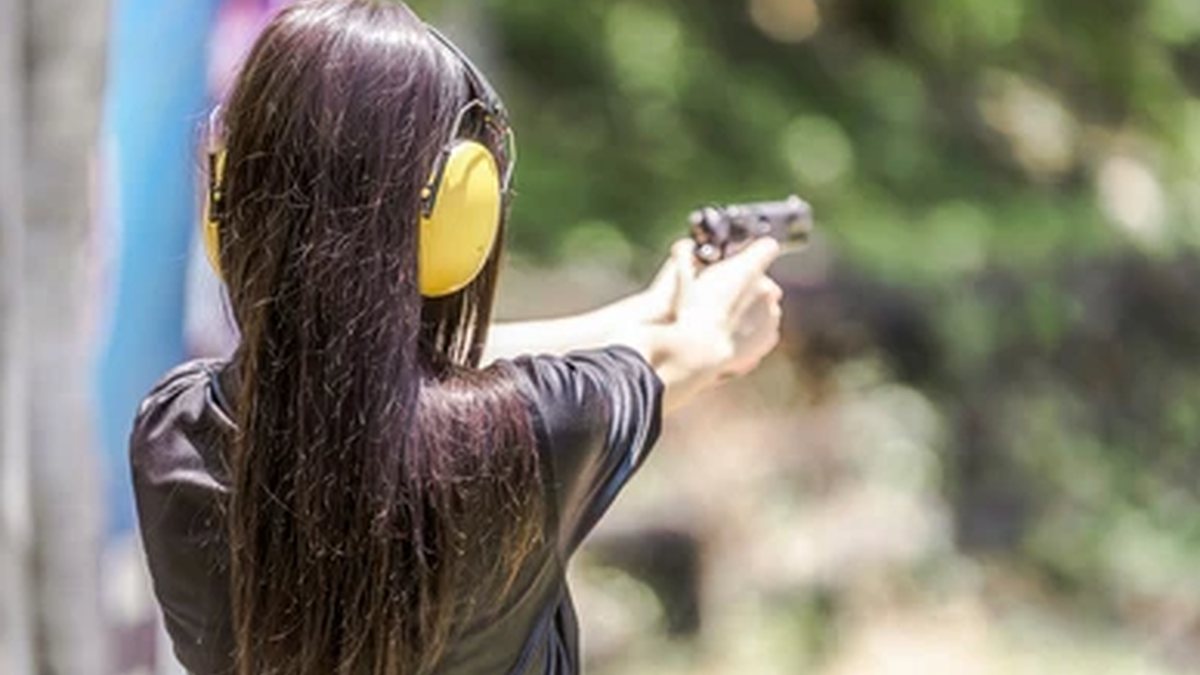
Picture a first trip to the range with a pistol borrowed from a spouse or a friend. The grip is wide enough that you have to stretch for the trigger, the recoil feels sharper than you expected, and by the tenth shot you are tensing up and your shots are drifting. It is easy to decide you are simply not a good shot. Often the real problem is fit, not ability. The answer is to choose and adjust equipment that fits your hands, practice the fundamentals at home and at the range, and find the people and resources that make the sport more enjoyable, so you can build skill and confidence at your own pace.
Start with fit: Why the same fundamentals feel different in different hands
The fundamentals of marksmanship are the same for every shooter. What differs is the size of the hands, the length of the arms and the build of the body that has to apply them. Think of work gloves that are a size too big. You can still do the job, but you lose control, and you tire sooner. A firearm that does not fit works the same way. Manufacturers have noticed, and they now design firearms and accessories with female ergonomics in mind, which has brought adjustable grips, lighter-recoil options and customizable features.
On a handgun, look for pistols with adjustable grips or models designed for smaller hands. A grip that suits your hand lets you reach the trigger comfortably and hold the pistol firmly without straining. On a rifle such as the AR-15, adjustable stocks, grips and accessories let you tailor the fit to your body. Several aftermarket products can help.
- Grips or grip sleeves for smaller hands
- Recoil pads to cushion the shoulder
- Adjustable triggers for better control and comfort
Of these, the grip is usually the first thing to get right on a handgun, because it decides how you reach the trigger and how you hold the gun for every shot. Recoil pads and adjustable triggers are refinements you can add once the basic fit works. Our guide to choosing a pistol as a beginner can help you judge fit when you are shopping.
Good practice: When possible, try different equipment at a range or through rental programs before you buy. Handle several firearms and notice which one lets you reach the trigger and hold steady without strain.
Protective gear deserves the same care. Invest in high-quality, comfortable earmuffs or in-ear hearing protection designed for prolonged use, and choose shooting glasses with anti-fog and scratch-resistant coatings. Many companies now offer shooting apparel with a focus on fit and comfort for women. Gear that is comfortable gets worn all session, and gear that pinches or fogs gets taken off. Our article on eye and ear protection explains what to look for.
Key idea: Skill is the same for everyone, but fit is personal. A well-fitted firearm and properly chosen accessories can significantly improve both performance and confidence.
The fundamentals: Stance, grip, trigger control and follow-through
A solid stance is the foundation for accuracy and recoil management. Two common stances show how that works.
| Stance | How you stand | What it gives you |
|---|---|---|
| Isosceles | Feet shoulder-width apart, body square to the target | A stable platform and effective recoil absorption |
| Weaver | One foot slightly forward, creating a "bladed" stance | Dynamic balance, which suits shooters who prefer a more fluid shooting motion |
The table shows two different ways to stay balanced. Isosceles squares you up so both sides of the body share the load, and Weaver turns you slightly so you can move more fluidly. Try both and keep the one that feels steadier. Some shooters find a slightly narrower stance improves their balance and control, so experiment rather than assuming one width is right for everyone.
Your grip comes next. A good grip is firm, not tense. Imagine a handshake. A confident one is firm and relaxed, while a crushing one makes your whole arm shake. A relaxed but firm grip minimizes muscle tension and improves trigger control. Keep your dominant hand high on the grip and wrap your support hand firmly around it with consistent pressure.
Then comes the trigger. Squeeze it gradually instead of jerking it, which minimizes movement and keeps the sights aligned. After the shot, follow through by maintaining your grip and sight picture for a few seconds. A golfer finishes the swing, and a shooter finishes the shot. Follow-through reinforces muscle memory and builds consistency. Our guide to pistol shooting fundamentals takes each of these in more detail.
Common mistake: Snatching the trigger and relaxing before the shot is finished. Squeeze steadily and hold your grip and sight picture a few seconds after the shot.
Dry-fire practice: Free repetition you can do at home
Dry-fire means practicing the motions of shooting without live ammunition. It is a safe, low-cost way to improve your fundamentals without the distractions of recoil or noise. You can practice extensively without paying for ammunition, repeat a single skill until it becomes automatic, and do it indoors. Snap caps, which are inert dummy rounds, help ensure safe handling.
Safety comes first, even with an empty firearm. Before every session, unload the firearm and check the chamber and magazine yourself. Keep all live ammunition out of the room, and point the firearm in a safe direction the entire time. Check your owner's manual too, since some firearms, rimfires in particular, call for snap caps to protect them during dry-fire.
Here are the drills to work with.
- Stance and grip hold. Hold your stance for 30 seconds, then transition into a dry-fire trigger pull. For grip, hold it steadily for 20 seconds, then make a slow trigger pull, repeating 50 times and keeping the pressure uniform.
- Basic trigger control. Focus on a fixed target and squeeze slowly until the shot "breaks," then reset. Aim for 50 to 100 pulls and emphasize smoothness.
- Sight alignment. Without firing, align your sights on a stationary target, hold the sight picture for several seconds, then relax and repeat.
- Follow-through. Aim, make a dry-fire pull and hold your position for 3 to 5 seconds after the "shot." This helps prevent premature movement.
- Transition. Place 2 or 3 targets on a wall at different positions and shift your aim quickly from one to the next while keeping the sights aligned. This builds target reacquisition, a vital skill in dynamic scenarios.
If you have limited time, start with trigger control and sight alignment, since those two decide whether the sights stay on target as the shot breaks. Add follow-through next, and bring in transitions once the first three feel natural. Our article on trigger control tips goes deeper on the most important of these skills.
An at-home dry-fire session
Twenty minutes at home builds the same habits as a box of ammunition. Every session starts with the safety check: unload, check the chamber and magazine yourself, and clear the room of live ammunition. Fifty to one hundred slow trigger presses on a fixed point, resetting after each one, warm up the trigger finger; 15 to 20 minutes on stance, grip and sight alignment follow; and two or three small targets on a wall let you practice shifting smoothly from one to the next. When the front sight stays still through the whole press and for 3 to 5 seconds after the click, the session is doing its job.
Live-fire practice: Taking your skills to the range, one step at a time
Once your fundamentals feel solid in dry-fire, live fire adds the real-world factors of recoil, muzzle blast and bullet drop. Keep your muzzle pointed downrange, your finger off the trigger until the sights are on target, and wear your eye and ear protection. Then build in steps, as in the table below. Choose distances that suit your firearm.
| Drill | Setup | What it teaches |
|---|---|---|
| Baseline grouping | A target at a fixed distance, such as 25 or 50 yards. Fire groups of 5 to 10 rounds and measure them | Your starting accuracy, which you can compare with your dry-fire results |
| Progressive distance | Start close and move out, for example 25, 50, 75 and 100 yards, firing a group at each | How trajectory and holdover change with distance |
| Multiple target engagement | Several targets at varying distances and angles. Fire at one, then transition to the next | Rapid transitions with proper sight alignment, a critical skill for defense and competition |
| Timed drills | A course with multiple targets and a stopwatch | Speed and precision under time pressure |
From top to bottom, the table is a ladder. Baseline grouping comes first because you cannot see progress without something to compare against. Progressive distance shows why a bullet drops and why holdover matters, and our guide to sighting in rifles at different distances explains the idea. Timed drills come last because speed rests on accuracy. Add the stopwatch once your groups are consistent.
Different rifles also reward different drills.
- Semi-automatic rifles, such as the AR-15. Focus on rapid transitions and a consistent sight picture under high-volume fire. Engage multiple static targets quickly, with smooth follow-through after each shot.
- Bolt-action rifles. Focus on deliberate single-shot accuracy. Fire single-shot groups at various distances, working on breath control and a smooth trigger pull.
- Lever-action rifles. Focus on the unique cycling mechanism while keeping sight alignment. Fire consecutive shots from a bench rest or prone position and pay attention to the rhythm of the lever pull.
Match the drill to the rifle in your hands. A semi-automatic lets you shoot faster, so follow-through matters more. A bolt-action slows you down, so each shot gets your full attention.
A practice routine you can keep, and a way to see your progress
Consistency matters more than marathon sessions. At home, warm up with 50 to 100 dry-fire trigger pulls, spend 15 to 20 minutes on stance, grip and sight alignment drills, and then practice rapid target shifts on multiple dry targets. At the range each week, follow the same order.
- Start with static grouping drills to set your baseline accuracy.
- Progress to dynamic drills, engaging multiple targets under varied conditions.
- End with a review, analyzing your performance and adjusting the routine as needed.
Tracking turns practice into learning. Keep a shooting log, sometimes called DOPE cards (data on previous engagements), and record group sizes, distances, weather conditions and any adjustments. Review it regularly, and the trends will show you what to work on. When possible, record your sessions on video. Seeing your own form is often the quickest way to catch habits you cannot feel.
Finding your direction: Self-defense, competition or hunting
Women have taken part in shooting sports for over a century, often challenging societal norms along the way. Early pioneers showed that precision shooting is not defined by gender, and organizations such as the Women's Shooting Sports Foundation (WSSF) have helped build training programs, competitions and support networks. National and international competitions now feature dedicated women's divisions, and the community has grown. That history matters because it means you are joining something established, not starting from scratch.
Shooting sports today include several directions, and the practice that helps most depends on which one you choose.
- Practical shooting and self-defense. Female competitors excel in dynamic disciplines such as IPSC and IDPA, where movement and rapid target transitions are key.
- Target shooting and precision. Many women take part in bullseye, silhouette and long-range competitions that reward accuracy and consistency.
- Hunting and recreational shooting. An increasing number of women are hunting, which is driving demand for specialized equipment and tailored training.
If you lean toward competition, add timed drills and multiple-target transitions, tune your equipment with high-quality optics, free-float barrels and adjustable triggers, and keep a detailed log. If self-defense is your focus, add scenario drills that mirror real situations, such as transitions, rapid target acquisition and low-light shooting. Do any live-fire scenario or low-light work with a qualified instructor. Beyond technical skill, a strong sense of situational awareness is crucial, and specialized courses that combine firearms training with situational response can help. Our guide to firearm safety for beginners belongs in everyone's routine, whatever direction you choose.
Community, mentors and confidence: You do not have to learn alone
One of the best parts of modern shooting sports is the community around it. Several kinds of resources are worth knowing.
- Women's Shooting Sports Foundation (WSSF). Offers training programs, competitions and networking opportunities.
- Local and regional clubs. Many states and regions have clubs for female shooters. Check local range bulletin boards or online forums.
- Competitions and expos. IPSC, IDPA and other women's events give you a competitive outlet and a chance to network.
- Online communities. Forums, social media groups and websites such as "Women With Guns" or "She Shoots" share tips and support.
Start with people you can meet in person, since a mentor who watches you shoot can correct habits no website can see. Online communities are great for encouragement and ideas. Bring those ideas to an experienced shooter or a qualified instructor before you adopt them, especially anything involving safety.
A mentor can be an experienced shooter in your community or online who offers guidance and shares what comes only from years of practice. Workshops and clinics designed specifically for women often cover everything from basic marksmanship to advanced competition strategies. Following successful female shooters can also keep you motivated.
Confidence grows from knowledge and small wins. Despite significant progress, many female shooters still run into outdated stereotypes about firearms and marksmanship. The best answer is to learn the facts, including history, safety protocols and the technical side of the sport, and to follow strict safety practices, which protect you and show that shooting is responsible and respectful. Start small with dry-fire drills, move to live fire gradually, and celebrate each improvement. Surround yourself with people who encourage progress, share your successes and give constructive feedback. Visualization and mindfulness exercises can reduce performance anxiety and sharpen focus. Our article on the role of mental focus in shooting shows how.
Check your understanding
Try answering these before you open the answer. If you can decide what to do and explain why, you have it.
1. A shooter says she must be a bad shot because her borrowed pistol is hard to hold and the trigger is a stretch. What would you suggest?
It may be a fit problem. Look for a pistol with adjustable grips or one designed for smaller hands, consider grips or grip sleeves, and try several models before buying, at a range or through rental programs.
2. You're nervous about recoil and want to improve before your next range trip. Why start with dry fire?
Without recoil or noise, you can focus entirely on stance, grip, trigger press and follow-through, repeat them for free and see whether the sights stay steady. Live fire then adds recoil and blast to skills that are already solid.
3. During dry-fire, your sights move every time you pull the trigger. Which fundamental should you work on first?
Trigger control. Squeeze gradually instead of jerking, which minimizes movement and maintains sight alignment. Then add follow-through by holding the sight picture for 3 to 5 seconds.
4. You want to see how holdover changes with distance. Which live-fire drill fits?
The progressive distance drill. Fire a group at each distance, for example 25, 50, 75 and 100 yards, and notice how the point of impact changes.
5. You're about to start a dry-fire session in your living room. What do you do first?
Unload the firearm, check the chamber and magazine yourself, take all live ammunition out of the room and pick a safe direction to point. Use snap caps if your owner's manual calls for them.
Where to go next
If the trigger drills raised questions, trigger control tips is the natural next read, since it is the skill that most affects your groups. The role of mental focus in shooting builds on the confidence ideas here. If a first trip to the range still feels intimidating, shooting range etiquette for new shooters shows you what to expect. And if you want a low-recoil, affordable firearm for practice, the .22 LR as a firearm for building and refining shooting skills explains why so many shooters start there. Happy shooting, and may each practice session bring you closer to mastery!
If this article helped you, we invite you to sign up for email notifications of new blog articles.